
Forbidden Love Affair at Auschwitz Between a Jew and Sadistic Nazi Guard
An unexpected relationship between a Jewish prisoner and an SS officer challenges traditional narratives of victim and perpetrator, prompting a reevaluation of human nature under extreme circumstances. In the midst of genocide, can moments of kindness alter the brutal reality of concentration camp life?
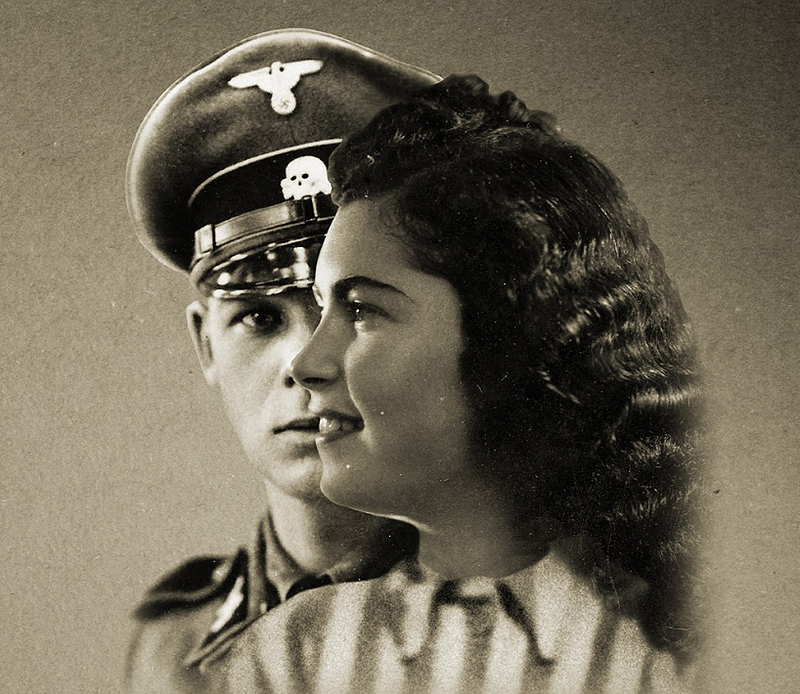
During World War II, Auschwitz emerged as a symbol of terror, despair, and the loss of humanity. It was here that the paths of a Jewish prisoner and an Austrian SS officer crossed. The story of Helena and Franz is an illustration of complex human interactions under extreme duress.
Their relationship, which unfolded within the confines of a concentration camp, presents a challenging narrative that defies simple categorization. It raises questions about coercion, survival, morality, and the human capacity for kindness in the face of abject cruelty.
Unlikely Beginnings
Helena Citronova was born in the small town of Humenné, Slovakia, on August 26, 1922.
She would later become a central figure in a story of survival and controversial relationships at Auschwitz. Before her deportation, Helena lived a normal life, immersed in the Jewish culture of her hometown.
The paths of Helena and Franz crossed under the most distressing circumstances. In March 1942, following the Slovak government’s agreement with Nazi Germany, Helena, along with other Slovak Jews, was deported to Auschwitz.
Helena arrived at Auschwitz as part of the first mass transport of Slovak Jewish girls and young women, initially misled by promises of work abroad. She was assigned to the Kanada warehouses, where she sorted through the belongings of those who had been murdered upon their arrival at the camp.
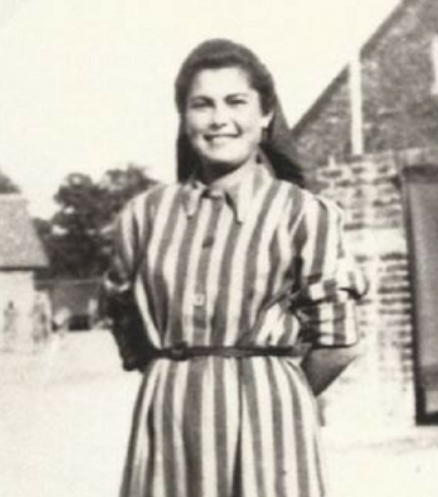

This was part of a larger tragic movement where around 58,000 Slovak Jews were forcibly taken to concentration camps. Upon arrival, the realities of the camp were brutal and immediate. Helena, assigned to laborious tasks, faced the constant threat of death and dehumanization.
Franz Wunsch, serving as an SS guard, represented the oppressive regime responsible for the atrocities committed within the camp. His initial role was overseeing the inmates, including Helena, in their daily torment. The SS guards were trained to show no mercy, treating the prisoners as less than human.
Helena and Franz’s acquaintance began in an unspeakable horror setting, where the balance of power was overwhelmingly in Franz’s hands. This dynamic would later shape the complex nature of their relationship.
A Forbidden Relationship
Their relationship began unexpectedly when Helena was ordered to sing at a birthday celebration for one of the guards in September 1942. She decided to sing, Liebe war es nie (It was never love), which caught the attention of Franz Wunsch.
Moved by her performance, Wunsch began to show her kindness, distinct from the treatment prisoners typically received from SS personnel. In secret, he sent her love letters and presents. He also used his influence as an SS officer to protect her from the harshest punishments typical of the camp.
Although Helena initially resented him, she soon found herself returning his affections. As a Jewish inmate, Helena’s daily life was filled with threats and the constant shadow of death. Franz’s attention toward Helena provided her with a slight but significant margin of survival.
In a significant act of compassion, when Helena’s sister Róza and her family were brought to Auschwitz, Helena managed to send a secret letter to Wunsch pleading for their lives. In response to Helena’s plea, Wunsch was able to save Róza, although tragically not her children.
The dynamics of their relationship were fraught with moral and ethical dilemmas. For Helena, reciprocating Wunsch’s affections was a strategy for survival. Her actions, driven by the primal need to live, led to benefits such as better working conditions and access to food.
Life Beyond the Camp
After the horrors of Auschwitz, Helena Citronova and Franz Wunsch faced very different futures. With the war’s end and Auschwitz overrun by the Soviet Red Army on January 27, 1945, Helena, like many survivors, sought to rebuild her shattered life.
She returned to Slovakia only to find that her family and the life she once knew were irrevocably gone. In July 1945, amidst the rubble of post-war Europe, Helena and her surviving sister emigrated to Mandatory Palestine, later known as Israel. There, Helena married and changed her name to Zipporah Tahori, distancing herself from the memories of her past life and the shadow of Auschwitz.
Franz Wunsch, on the other hand, returned to Austria, facing the consequences of his actions as an SS officer. Despite his efforts to reconnect with Helena, including attempts tracked through the Red Cross International Tracing Service, she firmly refused all contact.
Wunsch married and started his own family, but his past did not stop chasing him. In 1972, the Austrian government charged him with war crimes, and once again, Helena’s name resurfaced in connection with his life.
The Trial
The 1972 trial of Franz Wunsch in Vienna marked an important moment in the post-war reckoning with Nazi crimes. Charged with atrocities committed during his time as an SS officer at Auschwitz, Wunsch’s past actions were brought to light.
Helena, now living in Israel, was approached by Wunsch’s wife, who pleaded with her to testify on his behalf. Faced with a daunting moral dilemma, Helena agreed to return to Vienna, stepping back into a chapter of her life she had struggled to leave behind.
In the courtroom, Helena recounted her experiences at Auschwitz, describing how Wunsch had shown her kindness in a world filled with unimaginable cruelty. She highlighted instances where Wunsch had used his position to shield her from harm and even saved her sister from execution. However, Helena also acknowledged the broader context of Wunsch’s actions, including his role within the SS and the systemic atrocities committed against her fellow prisoners.
Her testimony delineated between the personal kindness she received and the undeniable cruelty that was part and parcel of Wunsch’s duties as an SS officer. Her words painted a picture of a man capable of individual acts of kindness yet implicated in widespread brutality.
The trial’s outcome was controversial. Despite significant evidence and Helena’s emotional testimony, Wunsch was acquitted. This decision was influenced by legal technicalities, including the statute of limitations on war crimes that were applicable at the time.
The court’s decision was met with mixed reactions, reflecting the deep divisions and unresolved traumas of the Holocaust’s legacy. For Helena, the trial was a traumatization, forcing her to relive painful memories and confront the man who symbolized her darkest days.
The acquittal highlighted the complexities and challenges of post-war justice, particularly in cases involving personal relationships amidst widespread atrocities. It sparked discussions and debates on the adequacy of legal systems to address the horrors of the Holocaust and the moral dilemmas faced by survivors.
Legacy of a Controversial Bond
The relationship between Helena Citronova and Franz Wunsch has transcended its historical confines to prompt broader discussions on the nature of humanity, survival, and memory. Their story continues to challenge and inform our understanding of the darkest period in history.
The legacy of Helena and Franz’s relationship affected their personal lives, contributing to the collective memory of the Holocaust. It raises questions about the boundaries of human relationships under extreme circumstances and the capacity for individuals to exhibit kindness and cruelty in equal measures.
One of the first major portrayals of their relationship was in the BBC documentary series Auschwitz: The Nazis and ‘The Final Solution.’ This series explores the horrific details of the Auschwitz concentration camp, including Helena Citronova. Through interviews and historical research, the series paints a broader picture of life within the camp.
Helena’s tragic love story also inspired the creative work of Thai composer S.P. Somtow, who composed the opera Helena Citrónová. Utilizing the narrative from the documentary, Somtow crafted a musical piece that seeks to capture the emotional depth and complexity of Helena’s experiences. This opera premiered in Bangkok at Opera Siam in January 2020, demonstrating the wide-reaching influence of her story, which has transcended cultural and geographical boundaries.
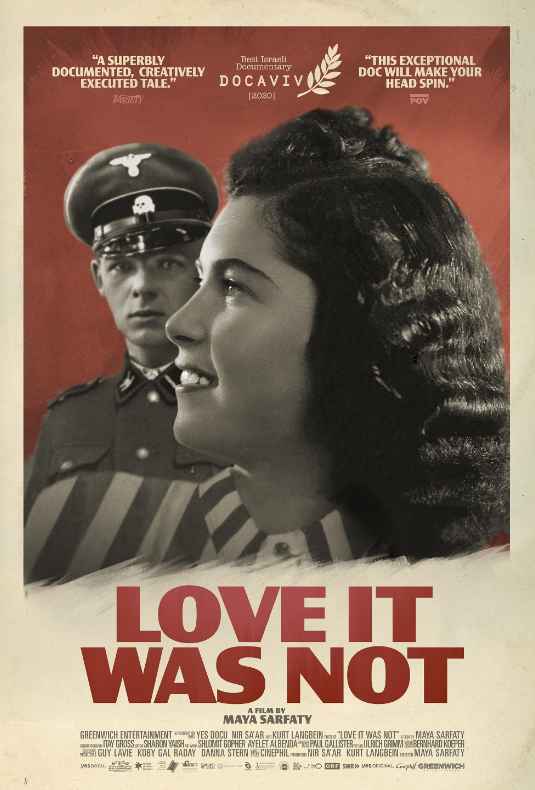
Furthermore, the Israeli documentary Love It Was Not, directed by Maya Sarfaty, provides a detailed and intimate portrayal of the relationship between Helena and Franz. This film, recognized for its nuanced approach, explores the moral intricacies and survival strategies under the dire circumstances of Auschwitz.
Love It Was Not offers a critical examination of the relationship’s impact on both the individuals involved and those around them. The documentary received critical acclaim and was nominated for an Ophir Award for Best Documentary in Israel, illustrating its significance and the compelling nature of Helena and Franz’s story.
Moreover, the story of Helena and Franz has become a part of the dialogue in understanding how trauma and memory shape identities and legacies. For survivors like Helena, the act of remembering and testifying is intertwined with personal healing and public history-making. Their experiences provide valuable insights into the mechanisms of survival, the ethics of memory, and the ongoing impact of the Holocaust on individual and collective levels.