avatarVic Womersley

Free AI web copilot to create summaries, insights and extended knowledge, download it at here

3382

Abstract

rup/">Wellness Mama</a>, is similar to the one I use and my kids LOVE it. Each winter they regularly ask for their ‘medicine’ and they haven’t had colds or flu since I’ve been making it for them.</p><h2 id="f632">Wild Roses</h2><p id="9e9f">Wild roses are a lovely sight in the hedges over summer. Not only do they look gorgeous, they often smell divine too. Rose petals can be used for salads, sweet dishes, and stir-fries. For me, it’s the rosehips that are left after the flower has passed that are the best part.</p><figure id="affc"><img src="https://cdn-images-1.readmedium.com/v2/resize:fit:800/1*wwuhF9DEX0ekpi1w35izLw.jpeg"><figcaption>Wild roses — Photo by <a href="https://unsplash.com/@kmitchhodge?utm_source=unsplash&amp;utm_medium=referral&amp;utm_content=creditCopyText">K. Mitch Hodge</a> on <a href="https://unsplash.com/s/photos/wild-roses?utm_source=unsplash&amp;utm_medium=referral&amp;utm_content=creditCopyText">Unsplash</a></figcaption></figure><p id="82cb">Rosehips sit like red gems amongst the greenery of hedges. Bright red or orange and shiny, they are easy to spot. Not quite as easy to pick. Take a pair of scissors if you’re looking for ‘hips, it’ll make your quest faster and easier.</p><figure id="8c7a"><img src="https://cdn-images-1.readmedium.com/v2/resize:fit:800/1*b9_Vw_WXZV3pI563TDYzfw.jpeg"><figcaption>Rose hips-Photo by <a href="https://unsplash.com/@smil_e_s?utm_source=unsplash&amp;utm_medium=referral&amp;utm_content=creditCopyText">e s</a> on <a href="https://unsplash.com/s/photos/rose-hips?utm_source=unsplash&amp;utm_medium=referral&amp;utm_content=creditCopyText">Unsplash</a></figcaption></figure><p id="4725">Rosehips are high in vitamin C and iron. They can be consumed to <a href="https://www.rxlist.com/consumer_rose_hips_rosa_canina/drugs-condition.htm">protect joints</a>, facilitate our metabolism of fats, and boost our immune system. One small study also found standardised rosehip powder was good for <a href="https://www.ncbi.nlm.nih.gov/pmc/articles/PMC4655903/">smoothing out wrinkles</a> in the skin. Pick ‘hips when they’re a bright fire-engine red — this shows they are at their peak for flavour and vitamin content.</p><p id="7ae7">You can consume rosehips as tea, or make a tasty syrup to put on your porridge over the winter months. You can either dry or freeze the ‘hips to use through winter to brew tea. The tea is slightly sour, but delicious with a teaspoon of honey.</p><p id="8651">To make tea, simply boil some water and fill your teapot with it. Throw in about five small to medium hips (fewer if they are larger) and leave to brew over low heat for around 10 minutes — longer if you are using frozen ‘hips. Once done, let it sit for another five minutes then pour. Rosehip tea is a lovely drink for a cold day, or drunk as a cold tea through summer.</p><h2 id="fce1">Hawthorn</h2><p id="bd25">The hawthorn tree was once thought to be the home of fairies and a gateway to the world of fae. Peril awaited for anyone brave enough to cut a hawthorn down. They’re often found in England’s hedges and Hawthorn is one of the trees that have both edible leaves and berries. In spring the new leaves can be used in salads and later in the season the leaves and flowers can be used to <a href="http://wildfoodsandmedicines.com/hawthorn/#:~:text=Preparation%20and%20Dosage%3A&amp;text=It%20can%20be%20taken%20as,t

Options

incture%2C%20cordial%2C%20or%20capsules.&text=Hawthorn%20Tea%20%E2%80%93%20Steep%20leaves%20and,their%20medicine%20including%20Vitamin%20C.">make tea</a>.</p><figure id="dafb"><img src="https://cdn-images-1.readmedium.com/v2/resize:fit:800/1*yb7CKtLO5H7mtg-dfXfvhw.jpeg"><figcaption>Hawthorn tree with leaves — Photo by <a href="https://unsplash.com/@ao__space?utm_source=unsplash&amp;utm_medium=referral&amp;utm_content=creditCopyText">Alexey O</a> on <a href="https://unsplash.com/s/photos/hawthorn?utm_source=unsplash&amp;utm_medium=referral&amp;utm_content=creditCopyText">Unsplash</a></figcaption></figure><p id="e7cc">In autumn, you’ll find tiny red ‘berries’ which to my mind look more like tiny rose hips. It’s best to pick them after the first frost as they’ll be juicier and sweeter. Hawthorn and the berries they produce are often called ‘nutrition for the heart’. Their flavonoids are high with heart-friendly antioxidants and they contain tannins along with high levels of vitamin C and B. The <a href="https://www.hindawi.com/journals/ecam/2011/801272/">triterpenic acid</a> they contain is good for lowering cholesterol levels naturally.</p><p id="3229">There’re a few things you can use the berries for. Haw berry syrup is a good cold preventative remedy and simple to make. The Practical Herbalist has <a href="https://www.thepracticalherbalist.com/healthy-recipes/hawthorn-syrup-recipe/#:~:text=%20Ingredients%20%201%201%2F2%20cup%20Hawthorn%20berries,tincture%20%28ginger%20tincture%20may%20be%20substituted%29%20More%20">a good recipe</a> you can follow.</p><p id="a5df">In India, haw berries are prized for using with brandy. I tried making <a href="https://www.omvedgardens.com/hawberry-brandy-2/">this</a> last year with great success! It’s a delicious Christmassy tipple that you can delight your friends with as a homemade gift or for a festive celebration.</p><figure id="a62a"><img src="https://cdn-images-1.readmedium.com/v2/resize:fit:800/1*2YLnieQmoHvgtoLfKuWCHw.jpeg"><figcaption>Bare hawthorn tree — Photo by <a href="https://unsplash.com/@glatz0?utm_source=unsplash&amp;utm_medium=referral&amp;utm_content=creditCopyText">László Glatz</a> on <a href="https://unsplash.com/s/photos/hawthorn?utm_source=unsplash&amp;utm_medium=referral&amp;utm_content=creditCopyText">Unsplash</a></figcaption></figure><h2 id="209d">A word of warning</h2><p id="2b76">All of the plants described above are generally safe to eat when prepared and can be wonderful for supporting your health through winter. However, some people may be allergic to some of the substances found in them. Some medications don’t mix well with the preparations either. You can check for cautions about <a href="https://www.eatweeds.co.uk/hawthorn-crataegus-monogyna#Cautions">hawthorn here</a>, rose hips <a href="https://www.versusarthritis.org/about-arthritis/complementary-and-alternative-treatments/types-of-complementary-treatments/rosehip/?gclid=EAIaIQobChMIzpriot_66wIV1entCh0h6wT5EAAYASAAEgLBufD_BwE">here</a>, and elderberries <a href="https://www.webmd.com/vitamins/ai/ingredientmono-434/elderberry">here</a>.</p><p id="c2aa">Foraging is a great way to connect with the environment around you. Pick carefully and remember that wildlife depends on these for a meal too. Learning about the native plants in your area can boost your physical and mental health.</p></article></body>

Foraging to Prepare for Winter

This is my favourite time of year. Autumn seems to be the season when so much of nature’s bounty is harvestable. It’s also the time when plants make their final push, before their sleep over the dark winter months. Their display of russets, reds, oranges, and golds make the country lanes a delight to wander. If you enjoy a country walk, picking berries as you go can make it even more satisfying. Try foraging some of what nature has grown over the summer to prepare for the winter.

The UK has a wonderful array of native plants that are perfectly suited to use in winter tonics. All of the plants described below are easy to find. Many can be found in America too. When prepared correctly, they can boost your immune system or fight off common winter ailments. Elderberries, rosehips, and haws are some of the plants I look to for keeping me and my family healthy through winter.

Elder

The Elder tree has a long, rich history in the British Isles. Long associated with witches, some folk tales proclaim the elder and witches are one and the same. The tree is not often found in hedges, for this very reason. However, you’ll find it in most parts of the UK, sitting quietly beside the hazel, minding its own business in woodland, or sitting solitary at the edge of a public footpath or bridleway.
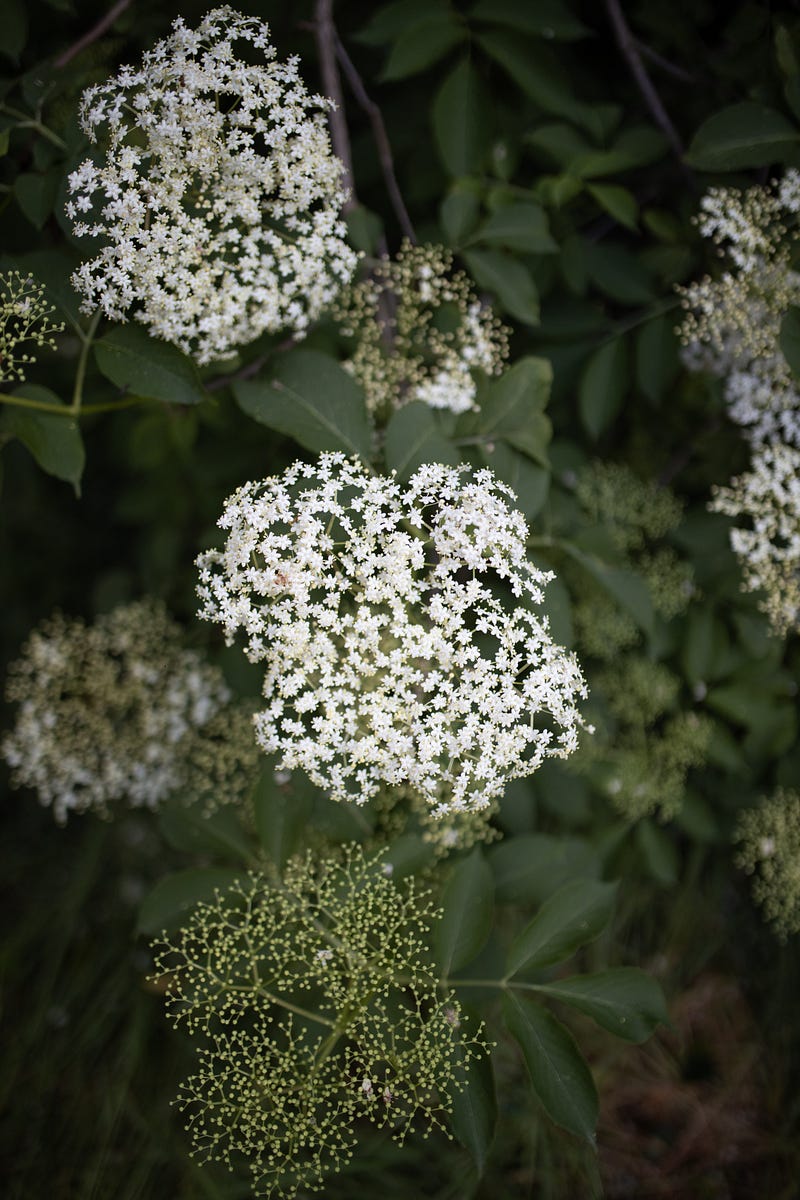
Elderflower image — Photo by Corina Rainer on Unsplash

In summer, the fragrant flowers can be picked to make elderflower cordial, champagne or lemonade. These are both delicious and good for your health. I like to be careful with the harvesting of the flowers as it’s the berries I prize the most.

Elderberries can make an excellent tonic that can prevent colds and flu. They can also decrease the length of sickness if you do contract a flu virus. Multiple studies have shown that elderberries have antiviral properties. One study found the flavonoids bind to H1N1 virions and inhibit their ability to enter our cells, thus multiplying and make us ill. What’s more, elderberry syrup is delicious, so you won’t have any trouble taking it or getting your kids to take a daily dose.
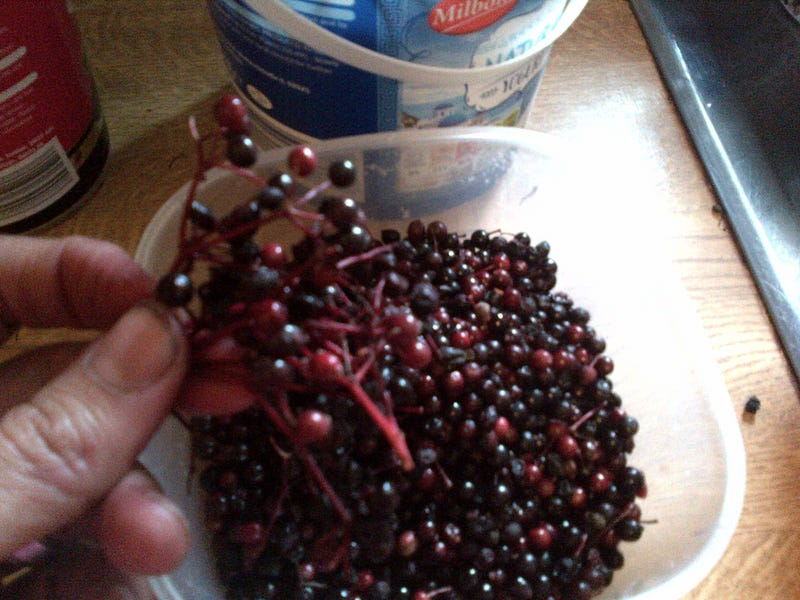
Foraged Elderberries — Authors own picture

Start by collecting elderberries when they are a deep purply-black colour. This time of year is perfect. Be careful not to get the juice on your clothes as it will stain. Don’t eat them while foraging either as without cooking, elderberries can make you ill. Once collected, de-stalk and rinse well. There is a multitude of elderberry syrup recipes available. This one, by Wellness Mama, is similar to the one I use and my kids LOVE it. Each winter they regularly ask for their ‘medicine’ and they haven’t had colds or flu since I’ve been making it for them.

Wild Roses

Wild roses are a lovely sight in the hedges over summer. Not only do they look gorgeous, they often smell divine too. Rose petals can be used for salads, sweet dishes, and stir-fries. For me, it’s the rosehips that are left after the flower has passed that are the best part.
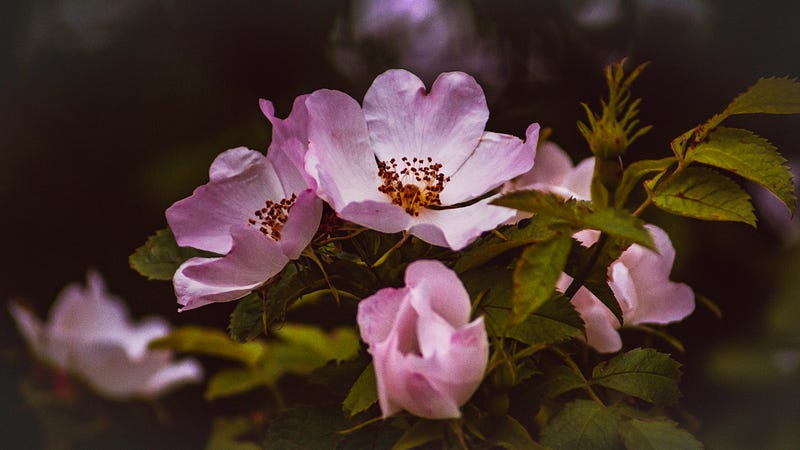
Wild roses — Photo by K. Mitch Hodge on Unsplash

Rosehips sit like red gems amongst the greenery of hedges. Bright red or orange and shiny, they are easy to spot. Not quite as easy to pick. Take a pair of scissors if you’re looking for ‘hips, it’ll make your quest faster and easier.
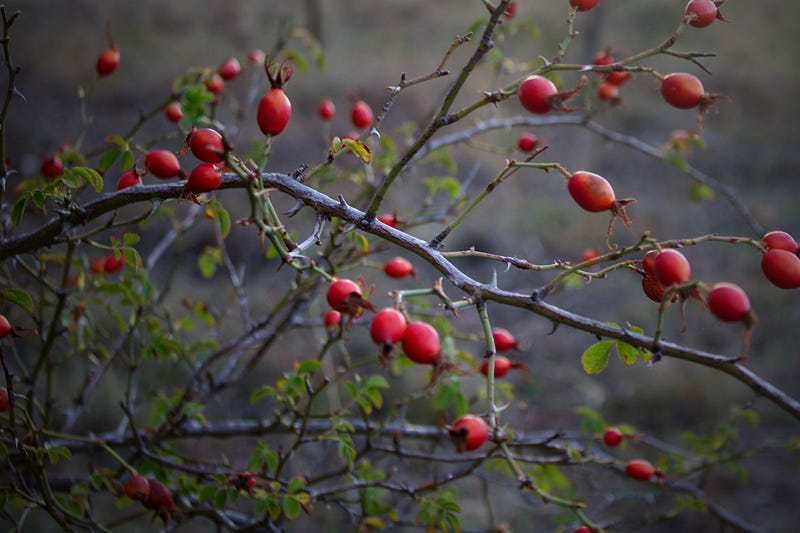
Rose hips-Photo by e s on Unsplash

Rosehips are high in vitamin C and iron. They can be consumed to protect joints, facilitate our metabolism of fats, and boost our immune system. One small study also found standardised rosehip powder was good for smoothing out wrinkles in the skin. Pick ‘hips when they’re a bright fire-engine red — this shows they are at their peak for flavour and vitamin content.

You can consume rosehips as tea, or make a tasty syrup to put on your porridge over the winter months. You can either dry or freeze the ‘hips to use through winter to brew tea. The tea is slightly sour, but delicious with a teaspoon of honey.

To make tea, simply boil some water and fill your teapot with it. Throw in about five small to medium hips (fewer if they are larger) and leave to brew over low heat for around 10 minutes — longer if you are using frozen ‘hips. Once done, let it sit for another five minutes then pour. Rosehip tea is a lovely drink for a cold day, or drunk as a cold tea through summer.

Hawthorn

The hawthorn tree was once thought to be the home of fairies and a gateway to the world of fae. Peril awaited for anyone brave enough to cut a hawthorn down. They’re often found in England’s hedges and Hawthorn is one of the trees that have both edible leaves and berries. In spring the new leaves can be used in salads and later in the season the leaves and flowers can be used to make tea.
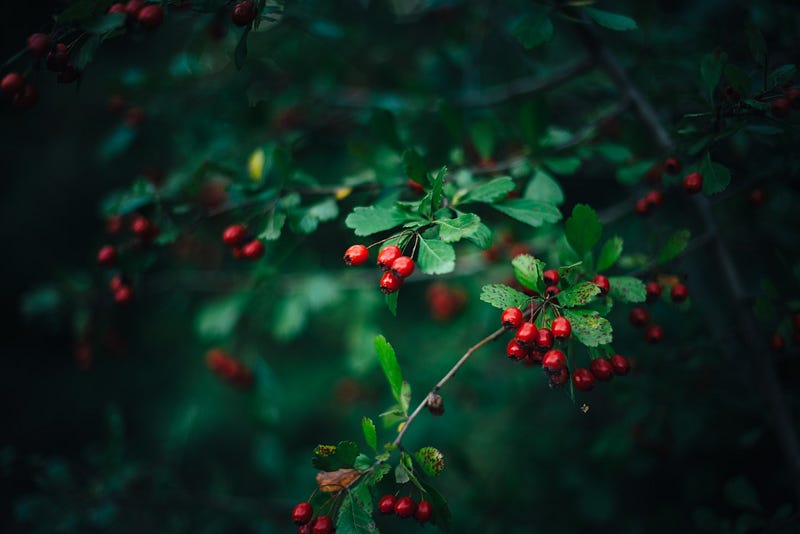
Hawthorn tree with leaves — Photo by Alexey O on Unsplash

In autumn, you’ll find tiny red ‘berries’ which to my mind look more like tiny rose hips. It’s best to pick them after the first frost as they’ll be juicier and sweeter. Hawthorn and the berries they produce are often called ‘nutrition for the heart’. Their flavonoids are high with heart-friendly antioxidants and they contain tannins along with high levels of vitamin C and B. The triterpenic acid they contain is good for lowering cholesterol levels naturally.

There’re a few things you can use the berries for. Haw berry syrup is a good cold preventative remedy and simple to make. The Practical Herbalist has a good recipe you can follow.

In India, haw berries are prized for using with brandy. I tried making this last year with great success! It’s a delicious Christmassy tipple that you can delight your friends with as a homemade gift or for a festive celebration.
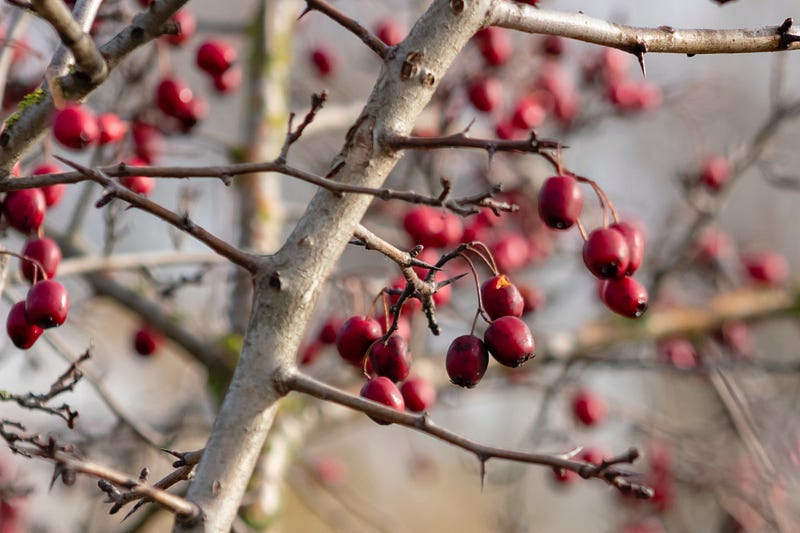
Bare hawthorn tree — Photo by László Glatz on Unsplash

A word of warning

All of the plants described above are generally safe to eat when prepared and can be wonderful for supporting your health through winter. However, some people may be allergic to some of the substances found in them. Some medications don’t mix well with the preparations either. You can check for cautions about hawthorn here, rose hips here, and elderberries here.

Foraging is a great way to connect with the environment around you. Pick carefully and remember that wildlife depends on these for a meal too. Learning about the native plants in your area can boost your physical and mental health.

Wild Foods
Nature
Outdoors
Health
Healthy Lifestyle
Recommended from ReadMedium