For Writing That Leaves An Indelible Image Take A Tip From Charles Dickens
Dickens used what was already inside his readers’ heads to keep them enthralled. Not only can we emulate him, we have a 21st century toolbox to pick from.
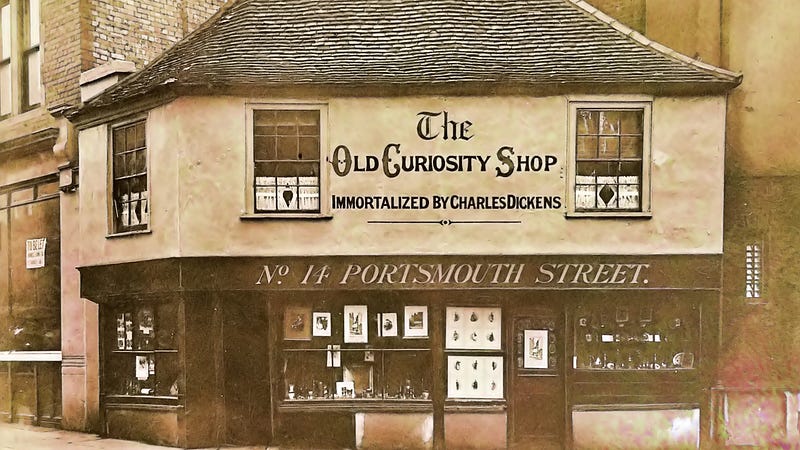
Charles Dickens was a master of drama and suspense. He kept his readers at the edge of their seats for episode after episode of his great classics. Whether or not you love his work, there is no denying the wide appeal of his books, and that his readership thirsted for every new instalment. There are lessons for us from Dickens’ success, and as 21st century writers, we have access to a modern toolkit to help us strive towards his level of skill.
Creating Tension and Drama Then and Now
Dickens’ readers were as gripped by his serialized novels as the fans of any modern soap opera, but his 19th century audience was accustomed to visual entertainment from a theatre setting — an audience watching a play. That was the audience he wrote for and you can see it in the techniques he uses.
Modern readers can reach out to all corners of the globe at the click of a mouse. Television and film are accepted parts of life. Immersion in virtual reality can pull readers into a story in ways beyond the imaginings of Dickens’ 19th century audience. The people we write for have expectations far beyond the static viewpoint of sitting in front of a stage. As 21st century writers, we can tap into that shared cultural experience.
Think about how a film is put together. Careful camera work shows the story from many perspectives. The camera’s angle can hide sections of the ‘stage’ from the audience. A tight close-up can show only what one character can see. A camera can lead a viewer into a scene, panning across a landscape or around a room, dictating the order in which different aspects become visible.
Consider this generic opening sequence: a wide shot shows a sunlit suburban street. The camera zooms in to follow a lone woman, overladen with shopping bags, struggling with the key to her front door. We can sense she’s late though we don’t know why. The camera closes in as she enters the house. We see slamming cupboard doors, her fingers turning knobs on a cooker, grabbing utensils. We feel her rush to get things done, and all we can see is the minutiae of what she is concentrating on.
Behind her actions, there’s a soundtrack. Its changing pace implies something beyond what we can see. We know — both from the background music and from our inbuilt expectations of film — that while we’re watching her wrestle with mundane tasks, something sinister is building in the background and something nasty is about to happen.
Done well, these techniques grip the viewer before a word has been spoken. We can use the same techniques in our writing.
Music has accompanied entertainment for a long time, but the use of the camera is relatively new, and the following examples show camera techniques translated into words.
Using these techniques in your writing means tapping into the cultural experience of film that you share with your readers, and it can do wonders for your prose.
Comparing Prose Techniques: from Bleak House to Bleak Water
The following extract is from Dickens’ Bleak House (first published 1852):
Sir Leicester is fidgety down at Chesney Wold, with no better company than the goat; he complains to Mrs Rouncewell that the rain makes such monotonous pattering on the terrace that he can’t read the paper even by the fireside in his own snug dressing-room.
“Sir Leicester would have done better to try the other side of the house, my dear,” says Mrs Rouncewell to Rosa. “His dressing-room is on my Lady’s side. And in all these years I never heard the step upon the Ghost’s Walk more distinct than it is tonight!”
In the context of the novel, Dickens generates a real sense of foreboding in this scene. Use of the present tense gives immediacy, and reference to hearing the step implies something sinister. Earlier in the book, the reader has been alerted to the significance of footsteps on the Ghost’s Walk.
However, there is no sense of a camera. The prose is descriptive. The readers are the audience watching the stage.
To compare how a 21st century novelist can tap into the power of camera technique, look at the following extract from Bleak Water by Danuta Reah (first published 2011). The context is that Eliza’s friend has died, and it has fallen to Eliza to clear her friend’s flat. After some hard and distressing work, she falls asleep. Then something wakes her.
But she could feel the chill drifting down from the small kitchen. She felt her way along the corridor and into the off-shot. The cold was intense. Her eyes were becoming accustomed to the darkness now, and she could see a lighter rectangle that was the open door. It was a second before her mind took it in.
The open door. The back door was open.
In the first paragraph, the ‘camera’ steps us through the scene showing us what Eliza sees in the order in which she sees it. In the second paragraph, the ‘camera’ zooms in for a close-up on the anomaly. Instead of seeing the open door immediately, as the audience would if watching the scene play out on a stage, the reader sees it only as it appears to Eliza.
Using Zoom to Control Viewpoint
A long shot can be compared to omniscient viewpoint, showing a wider view than any one character can see. Moving the camera in to focus on one character moves the prose either into their viewpoint or into the viewpoint of someone who is watching them. The closer the camera is behind the eyes of a character, the closer the viewpoint becomes.
If you have written a scene that feels flat where it should crackle with tension, it is worth analysing your camera angles. I follow my camera operator. Is she filming from the shoulder of one character? How closely? Does she leap from one character’s shoulder to another, and then clamber on to a roof for a wide-angled view? If your camera operator is harassed and confused, you can be sure your readers will be too.
Make Use of Your Modern Readership
Had Dickens used modern camera and film techniques — and I don’t doubt he had the imagination to have thought of it — his readership might have been perplexed more than gripped; they had no familiarity with the concepts. But the modern audience is fluent in these effects and the 21st century writer should take full advantage.


