
For Life’s Sake! Live!
What two thousand years of teachings got wrong about how to live.
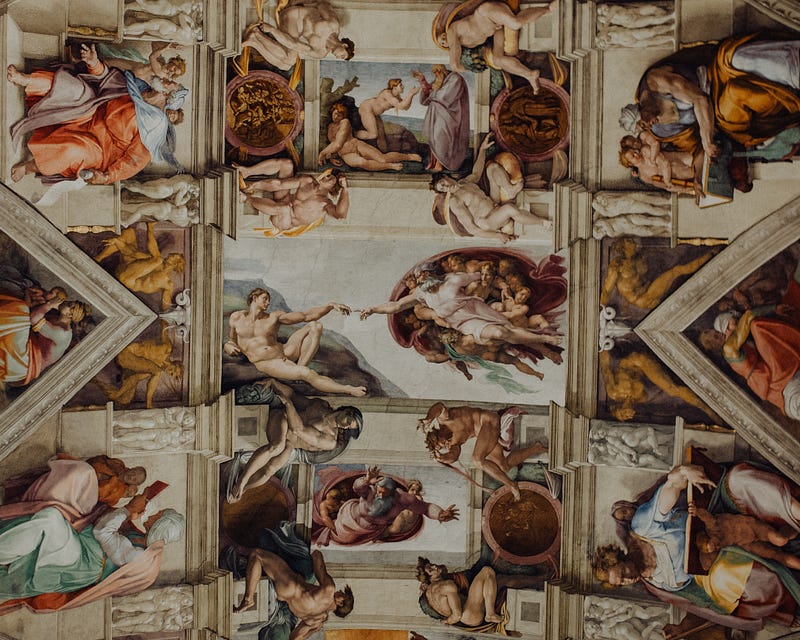
The Weight of Pending Judgment
I was in the seventh grade. It was the middle of the day. We were knee-deep in the facts of life’s unmentionables, guided by the perspectives of a Franciscan Sister and an extracurricular Christian publication.
Sister Lisa continued her lecture.
“The abortion of a child would be an irrecoverable error. It is a beating heart. To intentionally stop a beating heart would be murder, wouldn’t it?”
A hand raised.
“What about in cases of rape?”
“Oh, dear, rape is something so aggressive and violent that it would rarely result in the conception of a child.”
The class remained silent in agreement or cooperation. One could never tell.
Sister Lisa continued, reminding us of the eternal consequences of murder:
“To stand before Saint Peter bearing the weight of mortal sin would be too unacceptable for admittance to heaven.”
Admittedly, what struck me about our discussion that day was relatively inconsequential. I knew my classmate raised her question out of objection, not curiosity, but I trusted Sister Lisa. I trusted she wouldn’t mislead me. So goes the story of the young and indoctrinated.
Less striking than the absurdity with which she assigned universal conditions to rape was her reinforcement of one of the faith’s longest-held pillars: that our actions on earth will directly affect the destiny of our eternal afterlife.
Pair that with another one of the longest-held beliefs about an all-knowing, all-seeing, all-powerful, supernatural Being, and you’ve enough Old Testament fright for anyone. Never mind a pre-teen.
To believe in a philosophy of living that reduces itself to a behavior because someone is watching, or fear of punishment, isn’t just socially inauthentic; it’s morally unsound.
That doesn’t seem right to me.
“If people are good only because they fear punishment, and hope for reward, then we are a sorry lot indeed.” Albert Einstein
A Moral Philosophy for the Ages
Teachings on how to live have been the cornerstone of religious and moral enlightenment for thousands of years. Aside from the Roman Catholic perspective illustrated above, we see evidence of the same fear-induced beliefs in the world’s oldest living religious traditions.
Hindus and Buddhists share perspectives on the philosophy of karma. Belief in karma means believing actions with good intent will produce an equally beneficial effect, and harmful intent produces similarly negative effects.
The accumulation of karma determines the circumstances of one’s afterlife or rebirth. A similar account exists in Jainism, where how you live influences the conditions of your reincarnation.
Early Islamic debates concluded that despite God’s omniscience, and its presumable constraints on the idea of free will, He gave us free will to test our own judgment before the time comes to stand before His.
The jury is still out in Judaism concerning the soul following death because it’s not a topic traditionally discussed. Yet, Rabbinic scholars posit that after the twelve months following death, the righteous move on to Gan Eden, and the wicked Geihinnom.
The common theme among traditions concerned with hopes of an afterlife is a moral philosophy rooted in self-interest. Though we are primarily motivated by self-interest, wouldn’t it be disingenuous to allow it to govern our ethics too?
I wouldn’t want my son to clean up a mess because he knew I was watching him or because he feared punishment. I’d prefer he did it because it’s the right thing to do; because being responsible for your actions does good for its own sake, not because there exists a possibility of reward or punishment.
One Jewish scholar argues that because of how little the Torah discusses the afterlife, Judaism split from other traditions because of the way ideas of it would mis-align behavior. Such is the example of Spanish Inquisitors who believed the best way to ensure salvation was to torture people into accepting Christ.
If the goal is to lead us toward true salvation, why would they motivate their congregation to behave based on a fear of judgment? Is our entire existence just an interview for the afterlife? By Zeus, is anyone an authentic version of themselves during an interview?
Of course, who am I to claim what God wants from us, but I can’t help but wonder: Would He want us to clean up a mess because we fear His punishment?
Living for its own sake
People don’t want to live their lives looking over their transcendental shoulders. As the years pass by the hundreds, traditions and their pious have evolved. The days of ruling by fear are all but gone. Mostly, they’ve taken their foot off the gas of teaching a faith-based on fear — unless you spent the last twenty-five years as an Evangelical.
I don’t believe people are good because they are motivated by reward or punishment. Some are, but I think most people prefer to live in an environment of collective well-being. These are people who understand and seek the benefits of living a peaceful co-existence.
Anyone motivated to do what’s right for its own sake disregards concern for its consequences. The benefits that follow good, moral behavior are just the cherries on top. But to buy the cake only for the sake of its cherries would be a diet undermining our moral authenticity.
We wouldn’t accuse anyone motivated to live well for the sake of itself of being disingenuous. I’d argue God wouldn’t either.