Summary
The text reflects on the nature of perception and beauty, contrasting societal judgments with the inherent worth and sanctity of individuals.
Abstract
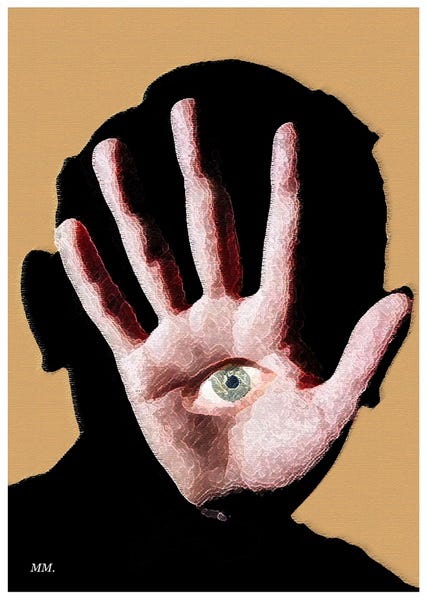
The article titled "FOR EVERY EYLET AN EYE" delves into the subjective nature of beauty and societal norms. It opens with a personal reflection on the concept of sainthood, suggesting a lack of understanding or attainment of such a state. The narrative then shifts to the theme of physical appearance, highlighting how society often labels those who deviate from conventional beauty standards as "ugly" or "cursed." The text implies that such labels are superficial, akin to a "blind guess." The author uses vivid imagery, such as a spider's web and morgue slabs, to illustrate how these perceptions can entrap and obscure the true essence of individuals. Despite this, the piece acknowledges the existence of beauty in diversity, emphasizing that there are "beautiful creatures around the earth" whose presence illuminates the darkness. The text concludes with an affirmation that, contrary to negative judgments, there is a place for everyone, and for every aspect of difference, there is a corresponding depth of beauty and value.
Opinions
- The author challenges the conventional standards of beauty, implying that they are arbitrary and often hurtful.
- There is a critique of how society labels and marginalizes those who are different, particularly in terms of physical appearance.
- The text suggests that beauty is not just skin-deep; it is found in the acceptance and celebration of diversity.
- The author seems to advocate for a more inclusive definition of beauty that transcends physical attributes and embraces the unique qualities of every individual.
- The piece conveys a sense of hope and resilience, affirming that despite societal judgments, there is a place where every person is seen as beautiful and valuable.