
What I learned from training for 2018 Olympic Trials
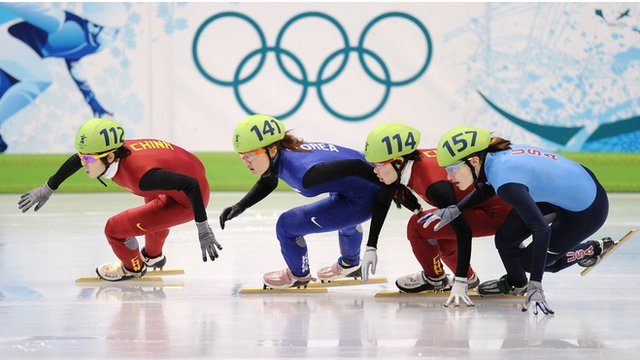
Sometimes quiet ascension is the best revenge, and discipline our best defense against daily injustice.
I started training in short track speed skating at age 11, inspired by the 2002 Winter Olympics — it was the first time in several Olympics that the U.S. had won any medals in short track, and American gold medalist Apolo Anton Ohno starred on every major television station.
I immediately fell in love with the sport, everything from leaning sideways at gravity-defying angles to clear each turn of the oval track, to the 16-inch long blades of steel attached to my skate boots, to the rough and tumble of jostling for position with other skaters…even down to the smell of ice and rush of cold air that hit my face whenever I swung open the heavy steel door to the ice.
A few months into the sport, I developed the peculiar talent of skating at 20+mph on a hockey rink sized track. This was surprising to everyone at the time, since as a frail, skinny and sick kid growing up, I was so obviously a loser in the genetic lottery for physical fitness and once fainted during a “warmup jog” during gym class in 5th grade.
When I was 13, I qualified for the 2004 U.S. Nationals Short Track Speedskating Championship. That was when I made it my goal to qualify for the Olympics. Whether it would be 2010, 2014, or 2018, I promised myself it would happen one day.
Why the Olympics?
There are many reasons that would go along with society’s expectations and fit in the narrative broadcasted in mainstream media. Something like, “Since I was young, I always knew I had a passion for the sport, so my parents sacrificed everything to realize my dream. I love them so much and although waking up early in the morning is hard, it’s great.”
My own reason for pursuing the Olympics are very different. It’s hard to talk about this to the people I know, and even harder to share in public. But now I want to share my story, for two reasons. First, I believe it’s important to be honest, even when it might make your life more difficult than going along with other people’s expectations of you. Second, it may empower other people with non-standard narratives to feel okay sharing their stories.
What was my reason for training?
Training helped me cope with years of physical and verbal abuse at home. It helped with shutting out pain from ruthless bullying and racial discrimination, along with managing the depression and suicidal thoughts that would not stop circling my mind. The daily act of pursuing the Olympic dream was an escape from the pain I experienced as a survivor of abuse and a minority growing up in America.
This is the 100% unfiltered story behind my journey in pursuing the Olympic dream, and what I learned from it all.
1. Pain Builds Resilience
When I was 4, my dad sat me at the piano for a music lesson. He talked about whole notes, half notes, and quarter notes. Then, he pointed at a note. “Which note is this?”, he asked. Like a typical 4 year old, I had spaced out. I said, “I don’t know.”
Out of nowhere, I felt a tight grip of his fingers on my ear, and him yelling, “WHOLE NOTE! IT’S A WHOLE NOTE!” I could feel his spit landing on my cheek. The next thing I know, the wind was knocked out of me, my head dizzy and disoriented from the force of the blow. My cheek was stinging. Tears well in my eyes.
“GO TO THE BATHROOM!” he yelled in Mandarin Chinese. I walk slowly in a stumbling gait to the bathroom. The door slams and I hear a click as it locks. I hear more yelling through the bathroom door. He says — in English to emphasize his point, “You are HOPELESS!!! JUST HOPELESS!!!!!”
That was a typical day at home growing up with my father. My mom, who was always gentle and forgiving, worked at a corporate office during the day. My dad would force me to practice piano or perform a tedious task for hours and hit me if I spoke my mind or refused to do what I was told.
Sometimes he would switch from cheerful to angry without warning. When he yelled, he would repeat his criticisms, not stopping until he was tired, or my mom came home from work and told him to stop.
I thought about calling Child Protection Services, but was too afraid he would find out before they could come and beat me even more. I discovered from a therapist years later that his behavior matches symptoms of Borderline Personality Disorder.
At practice, some kids complained about workouts being too challenging. To me, it felt like a fun break. I was never hit or yelled at, and was rewarded with encouragement and compliments when I put in my best effort. As it turned out, the pain at home had built my tolerance to challenges in training.
That’s NOT to mean that I advocate for child abuse, but rather, to look at the positive in every situation and keep an optimistic attitude to overcome pain and challenges.
2. Perfect Practice Makes Perfect Performance
If there was one positive thing about the way my dad raised me, it was that he taught me to hold myself to high standards.
At practice, I focused on perfecting my “base” skating position, which is a low squat. Some skaters would try to lessen the strain on their thighs by straightening their knees, and found themselves at a disadvantage when their bad habits would surface during a race. The best skaters always kept in the low base position, despite fatigue. Similarly, I wouldn’t let myself get away with poor technique, even on the last few laps when it’s tempting for most skaters to use improper form. As a result, I improved at speedskating at an ever slightly faster pace compared to the other skaters at my local club, which served to add up to a big difference by the end of each year I would train.
At my first skating club, a few weeks into practice, the coach told my dad that I had potential and should consider more regular practices to explore the possibility of competing in the sport.
We moved to a second club, which had more consistent practices. After training there throughout my 7th grade year in school, it became clear I had outgrown yet another local skating club. The coach said to my dad, “You should consider having your daughter train seriously for the sport. There’s an elite summer training program in Salt Lake City.”
The summer after 7th grade, a year and a half after I started skating, my dad and I moved from San Francisco Bay Area to a sparse suburb in Kearns, Utah, a 5-minute drive to the U.S. Olympic Oval. I was enrolled in the junior elite summer training program with daily supervision by U.S. World Team coaches.
When we started, I was the same speed as some skaters who had been practicing the sport for 4 or more years, and the regular training did well in improving my skating even more.
3. To Go from Good to Great, Find a Great Coach
At the turning point in my skating career, 6 months before I qualified for my first U.S. National Short Track Championships, one of the most helpful things my dad did was to find not just a good coach, but the best coach, one we could depend on to bring the Olympic dream into fruition.
For several weeks, my dad complained about the Olympic Oval coaches being specialized in long track, rather than short track, which was my sport. Then one day on the drive home from school, he told me we would be moving back across the country, this time to Long Beach, CA.
We moved to Orange County into the Cypress neighborhood, where I later met my coach, Wilma Boomstra, and many athletes who went on to become the best skaters of our generation: Jordan Malone, Eddy Alvarez, Jeff Simon, Kyle Uyehara, and briefly, JR Celski, who was 3x medalist at the 2014 Olympics Winter Games in Sochi. Many members of the U.S. World Team specifically moved to Los Angeles to train with our coach, who had previously trained the speedskating team in the Netherlands.
We trained every day, sometimes twice a day. The off-ice strength training regimen, or “dryland” exercises as we often called them, were nothing like I had ever seen back at home. Many of the training techniques were unheard of at other clubs, even according to some of the elite skaters hailing from the U.S. World Team. Every year at U.S. National Short Track Championships, we had at least one medalist, if not several. Coach Wilma’s quality training was so renowned that it was rumored that her training was better than that of the official U.S. Olympic team coaches.
In a matter of 6 months, I saw my race times for the 500 meters, 777 meters, and 1000 meters cut down to nationally competitive times. I qualified for U.S. Nationals for the first time in 2004.
4. The Best Revenge is Turning Sh*t into Success
When I moved away from the culturally diverse San Francisco Bay Area to Utah and then Los Angeles, I was treated differently than others.
In Utah, almost all of the kids in school were Caucasian. I found myself being ignored or teased. After school, sometimes my dad and I would eat at the McDonald’s close to our home. When we walked in, everyone turned their heads. The residents of Kearns, Utah had never seen Chinese people in their town. The rest of the town was a typical small American town — with African Americans mowing the lawns and Hispanic people mopping the floors. The kids at the Olympic Oval were nice to me in a polite way, but I never connected with them in the way they connected with each other. In school, nobody talked to me. I felt completely out of place.
In Long Beach, CA, despite a large Korean and Hispanic population, I still faced discrimination. Korean classmates would say to me, “You don’t really look Korean…what are you?”. Some would avoid me after I told them I was Chinese. The Caucasian and Hispanic kids didn’t talk to me.
In the skating rink, it was more challenging. One of the skaters, Cynthia, started picking on me. Cynthia would one moment pretend to be my friend, and another moment would pressure me into doing things for her, like pushing the heavy protective pads across the rink, to be collected at the end of our practice sessions, so she could get out of doing it. She would also whisper nasty rumors about me to other female skaters who were friendly to me, making it hard for me to make friends. Since I was accustomed to my father’s abuse at home, I had no idea her behavior was inappropriate and disrespectful, nor that I could have said something to make her stop. Having been trained into silence at home, I felt completely unequipped to defend myself or make friends in school, so all I could do was make peace with not having any friends, focus on training, and avoid Cynthia as much as possible. Looking back, I don’t know with certainty why she decided to pick on me, except that she had a particularly poor work ethic and would often slack off during practice, while I would never think to do such a thing. I believe we were simply different people with different outlooks.
To make matters worse, life at home was full of misguided criticisms and demands from my dad. At one point, he accused me of slacking off at skating practice, when I had actually been training my hardest. When I mentioned my concern about my social life, he said,
“You should be training, not making friends.”
When you get a bruise, you heal in a few days. When you are hurt emotionally, it can take years, decades, or even a lifetime to recover.
The discrimination at school, bullying at practice, and emotional assault at home all threatened to break me inside. I started entertaining suicidal thoughts. By the time I started high school, those thoughts turned into more serious plans of suicide.
In high school, the bullying continued, but in a more subtle way. It was never explicitly spoken, but you could feel it. If someone was mean, I would secretly slip a small piece of binder paper into their backpack that read, “Janet Chang — Olympics 2018”. It was my way of saying, “One day, I will be able to say FUCK YOU to you and your friends.” In retrospect, it was silly of me to do, but at the time, my feeling of not belonging anywhere strengthened my resolve to stand out and be remarkable.
5. If You Want No Regrets, Keep Going Until You Stop Asking “What If?”
In an unfortunate twist of fate, after less than a year of training in Long Beach, my dad lost a lot of money in the stock market. We could no longer afford training costs, and moved back home.
I was devastated, but wouldn’t give up hope, because that would mean falling prey to my suicidal thoughts. I took matters into my own hands. I went to every possible ice practice on weekends, joined the school track team, and made my own training plan that I would used in between school, track practice, and homework. I negotiated with my parents for a road bike to cross-train and used 5 different diets to fine-tune my nutrition. I didn’t know if I would succeed but I knew the only thing I could do to ensure I didn’t kill myself was to keep training and wait until I had another chance to train with the elite team in Los Angeles.
That time was 10 years after I left, when I was 25. Using books on career and business, I figured out a plan to create an arrangement at work that would allow me to have a good career but also flexibility for training and competing in different cities if I had to.
The first few attempts failed. Then I taught myself the most in-demand skills at internet companies. I successfully secured my first job as an intern for a veteran millionaire entrepreneur. I had no experience but worked for free and did such a good job he promoted me to manage a team and let me work from anywhere.
Once the work arrangement settled, I moved to LA. Coach Wilma immediately welcomed me back into her training program. I was slow at first, then hit a few personal bests halfway through the season. I started making travel plans for the upcoming U.S. National Championships. Everything was going according to plan.
Then the worst happened. I got injured in the gym while trying a new weightlifting technique. The back pain persisted for a week, and it turned out to be a serious injury to the tailbone, the sacro-illiac joint. After another two months of trying to recover while training at half-volume, I knew I wasn’t going to make the already ambitious timeline I had set for the upcoming Olympic trials. Even if I were to recover fully, I wouldn’t make Olympic Trials in time, and on the following Olympics I would be much older than most of the women on the team.
I was absolutely devastated, knowing that I was leaving behind a childhood dream I had dedicated myself to for most years of my life. I left the sport of short track speed skating having competed at the U.S. National Short Track Speedskating Championships in Cleveland, Ohio in 2004 and 2006, plus having earned first and second place finishes from the California State Championships in 2002, 2004, and 2014.
Reflections, Two Years Later
Although I’m disappointed that the injury took away my ability to compete in a sport I love, I feel no regret about having pursued my aspirations when I had the chance — when I was young and still early in my career, and could afford to fail without too much long-term impact. If I hadn’t pursued it, I think I would still be asking “What if?” all the time and feel angry at myself for not having the courage to leave my comfortable life at home to go for it.
On the other hand, the stress of training took a toll on my body. It took me a year to recover from the back injury, and even though I can function normally now, I don’t think I’ll ever be able to push my body to the same limits again as a result of the injury.
Emotionally, being away from competitive sports has allowed some wounds to heal from discrimination and abuse in my childhood. I’ve since realized a lot of my desire to pursue the Olympic dream and other ambitious goals in my teens and early 20’s came from a desire to feel loved and accepted by the people around me. Having realized that, I no longer rely on having a major life goal of incredible proportions to make me happy and fulfilled, but instead look to fill those gaps with spending quality time with people close to me.
Finally, I’m grateful I won’t be wondering “what if?” as I move forward into my career and life as an adult and am feeling optimistic about the exciting opportunities the future will bring. At the very least, I will have some entertaining stories to share with my future grandchildren.


