avatarSam Floyd

Free AI web copilot to create summaries, insights and extended knowledge, download it at here

6412

Abstract

art of many NFL fans, as those injuries are notoriously hard to come back from. But in a classic case of American exceptionalism, Rodgers believed and got others to believe that he would be the fastest human on the planet to return to the field.</p><p id="cdb8">In America, we tend to think we are unique and special — but often, we are simply ordinary or worse.</p><p id="2052">This meme strings together the symbolism of America and the disappointment of American exceptionalism nicely:</p> <figure id="3225"> <div> <div> <img class="ratio" src="http://placehold.it/16x9"> <iframe class="" src="https://cdn.embedly.com/widgets/media.html?type=text%2Fhtml&amp;key=a19fcc184b9711e1b4764040d3dc5c07&amp;schema=twitter&amp;url=https%3A//twitter.com/nfl_memes/status/1746666037943132607%3Fs%3D58%26t%3D5vV4Zr6CvGXavNaD-QXYlw&amp;image=" allowfullscreen="" frameborder="0" height="281" width="500"> </div> </div> </figure></iframe></div></div></figure><p id="8150">But enough about football for now. Let’s get back to business.</p><p id="4828">There are people out there who would have you believe that Diversity, Equity, and Inclusion (DEI) programs are “racist”. Some of these people are very accomplished <a href="https://www.bloomberg.com/news/articles/2024-01-13/bill-ackman-s-harvard-business-insider-feuds-bring-his-activism-to-culture-wars">billionaires</a> who spend a lot of time explaining on social media.</p><p id="cc8b">DEI programs are being <a href="https://fortune.com/2024/01/15/dei-backlash-fearless-fund-companies-changing-programs-avoid-wave-lawsuits-alleging-discrimination/">voluntarily shut down</a> by some companies, as companies who have made public commitments or internal policies that aim to level the playing field for minorities, women and LGBTQ — or like the below tweet, even simply aim to address cultural nuance — have been attacked on social media with boycott threats, with real political threats looming.</p><p id="8944">Two such examples are below:</p> <figure id="a375"> <div> <div> <img class="ratio" src="http://placehold.it/16x9"> <iframe class="" src="https://cdn.embedly.com/widgets/media.html?type=text%2Fhtml&amp;key=a19fcc184b9711e1b4764040d3dc5c07&amp;schema=twitter&amp;url=https%3A//twitter.com/wallstreetsilv/status/1745879792786800693%3Fs%3D58%26t%3D5vV4Zr6CvGXavNaD-QXYlw&amp;image=" allowfullscreen="" frameborder="0" height="281" width="500"> </div> </div> </figure></iframe></div></div></figure> <figure id="d839"> <div> <div> <img class="ratio" src="http://placehold.it/16x9"> <iframe class="" src="https://cdn.embedly.com/widgets/media.html?type=text%2Fhtml&amp;key=a19fcc184b9711e1b4764040d3dc5c07&amp;schema=twitter&amp;url=https%3A//twitter.com/elonmusk/status/1745158868676546609%3Fs%3D58%26t%3D5vV4Zr6CvGXavNaD-QXYlw&amp;image=" allowfullscreen="" frameborder="0" height="281" width="500"> </div> </div> </figure></iframe></div></div></figure><p id="ad20">The same people <a href="https://www.newsweek.com/charlie-kirk-flips-martin-luther-king-jr-attacks-growing-myth-1860839">attacking</a> MLK’s legacy and character this week, are the same people who are supportive of things such as <a href="https://www.reuters.com/legal/us-appeals-court-blocks-venture-capital-funds-grant-program-black-women-2023-09-30/">legal attacks</a> on the Fearless Fund’s equity grant program for Black women entrepreneurs.</p><p id="ca1c">They are trying to say that the Civil Rights Act of 1964, which bars discrimination on the basis of race, spawned a “permanent DEI-type bureaucracy”.</p><p id="959f">These are the same people who can’t admit that the root cause of the Civil War was slavery. People who also can’t seem to make the connection between the compounding economic impact of 246 years of chattel slavery to an increasing racial wealth gap today.</p><p id="b6c3">They don’t accept that this is basic American history. To them, there is a “woke mob” forcing mandatory race consciousness and racial “discrimination” against white people.</p><p id="8995">While I could go on and on about the real implications of America’s racial history and what they mean for the descendants of slavery, indigenous people, and immigrants of varying skin tones… it’s getting a little heavy again, so let’s go back to football 😅.</p><figure id="9f64"><img src="https://cdn-images-1.readmedium.com/v2/resize:fit:800/1*5l31kXUv4RGhi58PaLMuiA.jpeg"><figcaption></figcaption></figure><p id="7429">Race is a real thing that our society made up, and the quarterback position in football illustrates this illusion well. It takes a “bad” man to play quarterback in the NFL. You’ve got to be smart enough to recognize defenses, make adjustments at the line, know and execute every play, have chemistry and timing with all of your teammates, make decisions under pressure, and deliver the football on time to moving targets through moving windows. Aaron Rodgers is considered one of the GOATs because he possesses all of these traits and has consistently performed at the highest level.</p><p id="0574">For decades and even still today, there are folks out there who believe that Black people aren’t smart enough to play quarterback at the highest level.</p><p id="3cfe">In Rodgers’ last three years in Green Bay, a young Black QB named Jordan Love out of Utah State University, got to essentially intern under him — and in this story I think we can get a view of the root issue at hand.</p><p id="9d60">Jordan Love wasn’t highly touted out of college, but he was a first-round draft pick, selected number 26 overall in 2020. For comparison’s sake, Rodgers was the 24th pick in the 2005 draft — so they are relatively equal in starting talent. Love had displayed some combination of all of the above-mentioned tools in college, and earned a chance to learn from the best in Rodgers for three full seasons. The same learning timeline as Rodgers under Brett Favre.</p><p id="b407">This apprenticeship culminated in an excellent first year as a starter for Green Bay in 2023, and a Wildcard playoff victory this weekend on the road at Dallas. Jordan Love is becoming a star, and Green Bay

Options

fans are witnessing what can happen when a minority in this country earns an opportunity. He’s excelling at something that just a few decades ago many American’s didn’t believe possible.</p><p id="ba9f">Underlying these attacks on DEI programs from people all over the racial and socioeconomic spectrum, I believe, is mostly <b><i>fear</i></b>. Fear that there will be a <a href="https://www.brookings.edu/articles/new-census-data-shows-the-nation-is-diversifying-even-faster-than-predicted/">new non-white majority</a> in this country — an inevitability that is staunchly being fought against. I believe that same fear underlies the <a href="https://www.sfgate.com/49ers/article/nfl-draft-analysis-racial-bias-quarterbacks-18355172.php">chronic underrating</a> of Black QB’s by NFL scouts over the years. The evidence from a study from SFGATE “strongly suggests that racial bias is blinding teams in the draft process, leading them to prefer inferior quarterbacks as long as they’re not Black.”</p><p id="8733">These biases have held many NFL teams back. Using the private sector’s lingo, we could describe their reliance on a biased status quo as “anti-DEI”. Would we really rather embrace mediocrity instead of championing an approach that could spring us all forward?</p><p id="6eb1">In football, business or otherwise — our world is better when those who were held back in the past get the opportunities they deserve.</p> <figure id="b3a3"> <div> <div> <img class="ratio" src="http://placehold.it/16x9"> <iframe class="" src="https://cdn.embedly.com/widgets/media.html?type=text%2Fhtml&amp;key=a19fcc184b9711e1b4764040d3dc5c07&amp;schema=twitter&amp;url=https%3A//twitter.com/nfloncbs/status/1746699370202841213%3Fs%3D58%26t%3D5vV4Zr6CvGXavNaD-QXYlw&amp;image=" allowfullscreen="" frameborder="0" height="281" width="500"> </div> </div> </figure></iframe></div></div></figure><p id="9262">I can understand fear of “discrimination” when we make a conscious effort to balance the scales of opportunity, but it’s much scarier to live in a country that actively prevents the rise of minority talent in any field of endeavor. Research published by The Brookings Institution shows that our economy has <a href="https://www.weforum.org/agenda/2021/09/racial-and-ethnic-inequality-has-cost-us-economy-51-trillion-since-1990/">lost out on more than 50 trillion</a> (with a ‘t’!) in output since 1990 due to racial and ethnic inequality.</p><p id="1e24">This year, I didn’t see as much corporate MLK Day energy as in years’ past. Sadly, in this climate, we’re seeing narratives spun about “reverse racism” and “woke ideology” pushed by coastal elites. Let’s not take the bait. The reason that race-based policies need to exist are due to this country’s perpetual exploitation of Black people for labor and profit — full stop.</p><p id="88e3">The hidden fronts in this war that I wish to illuminate are around class and geographic lines.</p><p id="ace4">When we think about diversity, we typically think about race, gender, sexual orientation, ability, veteran-status, ideology, etc. — but do we ever think about class, or childhood zipcodes?</p><p id="2b66">After decades and cycles of redlining and gentrification, America has <a href="https://www.zinnedproject.org/materials/segregated-by-design/">de-facto segregated</a> itself, leading to important questions we need to ask regarding the place-based determinants of health, and how localized socioeconomic factors play into people’s probability of success in this country.</p><p id="dcf6">What would it mean for this country to come together not only across racial lines, but across class lines and railroad tracks too?</p><p id="2ce7">There is a <a href="https://www.mckinsey.com/industries/public-sector/our-insights/the-economic-impact-of-closing-the-racial-wealth-gap">big economic boost</a> for us all, if we can get it right.</p><p id="340c">Looking forward, I challenge us to look in our own backyards and ask better questions. Why do certain places get invested <i>in</i> and others get divested <i>from</i>? Why are so many American cities practically segregated? Why are there commercials about extra day grace periods from free checking account overdrafts during NFL games? What can we do about the reality that most Americans are living check-to-check and couldn’t meet an emergency 400 expense?</p><p id="a3ac">For my Wall Street friends, I challenge us to look at <i>where</i> capital flows and why more disclosure around human capital management isn’t required from fiduciaries.</p><p id="13b0">For my network more broadly, I challenge us to reflect on King’s quotes about class, some of which can be found <a href="https://mlk50.com/2021/01/18/6-king-quotes-that-should-agitate-americas-ruling-class/">here</a>.</p><p id="a7d2" type="7">“Let us be dissatisfied until the tragic walls that separate the outer city of wealth and comfort from the inner city of poverty and despair shall be crushed by the battering rams of the forces of justice.” — “Where Do We Go From Here” (1967)</p><p id="5c25">I believe we have more in common that what divides us. Change starts from within, and we have to be able to envision what a shared good really looks like. That starts with asking better questions, being open-minded to others’ perspectives, and being willing to have difficult conversations even when they’re inconvenient. This place won’t get better unless we make it so.</p><p id="307f">Thanks for taking this journey with me. I’m open to any and all thoughts, as I believe this is an important and pressing dialogue.</p><p id="011c">Hope everyone had an MLK weekend filled with service, rest, edification and reflection.</p><p id="4a7f"><a href="undefined">-Sam Floyd</a></p><ul><li>Recommended reading: <a href="https://www.amazon.com/Ours-Was-Shining-Future-American-ebook/dp/B0BT15DT45"><i>Ours Was the Shining Future</i></a><i> </i>by David Leonhardt</li><li>Related movie I’m excited to see: Ava Duvernay’s new movie <a href="https://collider.com/origin-movie-ava-duvernay-what-to-expect/#when-is-39-origin-39-coming-out"><i>Origin</i></a>, which is based on Isabel Wilkerson’s <a href="https://www.npr.org/2020/08/04/898574852/its-more-than-racism-isabel-wilkerson-explains-america-s-caste-system"><i>Caste</i></a></li></ul></article></body>

Football, Culture Wars, and the Fading American Dream

A Post-MLK Day Reflection

I’m as American as can be. Though most of my family’s ancestral roots trace back to Africa, this land is the only land we know.

I grew up in the South, in the middle-class Black suburb of Stone Mountain, GA.

I attended Florida A&M University, an HBCU founded in the aftermath of Reconstruction, and I studied business because I recognized early on that we live in a capitalistic society. As a result of my lived experience, it was always my intention to use capitalism for the economic empowerment of Black people.

During my junior year of college, in 2011, I was accepted into a career program called Sponsors for Educational Opportunity (SEO) that altered the trajectory of my life. Founded in 1963, eight years after Brown v Board of Education by Michael Osheowitz, SEO began as a non-profit dedicated to helping kids from underrepresented backgrounds gain access to competitive colleges and universities. By 1980, SEO was focused on providing opportunities for such young adults to access prestigious careers like investment banking. I have SEO to thank for getting me the internship and subsequent job offer that launched my career with invaluable connections and experience that I otherwise wouldn’t have had.

Today, my wife and I live in Manhattan, on the Upper West Side. We’ve been fortunate to leverage our business acumen to forge our version of the American Dream. However, we also recognize that the American Dream is not accessible to all, despite what our country likes to proclaim.

I sit here writing this, standing on the shoulders of civil rights giants like MLK, Fannie Lou Hamer— allies like Michael Osheowitz and the support he received from powerful people like Henry Kravis— as well as grassroots organizers from decades before them like A. Phillip Randolph and contemporaneously like Ella Baker.

While we have made so much progress that we must continue to acknowledge and be proud of, our country remains divided in many ways — across racial, social, and political lines.

This MLK Day, we found ourselves in the midst of a culture war. At a high-level, I would define the two sides as those who are for American ethnocide (whether they know it or not), and those who are against it. Often cloaked in seemingly altruistic rhetoric claiming a desire to uplift all Americans, we have recently seen coordinated attacks on everything from affirmative action and Diversity Equity and Inclusion (DEI) programs, to the credibility of elite academic institutions, to ESG investing.

Honestly, the state of affairs today is rather bleak. So, to lighten things up a little, please indulge me on a topic that all Americans can seem to agree on: football.

As evidenced below, football dominates the list of top TV broadcasts in America.

Whether at the high school level, college level, or professional level — we can’t get enough of it. And the salaries of public employees clearly back that up as a high priority.
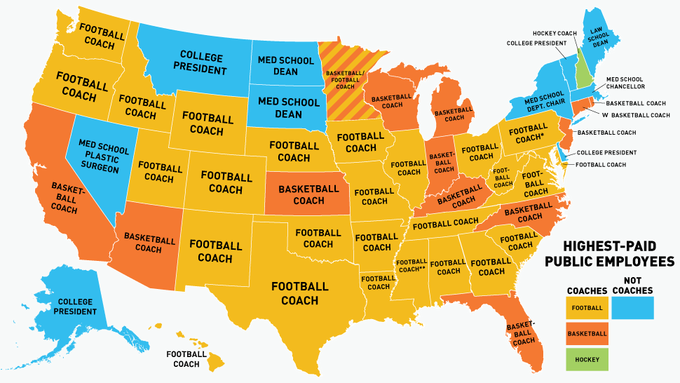
With this data in mind, I feel I can safely presume that many reading this are aware of the Dallas Cowboy’s brutal loss to the Green Bay Packers this weekend.

Rather than make the obvious connections between football and race, I’ll let the below photo and tweet illustrate this cultural nuance:
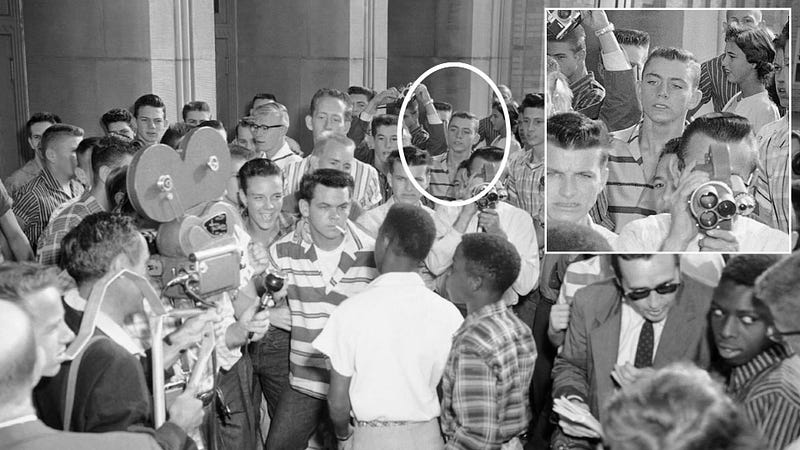
Cowboys owner Jerry Jones in 1957, as a group of Black students try to integrate classes at North Little Rock High School

I’m not trying to say Jerry Jones is racist, but we all get the joke about the homogenous group of owners in the NFL in contrast to the demographic makeup of the players.

As a Wall Street professional, I find that football is among the most efficacious of small talk topics before jumping into business.

So… Indulge me, if you will.

I don’t want to paint with too broad a brush here, but to connect the football and American symbolism themes — let’s take future Hall of Fame quarterback Aaron Rodgers.

His budding career as a media personality has been the topic of much debate, for reasons I don’t have time to get into right now. He says things on National TV like “America got the vaccine wrong”, and promotes a brand of individual freedom that resonates with conservatives and libertarians.

Unfortunately, Rodgers’ season ended on the Jets’ first drive of the year due to an Achilles injury. This broke the heart of many NFL fans, as those injuries are notoriously hard to come back from. But in a classic case of American exceptionalism, Rodgers believed and got others to believe that he would be the fastest human on the planet to return to the field.

In America, we tend to think we are unique and special — but often, we are simply ordinary or worse.

This meme strings together the symbolism of America and the disappointment of American exceptionalism nicely:

But enough about football for now. Let’s get back to business.

There are people out there who would have you believe that Diversity, Equity, and Inclusion (DEI) programs are “racist”. Some of these people are very accomplished billionaires who spend a lot of time explaining on social media.

DEI programs are being voluntarily shut down by some companies, as companies who have made public commitments or internal policies that aim to level the playing field for minorities, women and LGBTQ — or like the below tweet, even simply aim to address cultural nuance — have been attacked on social media with boycott threats, with real political threats looming.

Two such examples are below:

The same people attacking MLK’s legacy and character this week, are the same people who are supportive of things such as legal attacks on the Fearless Fund’s equity grant program for Black women entrepreneurs.

They are trying to say that the Civil Rights Act of 1964, which bars discrimination on the basis of race, spawned a “permanent DEI-type bureaucracy”.

These are the same people who can’t admit that the root cause of the Civil War was slavery. People who also can’t seem to make the connection between the compounding economic impact of 246 years of chattel slavery to an increasing racial wealth gap today.

They don’t accept that this is basic American history. To them, there is a “woke mob” forcing mandatory race consciousness and racial “discrimination” against white people.

While I could go on and on about the real implications of America’s racial history and what they mean for the descendants of slavery, indigenous people, and immigrants of varying skin tones… it’s getting a little heavy again, so let’s go back to football 😅.
Race is a real thing that our society made up, and the quarterback position in football illustrates this illusion well. It takes a “bad” man to play quarterback in the NFL. You’ve got to be smart enough to recognize defenses, make adjustments at the line, know and execute every play, have chemistry and timing with all of your teammates, make decisions under pressure, and deliver the football on time to moving targets through moving windows. Aaron Rodgers is considered one of the GOATs because he possesses all of these traits and has consistently performed at the highest level.

For decades and even still today, there are folks out there who believe that Black people aren’t smart enough to play quarterback at the highest level.

In Rodgers’ last three years in Green Bay, a young Black QB named Jordan Love out of Utah State University, got to essentially intern under him — and in this story I think we can get a view of the root issue at hand.

Jordan Love wasn’t highly touted out of college, but he was a first-round draft pick, selected number 26 overall in 2020. For comparison’s sake, Rodgers was the 24th pick in the 2005 draft — so they are relatively equal in starting talent. Love had displayed some combination of all of the above-mentioned tools in college, and earned a chance to learn from the best in Rodgers for three full seasons. The same learning timeline as Rodgers under Brett Favre.

This apprenticeship culminated in an excellent first year as a starter for Green Bay in 2023, and a Wildcard playoff victory this weekend on the road at Dallas. Jordan Love is becoming a star, and Green Bay fans are witnessing what can happen when a minority in this country earns an opportunity. He’s excelling at something that just a few decades ago many American’s didn’t believe possible.

Underlying these attacks on DEI programs from people all over the racial and socioeconomic spectrum, I believe, is mostly fear. Fear that there will be a new non-white majority in this country — an inevitability that is staunchly being fought against. I believe that same fear underlies the chronic underrating of Black QB’s by NFL scouts over the years. The evidence from a study from SFGATE “strongly suggests that racial bias is blinding teams in the draft process, leading them to prefer inferior quarterbacks as long as they’re not Black.”

These biases have held many NFL teams back. Using the private sector’s lingo, we could describe their reliance on a biased status quo as “anti-DEI”. Would we really rather embrace mediocrity instead of championing an approach that could spring us all forward?

In football, business or otherwise — our world is better when those who were held back in the past get the opportunities they deserve.

I can understand fear of “discrimination” when we make a conscious effort to balance the scales of opportunity, but it’s much scarier to live in a country that actively prevents the rise of minority talent in any field of endeavor. Research published by The Brookings Institution shows that our economy has lost out on more than $50 trillion (with a ‘t’!) in output since 1990 due to racial and ethnic inequality.

This year, I didn’t see as much corporate MLK Day energy as in years’ past. Sadly, in this climate, we’re seeing narratives spun about “reverse racism” and “woke ideology” pushed by coastal elites. Let’s not take the bait. The reason that race-based policies need to exist are due to this country’s perpetual exploitation of Black people for labor and profit — full stop.

The hidden fronts in this war that I wish to illuminate are around class and geographic lines.

When we think about diversity, we typically think about race, gender, sexual orientation, ability, veteran-status, ideology, etc. — but do we ever think about class, or childhood zipcodes?

After decades and cycles of redlining and gentrification, America has de-facto segregated itself, leading to important questions we need to ask regarding the place-based determinants of health, and how localized socioeconomic factors play into people’s probability of success in this country.

What would it mean for this country to come together not only across racial lines, but across class lines and railroad tracks too?

There is a big economic boost for us all, if we can get it right.

Looking forward, I challenge us to look in our own backyards and ask better questions. Why do certain places get invested in and others get divested from? Why are so many American cities practically segregated? Why are there commercials about extra day grace periods from free checking account overdrafts during NFL games? What can we do about the reality that most Americans are living check-to-check and couldn’t meet an emergency $400 expense?

For my Wall Street friends, I challenge us to look at where capital flows and why more disclosure around human capital management isn’t required from fiduciaries.

For my network more broadly, I challenge us to reflect on King’s quotes about class, some of which can be found here.

“Let us be dissatisfied until the tragic walls that separate the outer city of wealth and comfort from the inner city of poverty and despair shall be crushed by the battering rams of the forces of justice.” — “Where Do We Go From Here” (1967)

I believe we have more in common that what divides us. Change starts from within, and we have to be able to envision what a shared good really looks like. That starts with asking better questions, being open-minded to others’ perspectives, and being willing to have difficult conversations even when they’re inconvenient. This place won’t get better unless we make it so.

Thanks for taking this journey with me. I’m open to any and all thoughts, as I believe this is an important and pressing dialogue.

Hope everyone had an MLK weekend filled with service, rest, edification and reflection.

-Sam Floyd

American History
Race
Sports
Capitalism
Culture
Recommended from ReadMedium