
Food & Transport in Singapore
Eating and getting around in Singapore.
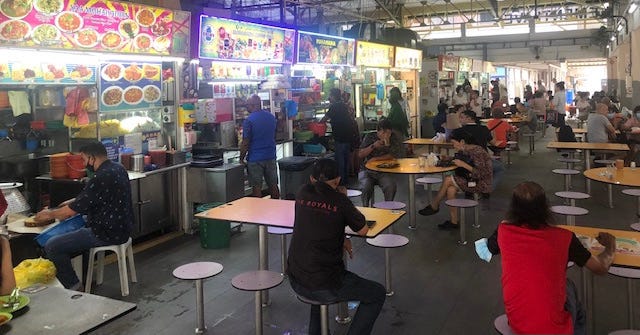
I rate the taste and quality of the local food in Singapore up there with the very best. Local food is readily found in Singapore at the many hawker centers. A hawker center is where one finds a variety of food vendors under one roof. There are common seating areas and one walks around visiting various stalls to order and pay for food. Each stall is independently owned.
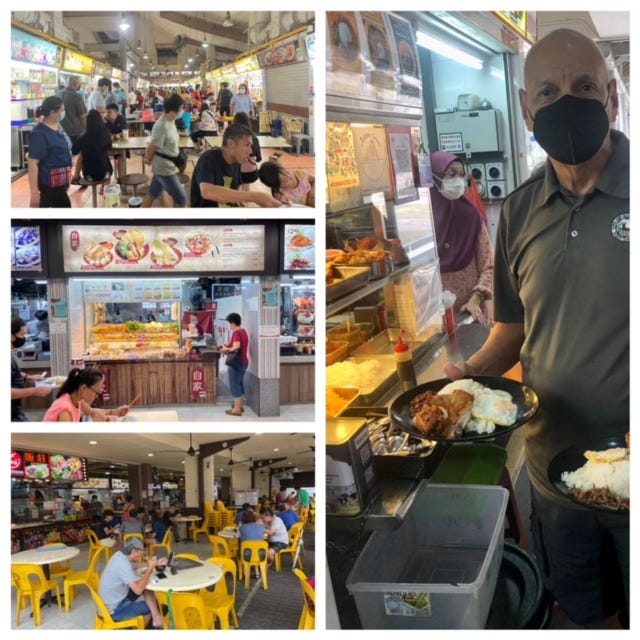
After completing your meal you need to return your cutlery and food and drink containers to a common collection point rather than directly to the vendors. It is a very economical and convenient way to eat a variety of foods. Hawker centers are readily found around every HDB (Housing Development Board) estate and market center. They are open but covered areas, almost always found on the ground floor of a building block.
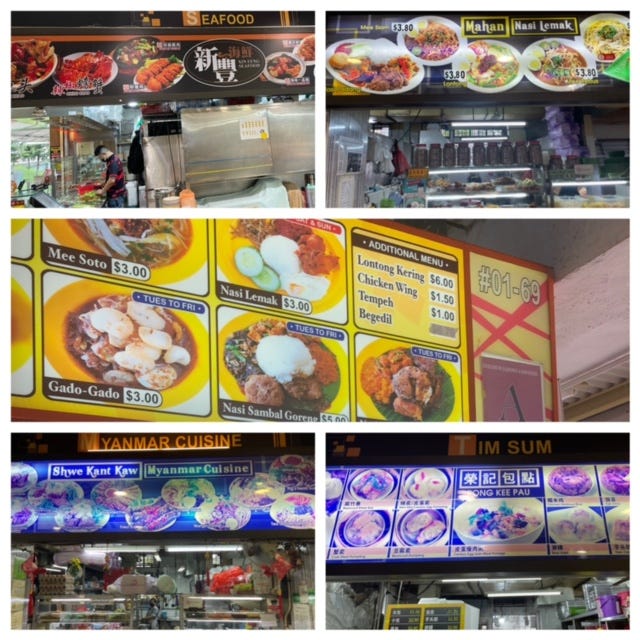
While there are excellent restaurants in hotels and private buildings, for the cost of a meal at a hotel or upscale restaurant, you could feed yourself for a week at the hawker centers. There are also many other stand-alone restaurants and shopping mall restaurants that are pricier than the hawker centers but still affordable and enjoyable to eat in. We visited a few when we were treated to wonderful dinners by friends and relatives. However, for the travelers wishing to stretch their food budget during a trip, nothing beats the hawker centers.
At the hawker centers, you can find all the famous ethnic Chinese, Indian, and Malay dishes. Some of my personal mouth-watering favorites are Char Kway Teow, Nasi Lemak, Chee Cheong Fun, Chicken Rice, Char Siew Fun, Rojak, Roti Chanai, Nasi Biryani, Mee Rebus, Laksa, Mutton Curry, etc.
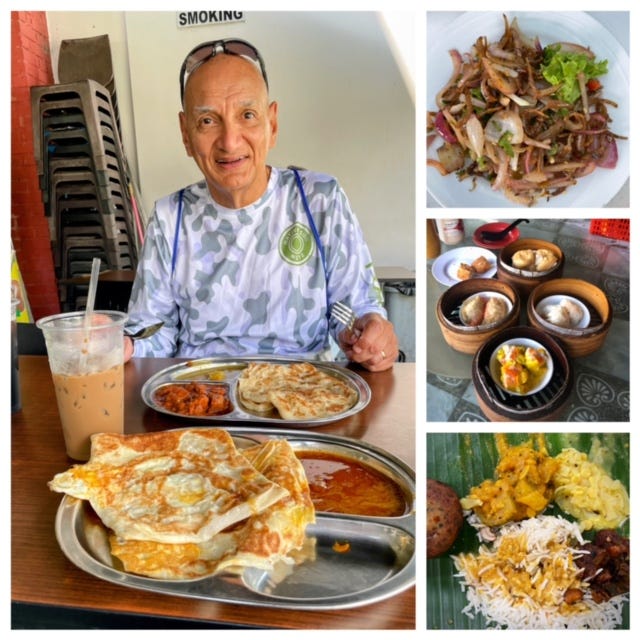
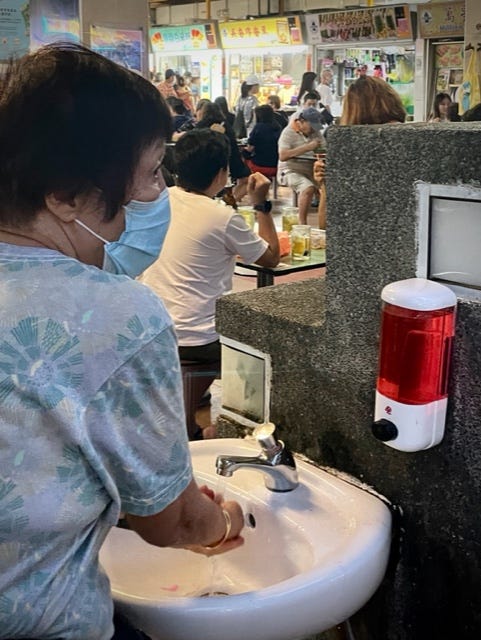
The centers are very clean. A meal at one of these stalls would run between S$3 and S$10. There is no danger of getting sick eating hawker food as Singapore prides itself on health and food hygiene awareness. There are now special sinks where patrons can wash their hands before and after a meal.
When it comes to transportation, there is a comprehensive network of trains and buses that would take you anywhere on the island. When you get to Singapore, get a train/bus card from an MRT (Mass Rapid Transport) station. You can charge these cards with funds and use them on the Singapore train and bus system. We had S$25 placed on each of our cards and did not need to recharge the cards during our ten days in Singapore. We used the card almost every day to ride trains and buses. If you are stuck for time, there is always Uber, Grab, or taxis, although we did not use any of these on our visit. Almost any place in Singapore can be conveniently reached by a combination of train, bus, and legwork.
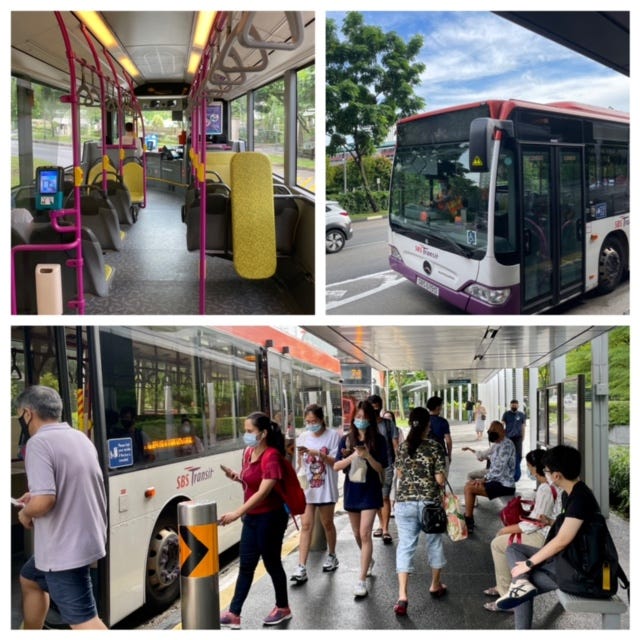
Download the bus app (SBS Transit) which will provide routes and times as well as live information on when each bus will arrive at each bus stop. All the bus stops have an identifying number. Inputting that number in the app will inform you when your bus number is approaching.
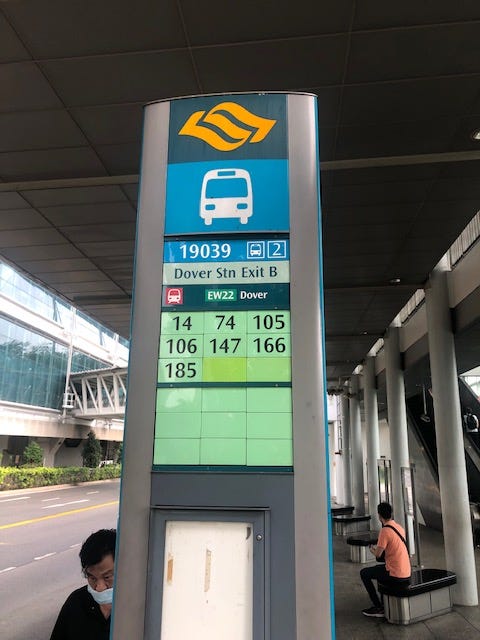
The photograph of the bus stop above indicates the stop number (19039) and the bus numbers that will stop there (eg. 14 and 74). Since it is right by an MRT station it also indicates the name and code for the station (EW22 Dover). All bus stops have seats and are covered so you don’t have to wait in the sun or rain.
Although there is a train app available we did not need it. There are train route maps posted at each station.
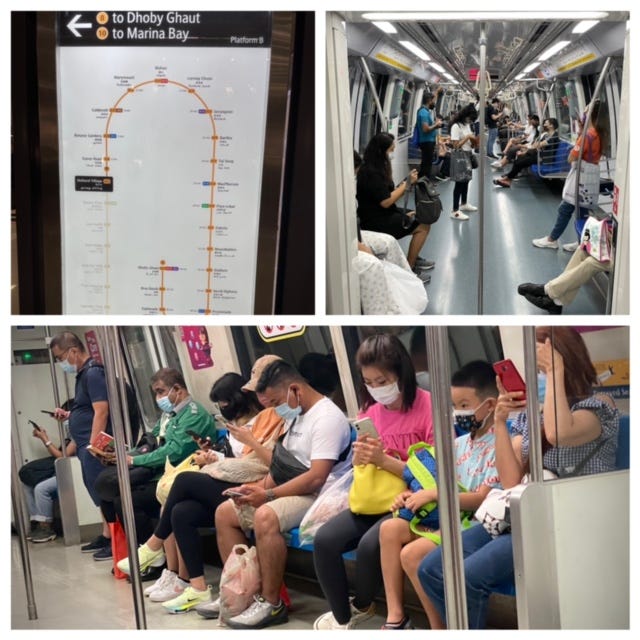
The trains are fairly regular and you can plan your route by looking at the train maps at any MRT station and map your trip. Once on the train, voice and visual notifications indicate where you are and the number of stops before your interchange or destination. You will notice in the photos that almost everyone is either reading a book or on their phones. This is not because they are unsociable. There are signs reminding passengers not to talk while they are riding the trains. This is probably meant to promote a quiet comfortable ride so passengers can hear the train announcements.
I hope you are convinced that you can really stretch your dollar in Singapore by using public transportation and eating at hawker centers. By the way, you can also get a beer at many of the hawker centers. In Singapore, your biggest expense will be your accommodation. Now that Singapore no longer allows AirBnB-type accommodation, the only alternatives are hotels or the kindness of friends. We are lucky to have good and accommodating friends in Singapore. There are less expensive hotels further away from the city but only a few are less than S$100 a night. You probably need to budget between S$100 and S$200 a night for a two or three-star hotel in Singapore. If Medium members know of convenient economical hotels to recommend, please do comment and add any useful information. There are some cheap backpack, capsule, and dormitory-type accommodations available, but at our age, that is really getting too old!
If you enjoyed reading this and are not yet a member of Medium, please consider using this link to join. I receive a small commission which will not increase the cost of your membership and you get full access to the work of all the authors on Medium. Thank you for your support.