avatarUlf Wolf

Free AI web copilot to create summaries, insights and extended knowledge, download it at here

1318

Abstract

(as in poisonous) chemicals.</p><p id="b059">Granted, farmers often have to battle insects and fungus and other pests that feed on what they plant and grow, and the solutions to this that seem most readily to hand are chemicals of one sort or another, and I guess that by the logic of somewhat chemical’ed food is better than no food at all, we should have to live with that. But that, I believe, goes mainly for the smaller farms — the farmers who care about the quality of the produce they grow, who keep the customer — the human eater and his/her health — in mind.</p><p id="86f3">Not so the industrial farm, however, where profit and shareholder dividend and quarterly reports reign supreme, quality of human edibles mostly be damned, for as long as the FDA (not a seat of angels by any stretch) approves the chemicals applied both in the field and after harvest (to keep things “fresh”) their hands are “clean” even if the same cannot be said for their consciences.</p><p id="2cdd">It is hard to find all-pronounceable food labels these days, a fact of 21st Century life, I guess. My suggestion is to buy the food with the least amount of unpronounceables and keep your fingers crossed.</p><p id="7081">© Wolfstuff</p><p id="dac7">P.S. If you like what you’ve read here and would like to contribute to the creati

Options

ve motion, as it were, you can do so via PayPal: <a href="http://paypal.me/UlfWolf">here</a>.</p><div id="72ef" class="link-block"> <a href="http://wolfstuff.com"> <div> <div> <h2>Wolfstuff</h2> <div><h3>So, who am I? Really really. I could tell you that I was born in northern Sweden during a snow storm, and subsequently…</h3></div> <div><p>wolfstuff.com</p></div> </div> <div> <div style="background-image: url(https://miro.readmedium.com/v2/resize:fit:320/0*z8X0NrfpGbGDCxfL)"></div> </div> </div> </a> </div><div id="260e" class="link-block"> <a href="https://www.amazon.com/author/ulfwolf"> <div> <div> <h2>Ulf Wolf — Kindle Store</h2> <div><h3>Ulf is a Swedish name that means Wolf. Well, today, wolf in Swedish is varg. Or, sometimes, if you're old-fashioned…</h3></div> <div><p>www.amazon.com</p></div> </div> <div> <div style="background-image: url(https://miro.readmedium.com/v2/resize:fit:320/0*tkTFyYeEDkc-fhUR)"></div> </div> </div> </a> </div></article></body>

Food Labels

Be Aware of What You Eat
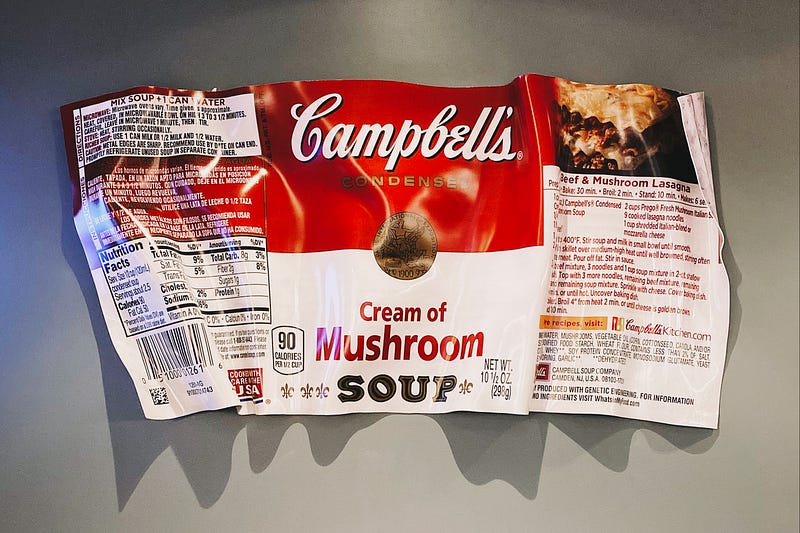
Photo by Jon Tyson on Unsplash

If you can’t pronounce it you should probably not eat it

The opposite of organic. As inorganic as they come. A list of chemicals a long label long, most applied (a) either to keep the product “fresh” (and yes, in quotes) for an inordinate (unconscionable) amount of time or (b) to keep it looking fresh for an even longer amount of time.

Food these days is so much more than physical body sustenance, it is big business, it is industry, the kind of industry that does not necessarily keep your best interests uppermost in its heart.

I read somewhere that as a test, some outfit removed all food products from a store that had unpronounceable ingredients on their labels. As I recall, it left only some spices (salt, pepper, and such) and bottled water. The rest were all spiked with somewhat innocent and/or not so innocent (as in poisonous) chemicals.

Granted, farmers often have to battle insects and fungus and other pests that feed on what they plant and grow, and the solutions to this that seem most readily to hand are chemicals of one sort or another, and I guess that by the logic of somewhat chemical’ed food is better than no food at all, we should have to live with that. But that, I believe, goes mainly for the smaller farms — the farmers who care about the quality of the produce they grow, who keep the customer — the human eater and his/her health — in mind.

Not so the industrial farm, however, where profit and shareholder dividend and quarterly reports reign supreme, quality of human edibles mostly be damned, for as long as the FDA (not a seat of angels by any stretch) approves the chemicals applied both in the field and after harvest (to keep things “fresh”) their hands are “clean” even if the same cannot be said for their consciences.

It is hard to find all-pronounceable food labels these days, a fact of 21st Century life, I guess. My suggestion is to buy the food with the least amount of unpronounceables and keep your fingers crossed.

© Wolfstuff

P.S. If you like what you’ve read here and would like to contribute to the creative motion, as it were, you can do so via PayPal: here.

Food
Labels
Ingredients
Dangerous Food
Chemicals
Recommended from ReadMedium
avatarAuthor, D. Denise Dianaty
Citrus Cake

My son’s favorite birthday cake

5 min read
avatarJudy Walker
House of Childhood

A poem

2 min read