
Food Insecurity is HERE — We NEED Community Gardens NOW
Rambling Anecdote Section
The first famine I saw was the tragic Ethiopian crisis of the 1980s. Though I was very young, the horror of seeing children like me starving carved an indelible mark on my psyche. Closer to home, I witnessed varying degrees of poverty and want, but there was still a disconnection between hunger ‘Over There’ and hunger ‘Over Here’. It was not until my mid 20s that I realized, it is all the same thing. It has differing degrees of severity and visibility, but it is all the same thing. In North America, it WAS just harder to see.
Food insecurity has permeated the Western First World so well because the system makes it invisible. What does the euphemism “Food Insecurity” mean? It means that you literally don’t know where your next meal is coming from. This is usually because of financial problems, but it also includes other causes such as living in a food desert with unreliable transportation, or being cut off from food supplies due to a disaster.
Run-of-the-mill food insecurity is the every-day lack of nutritious food of many of the vulnerable people in North American society. This problem has become so ubiquitous that it is ‘invisible’. Well, it was until the multiple crises caused by Covid.
Back in the ‘normal’ pre-Covid time, my child’s K-6 school, with about 275 students, in a RANCHING TOWN and the RICHEST COUNTY of the province, still had 60 children that had no food. None. They had no lunch brought with them to school, no breakfast before they got there, and no snacks while there. That is about 45–60 families that for varied reasons, could not feed their children. Want to know what the population of this affluent town was? 3500 people. Food insecurity is everywhere, even in rich, agricultural towns that otherwise look like a Normal Rockwell painting.
Fortunately, the primary school principal was virulently supportive of many food initiatives. The primary school had a hot breakfast program, hot lunch program, AND a snack program. Students needed to be signed up for the meals programs, but the twice daily healthy snacks were for every single student. It was at this little school that I learned that Community / Collective Gardening was for EVERYONE, everywhere. I began by teaching basic gardening in the Pre-School Class. Later, when my child was in grade 3, I again had the privilege of teaching children how to start basic pea plants for their home gardens.
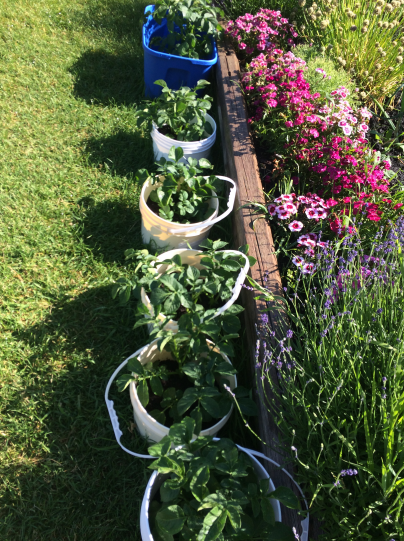
Compared to many seasoned gardeners, I have not been ‘in the gardening game’ very long. I have participated in school gardens, food bank gardens, and church gardens. But I’ve only gardened for seven years. I began participating in ‘collective’ gardening during my first summer as a gardener.
I believe that as each passing month deepens the problems of food distribution, North Americans MUST make a life-changing shift in their thinking. We cannot rely on massive supply chains spanning the globe. We need to start growing food WHERE WE LIVE. This obviously cannot be applied to things like beef or grain, but it CAN be applied to fresh vegetables and some fruits.
Enter, the COMMUNITY GARDEN.
There is a ton of public space in parks, school areas, private unused commercial property and community centers that can be used for this.
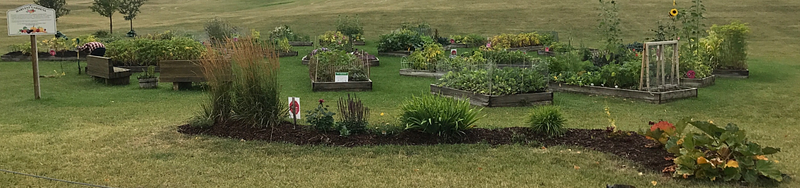
Actual Useful Information Section: ‘Community Garden’ is one of those terms that can mean several things. It can describe: 1. An informally shared plot of land where people grow flowers, vegetables, or other plants, without formally sectioned plots. These type of gardens focus more on the social and wholistic benefits of the actions of being present with nature and fellow human beings. Their effect is primarily to be a place of calm, and of human connection.
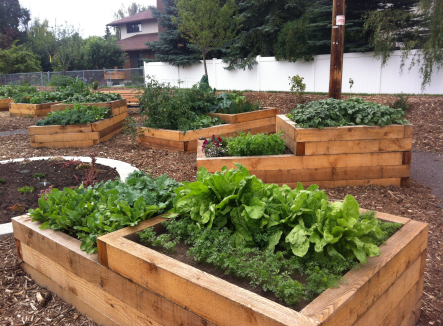
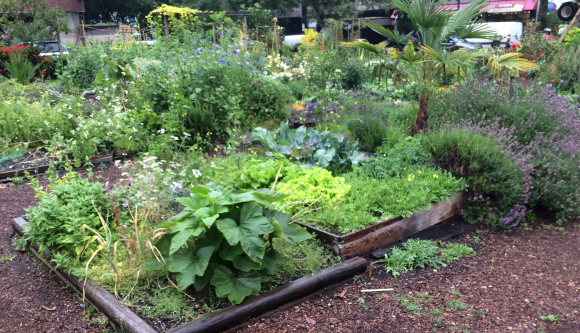
2. A miniature ‘allotment’ or space with ‘rented’ plots about 30–60 square feet, where each renter plants specifically what they want to grow in their assigned space, and are responsible for controlling weeds in their garden. The focus of this type of community garden is more toward food production. While renters may socialize with each other, they do not usually make a point of having coordinating times for attendance. Garden plots that are small are also seen as ‘hobby’ plots where renters can cultivate their gardening skills even though they are far away from traditional growing spaces.
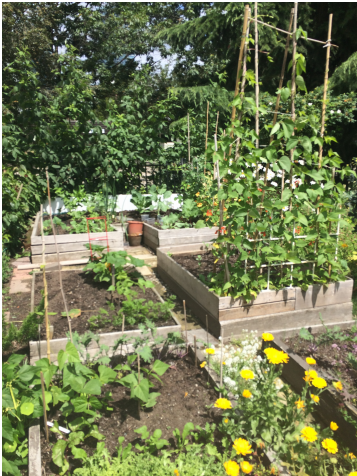
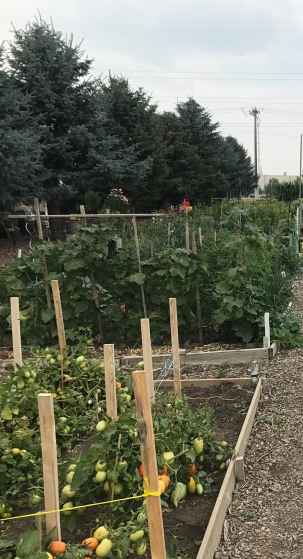
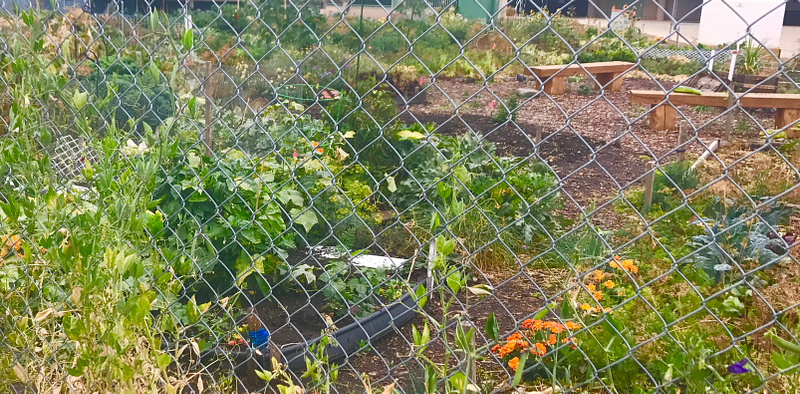
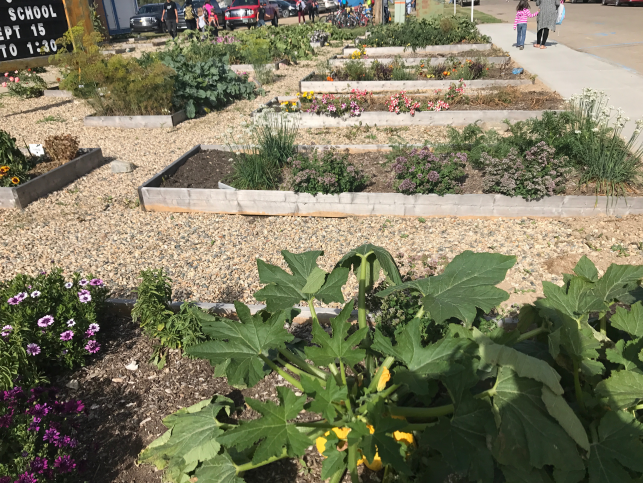
3. An institutionally-backed project for a specific people group. Below, is an elementary school garden in a small town in Saskatchewan. Many schools are sincerely embracing the need for teaching food production. This is a fantastic step in the right direction.
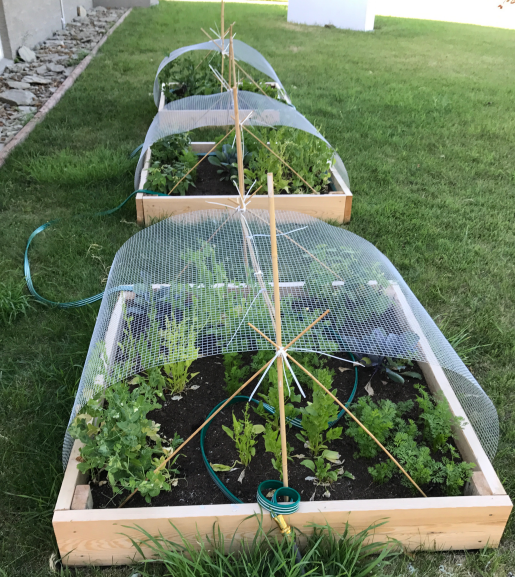
Another variation of the institutionally-backed garden project is gardens being placed and cared for on church property. Not all houses of worship are enthusiastic about food production, but I was blessed to have a very socially-minded reverend. (He even let me drag soil samples into the church for my free gardening class.) The board approved our request for three planter boxes, and we were able to plant some veggies for the local food bank. If you belong to a house of worship that is passionate about food access for everyone, I would encourage you to propose to the governing body that some of the property be used for food production. Naturally, you will have to be VERY cognizant of concerns such as property damage caused by mishaps (like someone leaving the hose on) and the aesthetics of the boxes, but as you overcome those things, you will see that it is a fulfilling endeavor.
Action Steps
The first thing to be done, is to understand your goals for the Community Garden. If you are supplying a school or other institution, it makes sense that you would take a general approach, and have a large area, preferably near the benefitting institution, and that crop planning would be done by volume, and not individual plots for planters. However, if you want to develop an individual plot area where boxes are rented, our approach should be geared toward potential garden ‘tenants’.
https://www.communitygarden.org/ and https://www.soils.org/about-soils/community-gardens/are great places to explore the generalities.
To get free examples of Community Garden Handbooks, just type it into Google.
Once you have an general outline of what form you wish your Community Garden to be in, you can start exploring opportunities for the space. As municipalities vary, the best place to ask is your local town hall.
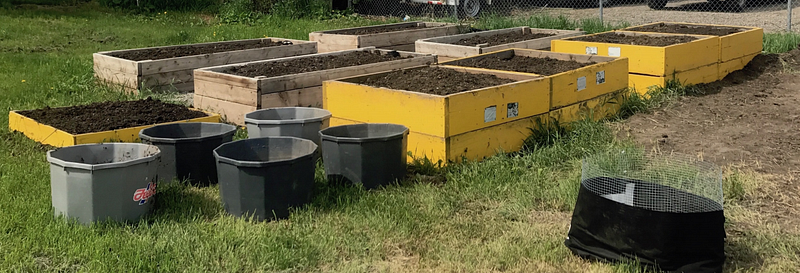
HOW I DID MY ACTION STEPS: I lived in a small town, where the local food bank struggled to provide fresh, (non-canned) vegetables for their clients. This of course, made sense. Food has to be shelf-stable enough that it can be put into hampers and distributed. This usually takes about 1 week. Lettuce is basically soup by then, especially in the hot months. So, our volunteer committee decided that the simplest solution would be to plant a garden with the perishable vegetables missing from the food hampers.
We are living in a time where the old way of doing things no longer works. This is scary and unknown. But it is also an opportunity to make our communities more resilient, our nutrition more available, and our food systems more just. Now is the time to change our way of thinking. The tools already exist. We just have to use them to make the much needed changes.


