avatarAdelaide Girl's Garden

Free AI web copilot to create summaries, insights and extended knowledge, download it at here

12735

Abstract

them to grow.</i></p><figure id="ed8f"><img src="https://cdn-images-1.readmedium.com/v2/resize:fit:800/1*nSAt2af0F_JbOuYps7VHpw.png"><figcaption>Cucumber</figcaption></figure><p id="3c96"><b>Beans</b>: <i>Beans fix nitrogen in the soil, which can benefit cucumbers. In turn, cucumbers can provide a trellis for beans to climb on.</i></p><p id="9c58"><b>Corn</b>: <i>Corn and cucumbers are a good combination because they have different nutrient requirements. Corn takes up nitrogen while cucumbers take up potassium, so they can grow well together without competing for nutrients.</i></p><p id="079a"><b>Radish</b>: <i>Radishes are a great companion for cucumbers because they repel cucumber beetles, which can damage the cucumber plants.</i></p><p id="8942"><b>Sunflower</b>: <i>Sunflowers can provide shade for cucumber plants during the hottest part of the day.</i></p><p id="180f"><b>Nasturtium</b>: <i>Nasturtiums are another companion plant that can help repel cucumber beetles.</i></p><p id="a6f8"><b>Marigold</b>: <i>Marigolds can also help repel pests that can damage cucumber plants.</i></p><figure id="6c33"><img src="https://cdn-images-1.readmedium.com/v2/resize:fit:800/1*1y1otOK0T1VGdD2JsnITDQ.png"><figcaption>Capsicum</figcaption></figure><p id="b9ea"><b>Basil</b>: <i>Basil can repel aphids and spider mites, which are common pests of capsicum plants. It can also improve the flavour of capsicum fruits when grown nearby.</i></p><p id="9d34"><b>Marigold</b>: <i>Marigold can deter nematodes, which can damage the roots of Capsicum plants. It can also attract beneficial insects like ladybugs and lacewings that prey on aphids.</i></p><p id="1976"><b>Oregano</b>:<i> Oregano can repel harmful insects and attract beneficial ones. It can also enhance the flavour of Capsicum fruits.</i></p><p id="8539"><b>Onion</b>: <i>Onion can repel aphids and other pests. It can also improve the health and growth of Capsicum plants.</i></p><figure id="750c"><img src="https://cdn-images-1.readmedium.com/v2/resize:fit:800/1*GXSSQRbRST_vRSv4dzyMnQ.png"><figcaption>Celery</figcaption></figure><p id="b382"><b>Beans</b>: <i>Beans and other legumes help to fix nitrogen in the soil, which can be beneficial for celery plants.</i></p><p id="1cb3"><b>Cabbage</b>: <i>Cabbage and other brassicas can help to repel pests that are attracted to celery, such as aphids and cabbage worms.</i></p><p id="5842"><b>Tomatoes</b>: <i>Tomatoes and celery are good companions because they have similar water and nutrient requirements.</i></p><p id="ef3a"><b>Spinach</b>:<i> Spinach is a good companion for celery because it does not compete for nutrients, and it can help to shade the soil around the celery plants.</i></p><p id="e20c"><b>Chives</b>: <i>Chives can be a good companion plant for celery because they can help to repel aphids.</i></p><p id="f003"><b>Nasturtium</b>: <i>Nasturtiums are good companion plants for celery because they can help to repel pests and attract beneficial insects.</i></p><figure id="d646"><img src="https://cdn-images-1.readmedium.com/v2/resize:fit:800/1*VKTqv6JPThDsqQU6xEQhLw.png"><figcaption>Lettuce</figcaption></figure><p id="526c"><b>Coriander</b>: <i>Coriander is a great companion plant for lettuce. It attracts beneficial insects that can help to control pests that may attack the lettuce.</i></p><p id="cba8"><b>Carrot</b>: <i>Carrots and lettuce make good companions as they have different root depths and help each other by not competing for nutrients.</i></p><p id="b27d"><b>Radish</b>: <i>Radishes can be planted along with lettuce as they germinate and grow quickly, so they can be harvested before the lettuce grows big.</i></p><p id="1741"><b>Chives</b>: <i>Chives can be planted around lettuce as they have natural pest repellent qualities and can help deter aphids and other pests from attacking lettuce.</i></p><p id="e60d"><b>Nasturtium</b>: <i>Nasturtiums are also great companions for lettuce as they help to deter aphids and other pests.</i></p><p id="8902"><b>Marigold</b>: <i>Marigolds help repel pests and improve the soil around the lettuce.</i></p><p id="de4e"><b>Dill</b>: <i>Dill is believed to help improve the flavour of lettuce and also helps to repel pests.</i></p><p id="3e7a"><b>Spinach</b>: <i>Spinach can be planted with lettuce and they can help to provide shade for each other.</i></p><p id="c336"><b>Beetroot</b>: <i>Beetroot and lettuce make good companions, as they can help to provide shade for each other and not compete for nutrients.</i></p><figure id="9726"><img src="https://cdn-images-1.readmedium.com/v2/resize:fit:800/1*QOvjZiv-H-Srja0IW5vU5g.png"><figcaption>Alliums</figcaption></figure><p id="ee5e"><b>Carrot</b>: <i>Alliums can help to repel carrot flies, which can damage carrot crops.</i></p><p id="ac09"><b>Lettuce</b>:<i> Alliums can help to deter slugs and other pests that like to feed on lettuce leaves.</i></p><p id="dd85"><b>Tomatoes</b>: <i>Alliums can help to repel aphids, which can damage tomato plants. In addition, the pungent aroma of alliums can help to improve the flavour of tomatoes.</i></p><p id="6818"><b>Cabbage</b>: <i>Alliums can help to repel cabbage worms, which can damage cabbage crops. They can also improve the flavour of cabbage.</i></p><p id="8399"><b>Beetroot</b>: <i>Alliums can help to repel aphids and other pests that can damage beet crops.</i></p><figure id="6db2"><img src="https://cdn-images-1.readmedium.com/v2/resize:fit:800/1*klPQi_y4DWZLw7DACpT0dg.png"><figcaption>Chilli</figcaption></figure><p id="0bfa"><b>Tomatoes</b>: <i>Both tomato and chilli peppers are members of the nightshade family and can be planted together. The tomato plant can repel insects that attack chillies.</i></p><p id="8ea0"><b>Basil</b>: <i>Basil can improve the growth and flavour of chillies. It can also repel harmful insects and attract beneficial ones.</i></p><p id="9842"><b>Oregano</b>: <i>Oregano can deter aphids, spider mites, and other pests that can damage chillies.</i></p><p id="29d7"><b>Parsley</b>: <i>Parsley can attract hoverflies, which are natural predators of aphids and other pests that can harm chillies.</i></p><p id="5dce"><b>Coriander</b>: <i>Coriander can repel harmful insects and attract beneficial ones.</i></p><figure id="0333"><img src="https://cdn-images-1.readmedium.com/v2/resize:fit:800/1*W4k31dKLKJ9imfxczpv9Bw.png"><figcaption>Eggplant</figcaption></figure><p id="7f91"><b>Marigold</b>: <i>Marigolds repel many pests that commonly affect eggplants, such as spider mites and flea beetles.</i></p><p id="fe75"><b>Capsicum</b>: <i>Capsicums and eggplants both require similar growing conditions and can help shade each other’s roots.</i></p><p id="a835"><b>Tarragon</b>: <i>Tarragon can help repel some pests that are attracted to eggplants.</i></p><p id="a159"><b>Thyme</b>: <i>Thyme can help deter some eggplant pests and improve soil quality.</i></p><figure id="b865"><img src="https://cdn-images-1.readmedium.com/v2/resize:fit:800/1*l-nAO-N7FmD1K0LiUOUUtg.png"><figcaption>Silverbeet</figcaption></figure><p id="3e1b"><b>Beans</b>: <i>Beans are said to improve the growth and flavour of silver beet. They also fix nitrogen in the soil, which is beneficial for leafy green vegetables like silverbeet.</i></p><p id="3a67"><b>Cabbage</b>: <i>Cabbage is said to deter pests that can attack silver beet.</i></p><p id="b826"><b>Onion</b>: <i>Onion is said to repel pests that can attack silver beet. Onion also adds nutrients to the soil that can benefit silver beet.</i></p><p id="e85d"><b>Lettuce</b>: <i>Lettuce is said to help protect silver beet from pests and disease.</i></p><figure id="f0a6"><img src="https://cdn-images-1.readmedium.com/v2/resize:fit:800/1*1LPw1SJZcg17PfXhIEELaQ.png"><figcaption>Pumpkin</figcaption></figure><p id="ac7a"><b>Corn</b>: <i>Corn provides a natural trellis for pumpkin vines, and pumpkins help to shade the corn roots, reducing moisture loss and weed growth.</i></p><p id="0b13"><b>Beans</b>: <i>Like corn, beans can also provide a natural trellis for pumpkins, and the two plants work well together to attract pollinators.</i></p><p id="966a"><b>Radish</b>: <i>These fast-growing root vegetables can be planted in the same hills as pumpkins, as they will be harvested before the pumpkin plants get too big. Radishes help to loosen soil for the pumpkin roots and repel pests like squash borers and cucumber beetles.</i></p><p id="0003"><b>Marigold</b>: <i>These bright flowers can help to deter pests that can attack pumpkins, such as nematodes and squash bugs.</i></p><p id="e8b2"><b>Nasturtium</b>: <i>Nasturtiums are known to deter squash bugs and other pests, and their flowers are edible and can be added to salads.</i></p><figure id="5941"><img src="https://cdn-images-1.readmedium.com/v2/resize:fit:800/1*r9xIsA-BRAP1U0FUFNeajA.png"><figcaption>Squash</figcaption></figure><p id="a99c"><b>Corn</b>: <i>Squash and corn are an ideal companion planting combination known as the “Three Sisters”. Squash helps keep the soil moist and cool, while the corn provides a trellis for beans, and both plants benefit from the nitrogen-fixing properties of beans.</i></p><p id="8fab"><b>Beans</b>: <i>Beans are another good companion for squash, as they also fix nitrogen in the soil that benefits all plants in the garden.</i></p><p id="5703"><b>Radish</b>:<i> Radishes are a great companion for squash as they help to repel squash bugs and other pests that can damage the plants.</i></p><p id="6152"><b>Marigold</b>: <i>Marigolds are another plant that helps to repel pests and attract beneficial insects, making them a good companion for squash.</i></p><p id="d0f5"><b>Nasturtium</b>: <i>Nasturtiums are a great companion for squash, as they repel squash bugs and other pests, while also attracting beneficial insects.</i></p><figure id="18a1"><img src="https://cdn-images-1.readmedium.com/v2/resize:fit:800/1*-JhCrhnQM93SBHhqiUFqDg.png"><figcaption>Rhubarb</figcaption></figure><p id="cb3e"><b>Beans</b>: <i>Beans are nitrogen-fixing plants that can help to improve the soil quality around rhubarb plants. They can also provide shade and act as a living mulch.</i></p><p id="c815"><b>Brassicas</b>: <i>Brassicas, such as broccoli, cabbage, and cauliflower, can help to deter pests that may be attracted to rhubarb. They can also help to provide shade and shelter for the rhubarb.</i></p><p id="7fae"><b>Chives</b>: <i>Chives are known to repel insects and can help to improve the flavour of rhubarb when grown nearby.</i></p><p id="df55"><b>Garlic</b>: <i>Garlic is a natural insecticide and can help to deter pests that may be attracted to rhubarb.</i></p><p id="61bb"><b>Mint</b>: <i>Mint can help to repel pests and can also help to improve the flavour of rhubarb.</i></p><p id="dbd3"><b>Nasturtium</b>: <i>Nasturtium is a companion plant that can help to repel pests and attract beneficial insects to the garden. It can also help to improve the flavour of rhubarb.</i></p><p id="01cd"><b>Spinach</b>: <i>Spinach is a good companion plant for rhubarb, as it can help to provide shade and shelter for the rhubarb. It can also help to improve the soil quality around the plant.</i></p><figure id="c01c"><img src="https://cdn-images-1.readmedium.com/v2/resize:fit:800/1*qziWkUMdSKayMJy3Q1l0ig.png"><figcaption>Artichoke</figcaption></figure><p id="78e1"><b>Asparagus</b>: <i>Asparagus and artichokes make great companions because they have similar soil requirements and grow well together. Asparagus also helps to repel pests that may be attracted to artichokes.</i></p><p id="e5ab"><b>Brassicas</b>: <i>Brassicas, such as broccoli, cauliflower, and cabbage, are good companions with artichokes because they have similar soil requirements and grow well together. Brassicas are also said to help repel pests that may be attracted to artichokes.</i></p><p id="2001"><b>Legumes</b>: <i>Legumes, such as beans and peas, are good companions with artichokes because they help to fix nitrogen in the soil. Artichokes require a lot of nitrogen, and legumes help to provide it.</i></p><p id="cc0f"><b>Lettuce</b>: <i>Lettuce is a good companion with artichokes because it grows well in the shade of the artichoke plant. It also has a shallow root system, which makes it less competitive with the deep roots of the artichoke.</i></p><p id="1e06"><b>Mint</b>:<i> Mint is a good companion with artichokes because it helps to repel pests that may be attracted to the artichoke plant. It also grows well in the shade of the artichoke plant.</i></p><p id="6ada"><b>Nasturtium</b>: <i>Nasturtiums are a good companion with artichokes because they attract beneficial insects that help to pollinate the artichoke flowers. They also help to repel pests that may be attracted to the a

Options

rtichoke plant.</i></p><figure id="5b19"><img src="https://cdn-images-1.readmedium.com/v2/resize:fit:800/1*2xAwVS2I2QeYBJGlWxk1dA.png"><figcaption>Corn</figcaption></figure><p id="48c2"><b>Beans</b>: <i>Beans are nitrogen-fixing plants, meaning they can take nitrogen from the air and convert it into a form that corn can use. In return, the corn provides support for the climbing bean plants.</i></p><p id="a9ce"><b>Peas</b>: <i>Like beans, peas are also nitrogen-fixing plants that can improve the growth of corn. Peas can be planted as a cover crop between corn rows and can help prevent soil erosion.</i></p><p id="9879"><b>Squash</b>: <i>Squash plants are excellent companions for corn because they can help suppress weeds and keep the soil moist by creating a living mulch. Squash can also provide shade for the corn roots and help keep the soil cool.</i></p><p id="4343"><b>Cucumber</b>: <i>Cucumbers are another plant that can help suppress weeds and provide living mulch for the corn. Additionally, the cucumbers can attract bees and other beneficial insects to the corn.</i></p><p id="7420"><b>Melons</b>: <i>Melon plants can be grown with corn to help attract pollinators to the garden. The melons can also help provide shade for the corn roots, and the corn stalks can provide support for the climbing melon plants.</i></p><figure id="1b97"><img src="https://cdn-images-1.readmedium.com/v2/resize:fit:800/1*gyRTMGoSAl8x8QEh6muz5g.png"><figcaption>Melons</figcaption></figure><p id="6804"><b>Corn</b>: <i>Corn is a good companion plant for melons because it provides shade for the soil and can help to retain moisture. The two plants can also share nutrients.</i></p><p id="da93"><b>Sunflower</b>: <i>Sunflowers are another good companion plant for melons because they provide shade and can attract pollinators to the garden.</i></p><p id="0ea4"><b>Beans</b>: <i>Beans are legumes that fix nitrogen in the soil, which can benefit melon plants. They can also help to control weeds and improve soil structure.</i></p><p id="d14a"><b>Marigold</b>: <i>Marigolds are a good companion plant for melons because they can help to deter pests and attract beneficial insects.</i></p><p id="3305"><b>Nasturtium</b>: <i>Nasturtiums are another good companion plant for melons because they can help to repel pests and attract beneficial insects.</i></p><p id="0baf"><b>Radish</b>: <i>Radishes are a fast-growing plant that can be planted with melons to help break up compacted soil and improve drainage. They can also help to deter pests and attract beneficial insects.</i></p><figure id="6e9b"><img src="https://cdn-images-1.readmedium.com/v2/resize:fit:800/1*Nd7qITJDnnMcbZ9p1ojAKg.png"><figcaption>Strawberry</figcaption></figure><p id="ad34"><b>Borage</b>: <i>Borage is an herb that is known to improve the growth and flavour of strawberries, while also attracting beneficial insects.</i></p><p id="59ed"><b>Thyme</b>: <i>Thyme is a fragrant herb that repels pests and attracts pollinators, making it a great companion for strawberries. And is known for enhancing strawberries flavour.</i></p><p id="d9f4"><b>Chives</b>: <i>Chives are an herb that repels pests and also attracts beneficial insects.</i></p><p id="d763"><b>Lettuce</b>: <i>Lettuce can be planted around the base of strawberry plants to help keep the soil moist and cool, while also adding nutrients to the soil.</i></p><p id="d474"><b>Spinach</b>: <i>Spinach is another good companion for strawberries, as it also helps keep the soil moist and cool and adds nutrients to the soil.</i></p><p id="4d98"><b>Nasturtium</b>: <i>Nasturtium is a flowering plant that can help repel pests and attract beneficial insects to the garden.</i></p><p id="1f6b"><b>Marigold</b>: <i>Marigolds are a popular companion plant for strawberries, as they repel pests and attract beneficial insects.</i></p><figure id="0d92"><img src="https://cdn-images-1.readmedium.com/v2/resize:fit:800/1*2nftL5bOe4PyTyrmghCRcA.png"><figcaption>Fruit Trees</figcaption></figure><p id="7321"><b>Comfrey</b>: <i>has deep roots that can help to bring nutrients up from deep in the soil and make them available to the fruit trees.</i></p><p id="dd44"><b>Nasturtium</b>: <i>These brightly coloured flowers are edible and can be used in salads. They are also known to repel aphids and other pests that can damage fruit trees.</i></p><p id="238f"><b>Clover</b>: <i>A legume that can fix nitrogen in the soil, which can be beneficial for the fruit trees. Dill: This herb can attract beneficial insects that can help to control pests that might damage the fruit trees.</i></p><p id="9678"><b>Chives</b>: <i>These herbs can help to repel pests and attract beneficial insects to the area around the fruit trees.</i></p><p id="fb5d"><b>Yarrow</b>: <i>This herb can help to improve soil quality and attract beneficial insects that can help to control pests.</i></p><ul><li>All of this information is personal experience and research, feel free to play around in your patch, the information is also based off of temperate in Australia. But this information is completely adaptable to your zone, climate and garden.</li></ul><p id="937c">By strategically planting compatible plants together, you can help to control pests, enhance soil fertility, and promote better growth and development of your plants. Additionally, companion planting can be an eco-friendly and cost-effective way to achieve these benefits without resorting to harmful pesticides or fertilizers.</p><p id="6b06">While there is still some debate and ongoing research about the effectiveness of specific companion planting combinations, there are many tried and true methods that have been used by gardeners for centuries. With a bit of experimentation and research, you can find the best companion planting combinations for your specific needs and create a thriving and healthy garden.</p><p id="dc5f">Overall, companion planting offers a holistic and sustainable approach to gardening that not only benefits the plants but also the surrounding ecosystem. By incorporating companion planting techniques into your gardening practices, you can create a beautiful, healthy, and vibrant garden that is both environmentally friendly and rewarding to tend.</p><ul><li>All of this information is personal experience and research, feel free to play around in your patch, the information is also based off of temperate in Australia. But this information is completely adaptable to your zone, climate and garden.</li></ul><p id="d13a">By strategically planting compatible plants together, you can help to control pests, enhance soil fertility, and promote better growth and development of your plants. Additionally, companion planting can be an eco-friendly and cost-effective way to achieve these benefits without resorting to harmful pesticides or fertilizers.</p><p id="b7b6">While there is still some debate and ongoing research about the effectiveness of specific companion planting combinations, there are many tried and true methods that have been used by gardeners for centuries. With a bit of experimentation and research, you can find the best companion planting combinations for your specific needs and create a thriving and healthy garden.</p><p id="24d8">Overall, companion planting offers a holistic and sustainable approach to gardening that not only benefits the plants but also the surrounding ecosystem. By incorporating companion planting techniques into your gardening practices, you can create a beautiful, healthy, and vibrant garden that is both environmentally friendly and rewarding to tend.</p><p id="af1a">If you have any questions or want to share your gardening experiences, newbie or experienced, feel free to leave a comment. I would love to hear from you.</p><p id="6c44"><b><i>Become a member of <a href="https://medium.com/membership?source=membership_page---membership_top_nav_link-----------------------membership_page_membership_top_nav_link-">Medium.com</a></i> <i>and you’ll get full access to every post that I write, your reads directly supports myself and thousands of other writers.</i></b></p><p id="61a5"><i>Connect with me:</i></p><p id="5fd8"><i>Take a photo or screen shot and use the hashtag #ADGIGABLOG and tag me on Insta, let’s connect!</i></p><p id="5a49"><a href="https://www.instagram.com/adelaide_girls_garden/">https://www.instagram.com/adelaide_girls_garden/</a></p><div id="e4bc" class="link-block"> <a href="https://www.buymeacoffee.com/AdGiGa"> <div> <div> <h2>Adelaide Girl's Garden is a Gardening Content Creator</h2> <div><h3>I love supporting creators!</h3></div> <div><p>www.buymeacoffee.com</p></div> </div> <div> <div style="background-image: url(https://miro.readmedium.com/v2/resize:fit:320/0*Fhf6gb5DY4wAtWmQ)"></div> </div> </div> </a> </div><div id="8c77" class="link-block"> <a href="https://www.youtube.com/channel/UCqydTF33XHG_YxFO2P58HGQ"> <div> <div> <h2>Adelaide Girl's Garden</h2> <div><h3>Welcome to Adelaide Girl's Garden! 🌿 Join me, Simi, an enthusiastic gardener with a passion for nature and food. From…</h3></div> <div><p>www.youtube.com</p></div> </div> <div> <div style="background-image: url(https://miro.readmedium.com/v2/resize:fit:320/0*99bonIwOPDaWXg5E)"></div> </div> </div> </a> </div><p id="a300">If you enjoyed this post, you’ll love my other posts. Subscribe and follow to have updates delivered to your inbox. I would love to have you here.</p><p id="3cf6">As always,</p><p id="b6f2">Keep nurturing your plants and watch them grow. Until next time,</p><p id="13e7">With a little bit of soil, a lot of love, and two green thumbs.</p><figure id="2d88"><img src="https://cdn-images-1.readmedium.com/v2/resize:fit:800/1*mxtz-Xo_paivCRW9pY-HMg.png"><figcaption></figcaption></figure><p id="722d">Sources:</p><div id="22f1" class="link-block"> <a href="https://www.sgaonline.org.au/companion-planting/"> <div> <div> <h2>Companion Planting | Sustainable Gardening Australia</h2> <div><h3>Your guide for what plants, fruit, vegetables to grow together. Does companion planting work? How to repel pests and to…</h3></div> <div><p>www.sgaonline.org.au</p></div> </div> <div> <div style="background-image: url(https://miro.readmedium.com/v2/resize:fit:320/0*PCFpPmQRbwRIdCfg)"></div> </div> </div> </a> </div><div id="99f3" class="link-block"> <a href="https://waldenlabs.com/the-ultimate-companion-planting-guide-chart/"> <div> <div> <h2>The Ultimate Companion Planting Guide + Chart</h2> <div><h3>Shortcuts Why Companion Planting?</h3></div> <div><p>waldenlabs.com</p></div> </div> <div> <div style="background-image: url(https://miro.readmedium.com/v2/resize:fit:320/0*bprxdnZsSGynELzk)"></div> </div> </div> </a> </div><div id="4e2a" class="link-block"> <a href="https://www.almanac.com/companion-planting-guide-vegetables"> <div> <div> <h2>Companion Planting Chart and Guide for Vegetable Gardens</h2> <div><h3>The Companion Planting Chart shows which vegetables to pair together in a bed. This is a tried-and-tested way to reduce…</h3></div> <div><p>www.almanac.com</p></div> </div> <div> <div style="background-image: url(https://miro.readmedium.com/v2/resize:fit:320/0*qY28JaDAt_Y1lujp)"></div> </div> </div> </a> </div><div id="fe49" class="link-block"> <a href="https://www.thespruce.com/companion-planting-with-chart-5025124"> <div> <div> <h2>The Basics of Companion Planting Garden Crops</h2> <div><h3>Companion planting in the garden offers benefits. Use this companion planting chart for vegetables to tell you what…</h3></div> <div><p>www.thespruce.com</p></div> </div> <div> <div style="background-image: url(https://miro.readmedium.com/v2/resize:fit:320/0*feocAl2bp3oPYrhL)"></div> </div> </div> </a> </div></article></body>

Food Companion Planting Explained — Garden Survival Guide

Companion planting, is the practice of growing different plant species together in close proximity, to improve the health and yield of your plants. The idea is that certain plants can benefit each other through a variety of mechanisms, such as attracting beneficial insects, repelling pests, improving soil health, and providing shade or support.

But how do we go about applying these principles to our little ecosystems, and what is the best companion for each of our tasty crops?

Photo by Eva Bronzini

I have compiled all of my findings from scouring every article, blog post and video I could find to give you, and your garden the best chance of a fruitful harvest with little work or stress.

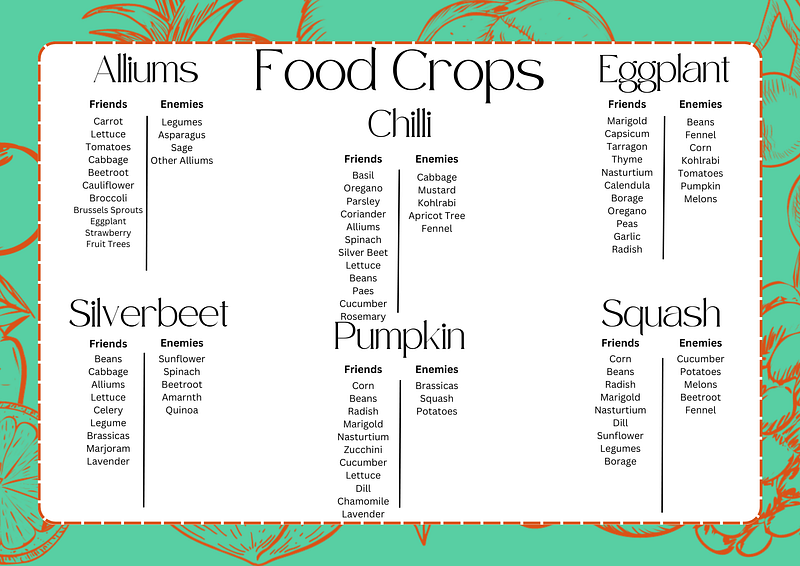
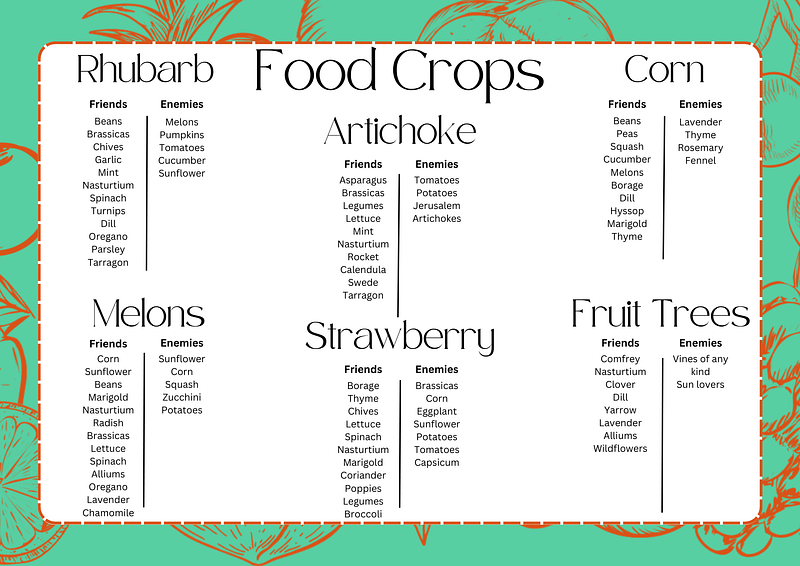
The best way to apply this centuries old practice to our modern gardens is to figure out what type of plants we want to use as companion plants, do you want to use other food crops? or, do you want to interplant with flowers or herbs? But don’t get to overwhelmed because we will cover each of these in individual posts, today we’ll focus on food crops. There are also tables that you can use for quick reference, the tables have more plant examples and bad companion for each plant.
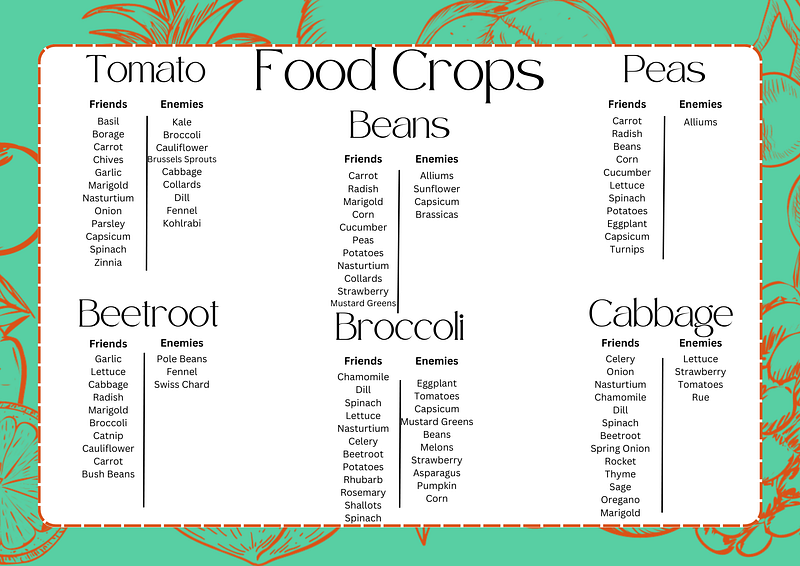
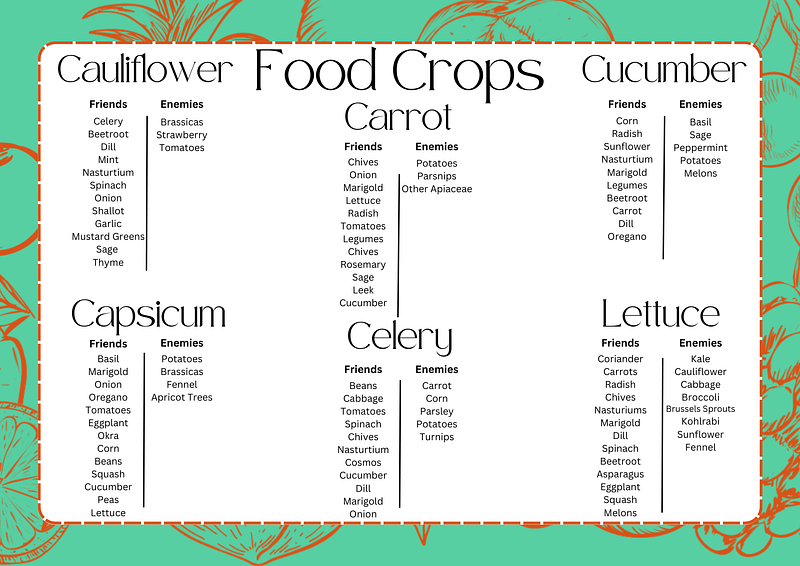
Table created by Adelaide Girl's Garden
Table created by Adelaide Girl’s Garden
Tomato

Basil: Basil can help repel insects and improve the flavour of tomatoes.

Borage: Borage can attract beneficial insects and improve the growth and flavour of tomatoes.

Carrot: Carrots can help loosen the soil around tomatoes and improve their growth.

Chives: Chives can repel pests and improve the flavour of tomatoes.

Garlic: Garlic can help repel pests and prevent diseases in tomatoes.

Marigold: Marigolds can repel pests and improve the growth of tomatoes.

Nasturtium: Nasturtiums can attract beneficial insects and repel pests from tomatoes.

Onion: Onions can repel pests and prevent diseases in tomatoes.

Parsley: Parsley can help improve the flavour of tomatoes.

Spinach: Spinach can help improve the growth and yield of tomatoes.

Zinnia: Zinnias can attract beneficial insects and improve the growth and flavour of tomatoes.

If you want to support my work or access any extras, you can do so here: https://www.buymeacoffee.com/adgiga Thank you, I really appreciate you.

Bean

Carrot: Beans and carrots have a mutually beneficial relationship. Beans fix nitrogen in the soil, which carrots love, and the tall bean plants provide shade for the shorter carrot plants.

Radish: Radishes are a good companion for beans because they help deter pests like cucumber beetles and aphids.

Marigold: Marigolds help repel pests that can harm beans, such as nematodes and bean beetles.

Corn: Beans and corn are classic companion plants, as beans fix nitrogen in the soil that corn needs, while the tall corn plants provide shade for the bean plants.

Cucumber: Cucumbers help deter bean beetles, and the two plants don’t compete for the same nutrients, as cucumbers grow vertically, and beans grow horizontally.

Peas: Peas and beans are both legumes and can help each other grow by providing nitrogen to the soil. Additionally, the tall pea plants can provide support for the shorter bean plants.

Potatoes: Potatoes can help keep bean beetles away, and the beans can help keep potato beetles away.

Nasturtium: Nasturtiums help repel pests that can harm beans, such as aphids and cucumber beetles.

Pea

Carrot: Carrots and peas are excellent companion plants because peas fix nitrogen in the soil, which carrots need for healthy growth.

Radish: Radishes can be planted with peas to help deter pests like cucumber beetles and aphids.

Beans: Beans and peas make good companion plants because they both fix nitrogen in the soil.

Corn: Corn and peas are great companions because they help support each other. The corn provides a natural trellis for the peas to climb, and the peas provide nitrogen for the corn.

Cucumbers: Cucumbers and peas are good companion plants because cucumbers provide a natural trellis for the peas to climb.

Lettuce: Lettuce and peas are a great combination because lettuce grows quickly and will provide shade for the peas during the hottest part of the day.

Spinach: Spinach is a good companion for peas because it helps to keep the soil moist and cool.

Beetroot

Onion: Onions repel pests that can attack beetroot, such as aphids and carrot flies. They also help to improve the soil quality by adding nitrogen to the soil.

Garlic: Garlic is another plant that repels pests, and it can also help to improve the flavour of the beetroot.

Lettuce: Lettuce makes a great companion for beetroot because it grows quickly and can be harvested before the beetroot is ready, leaving more room for the beetroot to grow.

Cabbage: Cabbage is a good companion for beetroot because it helps to repel pests and also adds organic matter to the soil.

Radish: Radishes are a fast-growing plant that can be used as a marker for where the beetroot is planted. They also help to improve the soil quality.

Marigold: Marigolds are a great companion plant for beetroot because they repel pests and attract beneficial insects.

Broccoli

Chamomile: Chamomile is a great companion for broccoli because it attracts beneficial insects such as ladybugs and hoverflies that prey on aphids, which can be a problem for brassicas.

Dill: Dill attracts beneficial insects such as wasps, which help control caterpillars and other pests that can be problematic for broccoli.

Lettuce: Lettuce makes a good companion plant for broccoli because it provides shade and helps retain moisture in the soil.

Spinach: Spinach is another good companion plant for broccoli because it has a similar nutrient profile and can help attract beneficial insects.

Nasturtium: Nasturtiums make good companions for broccoli because they repel aphids and other pests that can be problematic for brassicas.

Celery: Celery is another good companion plant for broccoli because it helps repel pests such as whiteflies and spider mites.

Cabbage

Celery: Celery is known to repel cabbage worms, which are a common pest that can damage cabbage plants.

Onion and Garlic: Onions and garlic are known to repel cabbage worms and other pests that can damage cabbage plants. They also have a pungent odour that can mask the scent of cabbage plants, making them less attractive to pests.

Nasturtium: Nasturtiums are a good companion plant for cabbage because they attract beneficial insects that can help control pests that can damage cabbage plants.

Chamomile: Chamomile is known to have a positive effect on the growth and health of cabbage plants. It also attracts beneficial insects that can help control pests.

Dill: Dill is another plant that can help repel cabbage worms and attract beneficial insects. It also has a positive effect on the growth and health of cabbage plants.

Spinach: Spinach is a good companion plant for cabbage because it can help shade the soil and retain moisture, which can benefit cabbage plants.

Beetroot: Beets are a good companion plant for cabbage because they can help improve the soil quality and nutrient availability for cabbage plants.

Cauliflower

Celery: Celery is known to repel cabbage worms, which are a common pest for cauliflower plants.

Beetroot: Beets are a good companion plant for cauliflower as they help to break up compacted soil, which allows the cauliflower to grow more easily.

Dill: Dill attracts beneficial insects like wasps and ladybugs, which help to control pests that attack cauliflower plants.

Mint: Mint can help to repel pests like aphids and cabbage moths, which are known to attack cauliflower plants.

Nasturtium: Nasturtiums attract beneficial insects like bees and ladybugs, which help to control pests that attack cauliflower plants.

Spinach: Spinach can help to provide shade for cauliflower plants during hot weather, which can help to prevent them from bolting.

Carrot

Chives: Chives are thought to repel carrot fly, which can be a major pest for carrots. They also are easy to grow alongside carrots.

Onions: Like chives, onions can help to repel carrot fly. They also provide a natural pest deterrent for a range of other insects.

Marigold: Marigolds are known to repel a range of pests and can also help to improve soil health. They are easy to grow and can add a nice pop of colour to the garden.

Lettuce: Lettuce is a good companion plant for carrots because it is a shallow-rooted plant and won’t compete with carrots for nutrients.

Radish: Radishes are often planted alongside carrots because they mature quickly and can be harvested before the carrots need the space. Additionally, they help to loosen the soil around the carrots, making it easier for them to grow.

Cucumber

Beans: Beans fix nitrogen in the soil, which can benefit cucumbers. In turn, cucumbers can provide a trellis for beans to climb on.

Corn: Corn and cucumbers are a good combination because they have different nutrient requirements. Corn takes up nitrogen while cucumbers take up potassium, so they can grow well together without competing for nutrients.

Radish: Radishes are a great companion for cucumbers because they repel cucumber beetles, which can damage the cucumber plants.

Sunflower: Sunflowers can provide shade for cucumber plants during the hottest part of the day.

Nasturtium: Nasturtiums are another companion plant that can help repel cucumber beetles.

Marigold: Marigolds can also help repel pests that can damage cucumber plants.

Capsicum

Basil: Basil can repel aphids and spider mites, which are common pests of capsicum plants. It can also improve the flavour of capsicum fruits when grown nearby.

Marigold: Marigold can deter nematodes, which can damage the roots of Capsicum plants. It can also attract beneficial insects like ladybugs and lacewings that prey on aphids.

Oregano: Oregano can repel harmful insects and attract beneficial ones. It can also enhance the flavour of Capsicum fruits.

Onion: Onion can repel aphids and other pests. It can also improve the health and growth of Capsicum plants.

Celery

Beans: Beans and other legumes help to fix nitrogen in the soil, which can be beneficial for celery plants.

Cabbage: Cabbage and other brassicas can help to repel pests that are attracted to celery, such as aphids and cabbage worms.

Tomatoes: Tomatoes and celery are good companions because they have similar water and nutrient requirements.

Spinach: Spinach is a good companion for celery because it does not compete for nutrients, and it can help to shade the soil around the celery plants.

Chives: Chives can be a good companion plant for celery because they can help to repel aphids.

Nasturtium: Nasturtiums are good companion plants for celery because they can help to repel pests and attract beneficial insects.

Lettuce

Coriander: Coriander is a great companion plant for lettuce. It attracts beneficial insects that can help to control pests that may attack the lettuce.

Carrot: Carrots and lettuce make good companions as they have different root depths and help each other by not competing for nutrients.

Radish: Radishes can be planted along with lettuce as they germinate and grow quickly, so they can be harvested before the lettuce grows big.

Chives: Chives can be planted around lettuce as they have natural pest repellent qualities and can help deter aphids and other pests from attacking lettuce.

Nasturtium: Nasturtiums are also great companions for lettuce as they help to deter aphids and other pests.

Marigold: Marigolds help repel pests and improve the soil around the lettuce.

Dill: Dill is believed to help improve the flavour of lettuce and also helps to repel pests.

Spinach: Spinach can be planted with lettuce and they can help to provide shade for each other.

Beetroot: Beetroot and lettuce make good companions, as they can help to provide shade for each other and not compete for nutrients.

Alliums

Carrot: Alliums can help to repel carrot flies, which can damage carrot crops.

Lettuce: Alliums can help to deter slugs and other pests that like to feed on lettuce leaves.

Tomatoes: Alliums can help to repel aphids, which can damage tomato plants. In addition, the pungent aroma of alliums can help to improve the flavour of tomatoes.

Cabbage: Alliums can help to repel cabbage worms, which can damage cabbage crops. They can also improve the flavour of cabbage.

Beetroot: Alliums can help to repel aphids and other pests that can damage beet crops.

Chilli

Tomatoes: Both tomato and chilli peppers are members of the nightshade family and can be planted together. The tomato plant can repel insects that attack chillies.

Basil: Basil can improve the growth and flavour of chillies. It can also repel harmful insects and attract beneficial ones.

Oregano: Oregano can deter aphids, spider mites, and other pests that can damage chillies.

Parsley: Parsley can attract hoverflies, which are natural predators of aphids and other pests that can harm chillies.

Coriander: Coriander can repel harmful insects and attract beneficial ones.

Eggplant

Marigold: Marigolds repel many pests that commonly affect eggplants, such as spider mites and flea beetles.

Capsicum: Capsicums and eggplants both require similar growing conditions and can help shade each other’s roots.

Tarragon: Tarragon can help repel some pests that are attracted to eggplants.

Thyme: Thyme can help deter some eggplant pests and improve soil quality.

Silverbeet

Beans: Beans are said to improve the growth and flavour of silver beet. They also fix nitrogen in the soil, which is beneficial for leafy green vegetables like silverbeet.

Cabbage: Cabbage is said to deter pests that can attack silver beet.

Onion: Onion is said to repel pests that can attack silver beet. Onion also adds nutrients to the soil that can benefit silver beet.

Lettuce: Lettuce is said to help protect silver beet from pests and disease.

Pumpkin

Corn: Corn provides a natural trellis for pumpkin vines, and pumpkins help to shade the corn roots, reducing moisture loss and weed growth.

Beans: Like corn, beans can also provide a natural trellis for pumpkins, and the two plants work well together to attract pollinators.

Radish: These fast-growing root vegetables can be planted in the same hills as pumpkins, as they will be harvested before the pumpkin plants get too big. Radishes help to loosen soil for the pumpkin roots and repel pests like squash borers and cucumber beetles.

Marigold: These bright flowers can help to deter pests that can attack pumpkins, such as nematodes and squash bugs.

Nasturtium: Nasturtiums are known to deter squash bugs and other pests, and their flowers are edible and can be added to salads.

Squash

Corn: Squash and corn are an ideal companion planting combination known as the “Three Sisters”. Squash helps keep the soil moist and cool, while the corn provides a trellis for beans, and both plants benefit from the nitrogen-fixing properties of beans.

Beans: Beans are another good companion for squash, as they also fix nitrogen in the soil that benefits all plants in the garden.

Radish: Radishes are a great companion for squash as they help to repel squash bugs and other pests that can damage the plants.

Marigold: Marigolds are another plant that helps to repel pests and attract beneficial insects, making them a good companion for squash.

Nasturtium: Nasturtiums are a great companion for squash, as they repel squash bugs and other pests, while also attracting beneficial insects.

Rhubarb

Beans: Beans are nitrogen-fixing plants that can help to improve the soil quality around rhubarb plants. They can also provide shade and act as a living mulch.

Brassicas: Brassicas, such as broccoli, cabbage, and cauliflower, can help to deter pests that may be attracted to rhubarb. They can also help to provide shade and shelter for the rhubarb.

Chives: Chives are known to repel insects and can help to improve the flavour of rhubarb when grown nearby.

Garlic: Garlic is a natural insecticide and can help to deter pests that may be attracted to rhubarb.

Mint: Mint can help to repel pests and can also help to improve the flavour of rhubarb.

Nasturtium: Nasturtium is a companion plant that can help to repel pests and attract beneficial insects to the garden. It can also help to improve the flavour of rhubarb.

Spinach: Spinach is a good companion plant for rhubarb, as it can help to provide shade and shelter for the rhubarb. It can also help to improve the soil quality around the plant.

Artichoke

Asparagus: Asparagus and artichokes make great companions because they have similar soil requirements and grow well together. Asparagus also helps to repel pests that may be attracted to artichokes.

Brassicas: Brassicas, such as broccoli, cauliflower, and cabbage, are good companions with artichokes because they have similar soil requirements and grow well together. Brassicas are also said to help repel pests that may be attracted to artichokes.

Legumes: Legumes, such as beans and peas, are good companions with artichokes because they help to fix nitrogen in the soil. Artichokes require a lot of nitrogen, and legumes help to provide it.

Lettuce: Lettuce is a good companion with artichokes because it grows well in the shade of the artichoke plant. It also has a shallow root system, which makes it less competitive with the deep roots of the artichoke.

Mint: Mint is a good companion with artichokes because it helps to repel pests that may be attracted to the artichoke plant. It also grows well in the shade of the artichoke plant.

Nasturtium: Nasturtiums are a good companion with artichokes because they attract beneficial insects that help to pollinate the artichoke flowers. They also help to repel pests that may be attracted to the artichoke plant.

Corn

Beans: Beans are nitrogen-fixing plants, meaning they can take nitrogen from the air and convert it into a form that corn can use. In return, the corn provides support for the climbing bean plants.

Peas: Like beans, peas are also nitrogen-fixing plants that can improve the growth of corn. Peas can be planted as a cover crop between corn rows and can help prevent soil erosion.

Squash: Squash plants are excellent companions for corn because they can help suppress weeds and keep the soil moist by creating a living mulch. Squash can also provide shade for the corn roots and help keep the soil cool.

Cucumber: Cucumbers are another plant that can help suppress weeds and provide living mulch for the corn. Additionally, the cucumbers can attract bees and other beneficial insects to the corn.

Melons: Melon plants can be grown with corn to help attract pollinators to the garden. The melons can also help provide shade for the corn roots, and the corn stalks can provide support for the climbing melon plants.

Melons

Corn: Corn is a good companion plant for melons because it provides shade for the soil and can help to retain moisture. The two plants can also share nutrients.

Sunflower: Sunflowers are another good companion plant for melons because they provide shade and can attract pollinators to the garden.

Beans: Beans are legumes that fix nitrogen in the soil, which can benefit melon plants. They can also help to control weeds and improve soil structure.

Marigold: Marigolds are a good companion plant for melons because they can help to deter pests and attract beneficial insects.

Nasturtium: Nasturtiums are another good companion plant for melons because they can help to repel pests and attract beneficial insects.

Radish: Radishes are a fast-growing plant that can be planted with melons to help break up compacted soil and improve drainage. They can also help to deter pests and attract beneficial insects.

Strawberry

Borage: Borage is an herb that is known to improve the growth and flavour of strawberries, while also attracting beneficial insects.

Thyme: Thyme is a fragrant herb that repels pests and attracts pollinators, making it a great companion for strawberries. And is known for enhancing strawberries flavour.

Chives: Chives are an herb that repels pests and also attracts beneficial insects.

Lettuce: Lettuce can be planted around the base of strawberry plants to help keep the soil moist and cool, while also adding nutrients to the soil.

Spinach: Spinach is another good companion for strawberries, as it also helps keep the soil moist and cool and adds nutrients to the soil.

Nasturtium: Nasturtium is a flowering plant that can help repel pests and attract beneficial insects to the garden.

Marigold: Marigolds are a popular companion plant for strawberries, as they repel pests and attract beneficial insects.

Fruit Trees

Comfrey: has deep roots that can help to bring nutrients up from deep in the soil and make them available to the fruit trees.

Nasturtium: These brightly coloured flowers are edible and can be used in salads. They are also known to repel aphids and other pests that can damage fruit trees.

Clover: A legume that can fix nitrogen in the soil, which can be beneficial for the fruit trees. Dill: This herb can attract beneficial insects that can help to control pests that might damage the fruit trees.

Chives: These herbs can help to repel pests and attract beneficial insects to the area around the fruit trees.

Yarrow: This herb can help to improve soil quality and attract beneficial insects that can help to control pests.

  • All of this information is personal experience and research, feel free to play around in your patch, the information is also based off of temperate in Australia. But this information is completely adaptable to your zone, climate and garden.

By strategically planting compatible plants together, you can help to control pests, enhance soil fertility, and promote better growth and development of your plants. Additionally, companion planting can be an eco-friendly and cost-effective way to achieve these benefits without resorting to harmful pesticides or fertilizers.

While there is still some debate and ongoing research about the effectiveness of specific companion planting combinations, there are many tried and true methods that have been used by gardeners for centuries. With a bit of experimentation and research, you can find the best companion planting combinations for your specific needs and create a thriving and healthy garden.

Overall, companion planting offers a holistic and sustainable approach to gardening that not only benefits the plants but also the surrounding ecosystem. By incorporating companion planting techniques into your gardening practices, you can create a beautiful, healthy, and vibrant garden that is both environmentally friendly and rewarding to tend.

  • All of this information is personal experience and research, feel free to play around in your patch, the information is also based off of temperate in Australia. But this information is completely adaptable to your zone, climate and garden.

By strategically planting compatible plants together, you can help to control pests, enhance soil fertility, and promote better growth and development of your plants. Additionally, companion planting can be an eco-friendly and cost-effective way to achieve these benefits without resorting to harmful pesticides or fertilizers.

While there is still some debate and ongoing research about the effectiveness of specific companion planting combinations, there are many tried and true methods that have been used by gardeners for centuries. With a bit of experimentation and research, you can find the best companion planting combinations for your specific needs and create a thriving and healthy garden.

Overall, companion planting offers a holistic and sustainable approach to gardening that not only benefits the plants but also the surrounding ecosystem. By incorporating companion planting techniques into your gardening practices, you can create a beautiful, healthy, and vibrant garden that is both environmentally friendly and rewarding to tend.

If you have any questions or want to share your gardening experiences, newbie or experienced, feel free to leave a comment. I would love to hear from you.

Become a member of Medium.com and you’ll get full access to every post that I write, your reads directly supports myself and thousands of other writers.

Connect with me:

Take a photo or screen shot and use the hashtag #ADGIGABLOG and tag me on Insta, let’s connect!

https://www.instagram.com/adelaide_girls_garden/

If you enjoyed this post, you’ll love my other posts. Subscribe and follow to have updates delivered to your inbox. I would love to have you here.

As always,

Keep nurturing your plants and watch them grow. Until next time,

With a little bit of soil, a lot of love, and two green thumbs.

Sources:

Gardening Tips
Gardening
Companion Planting
Beginners Guide
Home Gardening
Recommended from ReadMedium