
FOMO On Other Cultures
Don’t get stressed that you can’t meditate

Over the last decade, certain aspects of Eastern culture have become very fashionable in the West. Yoga is in. So is meditation. We all want to feel more Zen. But has our ever-growing interest in mindfulness just become another source of stress?
Nothing lasts forever
Japanese philosophy places great emphasis on transience, which basically means realising that all things pass. This is encapsulated in the supposedly untranslatable concept of mono no aware, generally rendered in English as “empathy towards things” or, perhaps more clearly, “an awareness of the ephemeral nature of things”.
Evidently, accepting that nothing lasts forever can be both liberating and depressive. Doing so can inspire a carpe diem mind-set that stops us from stressing needlessly over trivial details. But it can also provoke a feeling of insignificance — that whatever we do and achieve counts for nothing.
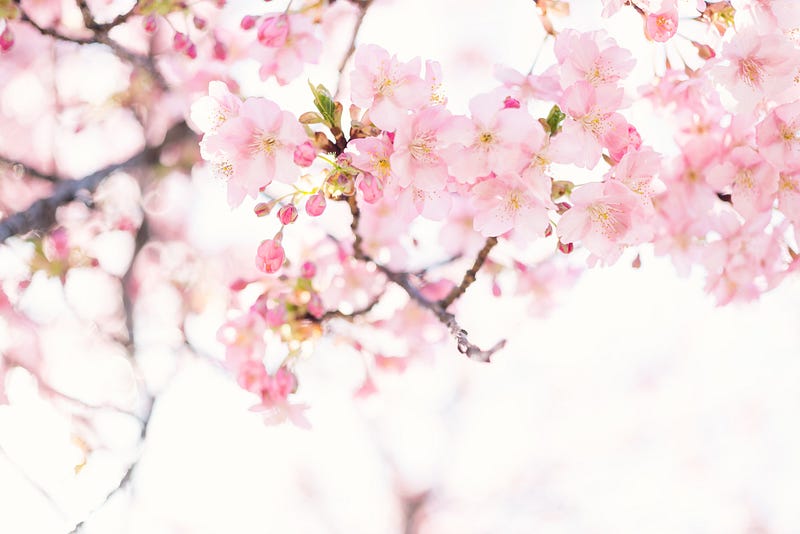
In Japan, transience is not considered an abstract philosophical concept, but a reality of life. The famous Japanese symbol of cherry blossom helps to visualise this. When cherry blossom starts to fall, we are witness to a physical representation of transience: the passage of the seasons beautifully illustrates the impermanence of our fragile human experience.
Transience is intrinsically linked to nature, which explains why it is particularly prevalent in Buddhist cultures. It is by no means an alien notion in the West, but it is not embedded as deeply into our experience of the world.
Our rationality-based outlook makes us want to understand why things happen. We arrogantly think of logic as the only way to make sense of our surroundings.
This is far from true. In fact, in a culture that places more weight on emotional response than logical deduction, it may actually be possible to perceive the world more clearly.
See the invisible
To highlight this, it is interesting to consider the reaction of a Westerner who views a work of Japanese art for the first time. A lot of Japanese art is minimalistic, which can make it seem underwhelming to a Western eye that has been trained to notice the shapes and patterns present on a canvas.
On the other hand, a Japanese spectator sees not only the marks on the page, but how these interact with blank space.
This comes down to a different conception of emptiness (mu in Japanese). From the Western perspective, emptiness is synonymous with absence: we consider the blank spaces are unfinished or vacant. Changing our perspective can help us “see” more.
Needless to say, it is grossly over simplistic to say that the Japanese are x and Westerners are y. Indeed, many in the West live with a keen awareness of transience, especially those whose livelihoods depend upon adapting to these balances.
Impermanence is also a topos in our art. For example, the great Romantic poet John Keats alludes to the ephemerality of life in his Ode on Melancholy. Interestingly, his suggestion for dealing with the changeability of human existence is to find solace in nature:
“But when the melancholy fit shall fall Sudden from heaven like a weeping cloud, That fosters the droop-headed flowers all, And hides the green hill in an April shroud; Then glut thy sorrow on a morning rose…” (ll. 11–15)
When looking at a rose, we realise that everything is ephemeral. This momento mori — a reminder of the inevitability of death — can make a period of melancholy easier to endure. Thus, transience helps us to temper emotions that might otherwise dominate our lives.
The meditation myth
Transience is present in the West, but is not embedded into our everyday reality like it is in the East. This exemplifies the problem with importing ideas from another culture: they often don’t survive as well when ripped out of the soil in which they were grown.
The rise of Eastern habits in the West — yoga, mindfulness, meditation — is a sign of our discontentment with our consumerist societies. At a time when technological advancements have brought unprecedented progress, inequality has drastically worsened. And, crucially, we are more stressed than ever before.

Latching onto exotic-sounding ideas in response can bring its own pressures. The average Westerner will often find it hard when they first start meditating. This is hardly surprising. Someone who has lived their whole life through a logical filter will inevitably need time to adjust before they are able to enter a state of mushin (literally “no mind”).
Our dwindling attention span doesn’t help with this. In 2015, a study by Microsoft found that the average Western attention span had fallen to eight seconds. The response to this story confirmed the finding: the figure caused a furore from people who hadn’t made it past the headline and actually read any of the 54-page report.
However, in our social-media governed lives mindfulness has become a trend. We are constantly subjected to photos of celebrities meditating in their luxury homes. We are told that the key to being a successful businessperson is to learn to meditate. Countless books offer us tips on how to be more Zen.
This pressure has made something that started out as the cure of our stress into another source of it.
Of course, the problem boils down to mindset. As is the way in our world of one-click checkouts and six-second vines, we expect rapid results. Get Rich Quick. Get a six-pack in two weeks. Get mindful with this one simple trick. That’s not how it works with meditation.
To benefit from the teachings of another culture, they must be grounded in their original context. Learning to meditate involves adapting your state of mind. To change something as inherent as your way of thinking requires patience.
Meditation has an array of benefits and is undoubtedly a healthy practice to follow in our daily lives. But it’s not a miracle antidote to all the problems of our capitalist societies.
The grass isn’t always greener
Our recent interest in Buddhist philosophy is mirrored by the progress of capitalism across Japan. The young are increasingly westernised to the detriment of traditional values.

The impact doesn’t seem to have been too positive. According to an OECD study, Japanese teens today have the third-lowest life satisfaction and above-average levels of overall anxiety. This is reflected in young professionals among whom suicide is the leading cause of death for men and women.
Overworking is often blamed as the prime cause of Japanese stress. This is linked to a work culture that puts enormous pressure on achievement, which starts at school and carries on throughout their working life. In a country where workers are pushed to mental and physical limits, it is not surprising that Japanese has a word, karoshi, which translates as “overwork death”.
Likewise, in the West work is consistently ranked as one of the main causes of stress. We criticise capitalism — quite rightly — as a machine that puts company profits above individual wellbeing. But stress transcends particular societal structures. It is a global problem: an estimated 300 million people worldwide suffer from an anxiety disorder.
There is something tragically ironic about all this. Whilst Westerners are turning to the East to counter stress caused by our consumerist lifestyles, Japanese young people are increasingly enticed by capitalism. Japanese author Marie Kondo has become a bestseller by helping Westerners detach themselves from their possessions, while the Japanese are themselves becoming more consumerist.
Stop feeling like you’re missing out
It is human nature to compare ourselves to other people. The University of Warwick demonstrated this in a study entitled:
Money only makes you happy if it makes you richer than your neighbours.
Therefore, somewhat counterintuitively, one of the leading catalysts of global dissatisfaction is an increased knowledge of how others live. Think about it: we can only know we are unhappy if we’re aware of another reality in which we believe we would be happier.
In the same way that we suffer from fear of missing out (FOMO) after seeing Instagram beach photos, an exposure to other cultures can also increase our stress.
We are all constrained by the society into which we are born. Our universal outlook is determined by the culture in which we have grown up. Undoubtedly, opening the mind to different cultural experiences is one of the best ways to escape a narrow-minded existence. The key is to do it the right way.
In order to successfully adapt another culture’s teachings, we need:
- A better understanding of the traditions they are taken from
- A more patient and sensitive approach to learning
- A state of mind that leaves behind our individual or societal prejudices
By combining the best teachings from around the world we can enrich our experience in this fleeting life. Just don’t get stressed when you’re struggling to meditate.
Daniel Clark is a reader, writer and linguist. He is the Editor of Briefly Write, a new literary webzine for anyone who likes bold, succinct writing.


