avatarDaphne Tideman

Free AI web copilot to create summaries, insights and extended knowledge, download it at here

3005

Abstract

n taking a supplement once. Instead, they talk about sleeping better and less stress, but even that isn’t the JTBD. At the very end, “motivated with life” and “getting the stuff done that needs to be done”. For Charlie, it is about achieving their goals in life, doing that, and not being held back by brain fog, inadequate sleep, and stress. The Smart Supplement is one way to do that. Suddenly other supplements are not the only competitors; it is:</p><ul><li>Meditation</li><li>Healthy eating</li><li>Coffee</li><li>Exercise</li></ul><p id="6b5b">That is not to say these can’t be used alongside, but instead, they are all ways to achieve the same, to do more but with a busy life. When the alternative is healthy eating, you can talk about it being a safety net to get all your needs and feel better every day rather than just which vitamins does it contain.</p><h1 id="3026">The Power of JTBD</h1><p id="cc08">JTBD not only help you understand how to communicate but also show you:</p><ul><li>What matters to customers</li><li>What they are comparing your product with</li><li>How to solve the underlying pain</li></ul><p id="11dd">Not only that, you are able to target a far broader pool of customers. Take Revlon as a beauty brand: the number of people looking for lipsticks is far less than those hoping to look better and stand out from the rest. So suddenly, you have a far bigger target audience:</p><figure id="6fb5"><img src="https://cdn-images-1.readmedium.com/v2/resize:fit:800/0*puH_Ko4e7AQxEhGg"><figcaption>Stages of Awareness</figcaption></figure><h1 id="d778">Getting to Know Your Customers JTBD</h1><p id="3cbf">Whilst reviews can give you a helpful hint towards what the JTBD are; customer interviews are the best way to dive deeper. It is best to ask customers who love your product/service, but <a href="https://jtbd.info/top-8-tips-for-jtbd-interviews-6739c88f1cc9">are new enough to remember the switching moment</a>, the moment they first tried your brand. Your focus is on understanding their journey to finding your product/service, what they compared it to, and what they do/don’t value. Don’t talk too much about your actual product/service but more their behaviour around finding the product/service:</p><ol><li>What other solutions did you try before deciding on [xyz]?</li><li>What did, and didn’t you like about other solutions you had tried?</li><li>What led you to try out [xyz]?</li><li>How did you go about finding a new solution?</li><li>Did you have any questions or concerns before trying out [xyz]?</li><li>If you could no longer use [xyz], what would you now use instead?</li><li>Have you set aside a budget for [xyz] or some other solution?</li></ol><p id="2265">As always in user interviewing you want to constantly dive deep, asking why to understand what is driving their behavior. When we asked this about the Smart Supplement they mentioned things like:</p><ul><li>“I used to have to drink four coffees a day, now it feels like even with less coffee, it i

Options

s easy to get out of bed”</li><li>“I want to be able to feel rested and sleep well without taking any medication or unnatural solutions”</li></ul><h1 id="c134">Sharing JTBD Within Your Organisation</h1><p id="e9f0">Now take all you’ve learned and try to simplify it down to a JTBD statement:</p><figure id="e88a"><img src="https://cdn-images-1.readmedium.com/v2/resize:fit:800/0*2x5K2pO1-nVGzqUG"><figcaption>Jobs to Be Done Statement</figcaption></figure><p id="4b8d">I also find it helpful to create a Customer Desire Map to break it down further, this misses a bit the situation the customer is in, but does help you bring to life what is going through the customers minds:</p><figure id="6876"><img src="https://cdn-images-1.readmedium.com/v2/resize:fit:800/0*EFAb9YBlrwRcT6Td"><figcaption>Customer Desire Map</figcaption></figure><p id="4ddd">If you want to share them in more depth it can also be helpful to:</p><ul><li>Sketch them out in a <a href="https://www.strategyzer.com/canvas/value-proposition-canvas">value proposition canvas</a> this helps you think further about what the pains and gains are of those customers</li><li>Sketch it out as a <a href="https://valchanova.me/customer-development-jobs-to-be-done/">customer journey map</a> which helps you think about all the different steps and triggers that led them to try your product</li></ul><p id="8468">Both are helpful to create but nothing is more helpful than having your team hear your customers talk about their Jobs To Be Done. That is why I suggest asking for permission to record them and share them internally. We even had an internal podcast “the Executive Function” (little brain joke there) with all the interviews and we shared whenever there were new episodes.</p><p id="c99d" type="7">You want everyone in your company to hear your customers talk about their JTBD. To really understand the problem you are solving and what you are trying to achieve.</p><p id="abb9">Getting this right seems like a sidestep from Product/Market Fit but it is the biggest step forward you can take. The JTBD you are solving for is what will drive that fit. We changed much of our communication to talk about that JTBD and the benefits they wanted to feel and <a href="https://bettermarketing.pub/how-to-increase-your-conversion-rate-by-300-60e3c244476e">saw incredible lifts as a result of it.</a></p><p id="e8f4">From there, you have the foundations to start looking further at how to drive PMF. This will involve asking more questions (remember, your customers find PMF for you, not you), so feel free to combine these stages into one interview. Keep an eye out for the next article where we dive deeper into what else you should be asking.</p><p id="fcc9">If you need more support on how to conduct jobs to be done interviews and use this to get your messaging right, I cover it extensively as part of my <a href="https://daphnetideman.podia.com/3ce7a37d-2655-4676-8afd-87ce1000f41d">message-market fit programme</a>.</p></article></body>

Focus on ‘Jobs to be Done’, Not Your Product

A Step by Step Guide to Finding Product-Market Fit

Photo by Drew Coffman on Unsplash

Coffee isn’t a hot beverage; it is a way to fuel your day.

Netflix isn’t a streaming site but a way to unwind after a long day.

Too often we think in terms of what our product is, the category it falls in to. Yet, end of the day it is what your customer is trying to achieve, their Jobs to be Done (JTBD). Charles Revson, the founder of Revlon, said the following:

“In the factory, we make cosmetics. In the drugstore, we sell hope.”

This is the essence of JTBD; the difference between what customers buy: “cosmetics”, and the why behind it: “hope”. The why is crucial: once you understand the why, you know how to communicate with your customer and build a product/service to meet their needs.

A JTBD is not what your customers buy but rather the change they wish to experience with your product.

JTBD is an unmissable building block in finding Product-Market Fit (PMF). In my last two articles on PMF, I covered the myths about finding PMF and where to start to find PMF. Now it is time to dive one step deeper into finding PMF because you don’t find PMF on your own; your customers find it.

The Role of JTBD

JTBD helps you truly understand the problem you are solving for and thus begins that journey to PMF:
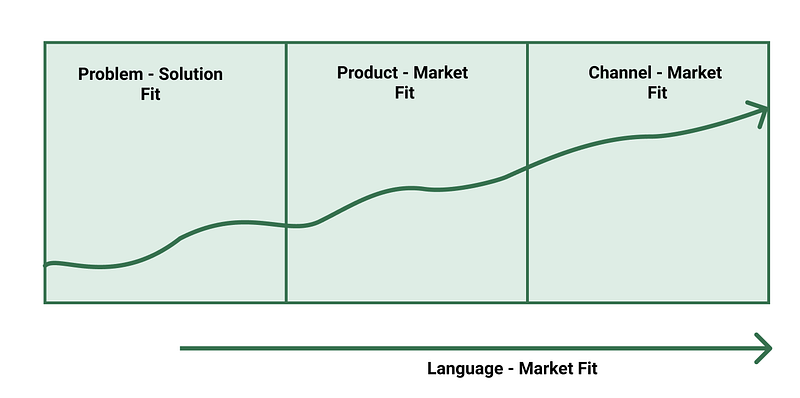
The journey to finding Product - Market Fit

When you immediately jump to just thinking in terms of what the product is (that second stage), you look at all the wrong things. For example, if at Heights we focused purely on supplements, we’d only talk about our ingredients, the quality, etc. But what is the JTBD? No one takes a supplement because they want a supplement. If you look at a customer review, you see hints of this:
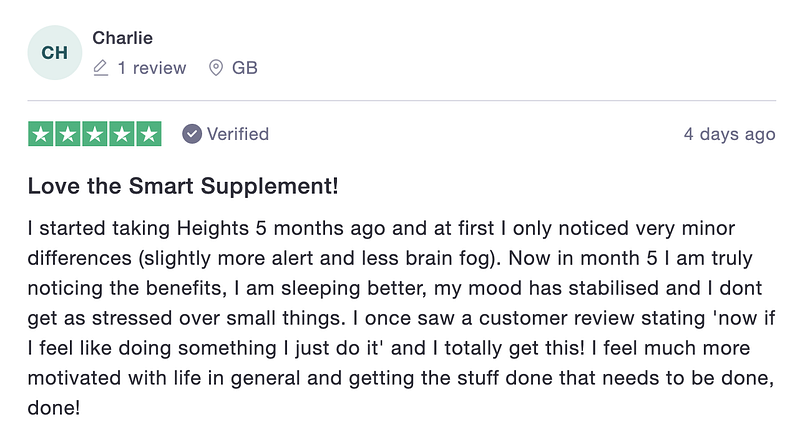
Review of a Heights Customer

What do you think the actual JTBD is?

Charlie doesn’t mention taking a supplement once. Instead, they talk about sleeping better and less stress, but even that isn’t the JTBD. At the very end, “motivated with life” and “getting the stuff done that needs to be done”. For Charlie, it is about achieving their goals in life, doing that, and not being held back by brain fog, inadequate sleep, and stress. The Smart Supplement is one way to do that. Suddenly other supplements are not the only competitors; it is:

  • Meditation
  • Healthy eating
  • Coffee
  • Exercise

That is not to say these can’t be used alongside, but instead, they are all ways to achieve the same, to do more but with a busy life. When the alternative is healthy eating, you can talk about it being a safety net to get all your needs and feel better every day rather than just which vitamins does it contain.

The Power of JTBD

JTBD not only help you understand how to communicate but also show you:

  • What matters to customers
  • What they are comparing your product with
  • How to solve the underlying pain

Not only that, you are able to target a far broader pool of customers. Take Revlon as a beauty brand: the number of people looking for lipsticks is far less than those hoping to look better and stand out from the rest. So suddenly, you have a far bigger target audience:
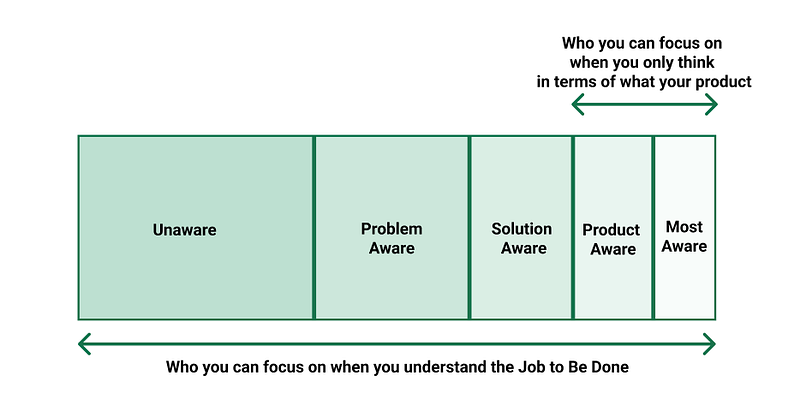
Stages of Awareness

Getting to Know Your Customers JTBD

Whilst reviews can give you a helpful hint towards what the JTBD are; customer interviews are the best way to dive deeper. It is best to ask customers who love your product/service, but are new enough to remember the switching moment, the moment they first tried your brand. Your focus is on understanding their journey to finding your product/service, what they compared it to, and what they do/don’t value. Don’t talk too much about your actual product/service but more their behaviour around finding the product/service:

  1. What other solutions did you try before deciding on [xyz]?
  2. What did, and didn’t you like about other solutions you had tried?
  3. What led you to try out [xyz]?
  4. How did you go about finding a new solution?
  5. Did you have any questions or concerns before trying out [xyz]?
  6. If you could no longer use [xyz], what would you now use instead?
  7. Have you set aside a budget for [xyz] or some other solution?

As always in user interviewing you want to constantly dive deep, asking why to understand what is driving their behavior. When we asked this about the Smart Supplement they mentioned things like:

  • “I used to have to drink four coffees a day, now it feels like even with less coffee, it is easy to get out of bed”
  • “I want to be able to feel rested and sleep well without taking any medication or unnatural solutions”

Sharing JTBD Within Your Organisation

Now take all you’ve learned and try to simplify it down to a JTBD statement:
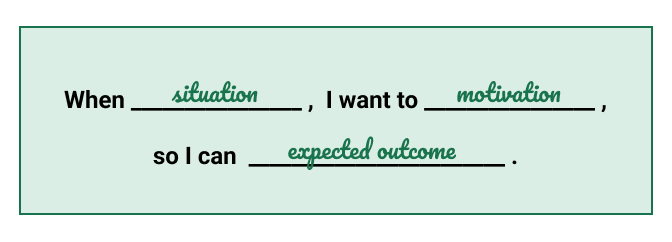
Jobs to Be Done Statement

I also find it helpful to create a Customer Desire Map to break it down further, this misses a bit the situation the customer is in, but does help you bring to life what is going through the customers minds:
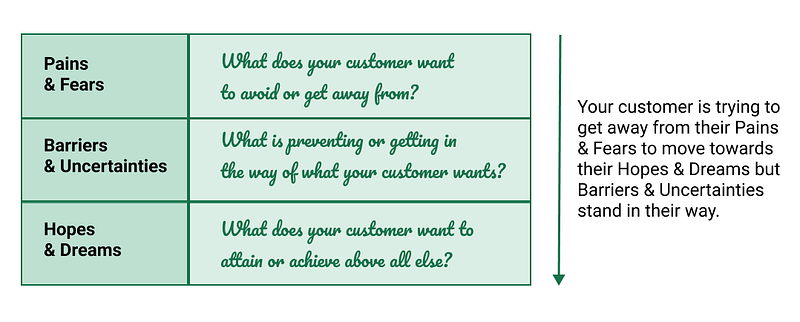
Customer Desire Map

If you want to share them in more depth it can also be helpful to:

  • Sketch them out in a value proposition canvas this helps you think further about what the pains and gains are of those customers
  • Sketch it out as a customer journey map which helps you think about all the different steps and triggers that led them to try your product

Both are helpful to create but nothing is more helpful than having your team hear your customers talk about their Jobs To Be Done. That is why I suggest asking for permission to record them and share them internally. We even had an internal podcast “the Executive Function” (little brain joke there) with all the interviews and we shared whenever there were new episodes.

You want everyone in your company to hear your customers talk about their JTBD. To really understand the problem you are solving and what you are trying to achieve.

Getting this right seems like a sidestep from Product/Market Fit but it is the biggest step forward you can take. The JTBD you are solving for is what will drive that fit. We changed much of our communication to talk about that JTBD and the benefits they wanted to feel and saw incredible lifts as a result of it.

From there, you have the foundations to start looking further at how to drive PMF. This will involve asking more questions (remember, your customers find PMF for you, not you), so feel free to combine these stages into one interview. Keep an eye out for the next article where we dive deeper into what else you should be asking.

If you need more support on how to conduct jobs to be done interviews and use this to get your messaging right, I cover it extensively as part of my message-market fit programme.

Product Strategy
Growth
Growth Hacking
Startup
Jobs To Be Done
Recommended from ReadMedium