

Hong Kong English/Cantonese (XXXIX)
Food Created by the Hong Kong Government
Let’s look back in years
The world knows what happened in Hong Kong in 2019, but I can’t tell you what exactly happened. I wasn’t in Hong Kong until August that year, but things happened before I went back, so I can’t tell you. But I am in Hong Kong since August 2019. You know the laws here? I can’t tell you what happened in 2019 or I will be at risk of being arrested.
So I can’t tell. I won’t tell. As long as I am in the city.
You may say this is self-censoring, but it is just too traumatising to look back at an event that ended brutally and abruptly. (Though now we might say it did somewhat successfully and it somehow is continuing.)
It is some collective memory that every Hongkonger should face, and should be dealt with, but talking about this is still utterly emotionally triggering.
So this article is a kind of side-track from there, as back then the police created a new local “dessert” because of their slur.
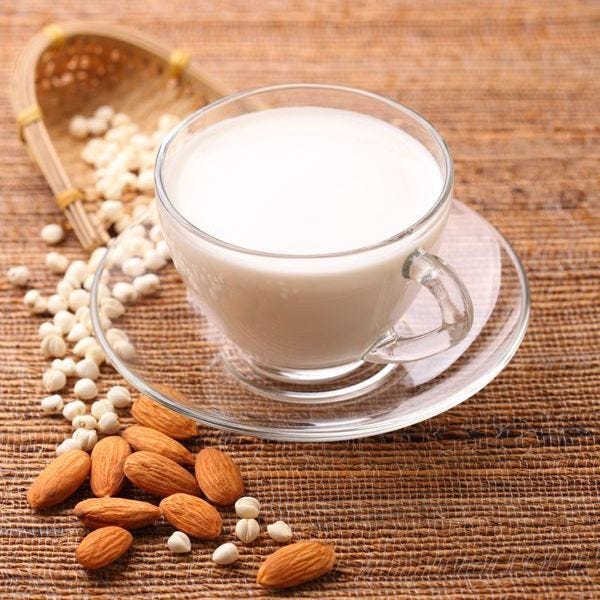
Let me introduce Flower-Gazing Apricot Kernel Drink (賞花杏仁露, Jyutping: soeng2 faa1 hang6 jan4 lou6).
Apricot kernel drink, being one of the popular sweet soups (as a dessert) in Hong Kong, what has to do with it with a leisure activity of looking at the flowers? And I said it has to do with a slur, what was happening?
As Hong Kong was a city of protests, you might have noticed that the roads were closed for the demonstrators during protests such that people could walk on the street, not just the pavements, to chant their slogans.
But when it wasn’t the designated protest area, or like 2019, when the protests were intentionally banned but the brave people of Hong Kong still went out to the planned protest areas. The police had to maintain order and had to take actions, they say, to ask the protesters to go back to the pavements.
This was so different from the Speaker of the Parliament, you can find old clips of Hong Kong protests in 2019 by yourself, I’m not talking.
Therefore, the police officers commanded, “上返行人路.” (Back to the pavement, Jyutping: soeng5 faan1 hang4 jan4 lou6) Well, if you are brave enough to look back the videos, you’ll notice that they were actually shouting like a maniac, and they were shouting fast. And so they slurred.
As for connected speech, espiecially slurred, elision is pretty common. So you may miss some consonants when slurring. Also, there is a linguistic phenomenon namely tone merger in Cantonese, some people are unable to pronounce and/or recognise certain tones in Cantonese and get them mistaken as another. These, I believe, are the reasons why the command became a dessert.
There are some popular mergers like those between the two Cantonese rising tones and two of the three closer flat tones. Because of the tone mergers, I think it is rather normal to get it misheard or mispronounced. (You know we mishear our pop songs too.)
What was funny was that the perception after the tone mergers could still get some phrases. And this made a sweet soup and a totally unrelated leisure activity link together. As a result, netizens would love to write this “novel dessert” into posts that were related to the police on internet forums, or social media.
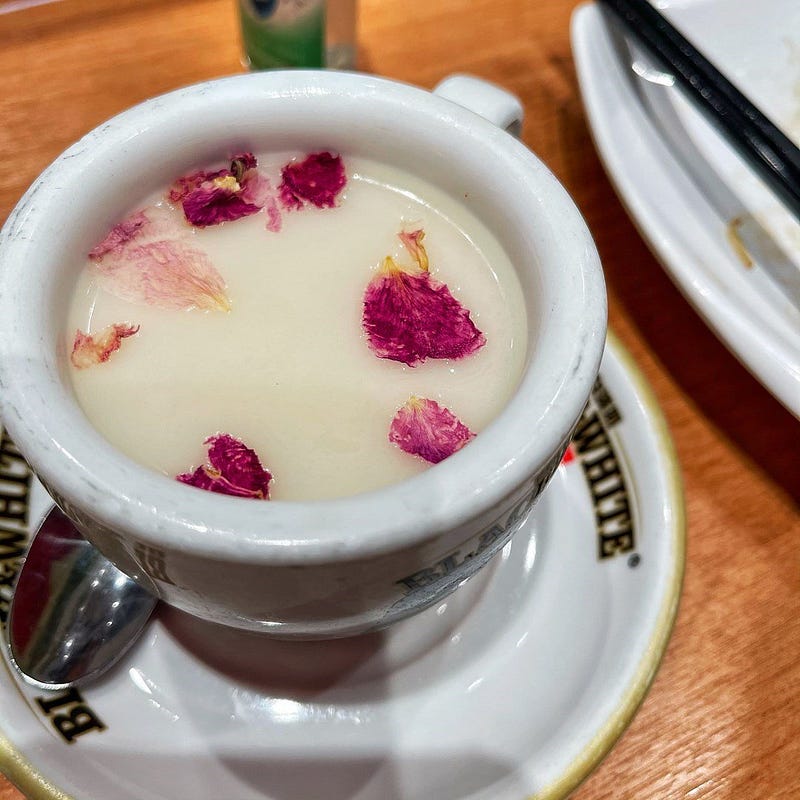
Oh. No. I just come to realisation that 賞花杏仁露 has become real. Here is a picture.
Well, there’s another food item that was “made” during that time.
That was Basic Law Fermented Tofu (基本法腐乳, Jyutping: gei1 bun2 faat3 fu6 jyu5).
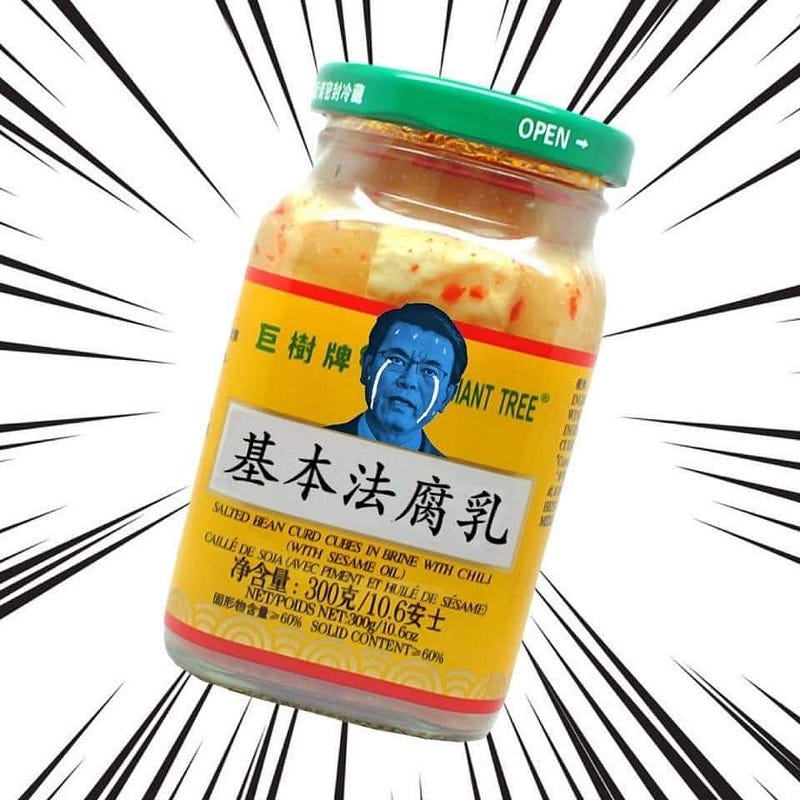
This is a mockery on government officials who claim that everything in Hong Kong is granted by Hong Kong’s Basic Law, as they said “… is granted in Basic Law”. (基本法賦予…, Jyutping: gei1 bun2 faat3 fu3 jyu5)
Yes, they even said that Hong Kong’s status as an international financial centre is granted by the Basic Law. We couldn’t help but laugh at this claim. This defies our common sense. Being world renowned should be something based on reputation, not something given by the laws of one single country.
The government’s claim was such a nonsense that we had to counter it by mocking it and making it food.
Hong Kong is losing a lot in its importance in the world now, but in this creativity on food, I believe that Hong Kong’s status as a “food paradise” can still stand for a while.
Who knows what major events in the world can help us be creative in making new food for the globe?


