
Florence + the Machine’s “Dance Fever”: Track-by-Track Review
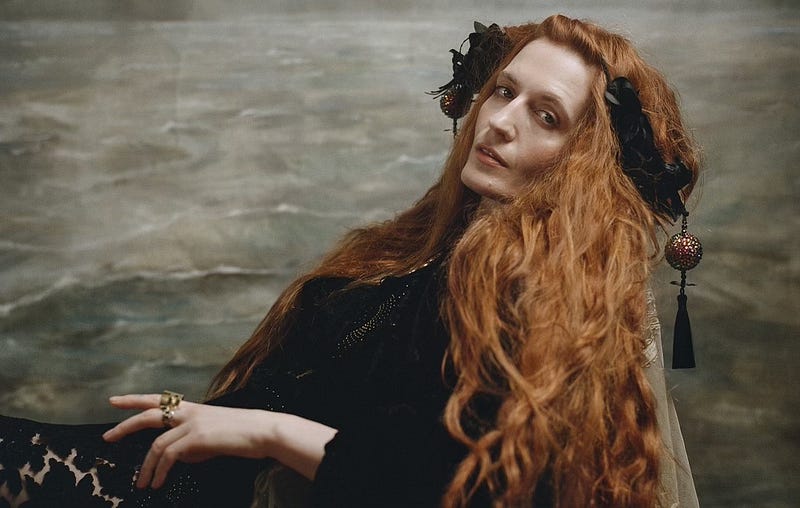
On May 13, Florence + the Machine released their fifth studio album Dance Fever to great critical acclaim. After nearly a dozen listens, I have put together a track-by-track review of the album, which is a mind-blowing and heartbreaking tapestry of musical genres and lyrical themes.
Click here for my review of “The Dance Fever Tour”
Florence + The Machine: A Primer
For the uninitiated, Florence + the Machine is an indie rock band that formed in London in 2007. The band is fronted by lead vocalist and songwriter Florence Welch and is rounded out by a host of gifted musicians including keyboardist Isabella Summers, guitarist Rob Ackroyd, and harpist Tom Monger. They are a genre-defying band that is equally skilled at glam rock, singer-songwriter confessionals, neo-soul, dance-pop anthems, grunge, punk, and folk music.
Although the band’s musical artistry is exceptional, it is hard to deny that the driving force behind their success is Welch herself. She is such a brilliantly talented and utterly fascinating person that it is unsurprising that she has developed such a fervently devoted following. Born in 1986 to a British advertising executive and an American Professor of Renaissance Studies, Welch discovered a passion for music and literature at a young age. Unfortunately, she also struggled with a learning disability, an eating disorder, multiple addictions, depression, and anxiety. Throughout her career, Welch has admirably channeled these struggles into her painful, powerful, and insightful lyrics and her captivating, live-wire performances.
My journey to becoming a Florence + the Machine devotee was a slow one. I was aware of the band’s existence and enjoyed the handful of songs I had heard from their 2009 breakthrough Lungs (which spawned their signature hit “The Dog Days Are Over”) and their equally acclaimed 2011 follow-up Ceremonials (which spawned their other signature hit “Shake It Out”). Those albums hit #1 in the UK, sold over 5 million copies, and received a trio of Grammy nominations and a pair of Brit Awards. The albums were also supported by two sprawling tours that included a whopping 382 live shows.
Despite their breakout success, it was not until the release of their third album How Big, How Blue, How Beautiful in 2015 that I really took notice. I don’t even remember what made me download the album. All I know is that I did and that after hearing it for the first time, I spent the next few months savoring every track that they had ever released. How Big became their first #1 album in the US and their 3rd in the UK, while spawning the hits “What Kind of Man” and “Ship to Wreck.” The album was supported by an 84-show tour that visited decidedly larger venues than their first two.
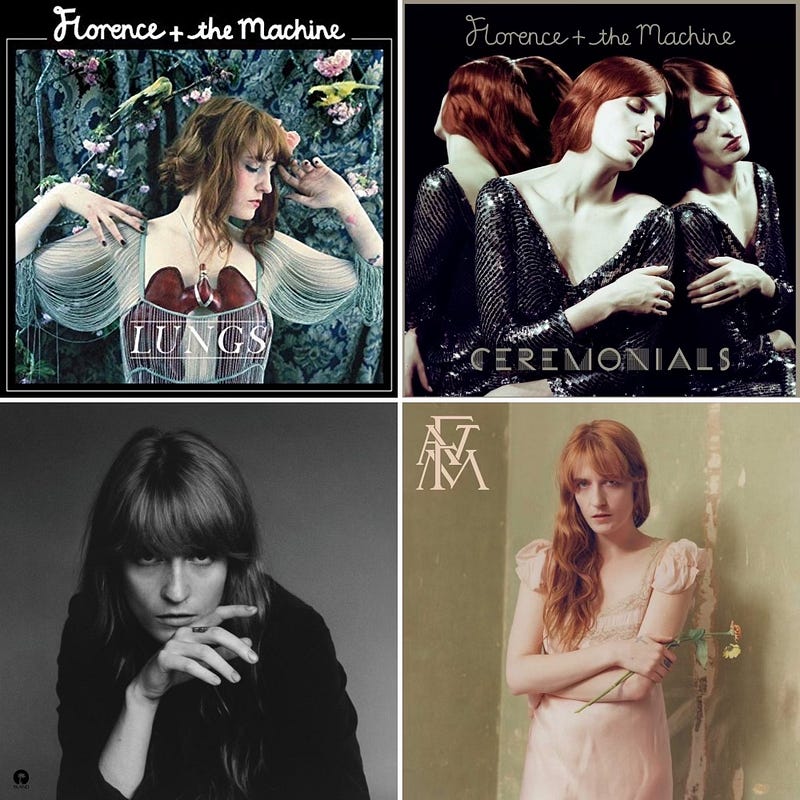
Although I was a bona fide super-fan and they had played over 450 shows since hitting it big, I had still not seen them live when they dropped their fourth album High as Hope in 2018. I finally got the chance to see them perform when I scored a ticket to an intimate show at the Walt Disney Concert Hall in Los Angeles that they scheduled to promote the album. It was easily one of the finest live shows I had ever attended and it significantly deepened my appreciation of the band’s artistry.
High as Hope was the first album Welch recorded completely sober. (She celebrated her eighth year of sobriety earlier this year.) Although undoubtedly a personal triumph for her, the album had a relatively muted critical and commercial reception compared to their first three albums in both the US and UK. It spawned only one modest hit in the form of “Hunger” and received good-but-not-great reviews. Nevertheless, the 93-show tour that accompanied it was a rousing success. This is no surprise given that nearly a decade into their career, Florence + the Machine had become widely revered as a live music act.
The Road to Dance Fever
Florence + the Machine was set to start recording their fifth album in New York City in March 2020. And then the pandemic upended life as we all know it. Cut off from her loved ones and the healing power of live performance, Welch sank into despair. But she kept writing. And before long, she was able to get back to recording, although now in London and with a lot more precautions in place.
One might have expected a somber and heartbreaking collection to have emerged from her time in lockdown, but Welch made it clear early on that it was going to be “anthemic.” In the months leading up to the album’s release, she dropped a fascinating collection of tidbits about the album, noting that it had been influenced by a wildly disparate array of genres and artists. Among the things she cited as inspirations were modern dance music, folk music, ’70s Iggy Pop, Lucinda Williams, Emmylou Harris, pre-Raphaelite art, the gothic fiction of Carmen Maria Macahdo and Julia Armfield, the recent wave of folk horror films like The Witch and Midsommar, and the folkloric panic of the Middle Ages. As a result, I had absolutely no idea what to expect from the album, but I was pretty sure it was not going to be a simple collection of singer-songwriter confessionals reflecting on loneliness during the pandemic.
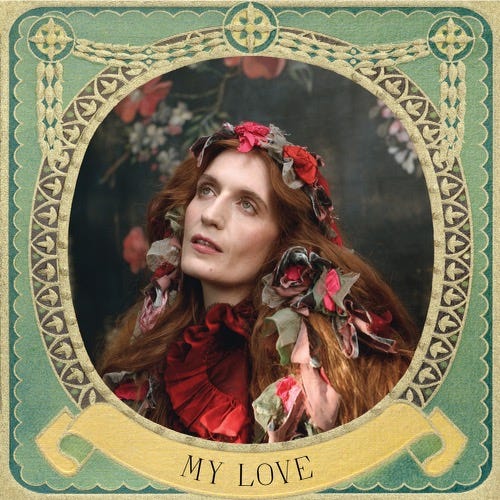
The release of Dance Fever was preceded by the release of four tracks from the album — “King,” “Heaven is Here,” “My Love,” and “Free.” Each was accompanied by a visually striking and symbolically rich music video directed by Autumn de Wilde and choreographed by Ryan Heffington. Welch has repeatedly stated that de Wilde deserves a great deal of credit for the album’s artistic vision and indeed the music videos and album art are works of breathtaking beauty and impressive aesthetic coherence.
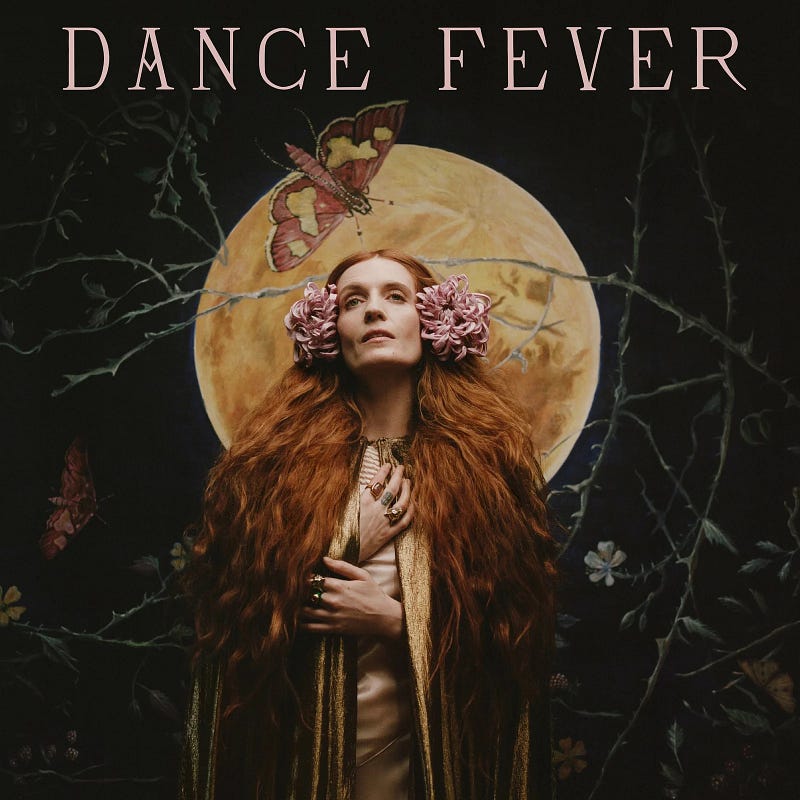
All of the songs on the album feature Welch as the lead writer and producer, with assistance from a remarkably impressive quartet that includes Jack Antonoff (who produced Taylor Swift’s 1989 and folklore and just won the Grammy for Producer of the Year); David Bayley (the creative force behind Glass Animals, whose song “Heat Waves” just topped the Billboard charts); Kid Harpoon (who previously collaborated with Welch on classic tracks like “Shake It Out” and “Sweet Nothing”); and Doveman (a Grammy nominee who has previously collaborated with acts like Norah Jones, Sufjan Stevens, Rufus Wainwright, and Taylor Swift).
The album was released on May 13 and has already garnered the best reviews of the band’s career. It has a stunning 85 out of 100 average rating from critics on Metacritc, as well as a 9.4 out of 10 average rating from users of the site. It seems that Florence + the Machine may finally be getting the respect they have long deserved.
Now, without further ado, here is my track-by-track review of Dance Fever.
Dance Fever: Track-by-Track Review
“King”
The album’s lead single is this haunting and anthemic opening track that instantly inserted itself into the top 10 of my list of greatest Florence + the Machine songs. The imagery-laden and vocally restrained verses find Welch taking on new thematic territory — the conflict between her career in music and emerging desire for domesticity. The defiant repetition of the song’s refrain “I am no mother, I am no bride, I am king” seems to find her prepared to eschew societal expectations and embrace her career and artistry, particularly as the song reaches its powerful crescendo around the three-minute mark. However, the whole thing ends on a plaintive and tentative note as she quietly sings, “And I was never as good as I always thought I was/ But I knew how to dress it up/ I was never satisfied, it never let me go/ Just dragged me by my hair and back on with the show.” The solemn outro shows that the conflict still rages within her and brilliantly sets up the tortured and transformative album that follows.
- Favorite Lyrics: “But you need your rotten heart/ Your dazzling pain like diamond rings/ You need to go to war to find material to sing/ I am no mother, I am no bride, I am king/ I need my golden crown of sorrow, my bloody sword to swing/ My empty halls to echo with grand self-mythology/ I am no mother, I am no bride, I am king”
“Free”
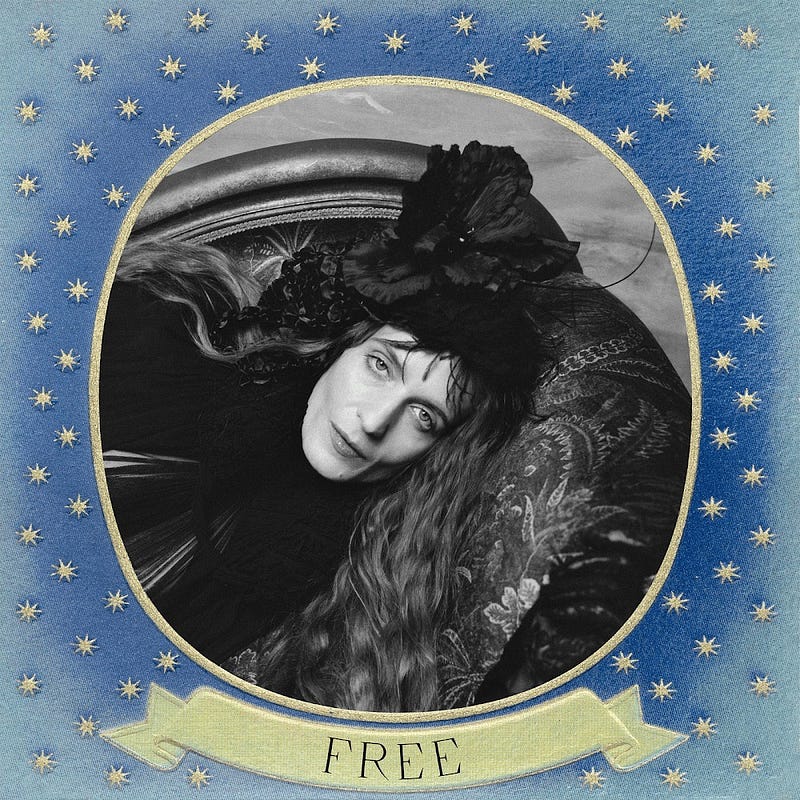
Welch delves deep into her anxiety for the lyrical content of the album’s second song, which is a delightful synth-rock/pop hybrid that has real single potential. She describes how her anxiety has the power to pick her up, put her down, chew her up, and spit her out a hundred times a day and just as her descriptions of her own suffering escalate into the tragic, she hears music and begins to dance. And then for a moment, she is free. The song is expertly produced by Welch and Antonoff, who perfectly capture the euphoric feeling of breaking free from mental anguish, if even for a frenzied, frantic moment. The song is also accompanied by a clever video that casts Bill Nighy (the extraordinary British actor best known as the past-his-prime rock star in Love Actually) as the personification of Welch’s anxiety.
- Favorite Lyrics: “I’m always running from something/ I push it back, but it keeps on coming/ And being clever never got me very far/ Because it’s all in my head/ ‘You’re too sensitive,’ they said/ I said, ‘Okay, but let’s discuss this at the hospital’”
“Choreomania”
The inspiration for the album’s third song fits with Welch’s long-established affinity for Medieval history, art, and myth. The title refers to the mysterious 1518 plague which struck the residents of Strasbourg with a seemingly uncontrollable urge to dance. (It also inspired the album’s title.) After a spoken-word introduction in which she tries to verbalize her internal chaos, the song gradually builds into a fast-paced, joyous celebration of the ability of music and dance to bring about catharsis.
- Favorite Lyrics: “You said that rock and roll is dead/ But is that just because it has not been resurrected in your image?/ Like if Jesus came back, but in a beautiful dress/ And all the evangelicals were like ‘Oh yes,’ ‘Oh yes’’”
“Back in Town”
The album slows down considerably for this fourth track, a poignant and nuanced ballad that finds Welch raw and vulnerable. After acknowledging that “sometimes it was easier hungover and half-dead,” she sings about returning to a familiar city and finding herself drawn back into the same cycle of heartbreak she always finds herself in. The restrained production and elaborately layered vocals allow the lyrics to take center stage, which is fitting because even though many of the lyrics are opaque and elusive they are gorgeous, atmospheric, and undeniably intriguing.
- Favorite Lyrics: “I’m back in town, why don’t we go out to that Ninth Street diner?/ And carry on slowly, torturing each other/ ’Cause it’s always the same/ I came for the pleasure/ But I stayed, yes, I stayed for the pain”
“Girls Against God”
Perhaps the most intriguing song title on the album, this song chronicles the feelings of rage against God that Welch experienced as COVID-19 took away her ability to both perform in and attend live shows. Even more interestingly, it chronicles her realization that this rage is utterly futile. The song’s production is notably restrained, mainly relying on electric and acoustic guitars and elaborately layered background vocals. As the song closes, a demonic cackle is heard, followed by ominous footsteps. Then Welch chillingly chants, “I met the Devil/ You know, he gave me a choice/ A golden heart/ Or a golden voice.” And here marks the transition into the album’s decidedly darker second half.
- Favorite Lyrics: “Oh, it’s good to be alive/ Crying into cereal at midnight/ And if they ever let me out, I’m gonna really let it out/ When I decided to wage Holy War/ It looked very much like staring at my bedroom floor”
“Dream Girl Evil”
If you were to mashup Alanis Morissette’s Jagged Little Pill, Stevie Nicks’s best moments from her time with Fleetwood Mac, and Florence + the Machine’s underrated 2015 track “Mother,” I suspect you would get something akin to Dance Fever’s sixth track. The song is an explosive rebuke of misogyny, as Welch mocks a man’s self-serving and unrealistic expectations of her. The heavily orchestrated track feels ready to fill an arena with impassioned chants all the way up to its haunting outro where she states that she is “nobody’s moral center” and repeatedly chants that “it cannot hold” (in a reference to a classic William Butler Yeats poem). For me, this is one of the album’s standout tracks and one that I expect will only grow in popularity over time.
- Favorite Lyrics: “Am I your dream girl?/ You think of me in bed/ But you could never hold me/ And like me better in your head/ Make me evil/ Then I’m an angel instead/ At least you’ll sanctify me when I’m dead”
“Prayer Factory”
Coming in at a mere 73 seconds, this is one of three ultra-brief tracks that Welch interestingly decided to credit as full songs as opposed to interludes. Amidst a haunting arrangement, Welch alludes to feeling ready to face the various demons that she has spent so long evading.
- Favorite Lyrics: “All the things that I ran from/ I now bring as close to me as I can/ Gripping hotel sheets with gritted teeth/ My montage of lost things/ My shining trinkets of grief”
“Cassandra”
The album’s eighth track instantly became a fan favorite — and deservedly so. The song evokes Florence + the Machine’s 2011 masterpiece Ceremonials in the best possible way. It starts with Welch conveying her inner turmoil through mythological allusions (this time Cassandra, who was cursed by Apollo to tell true prophecies that would not be believed) before gradually building into a soaring alt-rock anthem that demands repeated listenings.
- Favorite Lyrics: “All the gods have been domesticated/ And Heaven is now overrated/ And the churches, they all closed their doors/ But you can take your complaints straight to the Lord/ I try to still look with wonder on the world as the roses bloom/ And the riot van still plainly in view”
“Heaven is Here”
Easily the album’s most bizarre song, the ninth track was a curious choice to be the second song unveiled from the album. Like “Prayer Factory,” it clocks in at under 2 minutes. In contrast, however, it feels not like an interlude but a fully formed song — albeit a very brief one. Propelled by hand claps, foot stomps, bells, and sharp halts, the song is brimming with allusions to witchcraft and the tension between Heaven and Hell. It is baffling and bizarre, but nevertheless thrilling.
- Favorite Lyrics: “And every song I wrote/ Became an escape rope/ Tied around my neck/ To pull me up to Heaven”
“Daffodil”
Fittingly opening with a sharp gasp, the album’s tenth song is about Welch unexpectedly finding glimpses of happiness and optimism amidst the tragedy and chaos of the pandemic. The lyrics find her enamored with the blooming flowers of spring, which are renewing and hinting at brighter days to come even as the world is soaked in anguish. The bass- and percussion-heavy song has an enthralling hook and builds to a thrilling cacophonous crescendo.
- Favorite Lyrics: “English sun, she has come/ To kiss my face and tell me I’m that chosen one/ A generation soaked in grief/ We’re drying out and hanging on by the skin of our teeth/ I never thought it would get this far/ This somewhat drunken joke/ Sometimes I see so much beauty/ I don’t think that I can cope”
“My Love”
The third song Welch unveiled from Dance Fever was this masterpiece, which should have been an enormous cross over hit. Originally written as a sad poem about feeling unmoored amidst the pandemic, the song was transformed into a symphony of dance-pop exuberance by co-producer David Bayley (who is the lead creative force behind the rock band Glass Animals). The opening 30 seconds finds Welch holding an impossibly long wail before a modern-sounding dance beat kicks in. The lyrics chronicle her confusion and despair as she continues to have big emotions but no outlet for them as she is cut off from live performing and the people she loves. The chorus is an ear-worm for the ages, showing that if she wanted to Welch could have easily made a career as a successful mainstream pop songwriter. After the song’s soaring climax, the opening wail and tentative instrumentation return, suggesting that the dance-fueled detour was all a dream-like escape and she is now returning back to the heartbreak of reality.
- Favorite Lyrics: “I was always able to write my way out/ The song always made sense to me/ Now I find that when I look down/ Every page is empty/ There is nothing to describe/ Except the moon still bright against the worrying sky/ I pray the trees will get their leaves soon”
“Restraint”
The album’s third brief song is the one that feels most like an interlude. A guitar, organ, and foot stomps provide the atmosphere as a gasping, guttural Welch utters the song’s sole, provocative lines: “And have I learned restraint? Am I quiet enough for you yet?” It impressively crams mood, meaning, and musical mastery into a mere 48 seconds.
“The Bomb”
Opening with an exhale followed by a gentle, contemplative guitar arrangement, this song finds Welch waxing on tried-and-true themes related to being attracted to things that are bad for you (e.g., “Big God”) and having the insatiable urge to blow up your life (e.g., “Ship to Wreck”). Despite the familiar themes, the song feels remarkably fresh. The restrained production and tender vocals contrast with much of the album and the introspective poetry of the lyrics marks some of Welch’s best songwriting.
- Favorite Lyrics: “I’ve blown apart my life for you/ And bodies hit the floor for you/ And break me, shake me, devastate me/ Come here, baby, tell me that I’m wrong/ I don’t love you, I just love the bomb/ Buildings falling is the only thing that turns me on”
“Morning Elvis”
This gorgeously crafted ballad that closes the album finds Welch at her most vulnerable and autobiographical. The lyrics chronicle her battle with addiction and how prior to achieving sobriety she felt it was an integral part of being a rock-and-roll artist. She evokes Elvis, himself a rock star undone by addiction, and talks about her own conflicted feelings about her career (e.g., “And after every tour/ I swear I’ll quit/ It’s over, boys, now this is it/ But the call, it always comes/ And the songs like children beggin’ to be born”). The song — and album — end with a cheering crowd, indicating that Florence has made it back to the stage. She has waded through her addiction, her demons, and a worldwide plague and is finally back where she belongs — on the stage, performing her music in front of her fans. It is the near-perfect end to a near-perfect album.
- Favorite Lyrics: “When they dressed me and they put me on a plane to Memphis/ Well, I never got to see Elvis/ I just sweated it out in a hotel room/ But I think the king would have understood/ Why I never made it to Graceland/ The bathroom tiles were cool against my head/ I pressed my forehead to the floor/ And prayed for a trapdoor/ I’ve been here many times before/ But I’ve never made it to Graceland”
The Deluxe Edition
The Deluxe Edition of the album, available both on their website and Amazon.com, comes in the form of a gorgeous, high-quality, hardcover book that contains the credits and lyrics for each of the songs. Inside the back cover is a subtle sleeve that contains the CD, which includes the 14-track album plus 5 bonus tracks. The bonus tracks are acoustic versions of “Cassandra,” “Free,” “Morning Elvis,” and “My Love.” Due to the fact that it had relatively restrained production to begin with, the acoustic rendition of “Morning Elvis” doesn’t feel that much different. But new nuances to Florence Welch’s songwriting and vocals are abundantly evident in the stripped-down renditions of the other three songs. Then there is one original track, a cover of The Stooge’s “Search and Destroy.” The original was full of references to the Vietnam War and was written by Iggy Pop and James Williamson and produced by Iggy Pop and David Bowie. It is widely claimed to be a glam rock masterpiece, recently ranking on Rolling Stone’s list of the 500 Greatest Songs of All Time. Welch & co.’s rendition is simultaneously faithful to the original and undeniably Florence + the Machine. It was an excellent choice for a cover and ends the deluxe edition on a thrilling note.
Conclusion
Of course, repeated listens in the future could alter my evaluation of the album, but at this point I feel pretty confident saying that I think Dance Fever is Florence + the Machine’s second best album, behind only 2011’s Ceremonials. Considering how brilliant I find all five of their albums to be, this is high praise indeed. It is the rare album is both wildly entertaining as a casual listen and also worthy of hours of analysis and exploration. If there is any justice, Dance Fever will finally be the album that gets Welch the accolades that have long eluded her.
Rating for “Dance Fever”: 5/5 stars
Follow the author of this article on Medium and Twitter.
Read other articles by this author about legendary female musicians: