Flood of the Century-South Fork Dam. Disaster At Every Bend.
Johnstown, Penn. 1889
The catastrophic events that happened one after another were devastating.
It was May 1889, and the dam ruptured after several days of extremely heavy rainfall, releasing 14.55 million cubic meters of water. Six to ten inches of rain fell over a 24 hour period.
It was a growing industrial community known for the quality of its steel.
Conemaugh River was formed by the joining of Stoney Creek and Little Conemaugh Rivers.
At every bend, there was a disaster. The first disaster was the river flooding over its banks. 2,200 or so people were killed by the flood. The second disaster was the collapse of the Stone Bridge, an arched bridge built by the Pennsylvania Railroad in 1887. Its seven arches blocked tons of debris, carried by the Johnstown flood, including miles of barbed wire twisted through it from the destruction of a plant. The bridge withstood the force of the flood and this load. But an enormous fire broke out in the debris at the bridge, killing scores of people trapped within it, and burning for three days.
Third, were train cars that had been flooded out by the waters and knocked off the tracks. They had been pushed off the tracks and ended up in the debris with people in them. Fourth, was the iron mill that produced tons of barbed wire. People were caught up in all the debris.
Twice, under orders, John Parke an engineer, rode on horseback to a telegraph office in the nearby town of South Fork to send warnings to Johnstown explaining the dangerous situation unfolding at the dam. Parke did not personally take a warning message to the telegraph tower — he sent a man instead. The warnings ultimately were not passed to the authorities in Johnstown. There had been many false alarms in the past of the dam not holding against flooding.
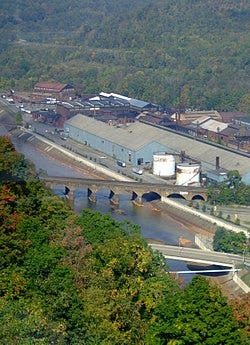
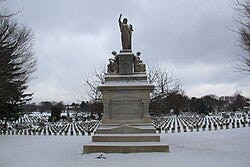
Of a town of 30,000 people, 2,200 were dead and 777 were unidentified. There is a cemetery with headstones but no names. Here is a poem that came out of the disaster.
Popular feeling ran high, as is reflected in Isaac G. Reed’s poem:
Many thousand human lives- Butchered husbands, slaughtered wives Mangled daughters, bleeding sons, Hosts of martyred little ones, (Worse than Herod’s awful crime) Sent to heaven before their time; Lovers burnt and sweethearts drowned, Darlings lost but never found! All the horrors that hell could wish, Such was the price that was paid for — fish!
Jo Ann Harris is an author, parent, book devotee, writer, copywriter, and film fanatic. She is an autodidact who learns about everything and rows her own boat. She grew up and worked in Atlanta, Georgia and lived there sixty years. She writes articles about love, hope, personal life stories, advice and poems. She is a published author with an article in Woman’s World magazine in October, 2017.


