Flight of the Monarchs
And where are the bees?
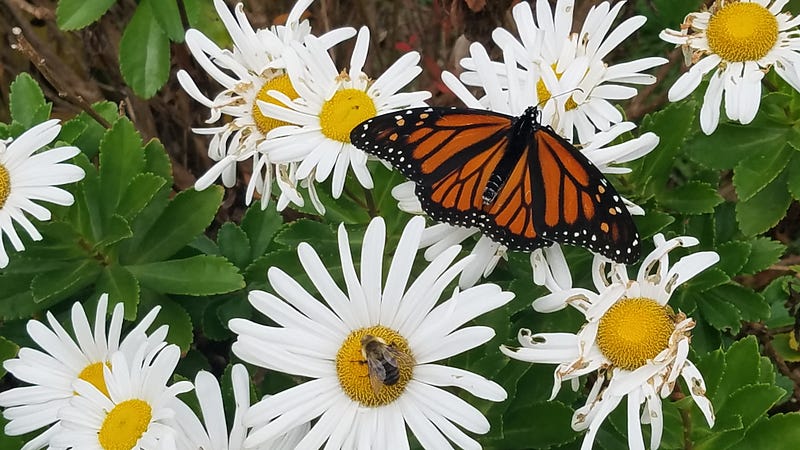
The yoke-colored bed of seeds sends out a soft and fragrant call for them to rest. I am surrounded by a flutter of butterflies enjoying the corona of white petals protruding from a golden center of the Montauk Daisies. The flowers are the sign of fall approaching and a group of lethargic bees lounge in the center. It is comforting to spend a few moments watching them until I look closer and realize that several of my small buzzing friends have made this their final rest. Surrounded by the gentle flapping of butterflies, they are gone.
Many of my little buzzing friends have come here for their final flap during the past few years. I slowly extend my hand in an attempt to pet them and see if they are still alive. Most will jump to the next flower long before my hand gets close. Others will welcome it and allow me a few gentle strokes across their tiny, but oh so important bodies.
For the butterflies, we have given them a heavenly place to spend a few days. There are bursts of color, fragrant breezes, and the Monarch’s favorite flower for breeding— the milkweed. As the flutter of these colorful creatures bounces around from bed to bed I feel like I have done something good.
It seems the least I can do since my life and home have taken up so much of their space. In fact, I know I have to do more.
The flight of the bees and butterflies is in danger. They are one more victim of people encroaching on their space. In this era of the pandemic, where hundreds of thousands of people in the US have died, we still have experienced only a fraction of the damage we have caused many of the other creatures on this planet.
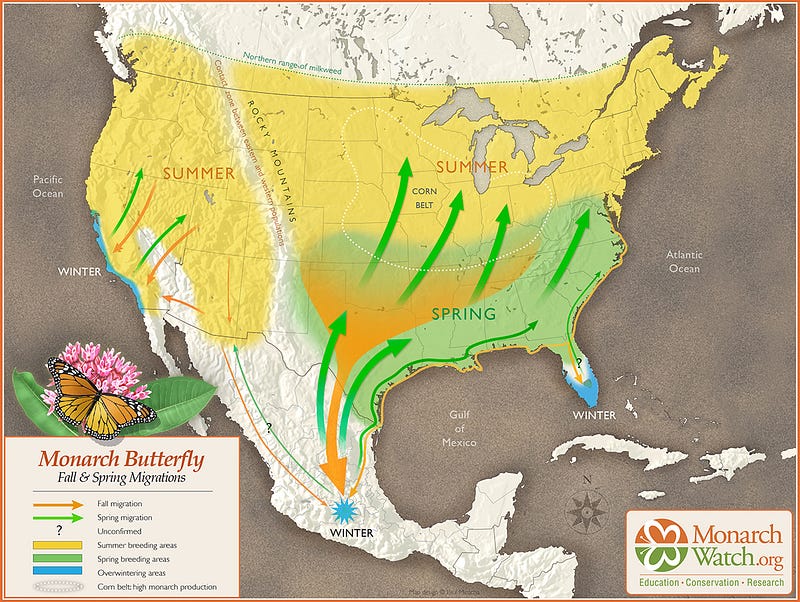
In some areas, Monarch Butterfly populations are down 50%. In others — 80% or more. The migration of the butterflies can extend to over 2,000 miles as they head south. We have eliminated most of their habitat by polluting them with pesticides or removed their food source to develop new communities. I know many of these small creatures may one day never come back to my yard.
Millions of people are currently walking the globe. They have been forced from their homes due to war, hunger, or lack of opportunity and often end up on the doorstep of wealthy countries that shun them. The migrant of a Central American caravan is treated with the same disdain as that of the butterfly and the bee. They are both regarded as economically untenable. The costs of migrant people, bees, and butterflies are equally regarded as prohibitively expensive in an era of 100-foot yachts, private jets, and private schools. If we can do this to people, how does the butterfly stand a chance? The flight of my small friends and migrants is much the same — the homes they once knew have been ravaged and no longer exist.
For those in the path of my flapping companions, I am asking you for help. Turn a small corner of every urban terrace and yard into a shrine of milkweed and life. Create a rooftop oasis for those in the flight path. None of this would require federal assistance. It could merely be an act of humanity.
Our small friends will only survive by the planting of gardens everywhere. If you have experienced a hurricane, tornado, freezing weather, or other natural disasters ask yourself— would you have made it through without any assistance?
My friends need your help and you will never feel better than being an anonymous benefactor to the environment. Plant a garden. Feed a hungry person. Be a pathway of assistance for those marching for help.
All my friends need you! Find kindness for those in need everywhere.