
Five Ways to Manage a Know-it-all
We all have at least one know-it-all in our lives.
He/she acts as though he/she knows everything and dismisses your opinions and comments.
What galls me even more is when they throw some half-baked psychological opinion at me that I know is not evidence-based.
Like the surgeon who sat next to me on a plane. When he learned I was an executive coach, he sounded off, “Oh, I could do that. Piece of cake”
I wanted to reply, “Next time one of your patients needs open heart surgery, I’ll take over. I know how to carve a turkey!”
Here’s how to manage such bigmouths.
Extinguish the Behavior by Ignoring It
The best defense against pushers of an indefensible position is NOT a potent offense.
For instance, your obnoxious uncle at Thanksgiving is sounding off on his latest conspiracy theory. Everything in you wants to hit him with ‘facts,’ but when you tried that tactic in the past, it only strengthened his noxious response.
Here, I’m reminded of the psychology research on Operant Conditioning.
By withholding the reinforcement (your argument), the behavior gradually decreases and may eventually be extinguished.
In other words, plan to avoid taking the bait.
Better still, anticipate his response and agree with the other guests beforehand to ignore him.
Don’t go low when he goes low.
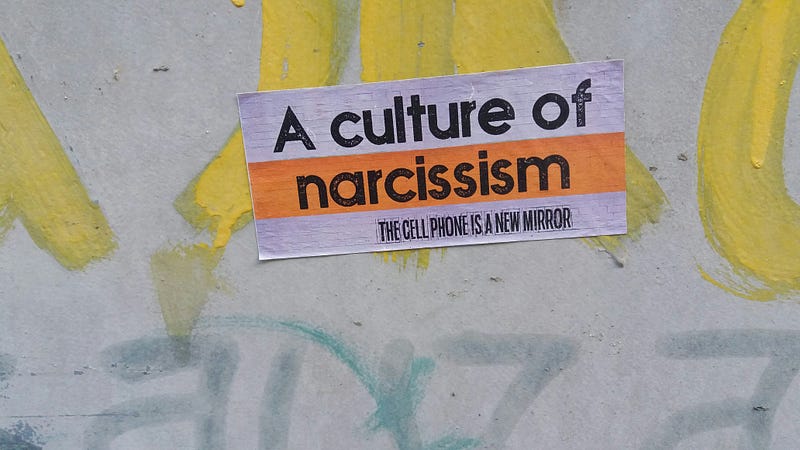
Know a Narcissist When You See One
It’s beneficial to know why people behave in such self-centered ways.
They could have a narcissistic personality disorder.
This annoying disorder rears its ugly head when (usually a male) has a strong sense of entitlement, an excessive need for recognition and affirmation, and is clueless as to your feelings.
Everything is about me, me, me.
We do well to realize, in the words of an HBR article, “How to Manage a Narcissist” by Manfred F.R. Kets de Vries, that.
“It’s hard to deal with a narcissist’s sense of entitlement, lack of empathy, and need to feel special.”
Rule #1 to manage a severely self-centered person is
“Don’t confront the narcissist directly.”
That would be like trying to douse a fire with gasoline.
Depending on the severity of their condition, narcissists seldom will change and don’t give a hoot about your opinion.
What I have done when I’ve coached Narcissistic leaders is to massage their egos with challenges like
“So you want to be an executive. Let’s review some behaviors and attitudes that lead to a promotion.”
Appealing to self-interest becomes the thin end of the wedge, facilitating at least outward but not necessarily inward change.
Don’t Jump into the Swamp with the Alligators
When I was an adolescent in Africa and before my prefrontal cortex (think good judgment) was fully developed, on a lark, I decided to jump into a crocodile-infested river and swim alongside the dugout canoe.
I still shudder at the thought of what a colossal crocodile could have done to me.
The message here is that when one is in the presence of a know-it-all, treat them with great caution. See the danger for what it is and try to ignore their wise-ass rantings.
They will eventually hang themselves on the rope of their ignorance.
Be Aware of Why We React to Wise-asses.
We all have hot buttons that condition us to react in regretful ways.
Susan (not her real name) told me of an explosive incident with her husband. They were having a mild altercation that escalated when he glared at her during the discussion.
Later, as she debriefed with me in therapy, she had an aha moment.
She remembered that as a child, her mother would frequently glare at her for some minor infraction of a family rule (when she loaded the dishwasher in the wrong way).
That glare was often the prelude to a spanking.
Her insight was that any glare would signal danger, and as an adult, this set her off into an irrational rage.
The key for her was identifying ways to recognize and regulate her responses to hot-button issues.
Ask yourself,
“Why is this smart-ass hitting my hot button?
“What ghost from my past is shadowboxing with me?”
Choose the Type of Person You Want to Be
We are all aware of the better angels of our nature. They remind us of the type of person we want to be. Like the line in the song “Smile and the whole world will smile with you,” a kindly disposition acts like osmosis in a group of people.
We can choose to be well-disposed with others (even with know-it-alls)
When we learn to center ourselves and connect with the love that is at our core, we have a shot at being the person we want to be.
In conclusion remember when Albert Einstein once wrote.
The significant problems we face cannot be solved at the same level of thinking we were when we created them.