
Five Ways to Make Narcissists Run From You
What triggers make them flee so you don’t have to worry about collapsing them?
If you leave a narcissist, they’re going to respond as trusty as a computer algorithm:

They will have a mental collapse.
They will hoover, beg, make promises, future fake, and become the world’s most dedicated therapy patient.
If you still leave them, they’ll unleash a disorienting fury of narcissistic rage.
And while they hit you with every form of revenge they can consider, they will smear campaign you: they’ll tell others that you are guilty of doing what they are guilty of doing to you. They’ll ostracize you and humiliate you, sharing things you’d trusted them with, exploiting your every wound.
It’s no wonder so many find themselves reading obsessively about this disorder: when you’re enmeshed with a narcissist and trying to leave the toxicity, it becomes very difficult to manage your life and heal through the trauma.
Much of the trauma they inflict is so horrifying that it’s lifelong, and your own brain will be on overload dealing with the trauma responses, whether the abuse is physical, emotional, psychological, or all of the above.
Many would like to know how to spot them to avoid them in the future and how to trigger them to flee so you don’t have to go through the stress of a life-threatening narcissistic rage again.
Narcissists are sensitive, despite all appearances, and their mental disorder causes them to have triggers that cause them to ghost their supply as fast as if their name was Casper.
1) Discuss the shames of narcissists

Since I was 18 and went to college for psychology, I knew my mother was a narcissist. That solved a lot of the mystery of my childhood. I considered it a closed chapter in my life.
I went on to keep obliviously trauma bonding to narcissists, stubbornly lacking self awareness of my own BPD.
All of my favorite people or lovers were some form of cluster b. My relationships to borderlines and histrionics fared much more strongly than my relationships to narcissists and sociopaths, but I am a master self loather and internalizer of shame: some of my favorite people relationships with sociopaths went on for over a decade.
These were deeply enmeshed and intimate friendships, and yet they had a whole hosts of secrets — and resentments towards me — that came spilling out like the bile from the little girl on The Exorcist when our friendships went up in flames.
What was interesting is that all my favorite people, including my sister, were WELL AWARE that they had abusive parents, and they were even pretty well-versed on narcissists.
They hated narcissists.
Passionately.
But they clearly WERE narcissists. (Some of my FPs weren’t even covert — one spent most his life in prison and was diagnosed as a sociopath).
How could they hate their parents so much and feel no desire to address or change their own behavior, keeping so many secrets?
Once I had my awakening and began to unmask people in my past, I couldn’t stop talking about what I’d discovered as I scoured all the literature.
AND THEN I STARTED TRIGGERING PEOPLE.
And losing people.
I started noticing that some people would FREEZE and look at me in TERROR.
I had a tendency to project myself onto all my friends and presume they had empathy — I thought that perhaps they were realizing they had BPD like me, and I wanted to soothe them that it wasn’t hopeless and that it doesn’t mean you are all bad to have a trauma response. I tried to convey that I even didn’t judge NPDs for theirs and believed we can heal our pasts.
They still sat wide-eyed with a terrified look.
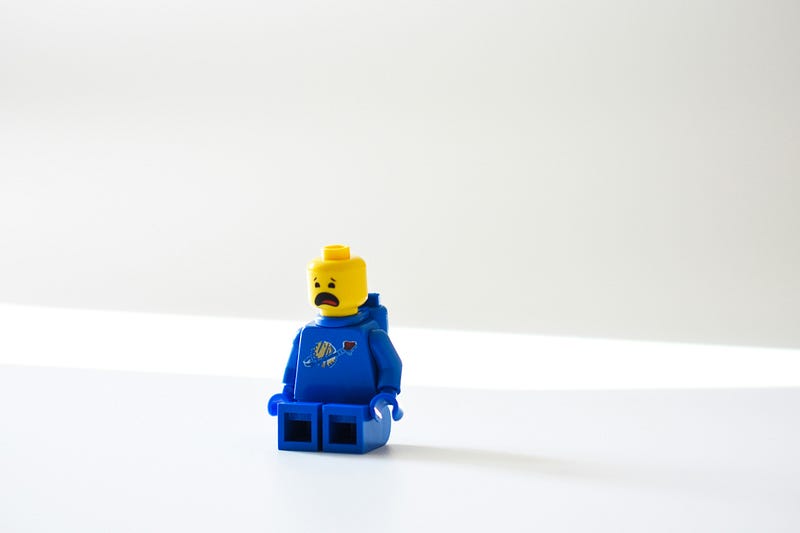
I’d discover later after getting promptly and suddenly discarded or cold shouldered that I was projecting: these were narcissists, not borderlines.
It was my pesky habit of assuming that all the people I loved had empathy and loving hearts, as I did.
As usual, I looked over and internalized every covert abuse, telling friends, “Oh, she’s just always late!” “Don’t take it personal, she says bitchy comments to everyone. It’s just her humor.”
The more I learned about NPD and ASPD, the more those people in my life ran from me or avoided me.
But talking about narcissism isn’t enough: the real key is that you talk about the SHAMES of these disorders.
Narcissists have no problem discussing narcissists as greedy, lying, sex addicts: they see all these traits as both powerful and positive. Greed means they have more than you, lying means they can dupe you, and sex means they have sexual worth.
They’ll talk about narcissists in this way, with disgust for them, all the live long day.
But if you bring up the DARKER secrets and behaviors of narcissists, THEN you’re starting to shine a light into their darkness, and they’re trembling in a corner in there hoping you’ll never find them.
Therefore, when I discuss NPD and ASPD, I discuss common shames that narcissists can’t handle confronting within themselves, but that they know they are guilty of:
- Rape
- Incest
- Child Abuse
- Animal Abuse
- Pedophilia
- Racism/Sexism/Genocide
- Closeted Sexualities
- Closeted Gender Identities
- Domestic Violence
- Murder/Mass shootings
You’ll notice how often the scholarly literature discusses these things, how often real victims discuss these things, yet how little you read about it in narcissistic abuse recovery spaces.
It’s because a lot of those people are narcissists too.
They always mask as their scapegoats, and they’re always looking for vulnerable people to abuse, but they showcase their fraud in their inability to discuss the darkest shames of NPD and ASPD, due to their shame-avoidance in their brains.
They like to talk about narcissists only as people who are powerful, intelligent, in full control, evil, and something to fear.
When you talk about the full truth, you’re fiddling with their mask. You’re threatening them to look inwards.
It’s because narcissists FLEE at the truth and self reflection.
The truth of every narcissist is really that terrified, shivering child behind the mask. Nothing scares them as much as the truth of themselves.
And what’s behind those darker shames is something they can’t make grandiose: they can only be seen as mentally ill, morally wrong, and even pathetic.
They get REALLY triggered when I’ve said a metaphor I often use about NPD: a person with NPD has a dead inner child, and they’re haunted by that ghost because they can’t grieve it and don’t know they’re dead.
More than one narcissist was deeply rattled by that, which is how I know it’s more truth than metaphor.
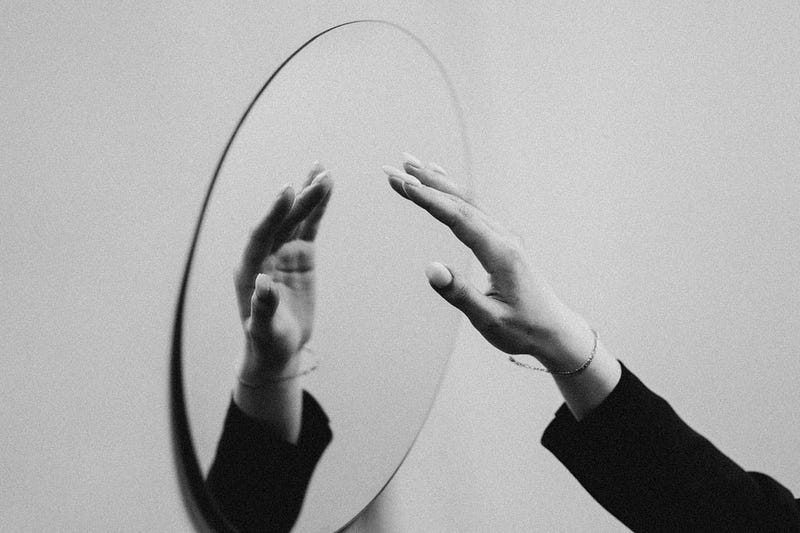
If you provide the mirror, they’re going to run from it.
You may not have even uncovered these shames in your narcissist you were trauma bonded to yet: your love for them may blind you from seeing those darker things, and your faith in yourself blinds you from seeing you may love people with those shames — it’s cognitive dissonance.
I guarantee that if you go searching deeper, you’re going to find much darker shames in the narcissist that you’d denied could be possible.
For example, have you ever been raped and then victim blamed or abandoned when you told a narcissist you trusted? That narcissist was a rapist. How they victim blamed you is how they also justify what they did to their own victims.
Throw up the mirror and watch how they flinch like vampires who can’t see their own reflection.
2) Raise your status
Narcissists care about status to a ridiculous extent. Status is everything to a narcissist, because their self worth is entirely constructed upon what those around them believe about them.
They need others to believe good things about them so that they can survive. And because a narcissist believes they deserve everything they want, they need STATUS to justify everything they have.
A narcissist without status in some way is an angry and dangerous narcissist: they cannot stand the feeling of not being the most important or in control of their supply.
Therefore, in work environments, they become exceptionally abusive, hostile, competitive, and unethical.
In friendships and intimate relationships, the status of a partner from wealth, job title, or the respect of others is something that appeals to them as a mark of their own status, so it’s useful for supply.
However, they don’t genuinely ever want their supply to succeed or raise their status, so they’ll sabotage that in any way they can.
With my parents, it always seemed incredibly important that I prove my lovability by performing well in school and being a perfect child.
My good behavior helped to secure their masks of normalcy as sociopaths, of course.
However, whenever I had an accomplishment that I thought would make people proud, it ended up making people pissed.
In high school, I was set to be honored with the Journalism Award my senior year. I’d been on the school paper all four years, and I was editor for the last two. I was proud and I enjoyed journalism.
Just hours before the ceremony, my mom barged into my room and beat me. I had to accept the award with bruises on my face.
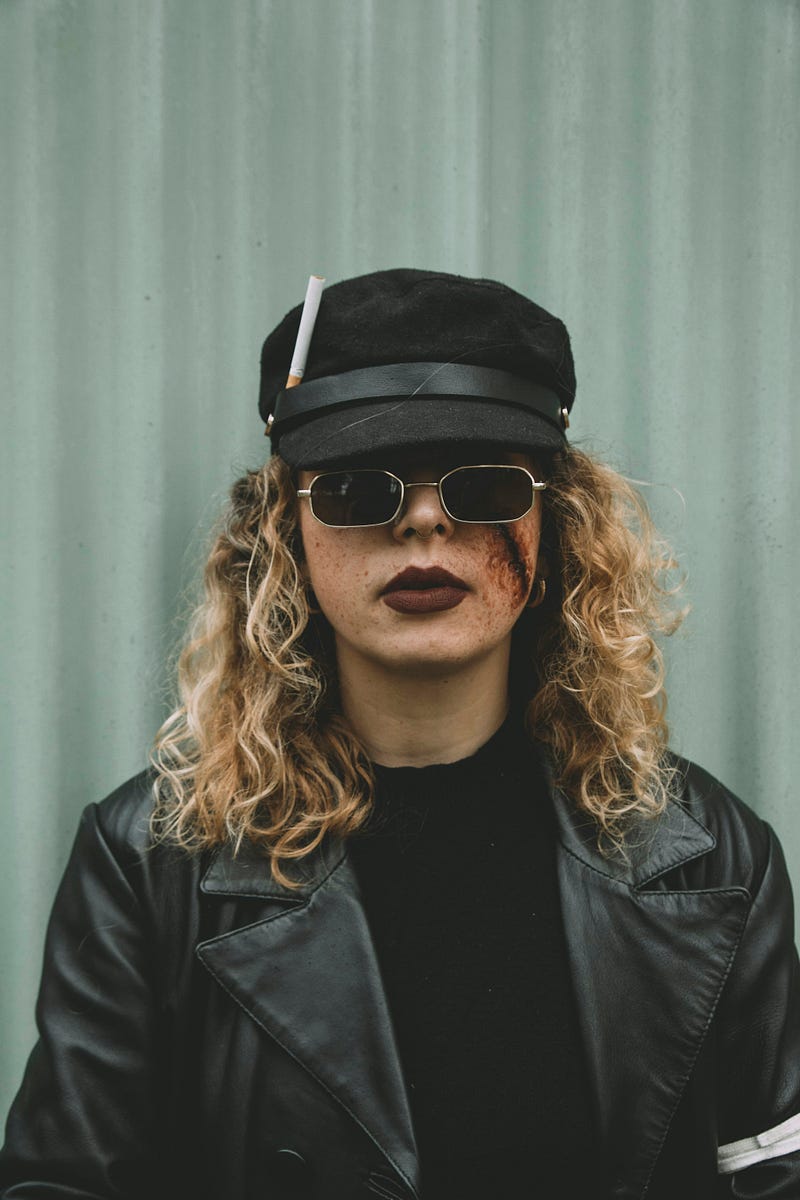
My mom arrived late and looked angry the whole time. But when I got the award, she cried.
I witnessed this with my father too: my sister was golden to my mother and scapegoat to him, but when she won an award in high school, he CRIED.
I remember telling my sister that my dad cried, because I thought it was evidence that he really loved her, deep down. She replied, flatly, “He cried? Good.”
I realize now that the reason they cried after being angry at our awards was because they were SITTING IN THEIR SHAME AND WORTHLESSNESS in those moments.
Those were moments in which reality hit them:
- Your children don’t deserve abuse
- Your children have talent and worth
- People may love your children when you don’t
- Your children may be better than you in some way
A narcissist can only conceptualize all good vs. all bad, so when their supply has any accomplishment, that makes them all good, so the narcissist, in contrast, feels all bad and worthless. This is also why they hate weddings and birthdays.
I had several lovers who I was attracted to for their intelligence and creative writing. I admired them and wanted them to succeed. I felt that if they saw me as potentially talented, perhaps they’d fall in love with me.
I was always shocked when a publication or writing award led to me getting cheated on or dumped for someone without writing talent or intelligence.
In one scenario, I even found my ex’s paper in the grad school printer, and he’d plagiarized me for an idea that he’d argued with me about and told me was stupid.
With a narcissist, it’s always opposite day.
So, one of the easiest ways to lose them is simply to increase your status (or just say you did, since status is all a meaningless narcissistic illusion anyway).
3) Get severely ill
This is a tried and true narcissist test: get severely ill, and get ready for a narcissist discard.
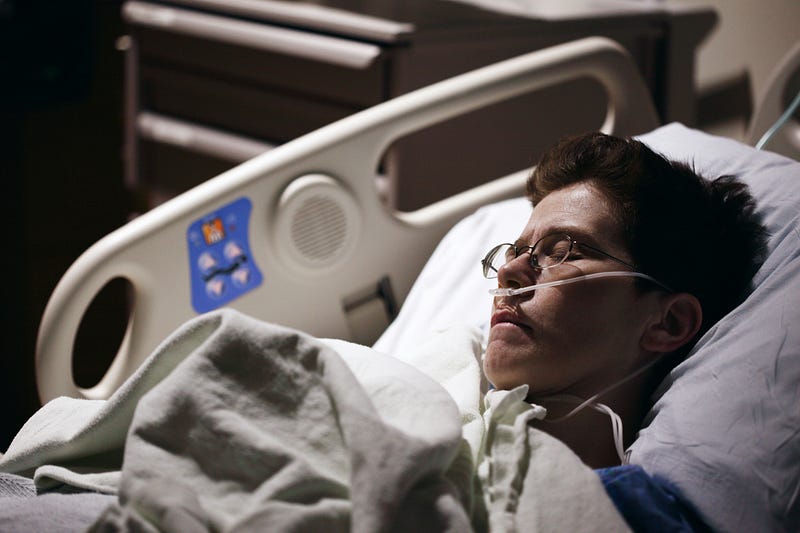
If they stay by your side, get ready for them to make you feel like a huge burden and for them to neglect and abuse you while you are helpless.
However, the likelihood of a discard when you’re ill is HIGH. I’ve had it happen and seen it happen to countless others.
Once, I got a kidney infection and landed in the ER. Feverish in the hospital, my sister picked a fight with me, went to go to the bathroom, and never came back.
I called and called. No answer. I called my boyfriend. No answer.
I found out after that my boyfriend, who knew I was going to the ER, was in bed with one of my friends.
After I got gang raped and went celibate, my body broke down from withdrawls, as I was trauma bonded to my rapist. When that happened, I got chronic C-Diff. It lasted for a year and a half, and I thought it might kill me, though it normally only killed old people.
At that time, I had a conversation with my favorite person. She was talking about some guy. She asked what was going on with me, and I began to explain my stomach pain and cried.
She interrupted me, “I think our friendship was better when you weren’t celibate….we should just take a break being friends for now.”
We’d been best friends for eleven years.
I was in such shock that I simply hung up the phone without a word.
But all my trauma came back: you’re too much, your pain is a burden, your needs are a burden, no one actually loves you, you give love and get nothing back.
Why was I expected to act like it was an atomic bomb air raid every time a man said hello to her but my health issues and struggles didn’t warrant attention?
She came back a year later after my health improved. I eagerly accepted her back and our friendship went back to a daily enmeshment.
Until I got stalked and raped by my maintenance man.
And then she stopped calling or texting…when I needed her most.
Why do narcissists do this?
In the memoir, Confessions of a Sociopath, M.E. Thomas discusses doing this to her favorite person, an empath. Her friend was diagnosed with cancer. She ended the friendship and abandoned her without a word.
She said that she did it because it felt like an unmasking. She felt as if the jig was up: there was no possible way for her to pretend to have empathy anymore.
She could pretend to care about trivial things, but she couldn’t pretend to care about something as grave as illness or death.
She felt that, if she stayed and tried to be there for her friend, her sociopathy would be discovered.
She also felt that all the supply her friend provided for her was taken away with the illness. She wanted the friendship for company, good conversation, and entertainment: but all of those things were not there if her friend had cancer, so her supply had suddenly run dry.
She said that after her friend beat cancer, she reached out again and they continued their friendship.
I suspect another reason they may run from illness is because deep down, they know they are responsible for the stress that causes the people around them to develop illnesses and die.
I remember the way my stalker flinched when I said he was TOXIC. His reaction made me wonder what it was like to be a toxic person and have no control over the fact that your existence poisons those who love you most.
4) Heal & Place Clear Boundaries

When I first set a boundary in asking a friend not to mock my appearance as a joke, I promptly lost someone I loved, triggering all my abandonment wounds and feelings of unlovability, plummeting me into suicidal borderline episodes.
It made continuing to heal and make boundaries very hard work, very TERRIFYING work.
My life had been centered on people pleasing, on trying desperately hard to get as many people to like me as much as possible. The idea that I could lose that possibility with people for something as simple as a boundary made me nauseous.
And sure enough, that IS what happened.
When I stopped being the professor who could be walked all over, certain students started cultivating an anger towards me.
When I stopped being the subordinate who took on the extra classes who no one wanted to teach, I got the cold shoulder and snide comments from my bosses.
When I asserted to people that their rape or racist jokes weren’t funny or that I didn’t want to be exposed to them, people revealed that they thought I deserved what happened to me.
The more I healed, the more certain people reacted to me with a HISS and then a RETREAT.

I hated that. I still hate that.
I still deeply love people and wish to be the one who can endure and absorb their pains, because all my life I’ve wanted people who had the strength and generosity to do that for me, and I know how much it would’ve meant to me if people did.
But now I see that my healing and my boundaries are working FOR me.
They’re my adult self protecting my inner child. They’re my adult self re-parenting my inner child.
They’re saying, “NO. No more. You don’t get to touch this child just because your own inner child is hurting.”
The people who were attracted to me for predatory reasons — to hurt and exploit my inner child — slink off in their shame as I assert my worth. And those who continue to target me or cross my boundaries, I have learned to watch closely with my guard up and/or walk away from. I even walked away from a job I loved for my boundaries, which the unhealed version of me never could have done.
I’m still a pretty laid back person, maybe a bit more flexible with boundaries than others because my pain tolerance is so high, but I’m constantly registering abuses now and making note.
(And if you do have a history with pwASPD and you have BPD, do make it a habit to write EVERYTHING down, even early warning signs of people. Keep documentation of everything in every way you can. Because you may need it all for police someday).

5) Discuss Ghosts or Demons
This is one I figured out that is still an unraveling mystery I’m trying to learn more about.
It doesn’t apply to all narcissists or sociopaths, but it’s a common enough theme that I want to mention it.
Many narcissists are REALLY afraid of the world beyond this world.
Full disclosure: I saw the ghost of my grandmother when I was a child.
Full, FULL disclosure: I also saw her when I was being raped for three weeks by a sociopath and she told me I’d live.
Full, FULL, FULLEST disclosure: I also once heard my first love’s voice who committed suicide when I was about to commit suicide and I get signs from him all the time.
Okay, go ahead and think I’m a nut FULL disclosure: My first love had ASPD.
So, I believe in ghosts. I don’t fear them. I don’t know that they all have good intent, but my only experiences have been positive — even with the ghost of a sociopath — so I’ve always delighted in ghost stories.
My grandmother had cancer, and I didn’t know she was dying. I woke one morning and she was sitting on the edge of my bed: she told me she’d love me and be with me forever. I blinked and she was gone. I ran out to ask my mother where she went, and my mother looked at my father IN TERROR. Then she wailed, “But why didn’t she come to visit me?”
My father informed me my grandmother was dead.
The fact that my grandmother visited me and not my mother seemed to deeply torment my mother. She even went on to find her birth mother, because she had such a void. She was angry about my story, reminding me that it didn’t mean I was better than her or that my grandmother loved me more.
I think that’s exactly what she feared it meant.
(I also want to say that I don’t think it’s true. I believe my grandmother came to me because she knew that later in life I’d be very alone and I’d need to believe in God to survive, as I did with my maintenance man and rapist. I believe my grandmother loves my mother equally to me, but we have had different life struggles).
Another story: when my sister was eleven, we watched The Exorcist.
Never in my life has my sister been so scared. Understandable — that movie spooked me too. I told her she could sleep with me in my bed and I’d protect her.
She had repeated, SEVERE PANIC ATTACKS.
She kept saying, “Don’t let the demon get me, sissy!” And she cried as if she was grieving, not as if this was just a scary movie. My sister wasn’t emotional like that. I kept promising her that demon possession wasn’t real.
But later my sister would do things to people so out of character and evil that it seemed she was possessed by a demon…so would other sociopaths I’d known.
Even Jeffrey Dahmer had an obsession with The Exorcist.
My theory is that because personality disorders are lifelong, when the ASPD child first has their suicidal collapses from abuse in early childhood, their brains respond with thinking everyone around them is a predator, and they have violent and scary thoughts about revenge and hurting people, thoughts they can’t express because they know them to be evil and strange.
I imagine that, for a child, this is extraordinarily terrifying, as if they think the devil is after them.
I never had thoughts like that as the scapegoat child: I had violent thoughts about myself. I was also scared, but I did speak my thoughts to others. I was afraid but I didn’t have shame muzzling me: I was begging for help. I thought I was in Hell, but I think the silence of my sister’s Hell, if I’m accurate about analyzing her experience, strikes me as far more horrific.
(I really miss her. I wish I could save her).

I read the memoir, Shot in the Heart by Mikail Gilmore, a Borderline in a family with ASPD. I was stunned to see that the sociopaths in his family, like mine, had a fear of demon possession, a fear of Ouija boards, and ghost stories in their family lore.
Narcissists I knew in my past as teenagers were also terrified of Ouija boards and gave dire warnings about playing with them. When I played them as a child with narcissists, things would happen and we got messages, but when I played them alone, the boards didn’t work.
I concluded they weren’t real, but the narcissists I knew were so afraid of them that one of them demanded we burn hers together.
The writer of Shot in the Heart said the same thing: he could never get Ouija to work on his own. But his mom swore they were responsible for deaths and tragedies in the family.
I purchased a Ouija on Etsy to try again as an adult: still nothing. The Ouija board is very cute and handmade, so I propped it on display on a shelf.
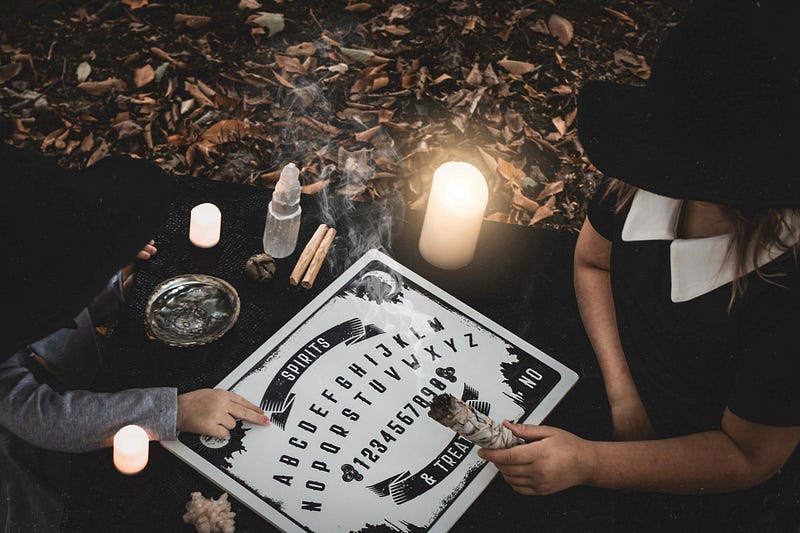
Wouldn’t you know? Narcissists react VERY negatively to it. It’s almost got the same effect as a cross does to a vampire.
What is going on with narcissists and their fear of demons and the spirit world?
The college I teach at is purported to be haunted. The janitors and staff trade stories, and the security runs regular ghost tours. I was always the person eager to hear what happened to people.
I was chatting with someone about a story when my boss, who I’d already identified as a narcissist, interrupted angrily:
“GHOSTS.
AREN’T.
REAL.”
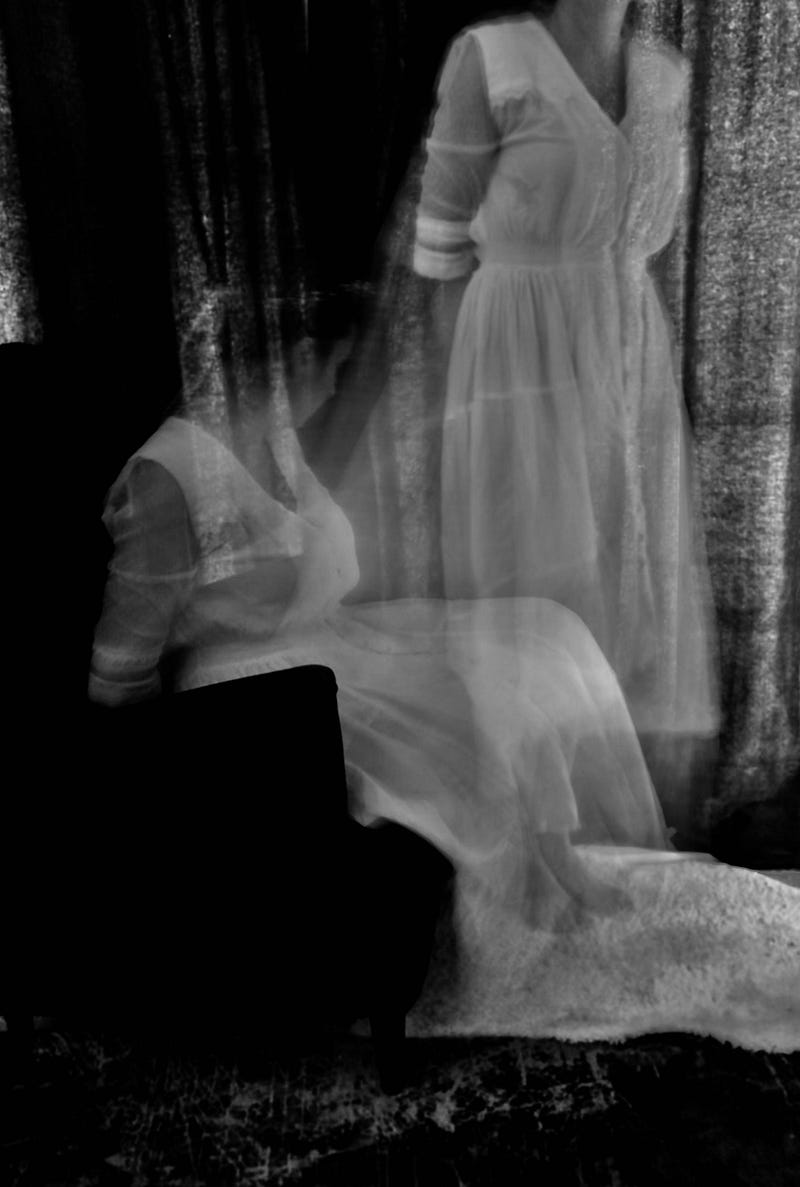
Methinks the boy doth protest too much!
If ghosts aren’t real, then why would someone be mad about people telling ghost stories? Ghost stories are older than antiquity and just something people do to bond and wonder and imagine. Let people have their magic, I say.
But I knew that if he was that MAD, it was because he knew ghosts to be real, just as I did with my grandmother, but he was AFRAID of them.
What are you afraid of, narcissist?
Because narcissists are the damned. They’re terrified of the power of the other side, a power they can’t control, a god who always betrays them.
The unloved. The unlovable.
It’s the kiss of death they give to anyone who loves them, that fear.
And some narcissists have some heavy guilts on their conscience, some of them have some UNFORGIVABLE guilts on their conscience, some of them have former supply who is now a GHOST, which may or may not be their fault.
I said to my boss, “You’re free to believe what you want. Some of us are just more open to the idea.”
Then, he REGRESSED.
The voice that came out of him sounded CHILDLIKE.

He said, “Ghosts aren’t real and if they are then they have GREEN SLIME!”
It was so absurd and so childlike that the whole room started laughing, including me. That’s part of how narcissists are so charming: they really are children, so when their mask slips or they regress, you see that child, and you can’t react with anything other than love for them.
However, I also knew what was happening. I knew he’d regressed because I triggered his fear. So when the laughing died down, I looked him right in the eye, pointed at him, and said the one word truth of his fear:
“DENIAL.”

He looked at me with such deep hatred that I’m surprised he didn’t growl. And then he didn’t talk to me or look at me for a solid month. The vampire knows when he’s met a witch.
A witch is just an alchemizer of pain to wisdom.
I have a lot of other stories about sociopaths being spooked by ghosts and the supernatural. They also obsess and call their victims “demons.” They project their fears onto victims, confessing through accusation. I even found a study that said that most murderers or veterans surveyed in it reported being plagued by PTSD dreams over people they’d killed and/or having a fear of ghosts.
The reason this scares them so much is because it’s a fear that there are energies which KNOW ALL THEIR SHAMES AND SECRETS…which they fear they may have to be accountable for someday.
Their entire lives are spent avoiding and denying truth and accountability.
Ironically, the same people in my life who seemed spooked by ghosts also usually liked to watch horror. In fact, they had two general genres: 1) Children’s TV or something they loved growing up or 2) Fantasy/Horror.
Watching horror was something I had in common with every sociopath I loved. I sat and watched horror with the very people who would end up nearly killing me.
I legitimately used to think, I could never be that girl plotting her survival on Nightmare on Elm Street. I’d just die early in the movie.
And then I literally WAS that girl plotting her survival from a monster who’d totally lost his tether to reality or self control. By the time I had to face off, I’d lived with the monster so long that I was desensitized. The monster was my DNA, a solitary survival of them was all I’d ever known.
It took me some time to figure out why sociopaths weren’t afraid of scary movies, weren’t horrified by themselves, but were afraid of the supernatural in real life.
It’s because in the movies sociopaths are almost always grandiose, fearful, and powerful. If Breaking Bad were real, for example, Walter White would also be a pedophile. But those shames are almost never in the popular culture, and if they’re alluded to, like with Stephen King’s IT, everything that is pathetic about the monster is drowned out by fear.
And fear is power.
In real life, they are much weaker and full of shame than in the movies. They’re dangerous. And traumatic. And deranged. And mysterious. And beautiful. And ugly. And gut-wrenching. And when you get to the bare-boned truth of them, it’s all just so very sad.
The movies give them a fantasy to feel powerful and better than others.
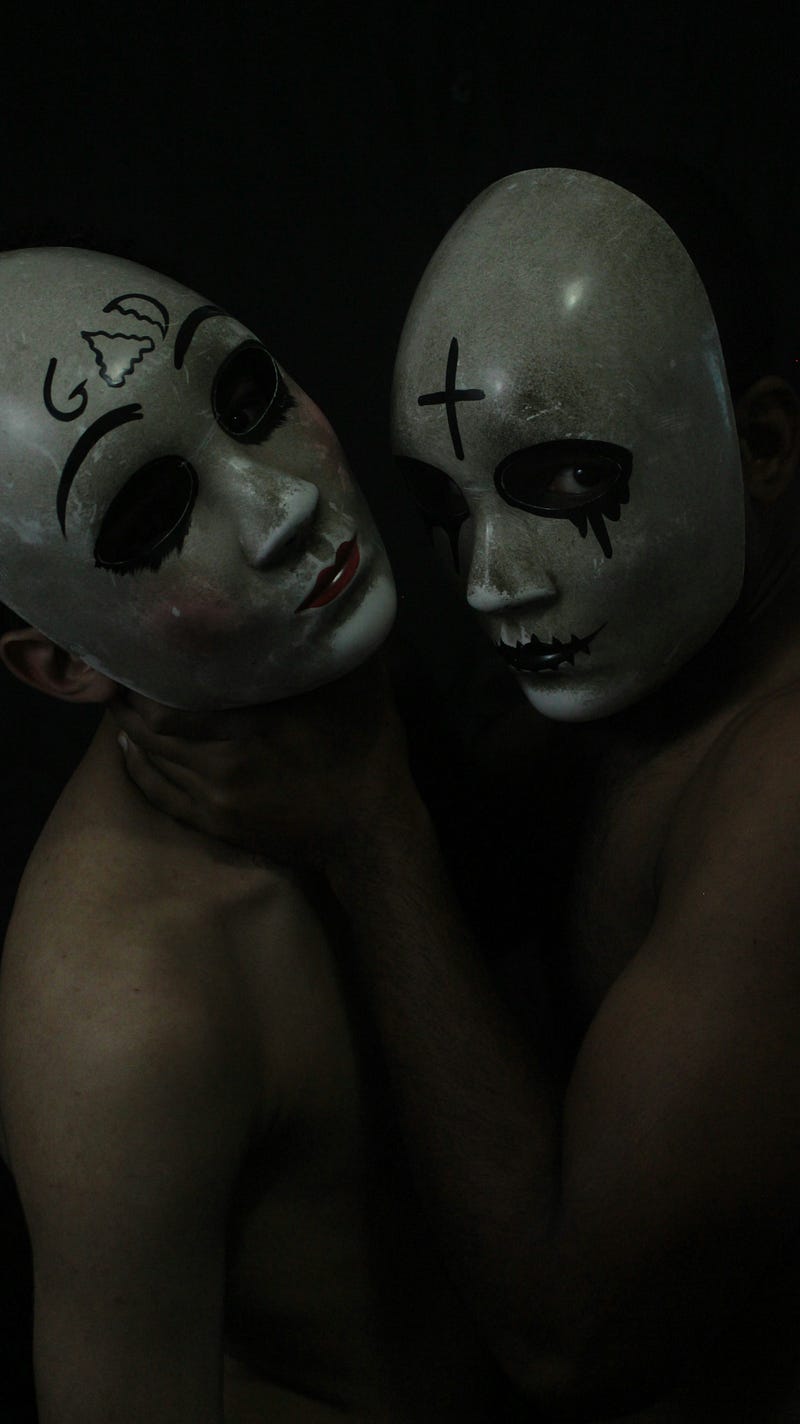
When you have a person in front of you sitting on a reservoir of guilt and shame that they haven’t processed or grieved, chances are you have a pretty HAUNTED person in front of you, and the supernatural power of something above them scares them a whole lot.
They’ll often swear they don’t believe in ghosts and try to prove to you that you’re silly for believing, but narcissists lie and gaslight: it’s just their playbook.
A good rule of thumb: whatever a narcissist has ever told you that you were dumb about, YOU WERE ACTUALLY VERY SMART ABOUT.
Too smart.
That’s the problem.
That’s why they had to hurt you.
If you can hear and see ghosts from the other side, then what happens when you hear and see the ghost child rattling inside their ribcages?
For individual coaching or group healing sessions, visit https://am-champion.com
Follow Blooming on the Borderline on Facebook.
If you’d like to support my writing, Buy Me a Coffee.
NEXT ABUSE RECOVERY GROUP HEALING SESSION: Tuesday, February 20, 7 p.m.-8:30 p.m. EST
TOPIC: Topic: From Idealization to Discard: Why Do Narcissists Turn You Into Their Worst Enemy?
A.M. Champion is the author of She Saints & Holy Profanities (Quarterly West, 2019), The Good Girl is Always a Ghost (Black Lawrence Press, 2018), Book of Levitations (Trembling Pillow Press, 2019), Reluctant Mistress (Gold Wake Press, 2013), and The Dark Length Home (Noctuary Press, 2017). Her work appears in Verse Daily, diode, Tupelo Quarterly, Prairie Schooner, Crab Orchard Review, Salamander, New South, Redivider, PANK Magazine, and elsewhere. She was a 2009 Academy of American Poets Prize recipient, a 2016 Best of the Net winner, and a Barbara Deming Memorial Grant recipient.


