WRITING TIPS
Five Unusual Ways to Boost Creativity
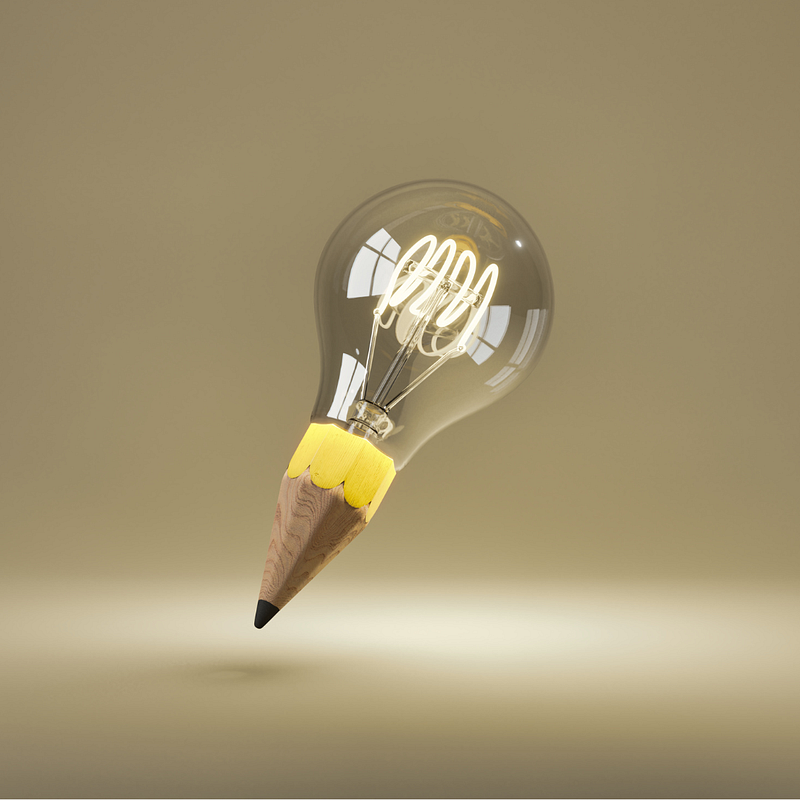
Ah, Creativity. That mysterious force our soul brims within childhood. We hold hands with It on the playground and sleep with It in dreams.
Then adulthood arrives. Bills. Traffic. News.
Suddenly, Creativity feels like a haunting memory we can never dance with again.
But, it’s always there. Waiting for us to play. Sometimes, we just need to tune our spiritual dial to Its frequency.
Form Doesn’t Matter
Writer? Dancer? Musician?Illustrator? Sculptor? The form of Creativity doesn’t matter. Our work here is tuning into that (seemingly) elusive spiritual frequency.
So let’s begin.
Unusual Creative Boost #1: Eavesdrop
Whatever your art form, Creativity loves to wink at us in other people’s conversations — their mannerisms too!
Here are four comments from people in a supermarket today:
“No — the old man expects me to be a lawyer. Livin’ for him dog. It’s not about me.”
“It burns — like bug bites on my privates.”
“We need another cantaloupe. You finished the last one. No — that one looks ready for the dumpster.”
“I need new panties. All of mine have holes.”
And the mannerisms — don’t get me started!
- The first was a man on the phone, speaking in a hushed voice as if his “Old Man” was in the supermarket with him.
- This was a young woman with dark roots and blond hair. Her face made me think of a crumpled paper bag. The friend she was talking to made a face like one of those emojis with the slanted flat line.
- If you read blame in this 3rd statement, you are intuitive. This was an elderly couple who behaved more like siblings than spouses.
- This was a middle-aged woman talking to what I could only assume was her teenage daughter.
Unusual Creative Boost #2: Downward Dog
If that spiritual radio dial is not bringing Creativity your way, consider doing some yoga.
Blood flow and creativity go hand-in-hand. There’s nothing like moving your head down to the floor to get that blood flowing.
“Downward facing dog pose opens up your legs, thigh, and spinal area. It brings calmness and relaxation to your body. Since this yoga pose also stimulates the location of the second chakra, it helps boost creativity.”-Yogi Krishna
But wait, there’s more! Four other yoga positions stimulate creativity: Vajrayana, child pose, pigeon pose, and corpse pose.
Unusual Creative Boost #3: Get Some Balls
Get your mind out of the gutter. I mean steel balls.
The famous inventor, Thomas Edison was known to nap under his desk or on a workbench while holding steel balls in both hands. He kept a metal plate right below his hands so that when he napped and woke up, the metal balls would make a loud sound, waking him up abruptly.
Edison kept a pad and paper nearby, so that upon his abrupt wake-up, he could immediately jot down ideas before they were forgotten.
Today, scientists refer to the transitional state between sleep and wakefulness as hypnagogia. Research suggests that when we dwell in the enigmatic world between wake and sleep our thoughts are more fluid. It’s kind of like stream of consciousness on steroids. And when the mind is more fluid, Creativity often knocks on our door.
Unusual Creative Boost #4: Do Something Weird
We are what we do, right? So, if we are doing the same things again and again in the same way, how can we expect unique results?
Children’s neural activity isn’t hardwired like an adults. Everything is new.
Yet once adulthood hits, we have our neural pathways set up with grooves deeper than a record from the 1950's.
How can Creativity make Its way to us with our familiar, ho-hum predictable patterns?
Enter, getting weird. Enter doing something different. Mixing it up.
The keyword: doing
Creativity loves action.
In a Netherlands study, people were set up into three different groups:
- Group 1: Told to prepare a sandwich in an unusual order.
- Group 2: Told to prepare a sandwich in the usual order.
- Group 3: Watched a video of a person making a sandwich in either an unusual or usual order.
The result:
The people who actively made the sandwich in an unusual order scored highest in cognitive flexibility.
I don’t know about you, but I’m off to brush my teeth with my non-dominant hand, skip instead of walk, and walk around my home with a cup on my head…I’m open to other creative ideas.
Unusual Creative Boost #5: Think Inside the Box
Yup. Creativity flourishes when there’s a set of rules in place. Creativity’s source is a paradoxical one: it fires up with freedom yet sputters out with too much.
Creativity likes parameters.
Without boundaries, the mind is all over the place.
Perhaps that’s why this writing challenge I shared did so well:
The mind likes limits within flexible parameters.
The great jazz legend Charles Mingus once said:
“You can’t improvise on nothing, man; you’ve gotta improvise on something.”
No wonder the blank page leaves many a writer scratching their head.
New York Times bestselling author, Steven Kotler is the Executive Director of the Flow Research Collective. He offers an example of that fine line between setting limits and free reign with an experiment where students were given 8 nouns:
- Group 1: The students were asked to use the 8 nouns to write rhyming couplets
- Group 2: The students were not given the 8 nouns and were just told to write rhyming couplets
Both groups were judged for creativity by an independent panel.
Time and again, the participants in the group that started with the constraint of eight nouns outperformed the other group.
Food for Thought
Where do you go for Creativity? How does your Muse arrive?


