
ERASMUS
Five Things That Shocked Me About Living in Brazil
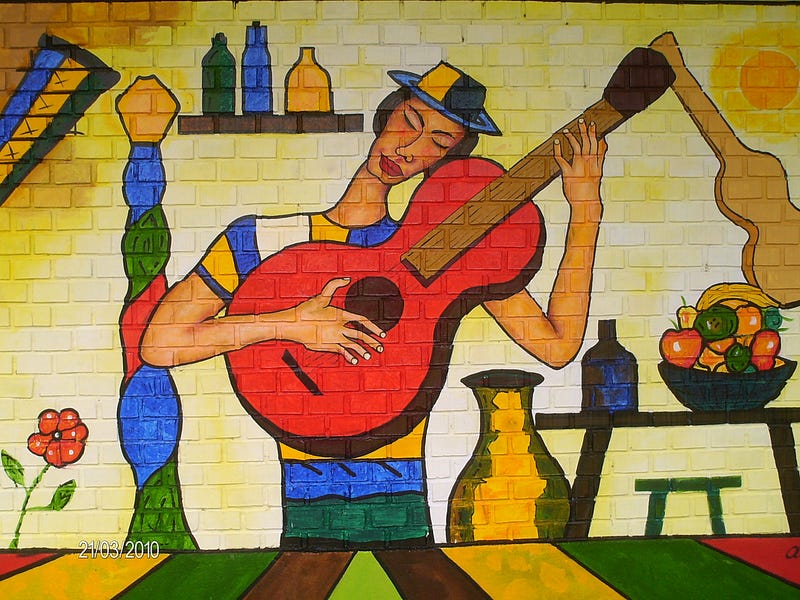
To the ignorance of most of the population, Portugal was the colonizing country of Brazil and not Spain. This historical and cultural connection forever links the two countries, whether Portuguese and Brazilians like it. And it was this cultural connection that, in 2010, led me, a Portuguese, to do a semester at a Brazilian university.
I was nineteen when I left on my own to Cuiabá, the capital of the state of Mato Grosso, in the northwestern part of the country, between Bolivia and the Amazon. I applied for a scholarship funded by the European Union, and against my own beliefs, I got it. The scholarship paid for my round trip and gave me 1,000 Euros a month for the duration of my stay there. At such a young age and as a student, that money was like winning the lottery.
I envied all those who went on Erasmus throughout Europe, but not being able to afford it was an impossible dream for me. So, opening the e-mail with that good news was one of the best feelings ever.
I quickly told my family about the news, and from the date, I knew I was going to Brazil until the day I set foot on Brazilian soil, not even a fortnight passed. Everything was prepared quickly, in an era when although the internet already existed, obtaining detailed information about where I would live was more challenging than nowadays.
But everything was done with great enthusiasm had I not been nineteen!
I was going with no expectations. My idea of Brazil came only from the soap operas I watched with my mother as a child. And then, later, my tastes for Bossa Nova and MPB ( Brazilian popular music) and the tropicália movement made me admire a country that spoke the same language as me but was so far away.
My vision of a tropical country was full of clichés and stereotypes produced by travel magazines, lovely beaches, and a climate everyone envies. However, my experience in Brazil would break with all the clichés and preconceived ideas of a country that looked nothing like the one I had in mind.
These are some of the aspects that changed, for better and worse, my vision:
1- The Climate

As I said, I thought the tropical climate was paradise, the epitome of the best weather in the world. I arrived in Brazil at the beginning of March, which meant winter in Europe and temperatures generally tooth-aching.
I remember saying goodbye to my parents with a jacket and a winter cap on my head, although I wore a t-shirt inside to feel more comfortable when I landed on the other hemisphere. The thermometers then in Portugal should be around seven degrees Celcius at most.
The trip was long. I had to take three planes; the longest transatlantic flight was at night. Anxious about everything, I couldn't sleep for a second. I arrived in Brasilia ( the capital of Brazil) at six o'clock in the morning, Brazilian time, and probably about ten o'clock in Portugal. However, I did my best to forget the old time.
I vividly remember getting off the plane, going downstairs, and seeing the sun rising over the horizon in the distance. I was setting foot in Brazil for the first time, and two things immediately awakened my senses.
First, and undoubtedly, the heat. The sun hadn't even risen yet, and I was already sweating.
Then the smell emanated from the earth. It may sound strange, but lands have different smells, and this was the first time I felt it. I can't find words to express what that feeling was, but maybe I can describe it as feeling inside a vast greenhouse, where you can smell various plants mixed with scents of fruit that have ripened too much and have fallen to the ground and got mixed up with the red earth that smelled like embers.
No wonder about the name Brazil…
I spent five hours at the airport in Brasilia, walking around the airport, looking at the landscape and the countless palm trees that surrounded the airport. Even today, I can hardly believe that I was only nineteen years old and that I lived this whole experience all by myself!
Halfway through the morning, I caught my connecting flight to Mato Grosso. I don't remember what time I arrived, probably midday. But one thing I will never forget:
It was hot…
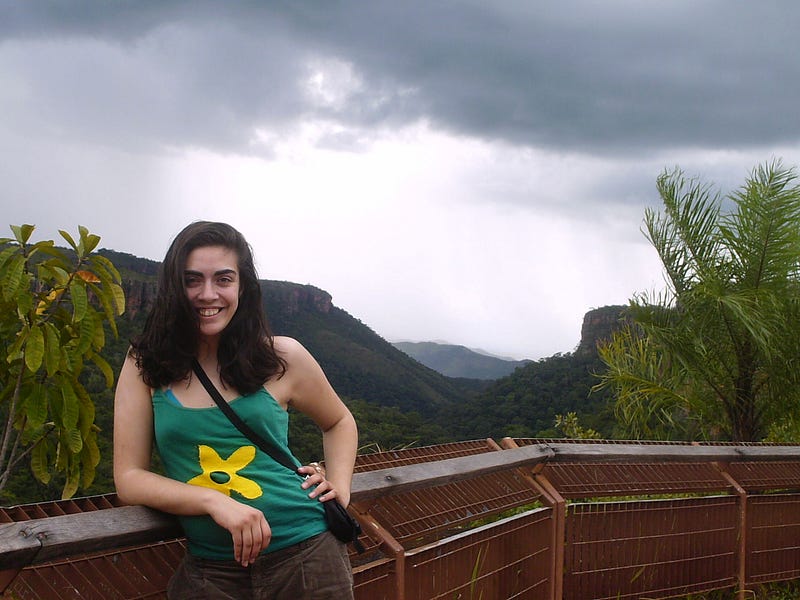
Not a heat you can stand, but a heat that makes your heart beat faster, your body goes into stress, and your anxiety skyrocket.
I felt lost and confused when I put my feet on the asphalt at the hottest hour of the day. My body had gone from about 7 degrees to 45 degrees in less than twelve hours.
The heat shock was horrible, so the first day was frightening.
The thermometers reached 47 degrees Celcius. And among other misfortunes, I still had to find a house — all that is another story.
All I could think about was the heat for a month or more. I remember being restless that day, even inside an air-conditioned shopping mall. I couldn't stop sweating.
Very disturbed, I vented to a lady: "How can you live here?"
She didn't understand a word I said, even though we spoke the same language. I was going to learn two things. First was that she possibly, in fact, didn't understand my accent. But the second would be that there was a more significant cultural barrier than the language; I didn't know what it was until then.
Throughout my stay, I could never adapt to the climate, which with it came mosquitoes that almost devoured me alive and gave me scars on my legs, some that I still have today after twelve years. Sleeping with air conditioning and later with a fan became the only solution. And one day, when I was so tired of not being able to sleep, I remember falling asleep in the shower with water that had been falling on me all night.
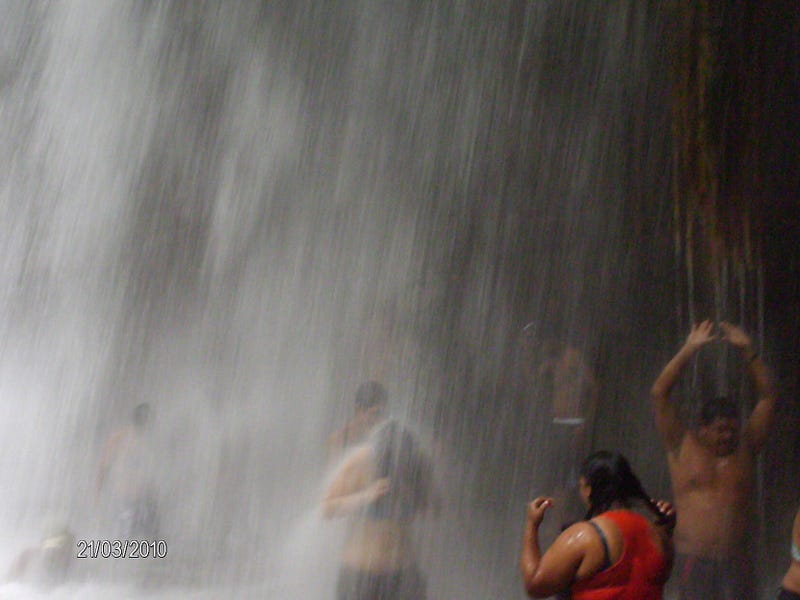
Going to waterfalls proved to be equally disappointing. Just when I thought I would finally be able to cool off, getting thousands of gallons of water on top of me did nothing to cool me off. Even though I enjoyed the experience, the water temperature was so high that I remember feeling like I was sweating even under the water… I don't know if such a thing is possible, but that was the feeling.
I still remember one night when I went out with some friends; it was two o'clock in the morning, and the city center thermometer read 42 degrees Celcius( 107.6 degrees Fahrenheit)!
I understand that those who have always lived in this climate are more comfortable. But I, a European, have discovered that I am not at all a person who likes high temperatures, and Brazil taught me that forever.
2- Religious Fanaticism
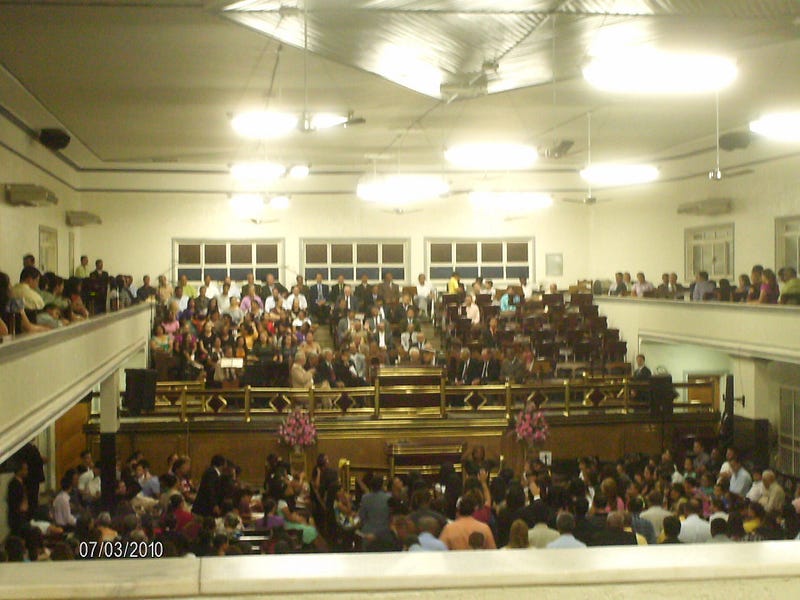
As or more shocking than the climate was the religious fanaticism I was not accustomed to, don't get me wrong. I'm Portuguese, and Portugal is a very catholic country, still full of traditions and saints' feasts. Still, the society has become increasingly secular, and even those who practice religion in Portugal, for the most part, don't usually carry their religious traditions with them daily.
Of course, some people are more religious than others, but generally, one doesn't notice any religious enthusiasm or fanaticism. At least not so much when compared to what I witnessed in Brazil.
After arriving in Brazil and the house I had been promised turned out to be a big sham, I had to find a place to sleep urgently. The group of students who had waited for me at the airport tried to help me as much as possible.
I was already exhausted when they drove through neighborhoods unknown to me. That first day was hallucinating.
I was suffering from heat shock and jet lag, and I was in the middle of the afternoon in an impoverished neighborhood—houses without doors, broken windows, houses with barbed wire around them, and dirt roads. It began to rain in torrents to make the already disturbing situation worse.
It was then that something extraordinary happened. I was in a car with young people all about my age, nineteen, twenty. They stopped the car and started praying, asking God to find me a house to stay in. I remember that moment vividly, feeling scared and wanting to laugh simultaneously; such was the confusion and tiredness in my head.
At that exact moment, I received an SMS not from God but from my best friend, who asked me if I had melted or was still intact.
Without a roof over my head, tired, alone, nineteen years old, panic began to set in. Luckily, a girl in that group told me I could stay overnight in their house. I will forever be grateful to that family who held my hand and gave me a home.
But, and now comes the but. Little did I know what I was getting myself into. In my innocence and ignorance, I did not understand what evangelicals were; I did not know the existence of Brazil's most fanatical religious sect, the Assembly of the Kingdom of God.
Well, this family was part of it. With them, I would cement my atheist convictions. If there was still a side of me inclined not to criticize the Church or respect religious fanaticism, this part fell apart after two months of living with them.
Nobody listened to music other than the gospel because, according to them, "it was a sin." Little could I imagine what could have been passing through their minds when I played Nirvana around the house.
Along with the music came the movies and the prohibition of walking around in shorts in an apartment that was always hot. I was inevitably dragged into their religious services, which was an experience I will carry with me for the rest of my life. Please make no mistake; I am not saying I became religious, but the exact opposite.
I saw in all that a horrible religious fanaticism, a great theater, a collective hysteria where any rational thought was not welcome. I saw screams, people fainting or making themselves faint, and pastors saying half a dozen nonsense words that, by shouting, excited everyone.
Religion wouldn't have bothered me if it had been limited to Sunday services. No, it was there all day long, and I forgot about it every time I started eating before the others, and everyone started praying before the meal.
Of course, I had seen these things in American movies, and then I realized that I was in the American continent, even though it was South America. There were many more similarities with the United States than with any European country. Even though we shared the same language, religion made me feel that I would be more at home in any European country than in Brazil.
At the age of 19, it was bizarre for me to see other people of the same age being so bigoted and racist — the family had a Black housekeeper who was forbidden to sit with us, something that still shocks me today.
I was so revolted that I started eating with her in the kitchen. I preferred her company a thousand times over!
3- Language barrier and lack of education
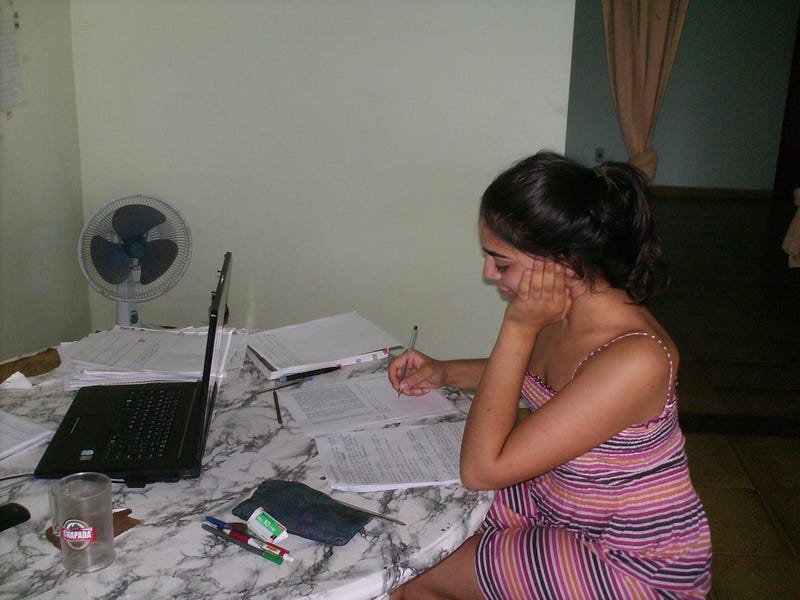
Those who study Portuguese know there is the so-called European Portuguese, which I speak, and the Brazilian Portuguese, from Brazil. However, despite the different accents, the language is the same.
So, as a Portuguese person, I never thought that Brazilians would have difficulty understanding me or that we did not speak the same language. But what was my shock when I first met the group waiting for me and then I noticed that they did not understand a word I said.
I, tired, said with emotion in Portuguese, "How nice to see you here. I am Araci; nice to meet you "… . The students looked at each other and then at me like an Alien, and one asked the other, "Did you understand anything she said?".
It was a weird moment. We Portuguese can perfectly understand Brazilian Portuguese, but at that moment, I immediately realized that the opposite was not the case.
Besides the accent, there were several linguistic problems, namely the existence of the same words but with entirely different meanings. I remember asking someone if I could fetch water from the fridge, and the person was very shocked at me.
The word in Brazil did not mean "fridge" but "slaughterhouse." Can you imagine what they thought of me?
The most embarrassing moment was when I called a girl a prostitute. The word "rapariga" in Portugal means girl, while it is associated with "prostitute" in Brazil. She was friendly and explained the real meaning in Brazil, and I immediately apologized, saying I didn't know.
Besides the language, I was going to have a huge culture shock. Whether we like it or not, Brazil is a country of enormous wealth but inequalities, which leads it to be called the third world. And one can feel this everywhere.
For me, access to education, or rather the lack of it, is the most worrying. In the whole state of Mato Grosso, which is the size of the Iberian Peninsula, there was only one public university. And even university education is very precarious and weak compared to European standards.
It may sound like a lie, but imagine my amazement when university students didn't know where Portugal was. Attention, they are Brazilians, and not knowing where Portugal is like asking an American where England is.
Many were also the people who answered me in Spanish when I said I was from Portugal. I almost can't believe this happened and can't prove it. Just believe it if you want to. But imagine an American starting to speak French after an English told him he was from England!
The most ridiculous episode about this happened during my last week in Brazil. The mother of one of my colleagues came to visit her daughter in the house we all shared, and when she asked where I was from and how long I had been there, she looked up and said in amazement:
"Gee, only six months here, and you already speak so well?"
By then, I just didn't care anymore, and I sarcastically replied that I was very intelligent….
4- Everything was more expensive than I thought
This was one of the facts that amazed me the most. Thinking of a third-world country and having euros with me, I thought I would have an effortless life in Brazil.
I really thought that everything would be at the price of rain for me. But if there is one thing I learned about living in a third-world country, it is how much more expensive everything is than in Europe.
I eventually learned that this is exactly what makes the country so unequal. I remember a liter of milk being twice as expensive as in Portugal. There was no competition, no choices. There was only one brand of milk, and of course, with no market competition, the prices were pretty much whatever the companies wanted.
The same thing happened with all other goods.
Clothing was expensive, very expensive. There was only one advantage; the quality was outstanding compared to the clothes from the department stores that we have in Europe. There weren’t the big brands that I knew in Europe. Zara? There wasn’t.
But of course, I liked that everything was made in Brazil and nothing came from China. But it’s true that maybe because of that the prices were much higher, there was zero competition, plus the young clothes seemed to be designed for much older people.
So, not surprisingly, many people bought clothes using credit, something that would never happen in Europe. Never! I have met people who are still paying for some jeans they have bought two years before…
5- The concept of beauty
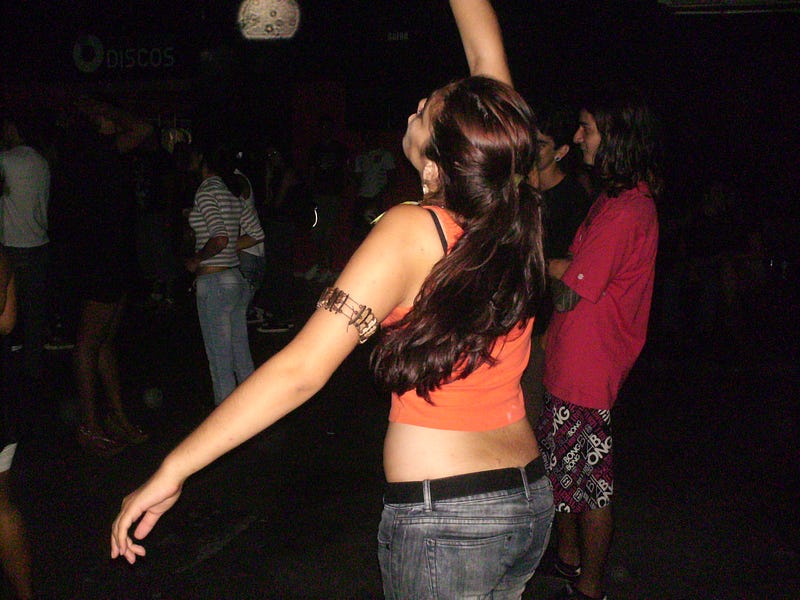
I confess that I have always been a relaxed woman regarding my appearance. I have always liked casual looks, jeans, a t-shirt, and sneakers.
I've never liked makeup or harsh colors. In Brazil, the concept of female beauty shocked me a lot. Everybody has to have their waxing up to date, and every woman cares about having her nails painted, hair straightened, lipstick on her lips… For me, that was just too much.
I am talking about day-to-day life; it is the norm. I can't even imagine what was going through their minds when they saw me in an old dress, without any paint on my face and often my facial hair showing — the hair grows even more in that weather!
Whenever we went out at night, my concept of going out at night was fun. For me, fun is to be as comfortable as possible, wear sneakers and a t-shirt, and just have fun.
The concept of fun for all the women I came across consisted of spending more than an hour putting on makeup and choosing dresses with dazzling colors… It couldn't be more contrary to my more relaxed way of looking at life. Something that made me feel very European.
I felt that Brazil still has such a bound patriarchal system that I was seen as a masculine woman simply for wearing jeans. I often felt like I was stepping back in time when women had yet to conquer much ground that belonged to men. I saw women with internalized misogyny, if that's a thing.

And as much as we think that being feminine is putting lipstick on our lips, I saw that the Brazilian society, including the women themselves, still objectifies a lot the female body. Proof of this is the countless plastic surgeries performed in Brazil, including botox surgeries on the buttocks and deaths associated with them when they are done in places with little safety.
I have never seen this mentality in Portugal or any other European country.
There are many things that I still like about Brazil. But once again, the Brazil I like seems to be extinct. I like the Brazil of Rita Lee, the rebels, the Girl from Ipanema, Cartola, and so many musicians who made Brazilian music one of the best in the world.
I talked to many Brazilians who had no clue about most of the musicians who made Brazil eternal…
Once again, the lack of education is something terrible to witness.
Hello, I’m Araci, a female writer from Portugal. I like to write about my country, Portugal. But I also enjoy pop culture, American culture, and cultural differences. I hope you’ve enjoyed this article!
You can also find more about me here:
If you have enjoyed this article, maybe you would like to buy me a coffee here https://ko-fi.com/joanaaraci. I don’t drink coffee that much, but food is getting ridiculously expensive, and I need to put it on the table.
There are other ways to help me out:
Are you considering joining Medium for only 5$ a month? Your membership fee directly supports me. This way, you are helping me out while you’ll also get full access to every story on Medium.
If so, consider doing it through my referral link.
Thank you for reading me.


