
Five Techniques for Remaining Calm and Reducing Anxiety from a Former Fugitive Hunter
The art of channeling your thoughts and remaining focused during chaos
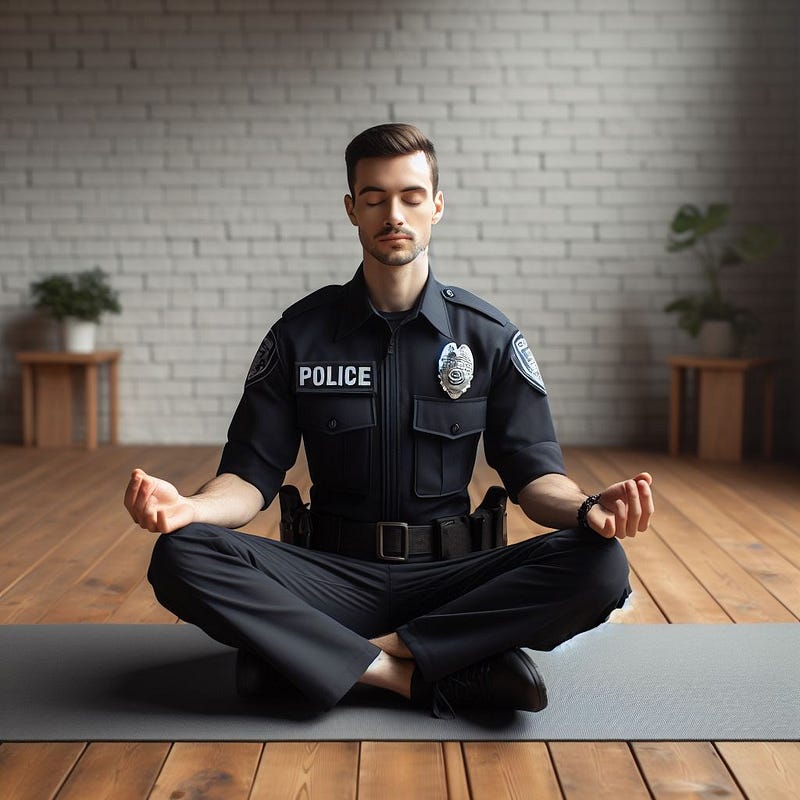
Chasing fugitives is a world of extremes.
The work has two speeds: leisurely Sunday drive and pedal-to-the-metal. There is little in between. Most of the time, we’re either gathering information and leads or doing surveillance. Surveillance sounds cool. Trust me, it’s not.
What is Fugitive Hunting?
It’s sitting in your car for hours watching a particular house, car, or hotel. Any place you believe your suspect might visit. You watch, and you wait. It may take minutes, or it’s likely to take days or weeks. That’s 90 percent of the job.
The other 10 percent is controlled chaos.
Let’s back up a bit. Fugitive hunters aren’t looking for the person with a warrant for missing traffic court. It’s typically for crimes like robbery, serious assaults, and murder.
They are people who are hiding and, in many cases, will do anything to escape justice.
Doing a job like that can cause extreme amounts of stress and anxiety. One case I worked sums it up well. I was hunting a fugitive wanted for murder and we tracked him to a remote boatyard nestled along a river. It was late at night.
He was suspected to be armed, dangerous, and hiding inside one of the boats.
Anxiety’s like a rocking chair. It gives you something to do, but it doesn’t get you very far — Jodi Picoult
There were 40–50 boats, and most had plenty of places where a person could hide. We had to search each one. There is no safe way to explore a boat parked on land, propped up on cement blocks. Each time I boarded one, I knew there was a real chance it could be my last.
We wouldn’t find him until days later.
I could only get through that night, and others like it, using techniques I’d learned and applied over time. You don’t need to be hunting bad guys to use these techniques. You can use them for job interviews, public speaking, and anything else that causes you significant anxiety.
1. Breathing
Breathing is more than just inhaling and exhaling; it’s a bridge to gaining control over your body’s response to stress. Under stress, we tend to take sharp, shallow breaths. What the body needs to bring stress down is deep, controlled breaths.
It takes focus and effort.
I use a technique called box breathing. It involves inhaling for four seconds, holding the breath for four seconds, exhaling for four seconds, and holding again for four seconds. This method calms the nervous system, reducing anxiety and bringing a sense of calm.
Box breathing helped me control my emotions and think clearly during that night in the boatyard.
2. Mindful Focus
In crises, the mind races with thoughts of worst-case scenarios. What’s interesting about the human mind is that in many people, something as simple as public speaking triggers the same response in the body as if your life were in danger. The fix is to train yourself to focus on the present task rather than all of the potential outcomes.
I learned to channel my thoughts towards immediate actions — assessing the environment, communicating, and taking the next step.
This deliberate focus is a form of mindfulness where you are fully present in the moment. You push away the extra thoughts you don’t need. If you fear public speaking, you focus strictly on taking the stage. Once you’ve done that, your sole responsibility in life is your opening line.
It’s a total focus on the next step.
3. Physical Training
Physical fitness is crucial to overall wellness, both mental and physical.
Regular exercise prepares your body to handle stress better. Exercise releases endorphins, known as ‘feel-good’ hormones, vital in managing stress and anxiety. Wellness for the body is wellness for the mind.
There are no workarounds for poor fitness.
Physical fitness also builds confidence, which is essential to handling pressure. Returning to the public speaking example, remember that the mind and body react to it the same way as a threat to life. Physical fitness is just as relevant in both scenarios.
4. Cognitive Rehearsal
Cognitive rehearsal, also called visualization, is a technique where you mentally prepare for many potential scenarios. This practice involves visualizing yourself navigating through challenging or stressful situations. Doing this builds a mental blueprint that can guide your actions when faced with a real-life crisis.
I used this technique constantly and still do today.
In the boatyard case, I mentally walked through scenarios of a shot teammate, an injured suspect, or a vehicle pursuit. There were dozens of scenarios. The beauty is that if any of them proved correct, the brain doesn’t have to work it out on the fly.
It’s seen it, or a version of it, before.
5. Fostering Resilience
Resilience is the ultimate goal in managing stress and anxiety. It’s not just about surviving a single incident; it’s about building the mental fortitude to handle any situation life throws at you. Resilience is developed and polished through physical preparedness, mental training, and emotional intelligence.
It’s also about using each past successes to build confidence, and using any failures as a learning experience to perform better the next time.
Final Thoughts
Toward the end of my career, events that would have once caused me fear and anxiety didn’t bother me any longer.
Some of that was experience, but the techniques I learned were even more crucial. Anyone can learn controlled breathing, mindful focus, cognitive rehearsal, and resilience over time. Most people can also improve their fitness.
Reducing fear and anxiety is the outcome of easily learned skills.
These techniques are not limited to policing; they apply to all life’s domains. Learning these techniques will empower you whether you are facing a life-threatening situation, public speaking, or a stressful job interview.
Calmness does not come from an absence of fear, anxiety, or stress. It comes from learning skills that give us mastery over those feelings.
If you have your own techniques, I’d love to hear about them in the comments.


