
Five Simple Ways to Make Instant Friends
Asking the right questions will bring you closer to each other
“True friends are never apart. Maybe in distance but never in heart.” ― Hellen Keller
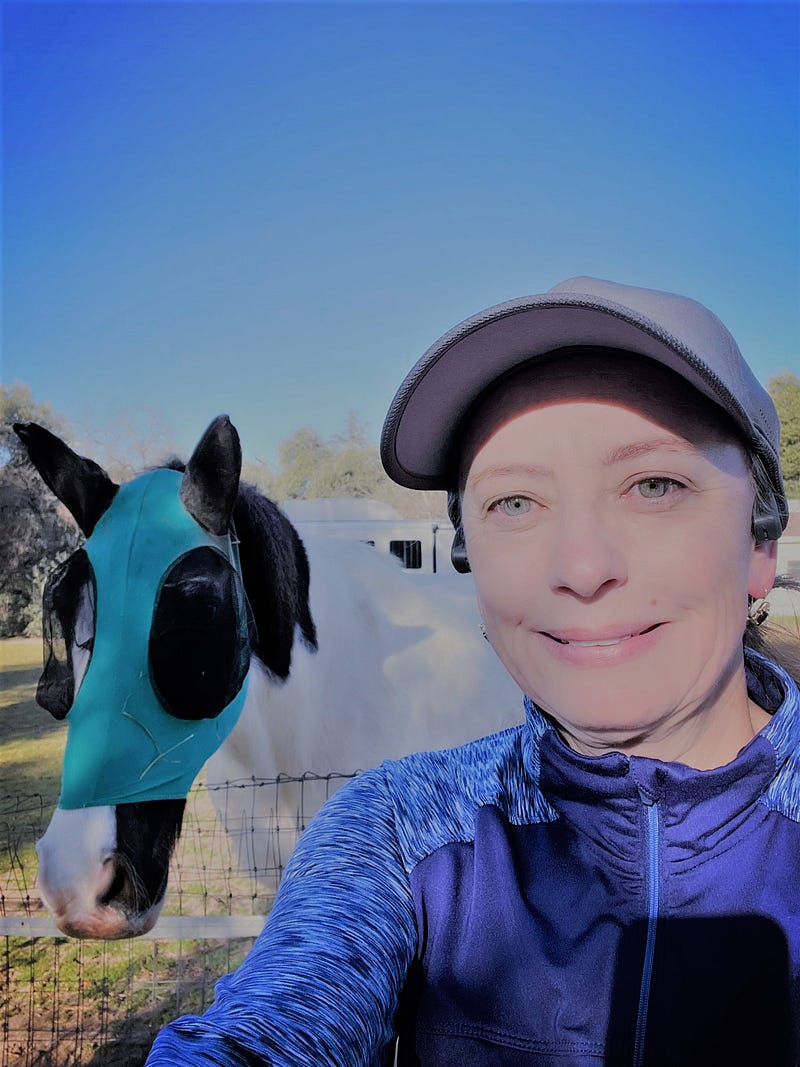
Running solo doesn’t mean that I will be alone during the whole run, which is why I made a quick stop to chat and pet my horse friend.
I have a big secret to tell you about these last two years of the pandemic: I have made the most friends despite the social distancing rule, which I followed closely in indoor settings, but not outdoors. Needless to say, staying healthy was my number one priority, which I accomplished through making new friends, even though that sounds counter intuitive in times when contact needed to be limited, or even avoided. Yet, I figured out that tending to my mental, emotional, and spiritual health was the perfect answer to my physical health due to a little outburst that I had experienced during the very first quarantine when the novelty Corona virus hit us.
My husband and I were talking about the upcoming weekend. I asked him to go someplace in nature on a family hike, but he simply refused and pointed out that we needed to stay in quarantine. His words sounded harsh, as if he was trying to discipline a naughty child, so I lost it and raised my voice, which I rarely do: “Are you saying that we need to live in prison stuck in our home instead of going out a little bit for a change of scenery?” I practically shouted and hurled all my frustrations at him.
“I’m saying that we will do that soon, but now we need to keep our family safe. Besides, you do go out and run around our neighborhood and the nature reserve.” he replied.
I felt lonely together for some reason, even though we were eating at least two meals together as a family with our teenage kids and saw each other every day.
I ran 30 to 40 miles a week mostly solo to follow the distancing rule. I cooked. I baked. I read. I wrote, and truly focused on finishing my first poetry book The PR — The Poetics of Running, A Book of Poetry in Motion, which I published at the end of 2020.
At the end of the two month-quarantine, I felt like a tiger in a cage pacing up and down. I reached out to some of my existing friends and got back to running together, as we figured being outside will lower the risk of us getting sick, in case we were asymptomatic. Once I started running with my good friends, I immediately felt lighter and happier. My instant joy was akin to watching a magician pull white doves out of his hat. It was incredibly uplifting and empowering.
We ran together. We laughed. We conquered.
1. Approach the other person first
“We cannot live for ourselves alone. Our lives are connected by a thousand invisible threads, and along these sympathetic fibers, our actions run as causes and return to us as results.” — Herman Melville
We are born into this world with many unique gifts that become part of our genetic makeup. To me, the art of starting up a conversation and connecting to all sentient beings is one of my strengths, which I attribute to my father, who made friends with everyone due to his easy-going nature. Unlike me, he was an introvert, but had a special way to make people feel good. My father was also quite funny and wise, which I am also hoping to achieve.
I remember when I was only about six years old. My mom and I moved to the Western side of Romania. Once settled in, I was eager to make friends with the kids in our neighborhood. Looking back, I simply took the initiative by asking the kids if I could play with them. They almost always answered yet, which matches the Mayo Clinic advice on developing new friendships: “Persistence also matters. Take the initiative rather than waiting for invitations to come your way and keep trying. You may need to suggest plans a few times before you can tell if your interest in a new friend is mutual.”
Unlike my mother, who thinks that others need to approach her if they want to be friends, I have learned to reach out first unless the other person beats me to it. By extending kindness and appreciation to the person we want to be friends with, we signal that we are open and friendly, which makes it easier for the other person to engage and decide if the interest is mutual.
2. Give genuine and honest compliments
“If you can’t say anything nice, at least have the decency to be vague.” ― Susan Andersen, Baby, Don’t Go
I am sure that there is such a thing as the universal parent who offers the same advice to their kids all over the world: “If you can’t say something nice, it’s better not to say anything at all.”
Luckily, giving genuine praise and compliments feels like second nature to me, or like putting on my running shoes, which is a regular act I do without overthinking. Not only am I good at dishing out genuine compliments, but I feel incomplete if I don’t offer them daily to my family, friends, and perfect strangers.
Giving kind compliments to others is like a boomerang effect, since it comes back at us. Praise turns into praise. Kind words ripple across the fiber of our beings like pebbles skidding across water. Kindness is miraculously intoxicating. It turns our souls into smiling sunflowers. It makes us glow.
Furthermore, according to Psychology Today, “the art of the compliment is not only a powerful social skill; it is one of the most fundamental. You don’t need to be an expert to do it well. You just need to be genuine. Compliments are in fact one of the finest tools for acquiring more social skills, because the returns are great and immediate. They escalate the atmosphere of positivity and become social lubricants, fostering the flow of conversation and advancing communication by enhancing receptivity.”
3. Ask questions, shut up, and listen!
“He who asks a question is a fool for five minutes; he who does not ask a question remains a fool forever.” — Chinese proverb
One thing that I learned early on was to ask questions.
“Raise your hand and ask the teacher questions,” my mom used to tell me when I was in elementary school. “It’s better to ask than make a silly mistake.”
Relationships have the potential to bloom when we learn to ask questions to find out what the other person thinks and wants rather than assuming we know the answer.
Although I am adept at asking the right questions, I think Deirdre Fitzpatrick, my friend and host of Dying to Ask podcast is a master of asking the best questions that can turn any stale conversation into a stellar one. When I had the honor to be on her podcast in 2021, I had prepared to go into one direction, but she skillfully redirected me, which happened on the spot and created a buzz about my habit of putting fun first into my calendar.
Dying To Ask: Why You Should Schedule Fun First Into Your Calendar on Apple Podcasts
I was so impressed with Deidre’s deft ability to ask the best questions that I have made it a habit to never skip any of her podcasts, since I oftentimes enjoy her questions the most. I particularly can tell when she is trying to extract the right information from her guests, which is why I think that we can all become experts at asking questions and listening to the answers. Doing so will cement our relationships or even take them in directions we never thought possible.
Asking questions demonstrates our interest in other people and that we care to know more about their lives. Asking questions is better at satisfying our curiosity than satisfying our sweet tooth. Asking questions is clearing all paths of misunderstanding and miscommunication. Asking the right questions is illuminating and revelatory, so go ahead and make more and better friends by asking intelligent, kind, and thoughtful questions.
4. Offer help without expecting anything in return
“Strive not to be a success, but rather to be of value.” — Albert Einstein
Offering help for the sake of making someone’s life easier and more pleasant is undeniably a big reason we live on this planet, if not the biggest one. Moreover, offering help without expecting anything in return is the very definition of a fulfilling life lived with grace, kindness, and joy.
When we are of value, as Einstein said, we lift everyone else’s spirits by offering our physical, emotional, and spiritual support. When we make other people happy, or we lessen their burdens, Marianna Pogosyan, Ph.D. points out in her article In Helping Others, You Help Yourself published in Psychology Today that “recent research suggests yet another way our well-being can benefit from practicing pro-social behavior: helping others regulate their emotions helps us regulate our own emotions, decreases symptoms of depression and ultimately, improves our emotional well-being.”
Our desire to be helpful is more enhanced by our wish to make our friends happy, as well as prove that we are attentive to their needs and wants. And sometimes, the help can just mean writing a lovely and encouraging card in which we express our love and support.
And since I love writing cards and little poems to my friends, I have developed a great strategy over the years. I buy all kind of cute cards from Trader Joe’s, as they are beautiful and inexpensive and have them on hand to attach my card to a bouquet of flowers or to a little gift that I drop off with a good friend.
We should never lose the art of personal touch and personalized hand-written cards, as they are great means to express our gratitude for the special people in our lives.
5. Keep nourishing your relationships
“Let us be grateful to people who make us happy; they are the charming gardeners who make our souls bloom.” — Marcel Proust
I have this quote written in black letters on a white, square magnet stuck on my fridge. I think it is quintessential advice to instantly become friends with almost anyone we choose to. What I love about this quote is the fact that Proust gives a clear prescription to nourishing our relationships with others by expressing gratitude to those who make us happy, for they are the charming gardeners who contribute to our joyous lives. I also appreciate the gardening analogy, even though I am not a gardener myself. It is clear that nourishing our relationships is akin to watering the flowers in a garden so that they thrive and continue to bloom.
Nourishing is watering. Watering is nourishment to relationships in gardening terms.
I have decided to text the new friends that I made during the pandemic daily. I am proud to say that I will remember this trait as something positive that came out of these unsettling times. My daily text messages contained funny memes, inspiring messages, nature pictures that I took during my runs, a little diary entry about something interesting that I did or read about that day, followed up by questions about my friend’s day and well-being. Even when my friends were too busy to answer, they told me that they enjoyed my text messages and that I often times knew exactly what to write to match what message they needed to hear that day.
Call me a good mind reader with great telepathic abilities, or just a loving friend watering the plants, nourishing one bloom and friendship at a time.
Final takeaways:
There is an art in winning more friends when we are willing to put in the work by approaching others first, complimenting them, asking the right questions, being helpful and kind, and by turning into charming gardeners who remember to nourish relationships and make others happy.
As to my horse friend whom I greet during my runs, these five rules also apply, since we all share the same desire: to be seen, loved, and appreciated.
This story has first appeared on Newsbreak under the title Making friends with humans and animals — a universal language that we all understand.
For more poetic musings and short-form philosophy, please check out my new book Morsels of Love, A Book of Poetry and Short-Form. Enjoy!
If you like this article and want to read more such articles without any restrictions, why not consider becoming a Medium member (if you are not one already) by using my referral link below?


