
Five Sectors That May Go Into Oblivion by a 2nd Lockdown
Work for Any of Them? Time to Make a Plan B, and I Will Tell You How to Do It.
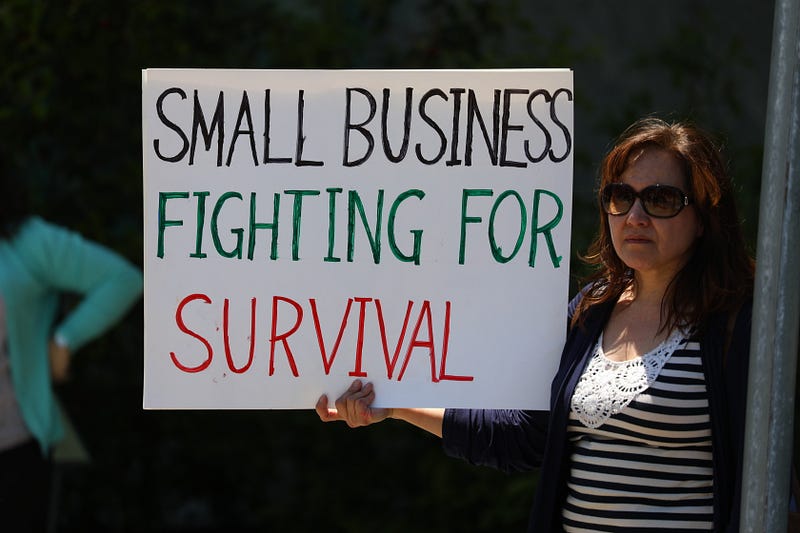
As an entrepreneur in the hospitality and tourism sector, in April I was overly pessimistic. I was expecting a crisis that would completely vanish any chance of a profitable summer, and bankrupt every second Hotel in the city.
The summer came, and together with it, a positive surprise. In entire Europe and North-America, the lockdown restrictions eased and it was not as bad as expected. We still lost money, that is true, but we survived. We even turned slightly optimistic about what lies ahead.
But October arrived, together with a second wave of the Covid19 pandemic. Together with governments closing sectors, decreeing curfews, and restricting business. To put it into perspective, this was like a patient that was hospitalized after being hit by a car, suddenly realize that his hospital room is on fire.
Still hurt from the catastrophic first semester, now we must run for survival, again.
Talking with other entrepreneurs to grab their sentiments about what the winter, and diving into some economical projections, I compiled the five sectors where business may be slaughtered by a second lockdown.]
Be aware that at no point in this text I am raising a point about how effective (or not) is a lockdown to fight a pandemic. My purpose here is only one: to alert anyone that works in any of those areas that things may get ugly this winter.
But I will also give you a message of hope.
Time to start the list of the five most damaged sectors by the newly imposed restrictions. And if the reader permits, I will start with my own sector:
Hotels and Touristic Accommodations
Winter for hotels is harsh, for a couple of reasons. The first is that it is a low season (unless you are in a winter-sport paradise or alike). The second is that expenses increase, especially in locations with harsher climates and shorter days. The percentage that utilities like heating and electricity represent from total expenditure nearly double.
In other words, for hotels, winter means less money coming in and more money leaking out.
This year, with the lockdown restrictions decreasing both touristic and business demand, the summer already had despairing numbers. According to STR, the average hotel occupation in Europe was 38.9% in September, when normally is near 70%. The average price per room dropped 27.2% and the revenue per room plunged gruesome 64.8%
Things can still get worse: according to climatologists from the World Meteorological Organization (WMO), there are 55% of the La Nina phenomenon extends to 2021, which means colder winters, and higher heating bills.
Hotels that will survive will either be the ones with easy access to inexpensive supplementary capital or with comfortable financial reserves. Independent hotels will be the most affected since chains have easier and cheaper credit. Therefore, will be no surprise if independent accommodations become easy prey to multinational hotel conglomerates.
Bars and Restaurants
One may think that the possibility to work with the delivery system is enough to save the restaurants from their demise.
Nothing further from the truth, and it is for two reasons. The first is that non-fast-food restaurants have the highest margin in their beverages and alcoholic drinks, rarely ordered via the delivery system. So food delivery consists of items with lower margins on the menu.
Besides that, food delivery apps like UberEats or Wolt charge high commissions from restaurants, ranging from 15% to 30%, which might correspond to half of the restaurant margin.
And, at last, during an economical crisis, eating out (or ordering prepared food from a restaurant) is one of the first items cut from most family budgets, just like holidays. For all those reasons together, Restaurants are facing a crisis similar to the Hotel industry, caused by fewer customers, increasing expenditures, and margins being eroded by lower prices.
Concerts and MICE (Meetings, Conferences, etc)
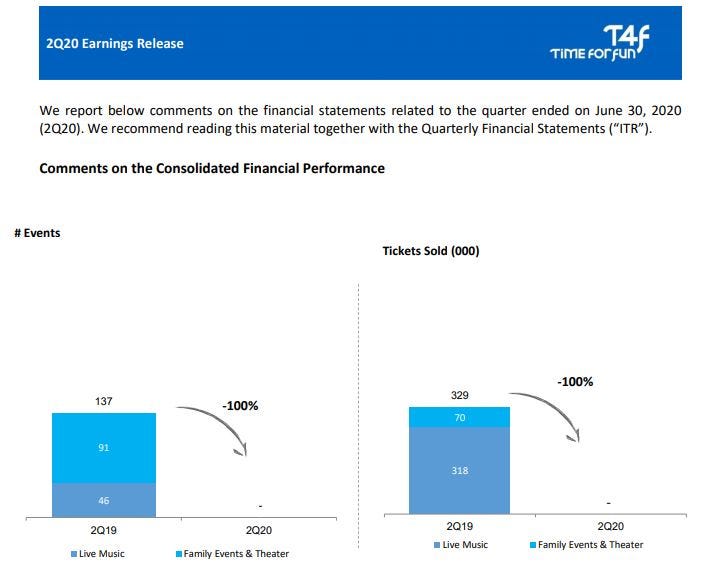
While restaurants and hotels at least had a glance of hope during the period that lockdown restrictions were eased, the concerts and MICE ( Meetings, Incentives, Conferences, and Exhibitions) sector never had a relief, since the restrictions over big events where always in place. This is how it looked, for example, the earning release of one of the largest live entertainment companies in the world, Time4Fun:
While this sector may look small at a first sight (how many concerts a medium city has per month anyway?), the subsectors that depend on it make its numbers respectable. From DJs to catering, from security to photographers, it is a sector that employs more than half a million people only in the UK, and at least a thirty thousand of them are at imminent risk according to the Financial Times.
Of all the sectors mentioned in this article, the Concerts and MICE may be the last to go back to normal. In virtually all reopening plans (which now are mostly lifted in Europe) they are in the last stages. The realization of sponsored lives in streaming websites like Youtube is an alternative source for famous artists, but the rest of the sector is near choking.
Gyms and Wellness sector
One of the first industries to be closed, and also one of the last to be reopened. Countries like Italy, Spain, Canada, and Poland closed their gyms for the second time in October and faced protests from personal trainers and instructors.
Stakeholders from this sector argue that this is not only an inefficient measure since the public of their establishments consists of people out of the risky demographics, but also because lacking physical activity contributes negatively to human immunity.
Personal trainers are among the most affected since their income dropped to zero.
Airlines
Probably the most obvious presence in this list, due to the high media coverage they get. Counter-intuitively, however, Airlines are not among the most affected. To understand why is enough to see how frequently governments bail out or nationalize near-bankrupt carriers.
Yes, some of the minor players like Flybe were among the first to go belly up, but traditional names like Alitalia, Lufthansa, or American Airways are still around independently of their billionaire losses.
Additionally, they were the first to downsize their operations and mass-release employees, so if you are still working for an airline, most likely the worst already passed.
Unless it is a small, cash-strapped company, governments will now allow most airlines to go bankrupt because they will also need them to distribute the vaccines that may be released somewhere in the next months. Lack of connectivity is dangerous for any country, so airlines do not have a tunnel as dark as the other sectors in this list. Still, it is important to be cautious and have a plan B in the case your name is in the next downsizing.
How can I prepare my Plan B?
The logic behind having an alternative route during a crisis is well-justified by the concept of anti-fragility, from Nassim Nicholas Taleb. Imagine a barbell. On one side you have one of your income streams and on the other your alternative income sources. When you depend on a single stream, you are out of equilibrium and any major stress in your sector may reflect in your own life. You fall.
Taleb uses his own example since he is (or was) a fund-manager and a writer. If for any reason his investment fund went broke, he still had the income from royalties of all the best-sellers he published — the lessons of his books were vital to save my business during the pandemic crisis, check here.
In the same way, develop an alternative route, a plan B in case the worst happens at work, and tomorrow you find yourself without a stable income. Together with my business, I am also a writer, and working on developing some additional skills now that tourism slowed down. Together with your profession, what more can you be?
Develop your anti-fragility.
Levi Borba is the CEO of expatriateconsultancy.com, and a best-selling author. You can check his books here and his other articles here


