
Five Misconceptions From History Everyone Should Stop Believing
Sorry, but fortune cookies didn’t come from China

As with any subject, history can be complex.
Though there are plenty of facts and figures, there are also many ambiguities and unknowns. Worse still, people have a tendency to exaggerate and oversimplify, resulting in floods of mistruths.
So, next time you hear someone mention one of the following misconceptions, make sure you correct them.
Misconception #1: People Died Young in the Middle Ages
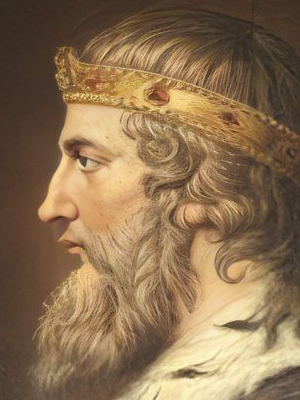

The Middle Ages has a grim reputation, with many viewing it as a time of starvation, disease, and turmoil. Whilst this is partly true, this period of history wasn’t as bad as many people think.
When it comes to life expectancy, the numbers vary depending on time and location, but even the more well-off societies struggled to reach a life expectancy above forty. This creates the illusion that people in the Middle Ages died at a young age.
But it’s important to remember that life expectancies were dragged down by high infant and child mortality rates. Those who survived the vulnerable stage of childhood had a good chance of surviving beyond middle age, even without the help of modern medicine.
In The Long History of Old Age, historian Shulamith Shahar says the following:
“People who reached early adulthood had a fair chance of reaching the age of sixty or seventy. There were also men and women who lived to be eighty or even ninety.”
Misconception #2: Women Were Burned Alive at the Salem Witch Trials
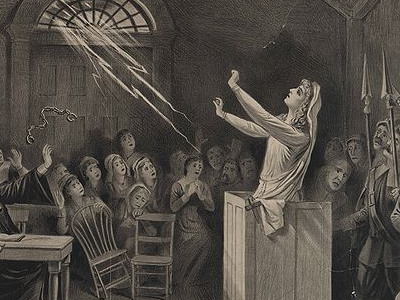

The Salem Witch Trials took place in Salem, Massachusetts, in 1692 and 1693. After the initial accusations in the village of Salem, hysteria spread across Massachusetts, resulting in hundreds of accusations.
But — contrary to popular belief — no one was burned alive during the Salem Witch Trials. There were nineteen executions in total (some of whom were men), and all of the victims were hanged.
Why, therefore, do people assume the accused were burned alive? Well, over in Europe, some of those who were accused of witchcraft were indeed burned at the stake. The Bamberg Witch Trials in Germany (1627–1632) are an obvious example.
In other words, the misconception seems to have occurred because people have confused American history with European history.
Misconception #3: Queen Victoria Said “We Are Not Amused”
.jpg)
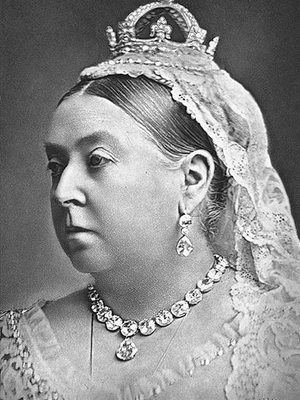
After the death of her beloved husband in 1861, Queen Victoria fell into a spiral of mourning. She wore black for the rest of her life and swelled to a large size owing to her unhealthy relationship with food.
This depressing image of Victoria has led many to believe she was a morbid sole who struggled to enjoy herself, which is probably why the phrase “We are not amused” is often attributed to her. But there is no proof she ever said this.
In fact, there’s no evidence she ever wrote these words, let alone spoke them. Historians have had access to her letters and papers for decades, and no one has ever come across the phrase.
(Conversely, the phrase “I was much amused” does crop up multiple times in Victoria’s diary!)
Misconception #4: Fortune Cookies Originated in China
.jpg)
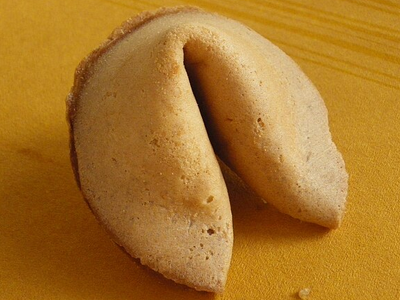
Fortune cookies are a staple part of Chinese restaurants in Europe and America. As such, many people believe fortune cookies originated in China. But this simply isn't true.
It’s hard to pinpoint the historical origins of fortune cookies, but there are several essential facts that need mentioning. In the nineteenth century (the exact date is unclear), something resembling a fortune cookie appeared in Japan. These cookies — which were larger than the ones we recognize today — were made of rice and flavored with salty miso and sesame seeds.
Then, in 1914, a Japanese American man named Makoto Hagiwara started to offer fortune cookies at a tea garden in San Francisco. These snacks were a hit with Asian-Americans, becoming popular with both Japanese and Chinese communities.
In other words, fortune cookies are Japanese, not Chinese.
Misconception #5: America’s Prohibition Laws Banned People From Drinking Alcohol
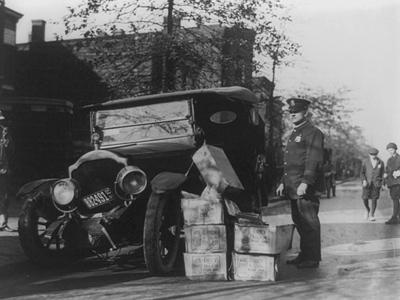

Those who live in the United States may already be familiar with the nuance of the Prohibition era. But in the rest of the world, this part of American history is often misunderstood.
The Eighteenth Amendment and the Volstead Act came into effect in 1920. These acts prohibited the manufacture, sale, and transportation of alcohol. (Certain states introduced prohibition legislation much earlier. Kansas, for instance, introduced prohibition back in 1880.)
However, these pieces of legislation did not prohibit the drinking of alcohol. So, given it was still within the law to drink alcohol, the demand remained, and certain individuals were keen to capitalize. Home-brewed liquor, drinking parlors called speakeasies, and criminal smugglers known as bootleggers flourished during this era.
In 1933, the Twenty-First Amendment repealed the Eighteenth Amendment, bringing an end to the Prohibition era.
Sources
The Book of Myths & Misconceptions: The Truth is Finally Revealed (2009) by Jeff Bahr
Who Said That First?: The Curious Origins of Common Words and Phrases (2011) by Max Cryer
Witchcraft Out of the Shadows: A Complete History (2004) by Leo Ruickbie