
Five Less-Technical Books to Get You Curious About Data in All The Right Ways
Find something good to read, whether you’re a beginning analyst or a business leader

Whether you’re an aspiring data analyst or a business leader and decision-maker, learning how to think about and use data in some level of depth is critical to your success. Here, I’ve compiled my five favorite less-technical books that can help you grasp the essential concepts you need to know so that you can approach data in an informed, practical way.
1. Becoming a Data Head: How to Think, Speak, and Understand Data Science, Statistics, and Machine Learning by Alex J. Gutman and Jordan Goldmeier
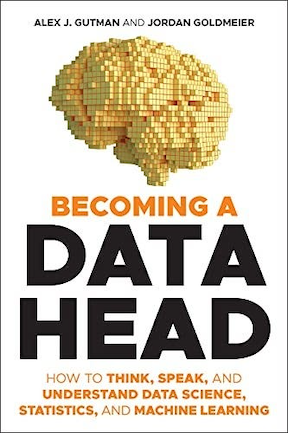
Anyone who has talked to me about data for even half a second has almost certainly heard me singing the praises of this book. It should be considered essential reading for anyone in a leadership role. It offers a very approachable, easy-to-understand explanation of how to think about data and what data can do, and along the way it reinforces why it’s critical that you understand the basics to be better at your job. If you’re an aspiring data analyst, this book also serves as a great introduction to concepts that you can later dig into in more depth using other sources, and you may just find you still return back to this book again and again as you learn as well.
2. Data Analytics: Practical Guide to Leveraging the Power of Algorithms, Data Science, Data Mining, Statistics, Big Data, and Predictive Analytics to Improve Business, Work, and Life by Arthur Zhang
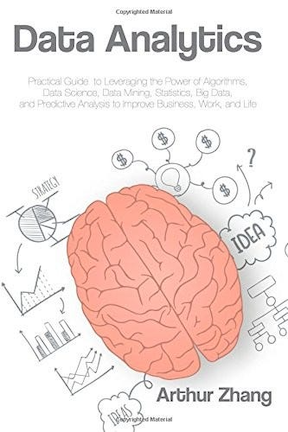
This book by Arthur Zhang is an amazing and comprehensive overview of data science, and it’s written in a way that you can understand even as a non-technical reader. If you’re a new analyst, this book will help you understand many concepts in context and get a good grasp on the practical applications of the many technical skills you’ve learned. If you’re a business leader, it will help you understand the ways data can be used in a business context so you’re more equipped to seek the right info from your analysts and identify meaningful insights.
Note: This book doesn’t seem to be available on Amazon any more. I’m keeping it on my list because it’s one of my favorite data books; maybe you can dig up a used copy or find a pdf version.
3. Data Science for Business: What You Need to Know About Data Mining and Data-Analytic Thinking by Foster Provost and Tom Fawcett
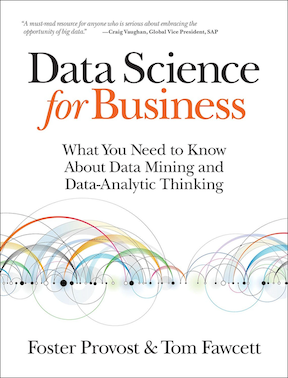
If you are a business leader or decision-maker and you want to understand data science work clearly, this is a great book for you. This book is a tiny bit technical, but only insofar as it helps you understand what a data science team does (and you can skim over the fine details of the technical stuff). If you’re a business leader, this book will help you understand how a data science team fits into an overall organization and the nature of the work they do, and the info it offers could be very useful if you are someone who supervises a data team. It also teaches you some general ways to think analytically and the specific ways that insights can be extracted from data. If you’re an analyst, this book will help you understand how those you serve in your company may be thinking about data and what value you provide them.
4. The Art of Data Science: A Guide for Anyone Who Works with Data by Roger D. Peng and Elizabeth Matsui
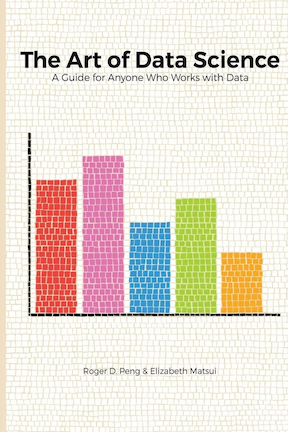
This book addresses some technical concepts, but it is written in such a way that a total beginner can understand. It’s a practical introduction to how to work with and think about data. Note that this is an older book from 2015, so read it with that in mind — but what it teaches you about how to approach and think about data analysis is still very, very valuable and relevant, whether you’re an aspiring analyst or a decision-maker who uses data.
5. The Data Detective: Ten Easy Rules to Make Sense of Statistics by Tom Vanderbilt
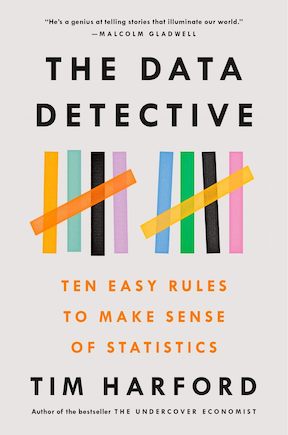
This is a highly readable, story-driven book that helps you understand how statistics can mislead you. It’s a light enough read that you can listen to it as an audiobook, and it’s really interesting stuff.
Agree with these recommendations? Let me know! Suggestions or corrections to improve this article, or other books you’ve loved? Please share them with me!
I’m a former English professor and current higher ed administrator, and I write about what I’ve learned on my self-taught journey to develop my data analysis skills. Through my articles, I hope to help you build your data literacy skills, learn some tips and tricks for Python, SQL, Tableau, Excel, and other common technologies analysts encounter, and think about the ways that data can help both you and your organization grow. Along the way, I’ll share strategies for developing the right mindset and approach for teaching yourself new skills — some drawn from my past teaching experience, and others gathered the hard way from stumbling here and there myself.