
Five Great Movies That Are Actually Historically Accurate as Well
Yes, Films Really Can Be Both
Last week I published an article about five of the worst movies ever made, at least as far as their historical accuracy. To show that I’m not just a grumpy old man who hates everything, today I want to present the flip side of that: five movies that are both excellent films and historically accurate as well. Sadly, there aren’t as many of these as there are of the bad ones as an overall total of what Hollywood puts out. On the plus side, not a single film listed here features that bane of historical filmmaking Mel Gibson.
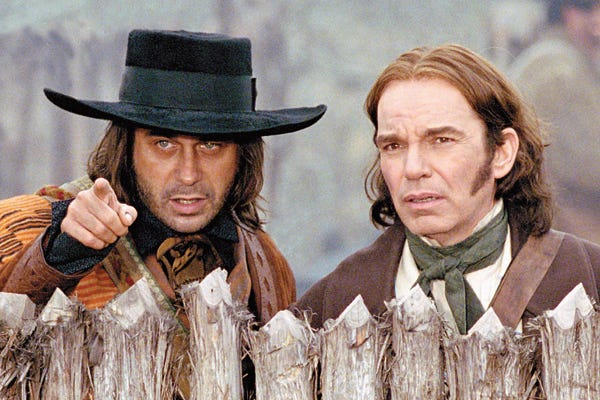
1. The Alamo (2004). If you’ve seen this one, it’s likely you did so on cable, DVD, or a streaming service because it was a complete bomb at the box office, losing over $140 million. The fact that it was released at the same time as Kill Bill 2 and Hellboy didn’t help, nor did Americans’ general disinterest in their own history. That is regrettable, because from a historical accuracy standpoint it was an excellent film.
It got everything right that the classic 1960 John Wayne film of the same name didn’t, including the generally unknown fact that there were only two frontal assaults during the 13-day siege (at the start and at the end with constant bombardment in between). It’s the first film about the battle to show the prominent role Tejanos played on the Texan side, and the first to portray the Mexican Army soldiers as real people who showed as much bravery as the Anglo and Tejano defenders. It also got the deaths of William B. Travis, Davy Crockett, and Jim Bowie right, which is a rare thing indeed. If you want to see a true depiction of both sides of the conflict that created Texas check this movie out.
2. Master and Commander: The Far Side of the World (2003). Russell Crowe starred in one of the least-accurate historical films ever with Gladiator, a movie I absolutely love in spite of its historical flaws. With Master and Commander he completely redeemed himself. It’s not easy to make a historically accurate film about life on a 19th century British warship, but this movie does it. The characters are fictional, but everything from the uniforms to the dialogue to the ship itself is spot on. Director Peter Weir had entire period-accurate ships constructed using original historical blueprints, and consulted diaries and transcripts from the era to get every detail right. None of this would matter if it wasn’t also a rollicking good movie to watch, which it definitely is.
3. Tora! Tora! Tora! (1970). In contrast to the 2001 Michael Bay travesty Pearl Harbor (which made my 5-worst list), Tora! Tora! Tora! remains the best film ever made about the attack on Pearl Harbor five decades after it was released. It was the first film made following the war to show both sides of the battle; it took nearly 30 years for that to happen, and has rarely happened since. We see both the lead-up to the attack and the attack itself from both the Japanese and American point of view. Best of all, there’s no jingoistic flag waving, just a compelling and accurate account of a key moment in history.
4. Black Hawk Down (2001). Based on the 1999 book by journalist Mark Bowden (read it if you haven’t), the film depicts the disastrous Special Forces raid in Mogadishu, Somalia in 1993 to capture warlord Mohammed Farah Aidid. Part of the reason the film succeeds where so many contemporary war films fail is that it avoided any commentary on the politics of the conflict, which will always bias a story to one degree or another. Black Hawk Down simply shows us the battle from the viewpoint of the Army Rangers and Special Forces troops that took part; this makes it a human story as much as a war story. The filmmakers also used accurate aircraft, weapons and other gear, thereby avoiding easily-noticed errors like repainting American tanks to look like German ones as they did in the 1965 film The Battle of the Bulge. Having been active duty Army at the time the film portrays, I can personally attest that the dialogue and interaction of the soldiers is 100% accurate.
5. All the President’s Men (1976). Based on the 1974 book by Bob Woodward and Carl Bernstein, the film chronicles Woodward and Bernstein’s investigation of the June 1972 Watergate break-in, an investigation that ultimately led to the resignation of President Richard Nixon. With Woodward and Bernstein played superbly by Robert Redford and Dustin Hoffman, the film shows the two men’s work as it unfolded over the course of more than a year, at a time when in-depth journalism was the norm rather than the exception it is today. There are no explosions or fast-and-furious car chases, yet the mere facts of the case and how the film allows them to unfold make for one of the most compelling historical films ever. It’s also a cautionary tale about presidential power worth revisiting today.
So that’s five wonderfully accurate historical films you can watch without wondering if you’re getting the real story or just revisionist fiction. To change up the old Mark Twain quote a bit, they let the facts tell a good story.


