
Five Educational Goals for Chicago Young and Adult Learners in Chicago in 2024
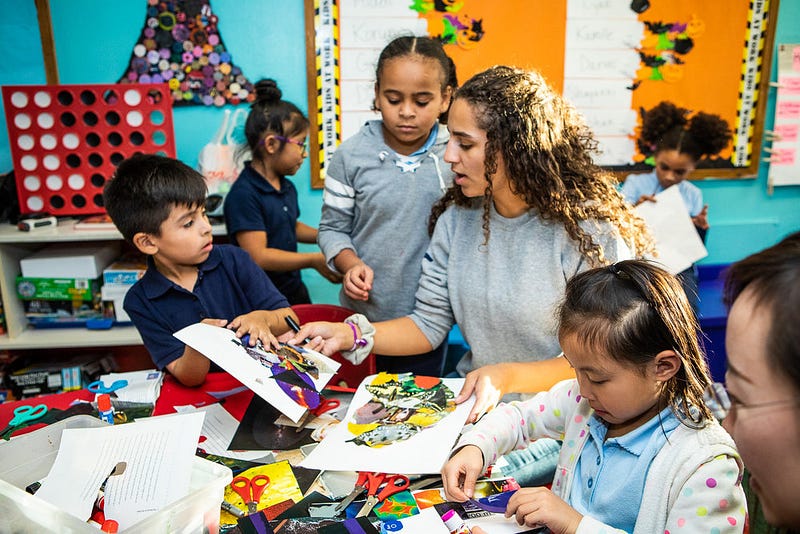
We went into 2023 focused on serving the needs of current and prospective Black and Latina/o college students (and recent HS graduates) in Chicago. We are going into 2024 with a vision for educational advocacy focused on the K-12 system.
Not to say the needs of racialized and minoritized students who are in or seeking enrollment at a college or university have vanished. Rather 2023 exposed us to a root cause of struggles faced in higher education linked to earlier childhood experiences with teachers, schools, disciplinarians, librarians, police officers, truancy workers, and formal and informal agents of the academy with a duty to serve and protect our most vulnerable populations living in Chicago…all children enrolled in Chicago Public Schools.
Serving the needs of children feels different to serving those of an adult in a practical sense, and there are also times when the maturity of the young people we work with can catch you off guard.
It is always important to keep in the forefront of your mind when working with students who are living in communities of Chicago that it is possible…they may live alone or with others in an community of intense poverty that comes with additional layers of personal and professional disadvantage.
Students living in these communities experience a desperate lifestyle within the 3rd largest metropolitan communities in the United States. 2023 exposed us to the realities faced by children living in communities with little opportunity for housing, employment, healthcare, education, and transportation.
We also learned about a spectrum of resiliency that exists within this population of young minds where some are very easily able to encounter sometimes significantly traumatic events like the death of a parent of eviction from a home and be able to function through it, if not be able to fully cope with it. For others, it may take years for them to regain the desire or ability to speak. Children we worked with this year fell along this spectrum relatively distant from center in both directions.
We learned a great deal from serving the needs of these children this year, and we look forward to building on these experiences in 2024.
We were blessed with the opportunity to work closely with 4 children this year and their families. All of them came to us organically through personal referral or individual motivation (e.g., they Googled “education advocacy Chicago” and found us. We are actively seeking more students and families who are trying to navigate the education system and finding it challenging.
Three areas of work emerged for us as particularly timely and significant in serving the needs of children we met (and others we aspire to meet) and two areas for adult learners in 2024.
For children we are focusing on: (1) Individual Education Planning (IEP) student and family advocacy; (2) English language services for young people who are Spanish-dominant; (3) expanding our tutoring offerings for English and Math for children grades 1–5.
IEP student and family advocacy can take many forms from simple phone conversations with parents about their plan for their child to full involvement in planning up to and including attendance at meetings with school administrators, social workers, educators, counselors, and other specialized educators in the building providing services to your student.
English language learning for our students — www.duolingo.com/classroom/kpggbj — is powered by Duolingo. All students aged 5–12 currently enrolled in school who are Spanish-dominant, need individualized support, encouragement, and motivation to learn English this year are encouraged to enroll.
Tutoring students that we work with in English and Math report that the additional time and individualized attention we provide helps them achieve their academic goals.
We find most Black and Latina/o students in CPS classrooms are working to produce academic artifacts that are rooted in white-dominant thinking. They reported experiencing confusion, frustration, and anger when attempting to complete assignments using their skills and talents only to receive non-passing scores and non-productive feedback from their educators. We are looking forward to continuing to work with the K-12 community in Chicago, learning about their needs and how to best serve them, and finding places of hope in communities of our city that others have decried as hopeless.
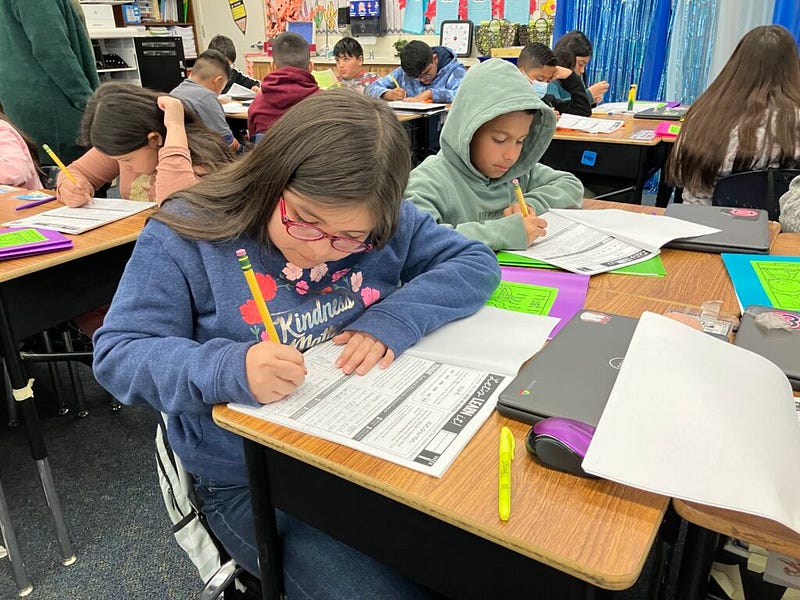
For adults, we are focused on: (1) English language services for adults who are Spanish-dominant and (2) mental health services advocacy for students on and off campus.
Adults, too, live in these same communities in Chicago that are historically and currently being intentionally blighted by a legacy of racist programs and policies. Such programs and policies were and are aimed at isolating these communities from the rest of the city while still actively relying on them for political power when the mayoral election came to town and funding for North Side developments through disproportionately placing red light cameras in areas of higher poverty.
For adults who were born in the city, they may have heard the sirens call of higher education before…and felt a distance between them and their aspirations that was a gulf too far.
We are also using Duolingo — www.duolingo.com/classroom/mxzsxx — to offer English learning support for adults. Anyone who is over the age of 18, Spanish dominant, and interested in practicing their speaking, writing, and listening skills for a minimum of an hour per week can enroll using the link above.
2023 exposed us to the mental distress realities being faced by people living in Chicago who are living, maybe working and maybe has a family, and trying to go to school. Community colleges are typically the gateway to higher education for students from communities with higher levels of poverty, poor academic performance in high school, lack of financial resources, and close proximate geographic location. Students attending community colleges are also more likely to be working, have a family, be married (or going through a divorce), and struggling every day to support their own existence.
Anxiety and depression among Black and Latina/o students are wildly underdiagnosed because of the stigma against mental illness in these communities. We aspire to address mental illness stigma for all communities we are working with in higher education by advocating for programs, offices, initiatives, and policies addressing the mental health needs of community college students in and around Chicago.
Closing out 2023 feels good, because we worked hard to advocate on behalf of the communities we serve and connected them to resources, services, and supports they needed.
We are equally excited to see what the momentum we built this year brings in 2024. We are actively applying for grants every day to support the programs described above, provide supportive operating costs for administrative support, and exploring emerging areas of educational need in Chicago.
We are eternally grateful to those individuals and organizations that worked with us to support the communities we serve this year. We look forward to continuing to grow and expand the reach we have into serving the needs of communities that we have seen firsthand a struggle that can be reduced if not eliminated through the infusion of continued learning either in college, the library, or elsewhere.