
Writing Craft
Five Books That Made Me a Better Writer
I recommend these books to anyone who wants to write fiction
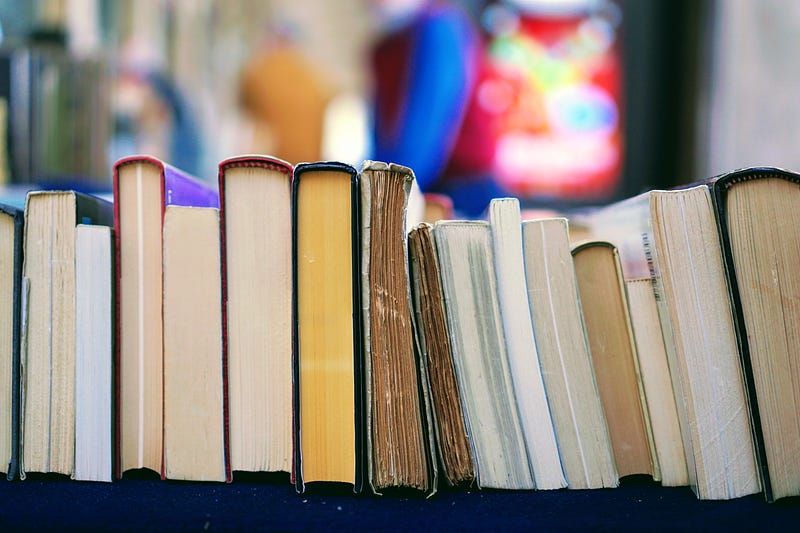
It’s probably a cliche now to hear about why writers need to be readers. But that will still not minimize the importance of reading for writers.
I started reading before I could write. I read mostly to either learn about things in general or entertain myself. But it wasn’t until I took writing seriously in 2020 that I began reading to write. Before then I believed myself to be a good writer. I still look back at those times and cringe at my ignorance.
Reading books on the writing craft taught me that I wasn’t nearly as good as I thought I was. Books transformed my writing from mediocre to somewhat okay, then to slightly more than okay. With more learning and practice, I know I’ll be even better in future.
Between 2020 and 2022, I read so many books on the writing craft, however, five of these books collectively sum up my learning journey and they have made me much better than I was before 2020.
Book #1: Elements of Style by William Strunk Jr. and E. B. White
While every book I’ve ever read about writing taught me so much, this book had the biggest influence on my life and has since been the foundation of all my writing.
Affectionately known as the Little Book, due to its size, the wealth of information it contains is by no means little. Elements of Style rewired my mind on what it takes to write well.
Before I read it, I thought I was a pretty good writer. I mean, I could string out grammatically accurate sentences, spell, and use vocabulary that could resurrect Shakespeare. Even my teachers were impressed by my talent in writing.
Then I read Elements of Style and I was in for a rude awakening. The book so thoroughly crushed my ego, nothing of it was left. For the first time, I realized that my writing was complete trash. No, really. It was.
My punctuation use, especially in fiction, was catastrophic, I rambled a lot, and worst of all was my verbosity. I had this mindset that using a lot of big words and complex sentences — purple prose — was the hallmark of good writing. Honestly, that wasn’t entirely my fault since that was encouraged in our schools. In Ghana, using big words and flowery descriptions in the English language was hailed as some kind of intellectual superiority.
Thankfully, Elements of Style reoriented my mindset and instilled in me the importance of simplicity, precision, and brevity. While I’m still learning, I can boldly say that my writing is more succinct now. And it was all because of this book.
I highly recommend Elements of Style to every writer, irrespective of what kind of writing they do. Whether you’re a beginner or an experienced writer, read this book if you haven’t already done so. It will change your life.
Book #2: The Art of Fiction: Notes on Craft for Young Writers by John Gardner
This masterfully crafted book is a must-read for all young writers of fiction.
To Gardner, there are no rules for writing fiction. Of course, one cannot write well without mastering the rudiments, such as good grammar and syntax, punctuation, diction, sentence variety, and paragraph structure”.
These, however, are not rules, he said. After all, once a writer masters the fundamentals of writing, they can skillfully break any so-called rule under the sun.
This gave me a whole new perspective as someone who clung to the idea of writing in one particular way. Not only did I learn so much about fiction from this book, but reading it was a pure delight.
Gardner was a master wordsmith and his style and voice were nothing short of breathtaking. I couldn’t help but analyze the way he wrote, his sentence structure, vocabulary, and use of punctuation. Even if you learn nothing about fiction from this book (which you will, by the way), his style will teach you a lot about what it takes to write well.
Book #3: How to Write a Damn Good Novel Volumes 1&2 by James N. Frey
While The Art of Fiction taught me about the fundamentals of fiction in general, How to Write a Damn Good Novel introduced me to the essentials of dramatic fiction. From character to plot, theme to setting, this book covered it all.
It taught me a great deal about writing memorable characters that drive the plot naturally.
Volume one contained a wealth of information about writing a damn good novel, but volume two goes into even more detail. By the time I was done with both volumes, I had gained a deeper insight into writing fiction.
This book encouraged me to put everything I’d learned into practice by writing one of my first books, Flame of a Dragon (Dragonmage Series). While writing Flame of a Dragon took a lot of effort and energy, it felt relatively easier than all those times I had been writing blindly without any guidance.
This book is a must-read for anyone hoping to write dramatic fiction.
Book #4: Plot and Structure: Techniques and Exercises for Crafting a Plot That Grips Readers from Start to Finish by James Scott Bell
Although I had taken a lot of time to learn about fiction, I still had a hard time writing a book. Because of this, I felt stuck while writing Flame of a Dragon.
I didn’t know this then, but at the time, I lacked a proper structure for my book. While I knew that novels needed conflict to be more engaging, I wasn’t sure when and how to incorporate it into the story. Besides, as a plotter, it was difficult for me to write if I don’t know where the story was going.
Thankfully, I found Plot and Structure by James Scott Bell. An excellent read, to say the least, it made plotting a book easier.
It introduced me to a wide range of plotting structures and techniques. What goes into the beginning, middle, ending, and scenes? The book answered it all. It even went a step further to teach me how to revise the plot.
It was after I read this book that I confidently started plotting a new book from beginning to end. The book, Awakening, is the first novel I ever finished writing in my life.
If you’re having a hard time plotting out your novels, give Plot and Structure a try.
Book #5: Writing Fantasy & Science Fiction by Lisa Tuttle
Just as its title says, this book teaches you how to write fantasy and science fiction. Since I was a fantasy writer and wanted to write good fantasy books, reading this book was a no-brainer for me.
I learned the fundamentals of writing fantasy; world-building, crafting magic systems, building cultures, and basically how to make readers suspend their disbelief while reading your story.
Before that, I had always thought that everything goes in fantasy. It didn’t matter if it made sense or not. I no longer see things that way ever since I read the book.
Lisa Tuttle is also a close friend of G. R. R. Martin, author of A Song of Fire and Ice (Game of Thrones). They’ve co-authored a lot of books together, so it was eye-opening reading about G. R. R. Martin’s perspective in Writing Fantasy & Science Fiction.
Conclusion
Books are wholesome. As writers, we need to be as in love with reading as we are with writing. This is especially the case for new writers. We cannot hope to become better if we don’t learn and practice.
While the five books above taught me a lot, they aren’t the only books I learned from. In fact, I didn’t only learn from non-fiction, but also from fiction.
I always advise new fiction writers to read a lot of novels, especially in their genre. Read your favorite authors and analyze why you loved their books so much. Learn from the masters of fiction, and adopt the elements that make fiction great.
Read bad books too. Figure out what makes the book bad to you and don’t replicate them in your own books. Read everything. It’s the beginning of becoming a great writer.
But while you read, don’t forget to practice what you learn. Without practice, you won’t improve your craft no matter how many books you read.
Read wide, write more.
Want to get my stories straight to your inbox? Please follow me and subscribe to my newsletter right here on Medium. Thank you.