
Fishing, Bears, and Jesus: A Poem About Summer in Alaska
Hard work manifested as spirituality
Looking for Bethlehem
As if the beginning were in my backyard, as if the hay in the chicken coop was the same hay where Jesus slept, as if a good life meant
being free of shit: why do these stories matter? What we wanted was not to need, what we wanted was a torch and some gasoline and we thought
we could do it by our power of navigation. But no one told us the smoothness of falling or the dreams where you never reach the bottom
or how hay smells like sweat that smells like blood like picking fish out of the net. Bethlehem might be on this beach with totes of fish guts, our faces
dotted with pearly scales, our hands covered in slime, where we fillet and tell our stories and there is only work and more work, not mindfulness,
not certainty, only a sow and her cubs eyeing our scraps. Sugar and soy and rock salt and the fish bellies sent to the smoker and no one changes their sweatshirts
or washes their hair. We sleep sticky and deep: I fly past glaciers and swamps, past hayfields and oceans, and I can’t land because I don’t know where I started,
can’t remember how we began, but maybe it doesn’t matter. Because it feels good up here. Because I can see — and maybe just for this cycle it doesn’t have
to hurt and because if I get to where I’m going there will only be pain: nails and open hands, black milk, a holy grail and turpentine —
when I wake: paw prints on the glass: do we serve what we cannot hear? I don’t have a chicken coop. But it makes me laugh to think eternity lives in our outhouse.
Makes me laugh to think of God covered in fish blood and stinky and that somehow if I could see the beginning I could say: it wasn’t beautiful.
It wasn’t beautiful and Mary wasn’t wearing blue, she was sweat covered and broken and she wasn’t wise and no one knew what was happening.
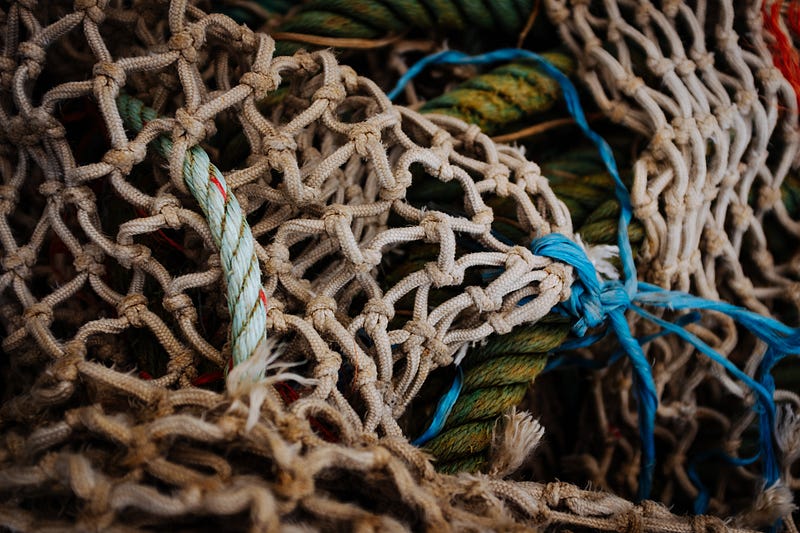
Fishnets are put out at low tide, and when the tide comes in, salmon are caught. When the tide is low again, you “pick” the nets of salmon — often hundreds. This style of fishing is called “set netting.” It’s hard; good work. Alaskans do this both commercially and for subsistence for their families. Because it’s dependent on the tide, you can often find yourself up in the wee hours gutting and throwing fish in totes.
This poem was written during a time (long ago) when I was helping pick salmon at Lake Clark in Iliamna, a volcano on the other side of Cook Inlet. I know, Alaskan geography is confusing — at some point, I’ll write a piece about how Alaskans talk about Alaska!
As you might imagine, bears are attracted to the smell of blood and smoking salmon, and around this time, a black bear was prowling around looking for scraps.
I wrote this thinking about the hard, visceral work of Jesus and his mother and how our shared myths don’t often acknowledge the complexity of their very human lives.
Want to get an email from me every time I publish? Join my email list by clicking here. In a world full of so many words, thank you for taking the time to read mine. Here are some other stories by me:


