
First World, Second World, or Third World?!
What was the reason for these divisions, and do you know the meaning of the first, second, and third world?
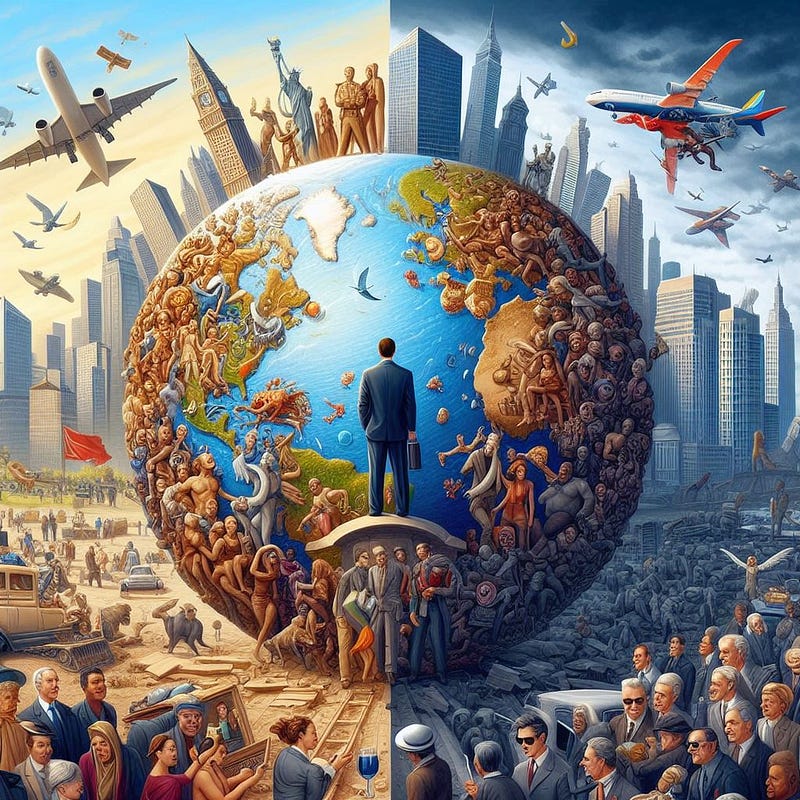
People often refer to the poorest countries in the world as the “third world,” assuming everyone understands what they mean. Many others use these terms to classify the development status of countries, with the first world being the highest tier, followed by the second world, and finally the third world. But all of this is meaningless.
To avoid misconceptions, we intend to provide you with the necessary information on this subject.
The use of the terms first, second, and third world originates from a geopolitical perspective during the Cold War era.
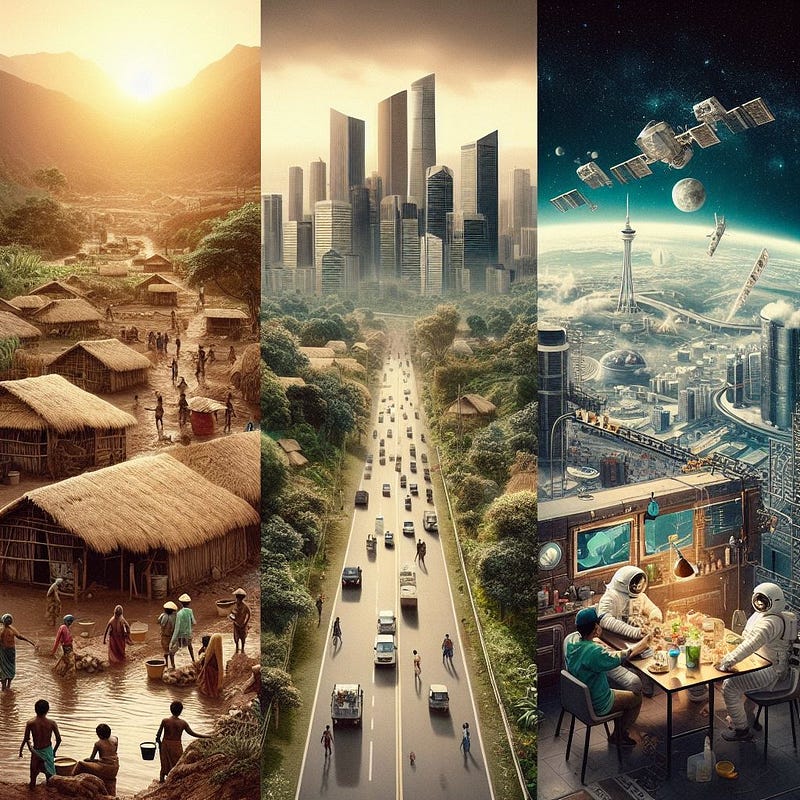
The first, second, and third worlds do not have precise and definite definitions. Below, we refer to the OWNO explanation of these terms.
Four Worlds
After World War II, the world was divided into two blocs and major spheres of influence with contrasting views on government and political society:
1: The bloc of democratic-industrial countries in the American sphere of influence, which became known as the First World. 2: The Eastern Bloc, or communist-socialist countries, which became known as the Second World. 3: The remaining three-fourths of the world’s population consisted of countries that were not aligned with either of these two blocs and hence were termed the Third World. 4: The term Fourth World, coined in the 1970s, referred to unrecognized nations (cultural entities) of indigenous peoples, nations of the First World, living within or across national state boundaries.
Initially, there was a three-world model The roots of these words are not clear. In 1952, Alfred Sauvy, a French demographer, wrote an article in which he compared the Third World to the Third Estate. Other sources claim that Charles de Gaulle coined the term Third World.
Definitions
The term “first world” refers to advanced, capitalist, and industrialized countries, roughly the bloc of countries aligned with the United States after World War II with similar political and economic interests: North America, Western Europe, Japan, and Australia.

“The second world” refers to former communist-socialist countries, industrialized nations (formerly part of the Eastern Bloc under the sphere of influence of the Soviet Union), including today Russia, Eastern Europe (such as Poland), some Turkic countries (such as Kazakhstan), and also China.
“The third world” encompasses other countries, which today mostly include developing countries in Africa, Asia, and Latin America.
The term “third world” includes capitalist countries (such as Venezuela) and communist countries (such as North Korea), as well as very wealthy (such as Saudi Arabia) and very poor (such as Mali) countries.
Countries of the third world have been categorized based on various factors: political rights and civil liberties, gross national income and poverty of countries, human development of countries, and freedom of information within the country.
Why is the wealthy country of Saudi Arabia considered a third-world country?
According to the old three-world model, Saudi Arabia was neither aligned with the United States nor part of the Soviet Union or the Eastern Bloc. The oil reserves of Saudi Arabia were discovered in 1938, and progress in exploiting these reserves began in 1941. Until that time, Saudi Arabia was a country with a strong tribal Arab culture, and even today, it remains a very traditional and conservative country with a monarchy. Public expression of political and social issues is discouraged. There are no cinemas or theaters in this country. There are no organizations like political parties or labor unions in this country.
Precedent
The Third World and the Third Estate were interpretations that became prevalent in France from 1947 to 1949.
After World War II and the onset of the Cold War, the world was divided into two blocs or two worlds: East and West. Other countries, which were mostly underdeveloped and did not fit into either of these two worlds, became known as the Third World. Some of these countries, as they did not consider themselves committed to either bloc, adopted the name “non-aligned countries” for themselves. In academic circles, terms such as “southern countries,” “developing countries,” and “underdeveloped countries” are more commonly used in reference to Third World countries.
Critiques
This term has faced criticism from some socialists, including Kwame Nkrumah, the President and leader of the independence movement in Ghana, and Frantz Fanon, the French-Algerian theorist.
I hope I’ve succeeded in clarifying the meanings of the First, Second, and Third Worlds for all audiences.
To support me through my investigations you can buy me a book📖 and also For more interesting and engaging facts, subscribe and follow now.


