
First to Forgive
Dads’ Survival Guide: Physicality — Our Health
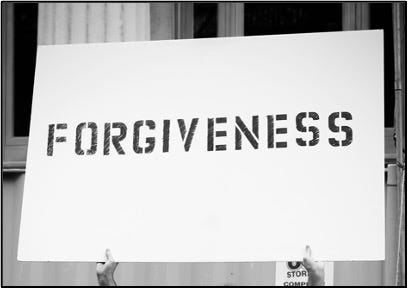
Forgiveness is the great elixir.
Strong medicine. For our well-being. A remedy for angst. Relief of inner pain. Hurt. Suffering. Emotional. And physical. Studies show forgiving others reduces our blood pressure. Coronary strain. While improving sleep patterns. Rest and recovery.
Forgiveness is an antidote for the strife Dads feel. The friction and discord we experience. Fractured relationships on the home front. Disconnection in the workplace. For which healing can start with this simple act.
The beauty of forgiveness is that every Dad has an endless supply. Available at any time. No ‘script necessary. Or instructions required.
Forgiving others is straightforward. Yet, incredibly hard to do. Seemingly impossible, at times. Forcing us to swallow our pride. Temper our ego. While extending mercy. To those who’ve wronged us. And are often undeserving.
Which means forgiving others is not a question of “Can we?” but, “Will we?”
Therein, lies the dilemma for Dads. Are we courageous enough? Humble enough. Man enough. To be first to forgive. And begin the process of mending fences.
Unforgiveness
There’s an old adage, “Resentment is like taking poison and waiting for the other person to die.” Resentment. Bitterness. Unforgiveness. These are traps. That Dads fall into. Over and over.
Someone has done us wrong. Or hurt a family member. A commonplace slight. Dig. Perceived injustice. Most times, inadvertently. And suddenly, a five-alarm, emotional inferno.
We get hot. Steamed. Burning mad. And begin ruminating. About the transgression. This egregious act. Unthinkable affront. The more we chew on it, the more heinous and appalling it becomes. “How dare they?!” “Who does that?” “I would never…”
Now, we’re locked in. The indignation builds. The outrage. The fury. Spawning vengeance. Retaliation. Reprisal. For all the pain and suffering we’re enduring. As a result of their actions. So, we start the plotting. Scheming. Hatching plans to make it right. Get even. Score our pound of flesh. Yeah.
Forgiveness?! Are you kidding?! Letting them off the hook?! Out of the question. No sane, rational, person in-their-right-mind would pardon someone so #!@*&%.
We hold on to the offense. Indefinitely. Not realizing that the only one smarting from the incident is…us.
We swallowed the poison.
Workplace Discord
The workplace is rife with unforgiveness. Not visibly. We’re all too professional for that. Instead, bitterness and acrimony harbor below the surface. Hidden from view.
The stats tell the story.
“Nearly 75% of cross-functional teams are dysfunctional,” notes a Stanford University study. According to research by Salesforce, ”86% of employees and executives cite lack of collaboration or ineffective communication for workplace failures.”
People. Working with other people. To build a successful firm. Smart folks with opinions and perspectives duking it out with other sharp folks. Causing tension. Friction. Disagreements. Conflict. Toes get stepped on. Noses are bent. Feelings hurt. Part of the growth process.
And when crossed or slighted, how will we respond?
“For most of us, the default reaction to getting hurt or being wronged by [a co-worker] is getting revenge, stonewalling, or withdrawing in passive-aggressive anger,” noted a recent Inc Magazine article. “But these acts will consume our other emotions, creating endless cycles of resentment and retaliation that lead to a toxic lifestyle.”
Passive-aggressive behavior. Stonewalling. Cycles of retaliation. A toxic environment. Yep. Sounds familiar.
The Human Dynamic. In every workplace. With our personal identity and reputation on the line. Amid a performance-based, prove-your-worth, pressure cooker. No wonder there’s ‘Us vs. Them’. ‘He-said, she-said’. Absolutes and generalizations heaved at colleagues. “They always….” “They never…”
Disjointed relationships. Disconnection. And beneath it all; bruised egos. Acrimony. Unforgiveness.
Move Ahead
Unforgiveness is prison. Incarceration. Chaining us to events of the past. Transgressions from way-back-when. Injustices. Inequities. Grievances we can’t overcome. Or refuse to move beyond.
Carrying a grudge is self-imposed bondage. Our own emotional lock-up. With an endless sentence.
Fortunately, every Dad has the key. A Get-Out-of-Jail-Free card. The means of liberating ourselves. If we choose. To forgive.
“When we forgive, we don’t change the past,” writes Manfred Kets de Vries in The Art of Forgiveness, “But we can change the future.”
And changing the future starts with three key ingredients: empathy, humility and grace.
Empathy. Compassion for others. Putting ourselves in their shoes. Understanding how they see a situation. Acknowledging that people are people. Humans. Like us. With emotions. Feelings. Which may get the best of them. At times. Like us. Causing them to say or do something they regret. Like us.
Humility. Recognizing we are no better than others. Not morally superior. More principled. Or innately righteous. We’re just as likely to let our pride and ego get in the way. Think we’re all that. When we’re not.
Grace. Granting mercy. Unmerited favor. Wiping the slate clean. Whether others deserve it or not. Absolving them. Without apologies. Or amends. No pound of flesh. No condemnation. Just let it go. And move ahead.
Forgiveness is a test. For every Dad. Not of our will. Of our character.
A chance for each of us to set an example. At home. And at work. To demonstrate how we can choose to forgive. A wise and healthy choice. Powerful enough to free us from past wrongs. Or wounds. While restoring relationships. With neighbors. Co-workers. And family.
So, let’s be first. Take the lead. By checking for any pit of bitterness. Lingering resentment. Then deciding to forgive. And move ahead. On the road to being a better Dad.
Wow. Feels better already.
Go, Dads. Go.


