
First Signs of a New Monarch Butterfly Generation
Monitoring the life cycle of this iconic butterfly has kept me busy for over twenty summers. This year turns out to be no different.
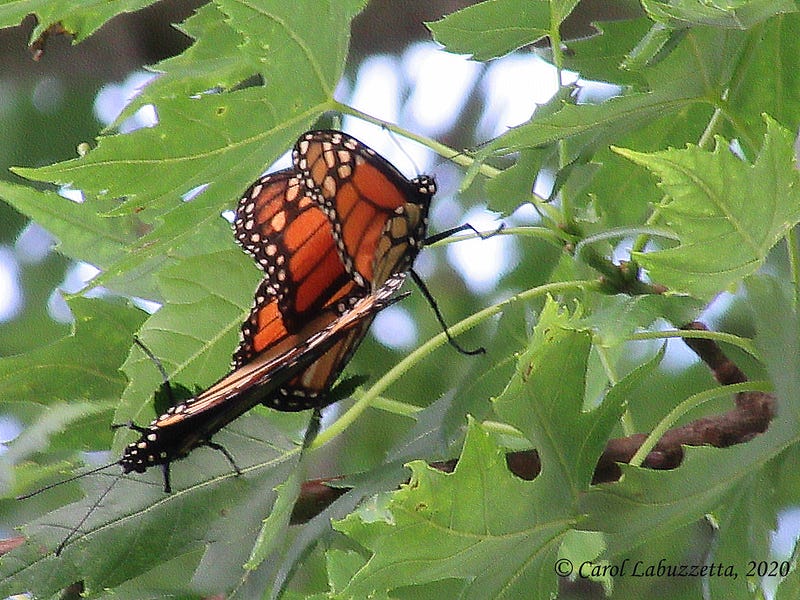
A few weeks ago, I spotted my first monarch flying down the road. It is always a thrill for me to spot the first monarch butterfly of the season, but this was early. It was only mid-May. We can still have frosts in northern Wisconsin in mid-May!
Phenology and Nature’s Rhythms
Nature has rhythms. You can notice these rhythms if you take the time to look. Aldo Leopold, famous for his Sand County Almanac, was the father of the science of phenology (source). He not only noticed but kept records. His records help us know what to expect when something should occur in the natural world.
Over the last twenty years, I’ve done the same. And through my observations, note-taking, and reporting to citizen science organizations that follow monarchs, I noticed that milkweed always germinates (it's a perennial and comes back year after year) first. It emerges from the ground before the monarchs arrive in Wisconsin.
This makes perfect sense in that the milkweed is the only plant that sustains the monarch’s life cycle. As the monarchs make their way northward from their overwintering grounds in Mexico, the days are getting longer and warmer here in the northern parts of the United States.
By the time new generations reach Wisconsin (where I live), the milkweed has germinated. This is nature’s way of showing it knows that milkweed has to be present for the monarch’s life cycle to continue.
Female monarchs lay their eggs on the newly emerged milkweed plants, and when the monarch larva (caterpillar) hatches a few days later, they already have a ready food source — the milkweed leaves!
First, the larva will eat its way out of the eggshell — this is high in protein and boosts the tiny, hair-like caterpillar and provides a way out of the egg to begin the second phase of the monarch's life cycle.
This whole process seems a bit of a miracle to me. I’ve carefully observed it for over 20 years, and it still amazes me.
The phenomenological events of nature are changing, however. This is in part due to human destruction of habitat but also due to climate change. We’ve had snow in late April and summer-like heat in the early days of spring — neither of which seem “normal” according to phenological records historically (source).
I immediately worried this year when I noticed the butterfly before the milkweed had emerged. Hopefully, the monarch I saw just flew around until it found some milkweed that had emerged in another, sunnier part of the Northwoods. Hopefully, it had the energy to do that — because there weren’t many flowering plants available yet to obtain nectar from either.
All Is Well…The Cycle Continues
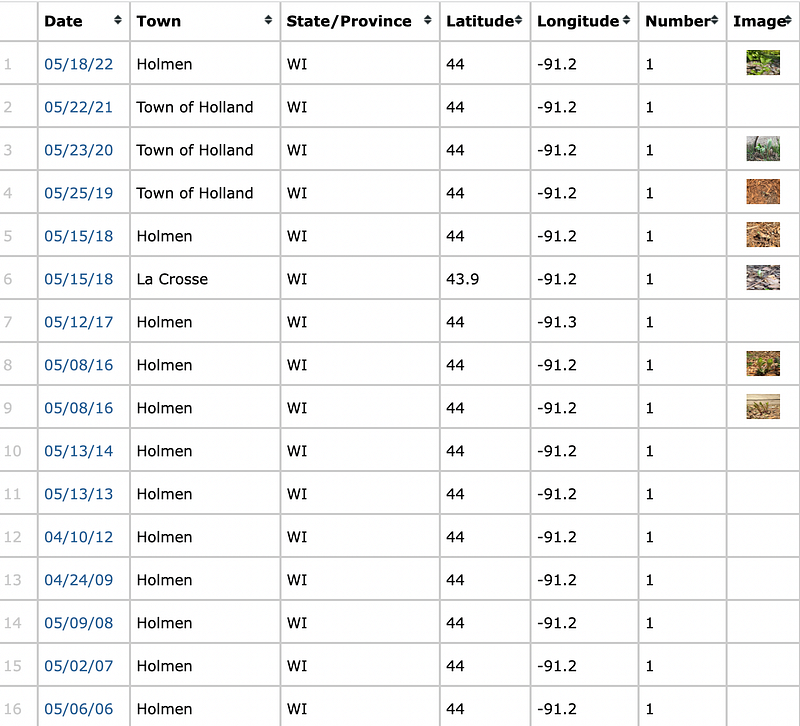
Despite this early monarch butterfly appearance, the milkweed seemed to arrive right on time. It had germinated by Memorial Day (May 31st) along the roadside and in my gardens. Here are my records on milkweed emergence:

On June 2nd, two days ago, I observed my first two monarch eggs of the season.
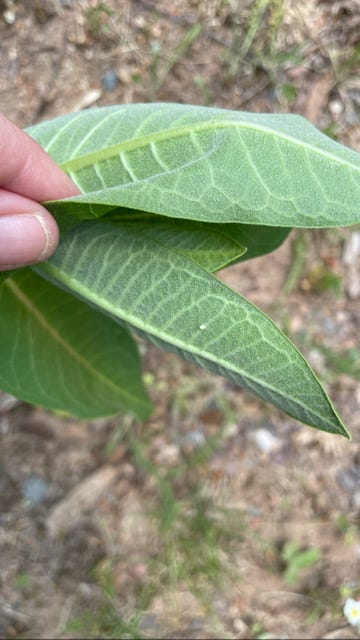
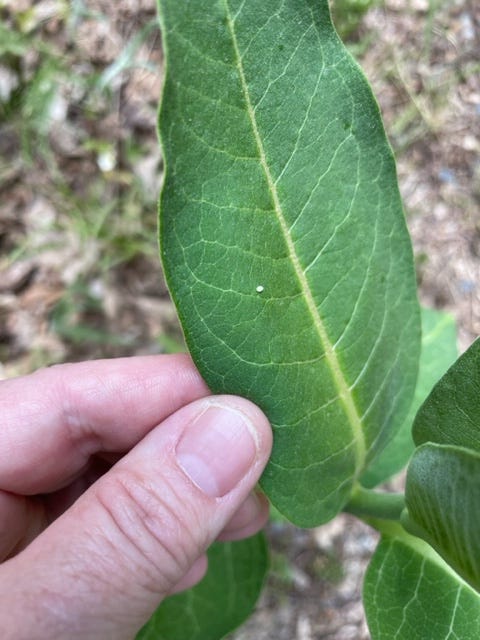
Ordinarily, I’d bring these eggs into my monarch-raising mesh container to continue to watch the awe-inspiring life cycle changes as the monarch butterfly goes from egg to larva to chrysalis to an adult butterfly — ready to start the cycle again.
But two years ago, I stopped raising monarch butterflies. Research has shown that monarchs raised in our homes — kitchens or laundry rooms, are not receiving the same natural signals to help them successfully migrate come August (source).
They also seem to be more exposed to diseases like OE (Ophyrocystis elektroscirrha (OE), a parasitic infection when humans are involved in raising the monarchs (source). In part, this is due to an increased density in their captive environment and is something I have personally witnessed.
Because this is a species I’ve come to love and know so much about over the last twenty years, I do not want to do the monarch any harm — thus, I stopped raising them. I read the research from groups like Monarch Watch, Monarch Joint Venture, the Xerces Society (cited above), and Journey North. I want to do what’s right for the species. Even though I dearly loved rearing a small number of butterflies each year, I’ve stopped. We are not Mother Nature or any other higher power and must know when to stop interfering, even when we have good intentions.
I’ve taught hundreds of school-aged children and adult community group members about the monarch life cycle, monarch habitat, and how to help this species in danger of losing one of the most awe-inspiring migrations of our natural world.
I no longer have a group that I teach. I live in a different community, further north. I know fewer people. My passion continues, but now it involves watching from afar — down the road, or in my yard, but not on my kitchen counter.
The experts agree that raising a few monarchs over the summer months won’t do any great harm to the species — especially if you are doing it for educational purposes. But raising monarchs in large numbers in artificial conditions (in a house with AC and artificial lighting) is highly discouraged.
This first or second (in the north) generation of monarchs that we are seeing now will only live about a month — if that. There are several generations that occur from May-September, about a generation a month, to put it in simple terms.
Only the last generation — born from mid-August to mid-September will make the miraculous and lengthy journey from the northern U.S. and southern Canada (east of the Rocky Mountains). This is referred to as the super generation of Monarchs.
The butterflies born in the late summer are the ones that migrate to Mexico! Yes! These tiny creatures, approximately the weight of a paper clip, fly thousands of miles over the central section of the United States to reach the Sierra Madre Mountains of Central Mexico for overwintering. Members of this generation, if successful in making the trip, live in a suspended state called diastasis over the winter. They live eight to nine months, moving very little, hanging in clusters on the Oyamel Fir trees of the Mexican mountains (source).
When nature signals that spring is near, the monarchs begin to fly north. Egg laying begins, and the journey continues until the adults reach northern latitudes, find milkweed, lay their eggs, and the cycle starts again.
All the signs are in place now. The milkweed has emerged and is growing, adult monarchs have been sighted, and I noticed some eggs on milkweed plants. I’ll continue to watch this interesting and awe-filled life cycle that has caterpillars emerging from eggs and butterflies from chrysalises. And, I’ll continue to hope for the best.
Other articles I’ve written about the monarch butterfly:
All of the sources of information cited and linked in this are reputable organizations that support the current science regarding monarch butterflies.
You can follow me if you find this article valuable, entertaining, or inspirational. Here’s how:
You can join Medium, here. By using my referral link, I will receive a portion of your membership subscription. You are then free to read all the Medium.com articles you want, from any author on the site! Thanks for your consideration!
Would you rather get my posts via email? You can get an email subscription to my page, here. Whenever I post on Medium, the article will arrive in your inbox! I appreciate your interest!