
Firms are like miniature Soviet Unions
(Introduction to Economics, Lesson 13)
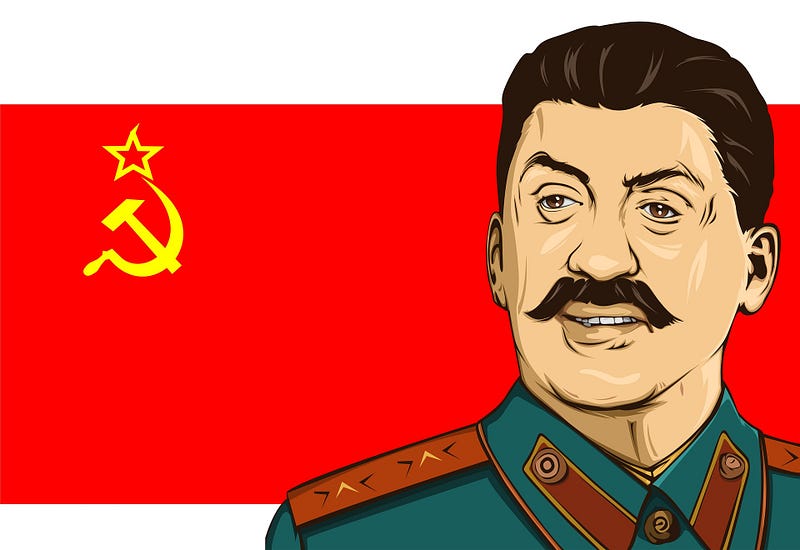
An interesting way to think of a firm — such as a partnership, company, corporation or any other business — is as a sort of mini command economy.
The employees of the firm — whether they are ordinary workers or managers of some kind — essentially have to do as they are told. Each worker generally has a line manager — a boss — who tells them what to do.
It’s true that there are limits on the power their boss has. Their boss can only really order them to do things that are legal and the worker’s contract may further restrict what activities they can be ordered to undertake. And, ultimately (at least in most countries), a worker who doesn’t like their job can simply leave it — if they can afford to do so — and try to find another one elsewhere.
Nevertheless, whilst a worker is working for a firm, it is, in many ways, like working in a sort of mini command economy (It often feels like that too!). It’s just that, instead of a Prime Minister or President, there’s a business owner or a Chief Executive Officer. Instead of a Parliament or Congress, there may be a Board of Directors. So, in a sense, firms are like mini-fiefdoms — islands of central control.
If there were no firms at all, then individuals would have to negotiate with each other over every little thing they needed to cooperate over in order to achieve anything. Everyone would be a ‘freelance’ — hiring themselves out for individual tasks. For some professions, this might work very well. For example, journalists and illustrators often work on a freelance basis. In other professions and industries, however, the constant need for negotiation over every individual task would probably make a freelance system unworkable. Imagine having to negotiate to hire a secretary every time you wanted a letter typed — and never being sure of which secretary would be available at any particular time. Imagine having to negotiate for chefs, waiters and cleaners every day in order to run a restaurant — ever day having to negotiate afresh how much people will be paid. Thus, in order to cut down on the time and energy needed to negotiate, firms employ workers on a much longer term basis — and thus form these mini-fiefdoms.
In a sense, therefore, firms represent a sort of compromise between a completely open market economy populated only by individuals and an economy completely controlled by an all-powerful government. As such, they can benefit, in the same way as governments, from the ability to coordinate individuals and resources without getting bogged down in constant negotiations.
On the other hand, they can suffer from the same problems as governments. By having the ability to dictate things without negotiation, they can lose track of demand and supply and end up with problems of shortages or surpluses (such as having huge stocks of goods they are unable to sell). They can become bogged down in bureaucracy. They may also become self-serving; losing sight of the individual owners, customers and workers they are supposed to be benefiting.
In a sense, the difference between a command economy and a capitalist economy is merely that a capitalist economy is made up of many miniature command economies — with each mini command economy being known as a company, a business, a charity, an organisation or a family.
Firms, in a way, are free market organisations, because the individuals that make up the firm are voluntarily coordinating their actions, supposedly for the common good. This sounds good in theory. In practice, however, the experience of working for a firm — especially a large one — can often be much more like slaving under the direction of a powerful dictator.
The existence of firms brings many advantages, but, especially when they get very big, they can also bring many problems that aren’t too far away from the problems caused by an excessively powerful state.