
Fired Under Strange Circumstances?
Five ways you can prevent that from happening

Overlooking the term CRAAP may result in costly mistakes in business, education, medical, and medical-legal situations for starters.
The term is an acronym coined by the California State University Library in Chico by Sarah Blakeslee. And it means currency, relevancy, authority, accuracy, and purpose.
Consider: Activist Lateefah Simon began receiving multiple threats for her pro-police reform activism as one of seven elected directors on the Bay Area Rapid Transit (BART) board. Concerned for the safety of her daughter, she sold her home and moved.
According to the East Bay Times, as a result of Simon’s move within what she believed was still her district, Simon was stripped from her paid position (less than $20k annually) as a board director with Northern California’s Transit Agency.
Many would argue there is a lot to unpack in this incident.
Simon consulted BART staff and officials for clearance before she moved and received an OK, but the information Simon was given was incorrect.
After Simon moved, BART knew the correct answer. End of discussion.
This article will focus only on what many people overlook about fact-checking and due diligence and why it often may not work.
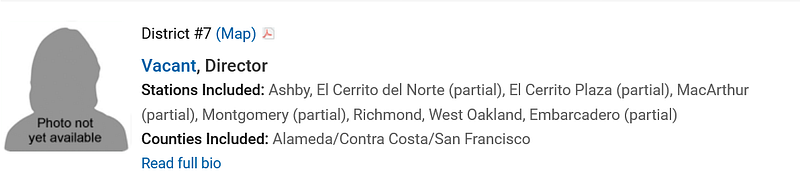
Simon believed she had been given the right information, although officials state she never asked and they had no evidence of such. Check out the BART district map below.
This incident occurred in a state government setting, but the underlying issue is not unique. It underscores how inaccurate information handed out by seemingly authoritative sources and then relied upon can be costly in many other situations.
The takeaway here is that no one always passes the CRAAP test 100 percent.
1. Always ask in writing and get an answer in writing. 2. Never assume the wanted answer confirmed is correct. Ask which source is the given answer based on. 3. Find out the applicable law or regulation. 4. Ensure the parties consulted have a written record of your concern. 5. Double-check with an authoritative source outside the system.
Regardless of race or gender, whether an honest mistake, incompetence, implicit bias, or racism, being given the wrong information is too often the case.
So for your well-being, do not overlook any element of the five steps listed above.
Thank you for reading.
Dee Adams is the author of the forthcoming title Inspector Squirrel’s Multicultural Medical Notebook: Overlooked tips for women and people of color with unexpected injury or illness
A book that underscores the importance of asking the right questions and fact-checking the answers so that you can avoid mistakes based on incompetence, bias, racism, or misinformation.
Sources
Eliyahu Kamisher | [email protected] | Bay Area News Group March 10, 2022 at 5:17 p.m. | UPDATED: March 11, 2022
Former board member makes plea against her removal


