avatarshrey vijayvargiya

Free AI web copilot to create summaries, insights and extended knowledge, download it at here

1146

Abstract

9d13">As the thing in itself cannot be known, we are left with patterns of rationality as the only relevant reality (idealism). These patterns of intelligibility structure reality, and like living things they can develop towards more rational states. The name for this kind of extended mind in German is <b>Geist</b>, meaning a combination of mind and spirit.</p><p id="8020">The development of Geist is driven by two processes: <b>differentiation / articulation</b>, and <b>integration</b>. Together, they comprise the <b>systematization</b> of the world itself. This autonomous system gradually evolves as it synthesizes opposing ideas through the dialectical process. In this way, rationality (and thereby reality) realizes itself, ultimately becoming self-aware in the form of the World Spirit (or God).</p><p id="ce4a">One of the consequences is that God, as the self-organizing principle of reality, is again seen as rational, and we can again access the divine through rational reflection. Hegel is effectively translating religion into philosophy.</p><p id="fbc4">While popular in his time, Hegel’s ideas faced critiques on numerous front

Options

s:</p><ul><li>Schopenhauer (and later Nietzsche) considered the intelligibility patterns to be driven by will (Will to Live, Will to Power), making them fundamentally irrational and arbitrary.</li><li>Kierkegaard criticized Hegel’s philosophy for being a purely intellectual system lacking in the participatory knowledge needed to cultivate wisdom. From the Kierkegaardian perspective, our attempts to realize the divine have been severed from personal transformation (they do not compel us to take the “leap of faith”).</li><li>Marx saw religion as an opium distracting us from the reality of how socioeconomic forces shape history through conflict. The participation that Hegel inherently lacked, Marx provided through a call to political and economic revolution.</li></ul><p id="dc4e"><a href="https://readmedium.com/summary-of-awakening-from-the-meaning-crisis-by-john-vervaeke-chapter-23-romanticism-0ded8b29cb29">Previous chapter: Romanticism</a></p><p id="24a8"><a href="https://readmedium.com/summary-of-awakening-from-the-meaning-crisis-by-john-vervaeke-chapter-25-the-clash-a8ea65710b2d">Next chapter: The Clash</a></p></article></body>

Google Authentication in less than 5 minutes

Adding firebase authentication using email and google mail.
Reach to our website

If you have reached here directly, Here is the link to the article => Connect Firebase to react project

Steps!! -

  1. Connect Firebase to your project.
  2. Add initial signup method for the new user using email and password.
  3. Add signup and sign-in method using Google Gmail.
  4. Add sign-in methods for users using email and password.

Sign up with an Email and Password!!

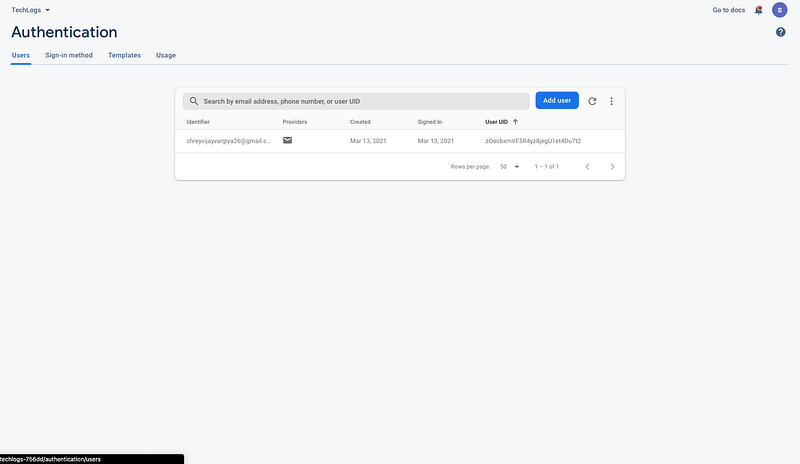
Creating signup for new users is pretty simple, Firebase gives you a method createUserWithEmailAndPassword. This method helps to create a new user in the Authentication section of the firebase console.

Before adding this method make sure you enable the firebase email and password authentication method in the Sign-in-method tab section.
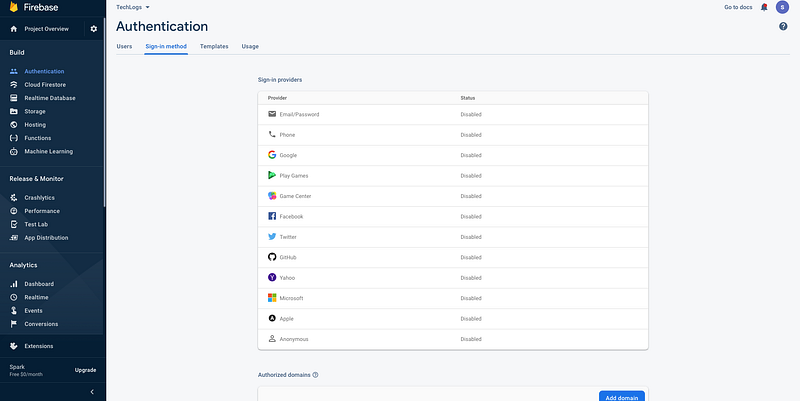
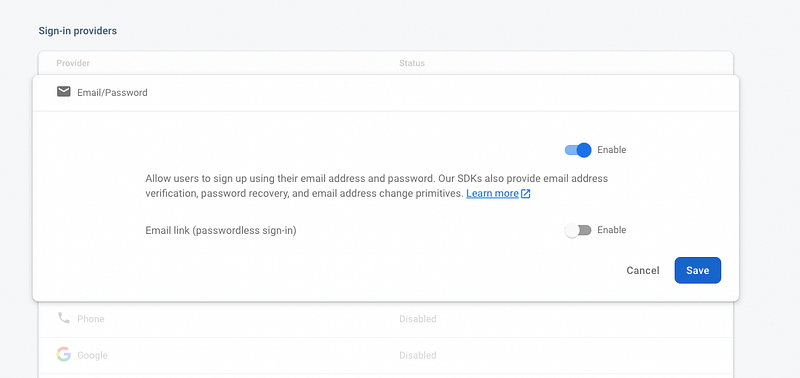
Sign in a tab section
Enable sign-in providers via Email Password

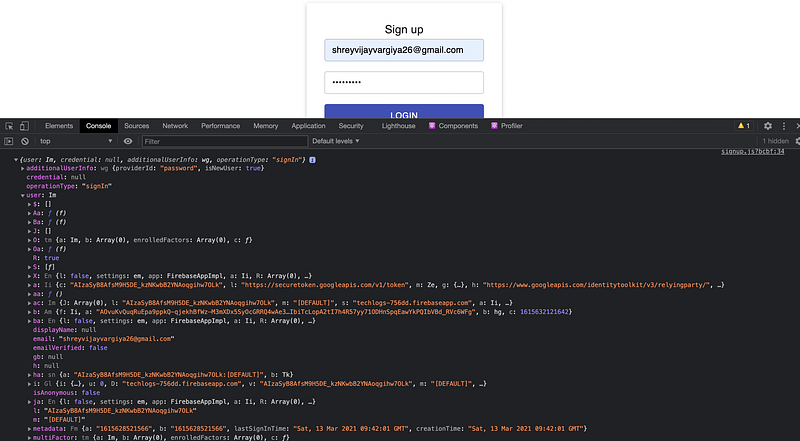
The next step is to add a signing method. The method is simple, you will give the firebase auth method an email and password in request and in return firebase will give you its corresponding data.
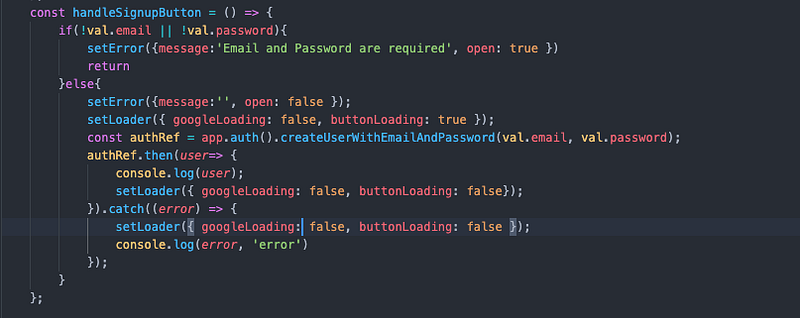
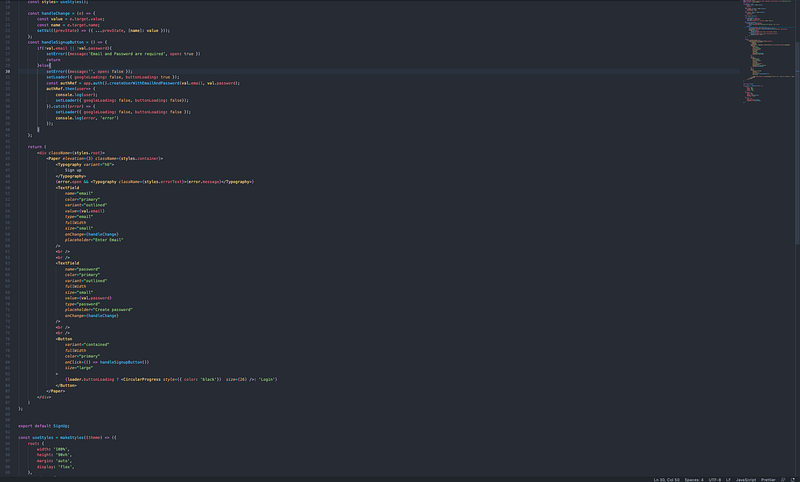
createUserWithEmailAndPassword method and signup code
User data in console return by firebase.
Firebase users section of authentication

Sign In with an Email and Password!!

Firebase provides the signInWithEmailAndPassword method, which again takes only email and password and return the response accordingly.
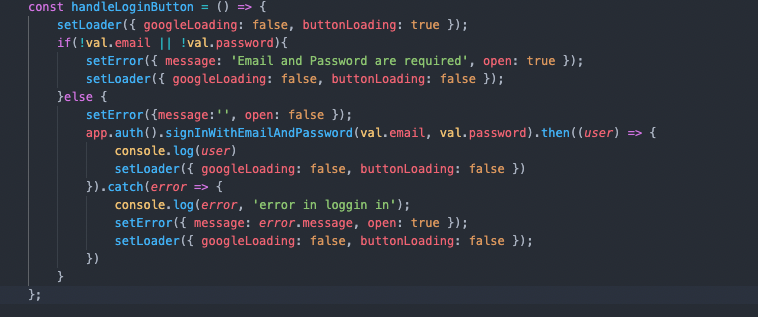
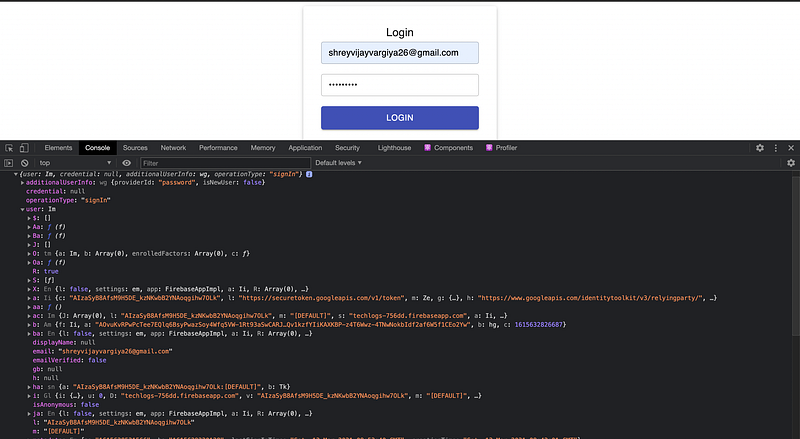
Login with email and password method
user returned by firebase after entering correct credentials.

Login with Google

I will use react-icons npm package for all sort of icons, its pretty simple to install plus they have a variety of icons. Link => https://react-icons.github.io/react-icons

I have created the google login button.
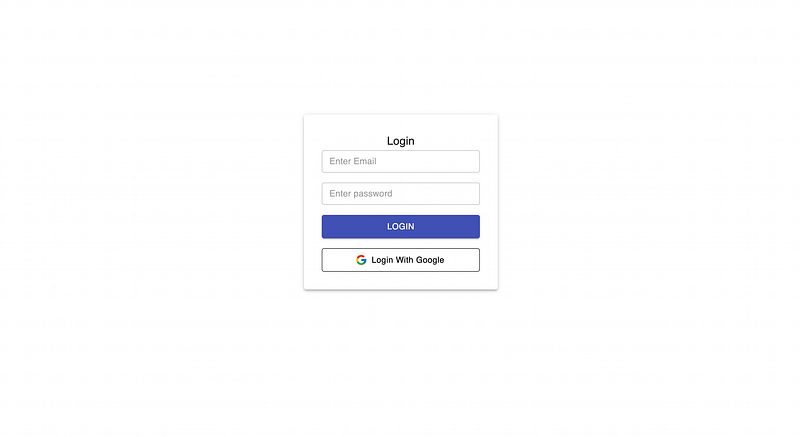
Log in with the Google button on the login page

Now, do the same step we did with email and password sign in providers, go to the authentication sign-in method tab and enable the google login.
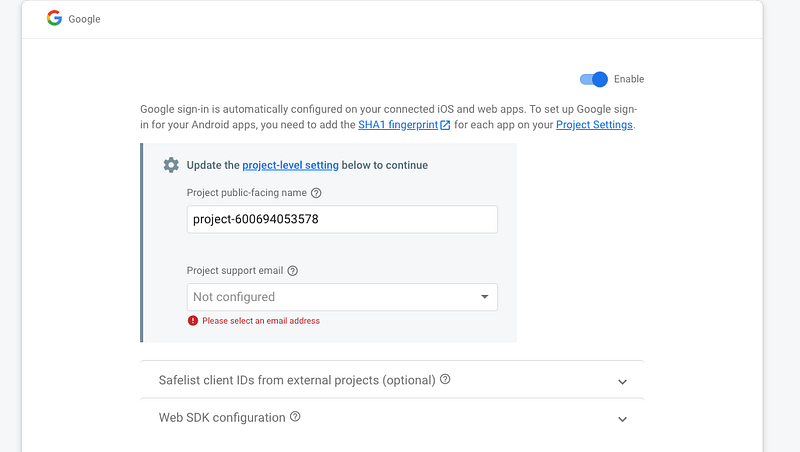
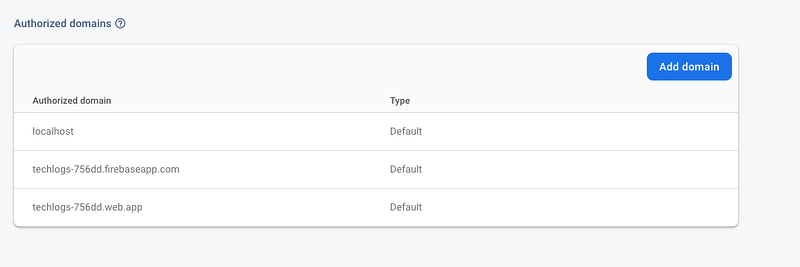
Enable google login providers
Add your localhost and production domain, so that firebase can give the domain to use the above provider's permission.
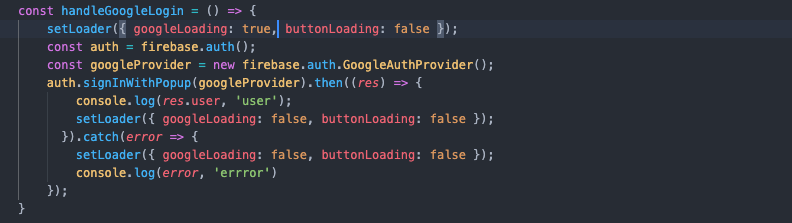
Google login method

After clicking to google login button user will be thrown to a new tab which has all the list of email’s(left-hand side image), after selecting one email user we be thrown back to the main page and in the response then you will get user data(right side image).
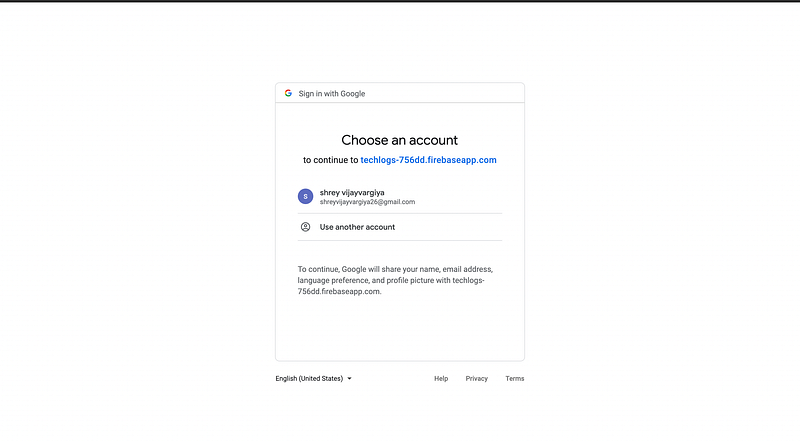
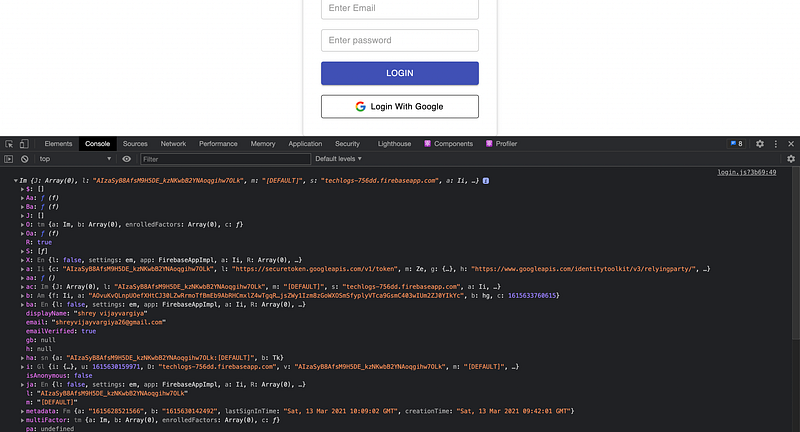
Firebase response after google login

Google login is completed, now you can use the response data from firebase in any way you want. I prefer to store the uid return from firebase and token in the cookie which helps me to detect whether the user is logged in or not, if cookie does not contain uid then the user is logged out. Also do set some expired days, for example, 14 days for every cookie value you will save in the browser.

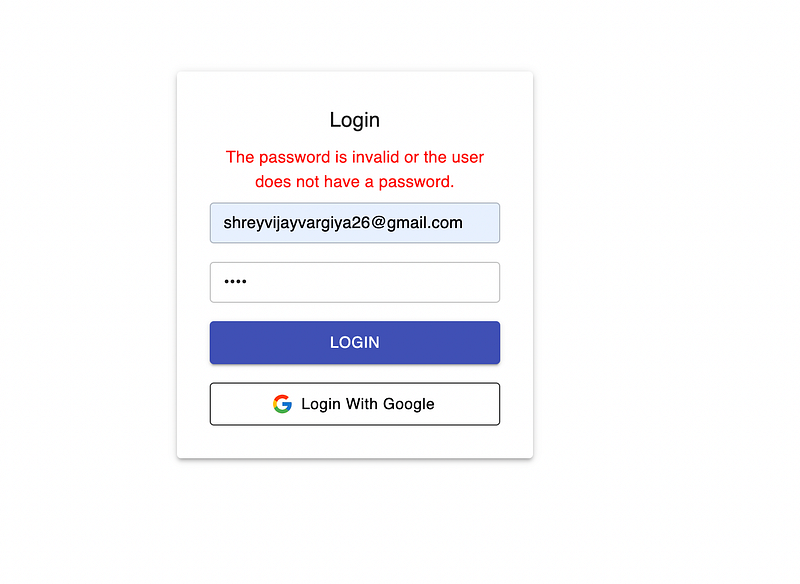
I have added a cool loading button in every button and some covered some edge cases like clicking the button without entering an email or password and so on. It’s always a good approach to cover as much edge cases as you can, that gives the user a good user experience.

Here are the images of some edge cases I have covered.
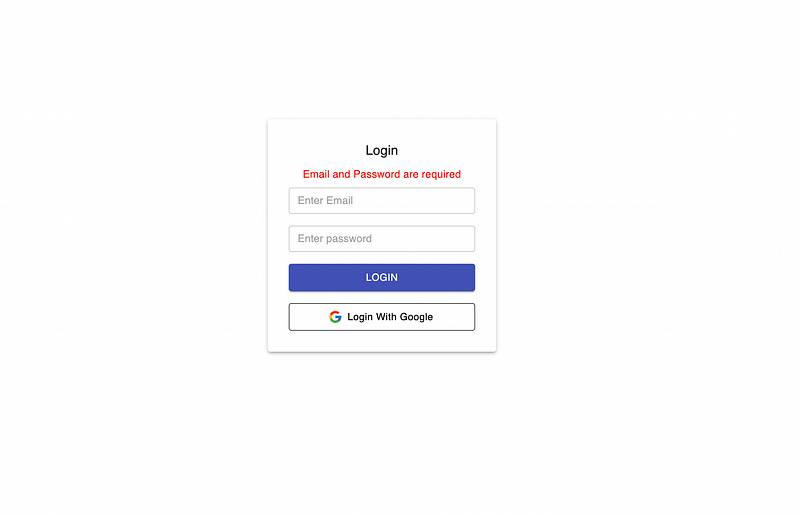
Error is shown properly to the user for a better user experience.

Please, do press the like button if you found it useful and mention your issues in the comments I will try my best to help you out. Till then have a good day, people.

Here is the code repository

Firebase
Firebaseauthentication
Google Login
Firebaserealtimedatabase
Recommended from ReadMedium