
Finland’s Response to Russian Attack on Finland
This article is a sequel to my previously published article on a medium called Russia and China Coordinated Attack on Finland. This article will summarise Finland’s actions to counter Russian aggression.
I must be clear that what the Russians are doing is weaponising the migration crisis caused by the Ukraine war and directing refugees towards the Finnish border.
Also, refugees from the Russian Federation directly, which number 1 million souls.
What the Russian Federation is doing is hostile action using indirect means.
Any direct action by the Russian Federation would trigger Article 5, which provides that if a NATO Ally is the victim of an armed attack, every other member of the Alliance.
Will consider this act of violence as an armed attack against all members and will take the actions it deems necessary to assist the Ally attacked.
Geopolitics and International Law
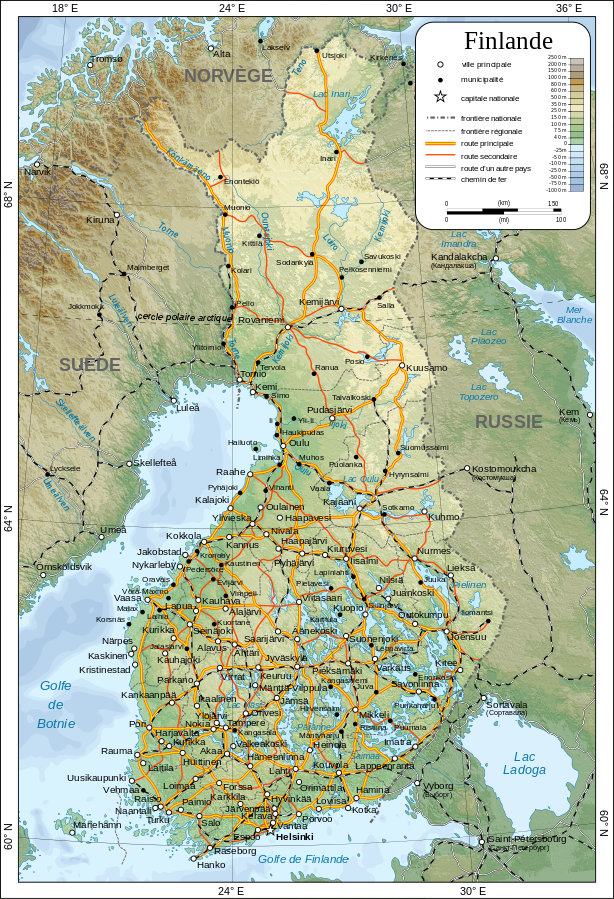
What the Russians are trying to do to Finland is to punish them for joining NATO, which happened on 4 April 2023, and then Sweden joined on 18 May 2022.
These two nations joining the NATO alliance are severely threatened.
According to the Russian point of view, their access to the Atlantic Ocean and North Sea.
For the Russians to get military access to the rest of the world from the Baltic, they would need to pass through Finland, Sweden, Norway, Denmark, and finally, the British and the French.
In practical terms, the Russians cannot access the sea from the Baltic in a way that makes them feel more secure geopolitically.
The politics of geopolitics using the discipline explains why nations act as they do. It can be used to describe why the Russian Federation seized the Crimean peninsula from Ukraine in 2014.
The purpose of taking the peninsula from the Ukrainians was to give the Russians access to the port of Sebastopol and from Crime to the rest of the Black Sea, which leads into the Bosporus River, the Aegean Sea, the Mediterranean Sea and finally, the Atlantic and the Suez Canal.
But even with all of that, the Russians don’t have clear access to the global oceans because Russia’s shipping lanes need to pass through multiple NATO members, including the Turkish Republic, who control the Bosporus due to control the city of Istanbul.
Egypt, which controls the Suez Canal, is a non-NATO member that is part of the alliance. Finally, the British controlled the Straits of Gibraltar and were capable, along with their American allies, to block the Strait’s international shipping if they desired.
Politically and culturally, the Russians don’t believe in international law; they think it is political fiction naturally based on reality and that all politics, particularly international politics, are defined by power.
The Freedom of the Seas is an international legal concept regarding non-territorial waters. It allows ships to navigate the open seas freely without any restrictions on movement from one port to another.
Naturally, suppose a nation and political culture don’t believe in the freedom of the seas. In that case, it makes sense for that nation to conquer or control other countries and relevant landmasses through economics and politics, such as the Crimea peninsula, to have better access to the global shipping lanes.
This is particularly true for Russia with its four seas problem.
Closing the Borders
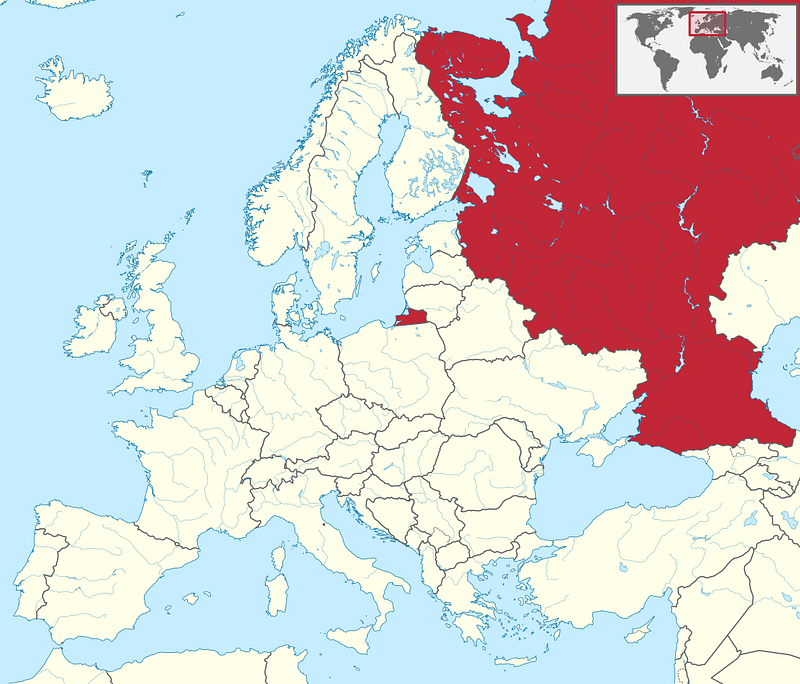
Finland has a 1,340-kilometre (830 mi) border with Russia, which more than doubled NATO’s pre-existing border with Russia upon accession.
What the government of Finland are doing to protect their borders from migrants fleeing the country partly due to the Russian actions to attack Finland by putting pressure on its government services.
This kind of action is allowed in politics and international relations because during the Cold War, from 1945 to 1989, the United States of America and the Soviet Union engaged in multiple proxy wars, such as the Korean War in 1950 and 1953.
Furthermore, the United States of America used the policy of containment and economic warfare to defeat the Soviet Union, which was on its last legs in the late 1970s and 1980s.
Warfare is not just won with tanks, ships, and other military equipment warfare; according to Sun Tzu, to win a war without fighting is the ultimate objective of an grand strategist wich the Americans accomplished.
The full quotation from The Art of War written by Sun Tzu: ‘The supreme art of war is to subdue the enemy without fighting.’
U.K.’s former Prime Minister and war leader Winston Churchill in the 1950s predicted the destruction of the Soviet Union not by military means but through economic warfare and containment.
As for Finland, the government, in response to the attack on its borders, Finnish authorities quickly closed four checkpoints and then three more, leaving just one Arctic crossing point open for asylum-seekers. They sent Finnish soldiers to erect barbed wire and concrete barriers along the frontier.


