
Fine Art in Street Photography: Intention
To make Fine Art out of street photography you need to go far beyond the capture of candid moments.
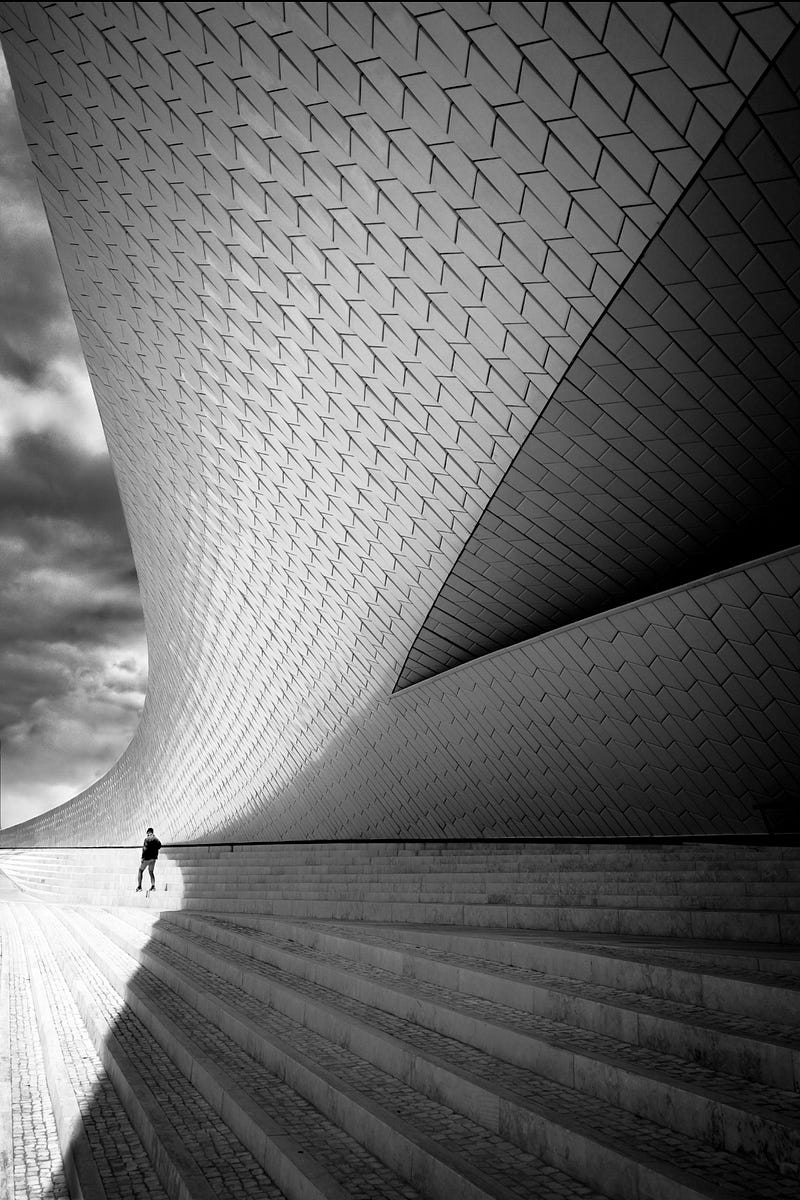
To do it you must create visually compelling and thought-provoking images that resonate with viewers on an emotional and intellectual level.
Start with an intention in mind
You need to approach the scene or the subject with intention. The intention of create something that is (still) not there. Like when you start painting on an empty canvas.
It may start with the feeling that you can achieve something either by working on the framing or playing with the light and shadows. You then get excited under the anticipation that you can achieve “that” picture which starts to idealize in your head. You get into the zone. Eventually, you get the click that makes you smile. You get that sense that you won the day.
It can also start with a picture already in your head. You close your eyes and you “see” that this can work if you can get the right ingredients. You then are patient. You go around. Study the scene. Framing through the viewfinder the different possibilities. Release the shutter a couple of times.
You take a sneak peek of the scene on the camera screen. Do you get the exposition right? Do you need to compensate? You look at the pattern of the movements of the potential subjects that will be the protagonists in a stage that you are putting in place. You shoot several times. All fall eventually to the right place. You get that smile again.
Research and imagine
My photo “Haunted” at the beginning of this text is an example of the second approach.
I saw some photos on the internet of that exquisite piece of architectural creativity close to the river Tagus in Lisbon: the Museum of Art, Architecture and Technology (MAAT). That texture, those wall shapes, those shadows that are cast in multiple directions depending on the time of the day, people constantly passing by or entering to visit the museum. From certain angles, it seems like a sort of spaceship.
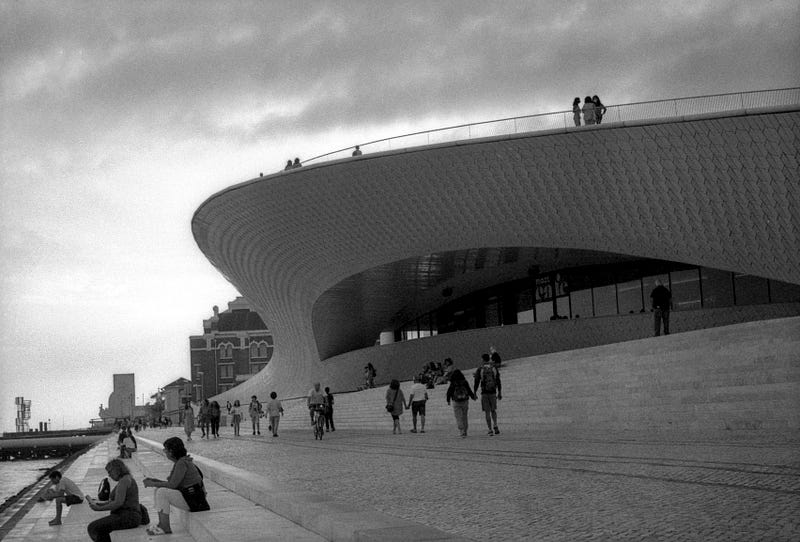
I thought this could be a good canvas for a story or some surreal composition. I also thought that most probably this was a spot in Lisbon already quite photographed and with street photos already taken. A quick Google search confirmed it. A good example is the two night street photos below from the great Rui Palha with the silhouette against the texture of one of the walls of the MAAT and a couple at the top of one of the beautiful exterior staircases.
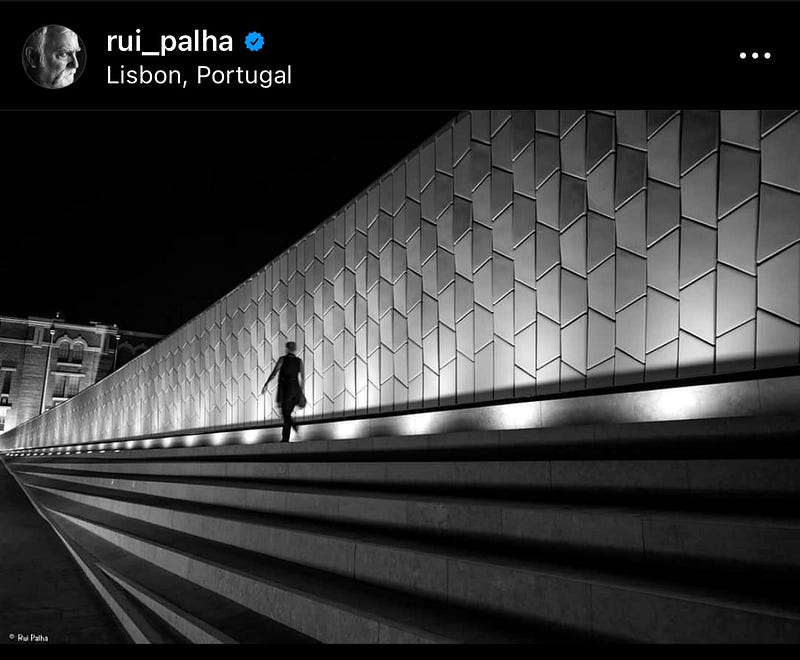
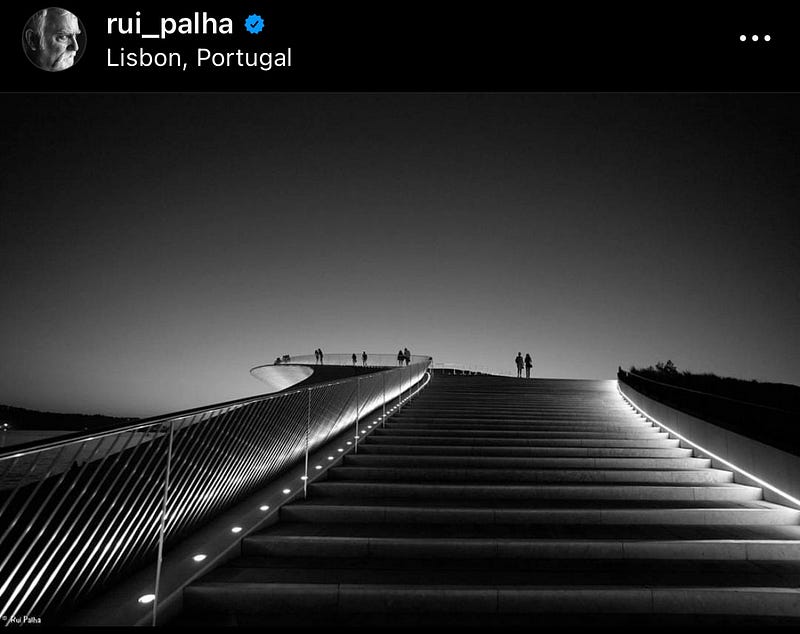
That gave me some inspiration, but I wanted to do something different. That spaceship look. Those dramatic shadows. I envisaged a photo taken from a sci-fi cyberpunk movie where technological achievements juxtaposed social loneliness.
Set a stage and direct
The photo “Haunted”.
Sunny day, around noon, with strong and harsh shadows. There was a man seated in the shadow on the stairs in front of the main façade. He decided to stand up and start walking in the direction of the brighter area of the scene. I made some shots and tried different points of view. The shadow on the stone stairs was making a beautiful organic shape converging to a vertex.
I was able to get a shot where my actor got himself on the spot that I had “directed”. Depending on the viewer’s interpretation, he may seem to be haunted by a shadow, escaping from it or leaving a blackness trail.
The process of transforming street scenes before your eyes into a canvas that allows you to express your artistic view is Fine Art. You do not need models, costumes, artificial light, or a studio. You just need to hit the street regularly, be open to what happens there, have ideas, and look to opportunities to express yourself through those captures that are a reflection of yourself.
I will continue to explore the reasoning and the how-to behind the making of some of my street photos.
I hope you can get inspired.
I will be looking forward to your reactions.


