avatarAnthony English

Free AI web copilot to create summaries, insights and extended knowledge, download it at here

1400

Abstract

</p></blockquote><p id="86e4">I took a photo of the orb weaver’s web. It had started 4 meters (around 4 yards) up in a tree.</p><figure id="e305"><img src="https://cdn-images-1.readmedium.com/v2/resize:fit:800/1*[email protected]"><figcaption>The orb weaver’s web can start from a great height. (Photo by Anthony English)</figcaption></figure><p id="cb00">And you — just like an orb weaver — might start with an idea no one can see, a connection no one has made before.</p><h1 id="fbfc">From one thread, another connects</h1><blockquote id="8e84"><p>The spider secures the line and then drops another line from the center, making a “Y”. (<a href="https://en.wikipedia.org/wiki/Orb-weaver_spider">source: Wikipedia</a>)</p></blockquote><p id="ce24">Just like you, connecting your initial wild idea to some fact or anecdote that’s going to help your story take shape.</p><h1 id="cedb">Hiding, waiting, capturing ideas</h1><blockquote id="df35"><p>Most orb-weavers tend to be active during the evening hours: they hide for most of the day. (thanks again, <a href="https://en.wikipedia.org/wiki/Orb-weaver_spider">Wikipedia</a>)</p></blockquote><p id="fd7e"><b><i>Well, that’s the very definition of a side hustle.</i></b></p><p id="c0e7">The thread of your story is hanging there, waiting for some new fact or memory to get trapped.</p><p id="3ad2">You can be “writing” even when you’re driv # Options ing, eating, resting. Writing is more about spinning your web of ideas than typing on a keyboard.</p><figure id="8486"><img src="https://cdn-images-1.readmedium.com/v2/resize:fit:800/1*[email protected]"><figcaption>A web is hanging there all day, waiting to catch something (Photo by Anthony English)</figcaption></figure><h1 id="e912">Take a Break, Then Start Again</h1><blockquote id="1620"><p>Generally, towards evening, the spider consumes the old web, rests for about an hour, then spins a new web in the same location.</p></blockquote><p id="5cb3">Yesterday’s story may have totally flopped. Or it might have won you 1000 views.</p><p id="6389">Either way, your job today is to start again.</p><p id="31a9">And that ability to spin a thread will capture something, something big, which will be enough to feed your writing mission for another day.</p><figure id="7dc6"><img src="https://cdn-images-1.readmedium.com/v2/resize:fit:800/1*[email protected]"><figcaption>Your patience is rewarded, when you allow an idea to fly into your web (Photo by Anthony English)</figcaption></figure><p id="904c">I didn’t wait around to watch the orb weaver come to consume its old web (and its prey) before it started again. I had a story to write.</p><p id="4f0d"><i>Where do you get ideas for your stories? Share your source of inspiration in the comments.</i></p></article></body>

I Needed a Great Idea for a Story, So I Asked a Spider 🕷️

But not just any spider! It was an orb weaver! 🕸️🕷️

(Unfortunately, the spider didn’t show up)

Although the spider didn’t show up, I didn’t give up.

I took some photos of its web and learned about the orb weaver from Wikipedia.

Medium writers can learn a lot from orb weavers

For instance, who knew this?

Many orb-weavers build a new web each day (source: Wikipedia)
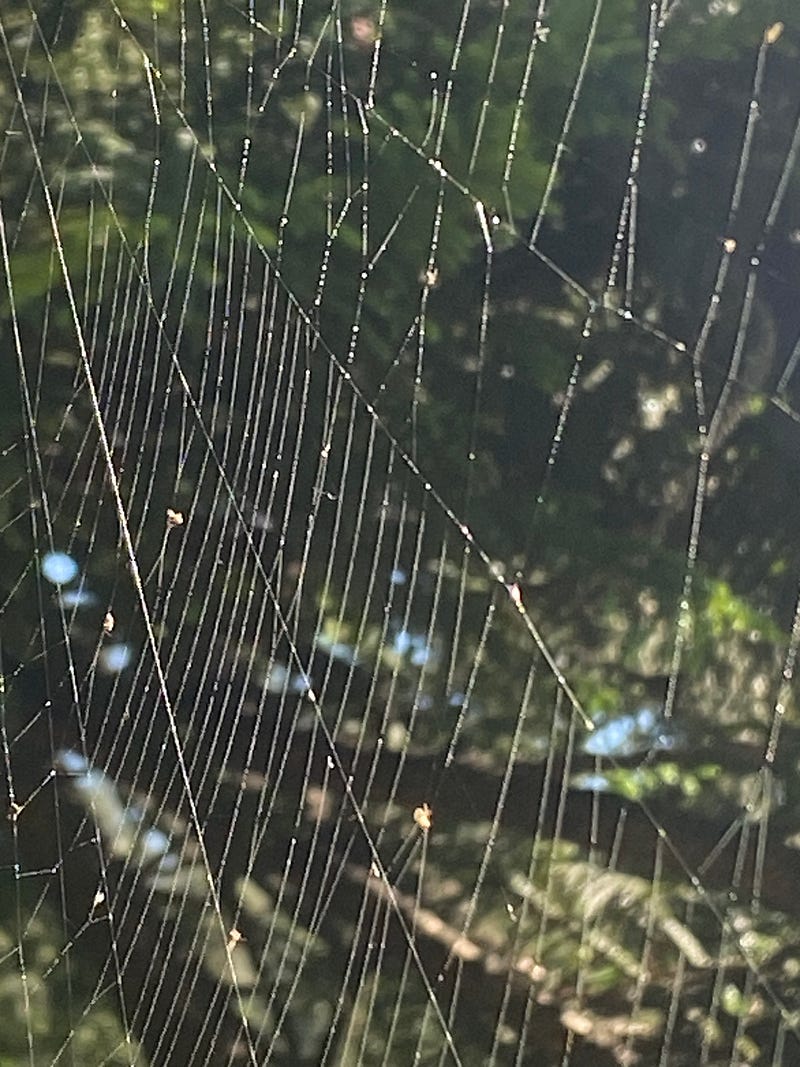
A new web each day means the old bits don’t go stale, just hanging there (Photo by Anthony English)

And many Medium writers build their habit by writing a new story each day. It’s about looking for new ideas, new audiences.

A Wild Ride That Starts With a Single Thread

The building of a web is an engineering feat, begun when the spider floats a line on the wind to another surface. (source: Wikipedia)

I took a photo of the orb weaver’s web. It had started 4 meters (around 4 yards) up in a tree.
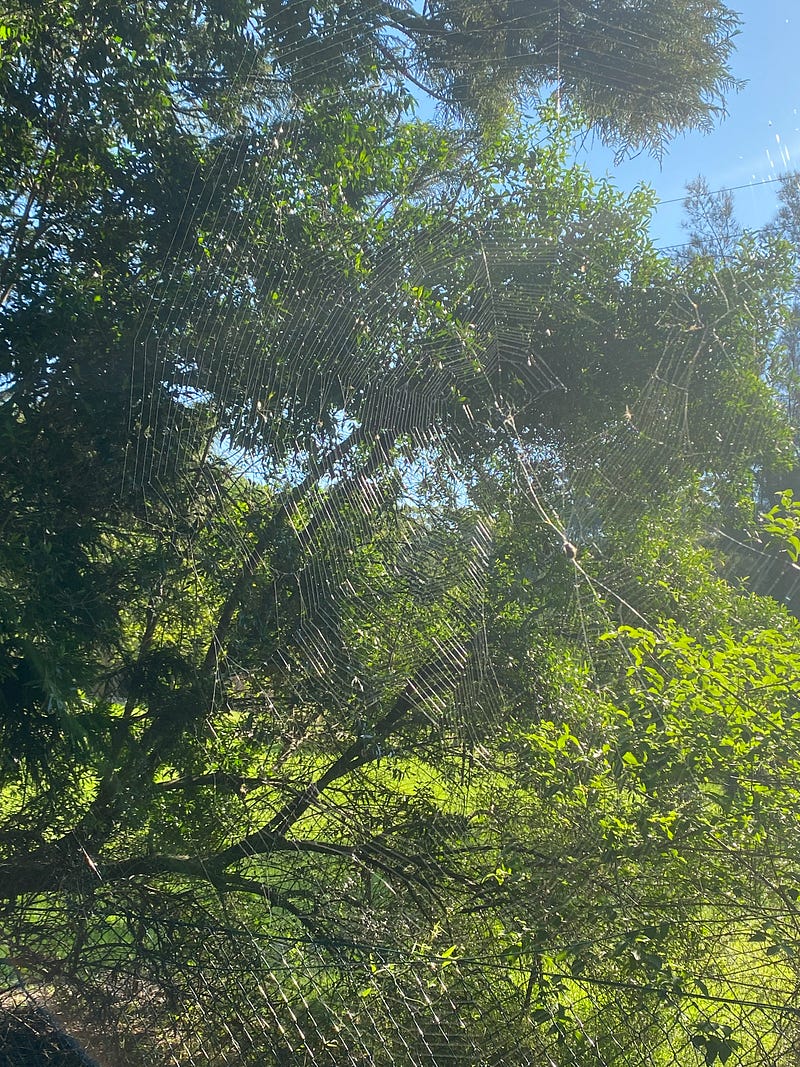
The orb weaver’s web can start from a great height. (Photo by Anthony English)

And you — just like an orb weaver — might start with an idea no one can see, a connection no one has made before.

From one thread, another connects

The spider secures the line and then drops another line from the center, making a “Y”. (source: Wikipedia)

Just like you, connecting your initial wild idea to some fact or anecdote that’s going to help your story take shape.

Hiding, waiting, capturing ideas

Most orb-weavers tend to be active during the evening hours: they hide for most of the day. (thanks again, Wikipedia)

Well, that’s the very definition of a side hustle.

The thread of your story is hanging there, waiting for some new fact or memory to get trapped.

You can be “writing” even when you’re driving, eating, resting. Writing is more about spinning your web of ideas than typing on a keyboard.
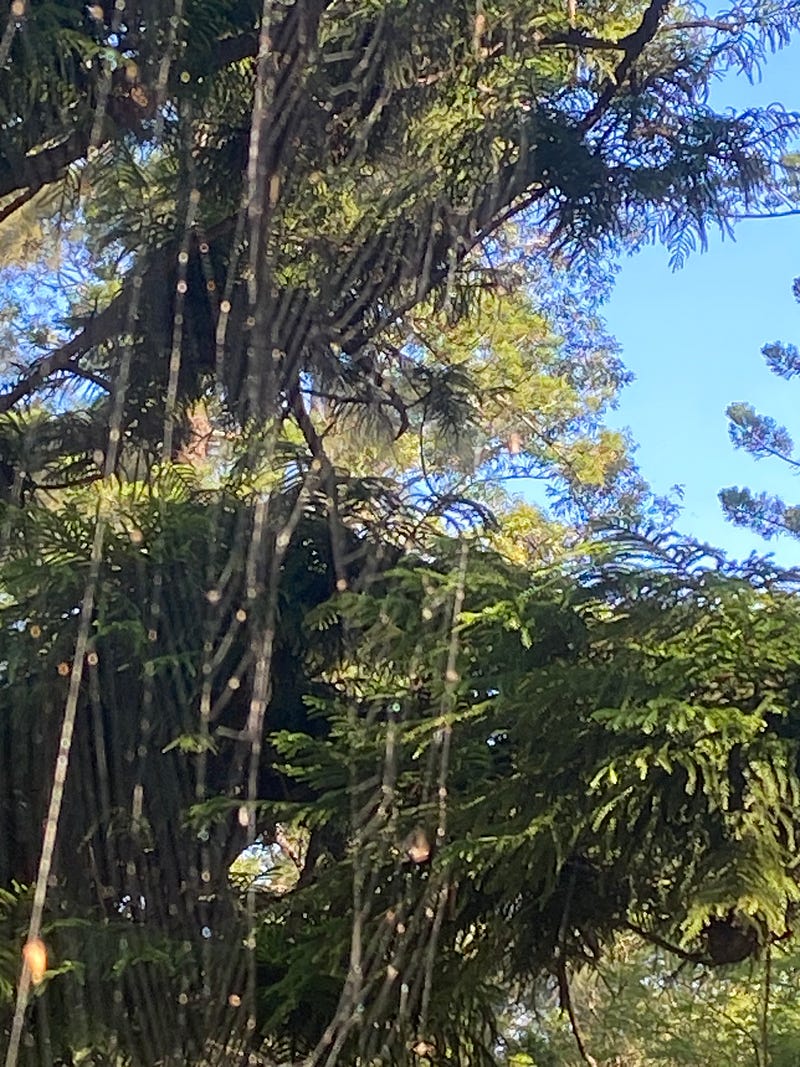
A web is hanging there all day, waiting to catch something (Photo by Anthony English)

Take a Break, Then Start Again

Generally, towards evening, the spider consumes the old web, rests for about an hour, then spins a new web in the same location.

Yesterday’s story may have totally flopped. Or it might have won you 1000 views.

Either way, your job today is to start again.

And that ability to spin a thread will capture something, something big, which will be enough to feed your writing mission for another day.
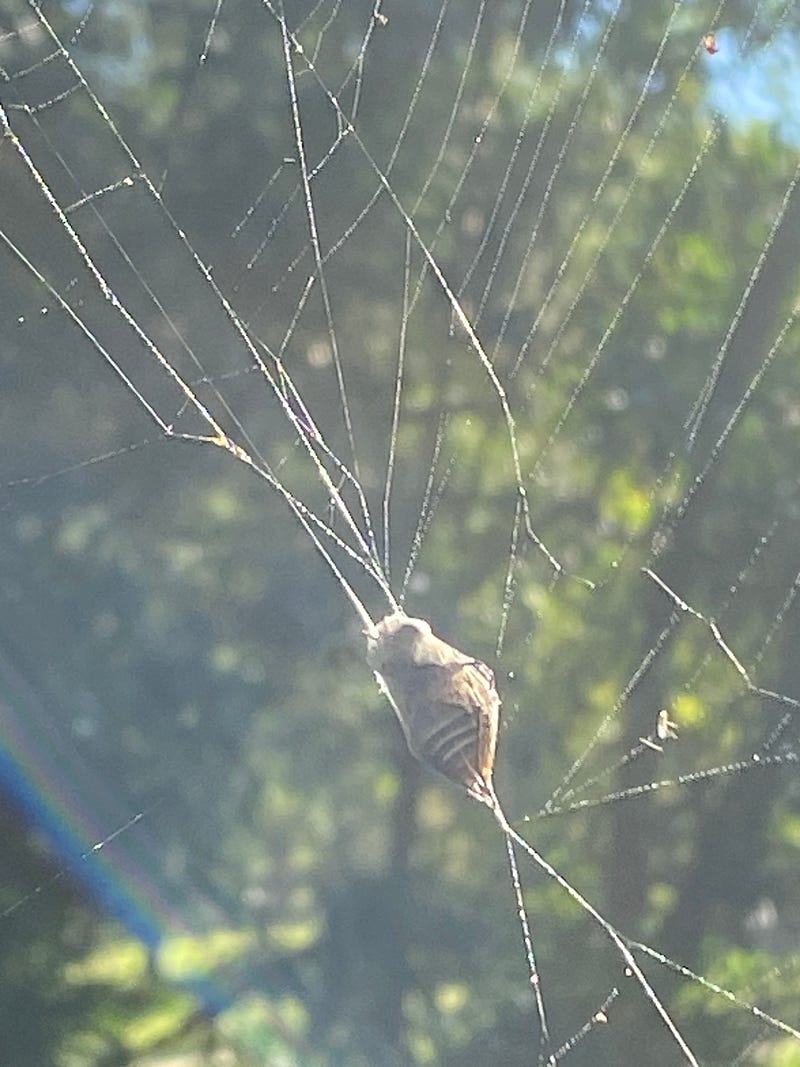
Your patience is rewarded, when you allow an idea to fly into your web (Photo by Anthony English)

I didn’t wait around to watch the orb weaver come to consume its old web (and its prey) before it started again. I had a story to write.

Where do you get ideas for your stories? Share your source of inspiration in the comments.

Writing
Storytelling
Life Lessons
Nature
Nature Writing
Recommended from ReadMedium