TRAVEL
Finding Purpose in the Himalayan Heights
A Climate-Positive Expedition in Ladakh, India
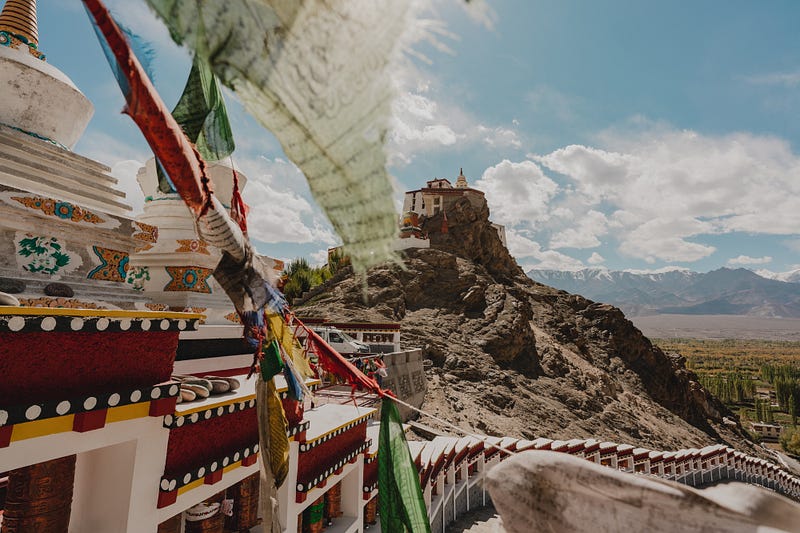
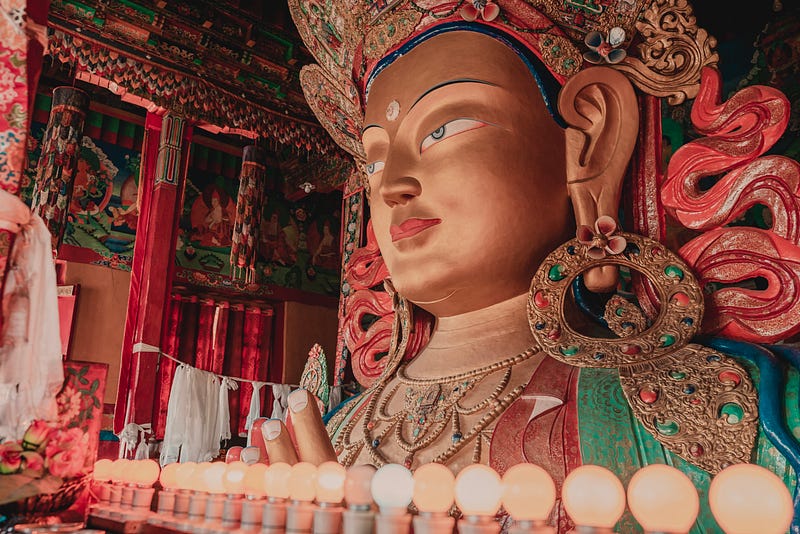
The scent of incense fills the dark chamber of the Buddhist monastery as wisps of smoke drift up and dissipate in front of faded frescoes. A monk sits in front of me, chanting to the beat of a drum and the ring of a prayer bell, eyes rolling back in his head. He’s praying for good fortune and health on our upcoming expedition — tomorrow we’re venturing on foot into the heart of Ladakh, the gateway to the Tibetan Plateau.
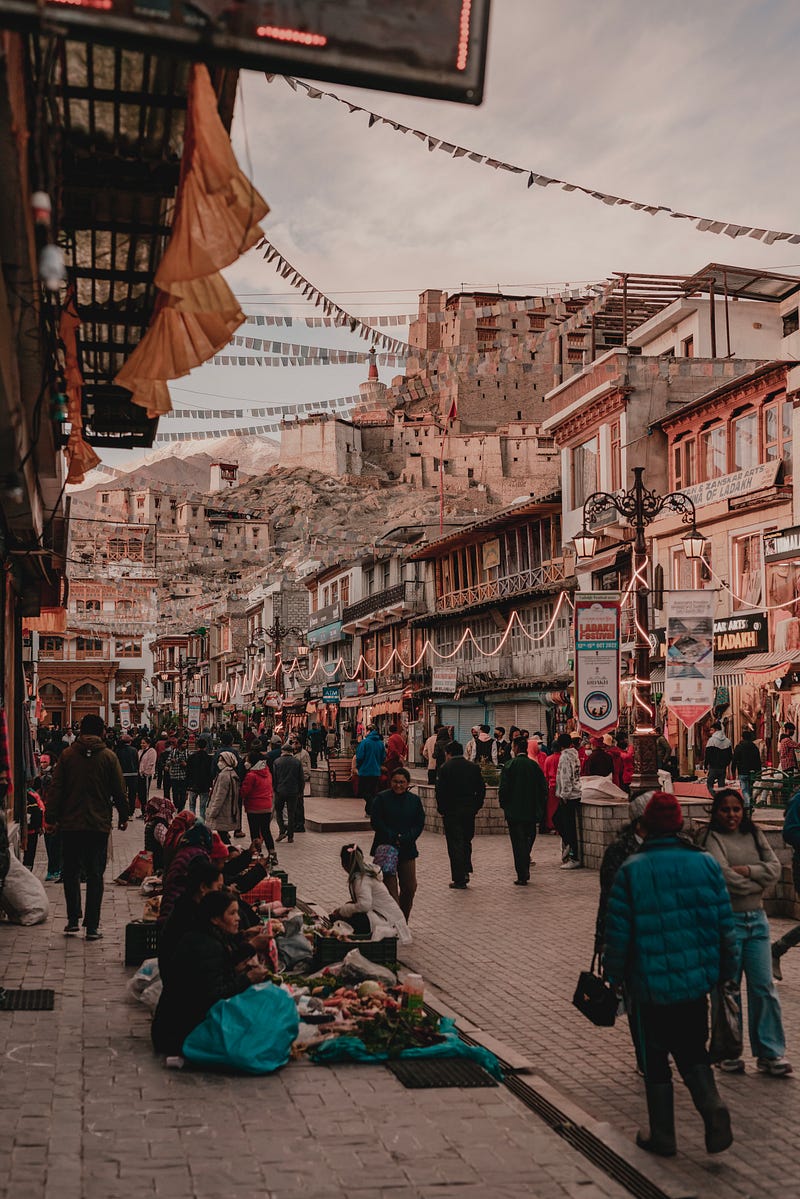
We had touched down three days ago, flying in from Delhi to land at the small dusty airport just outside of Leh. The surrounding peaks of the Indus Valley are crowned with icy spires, while nearer to hand, foreboding military compounds line the motorways — a reminder of the geopolitical border tensions between China and India.
I’m on the ground with Paras Loomba, electrical engineer and founder of Global Himalayan Expedition (GHE). After a transformative experience in Antarctica, Paras was inspired to create a company at the intersection of engineering and tourism, enlisting travelers to provide solutions to the climate crisis. The result? Over 200 communities in India now have electricity, thanks to GHE, including the monastery we’re sitting in.
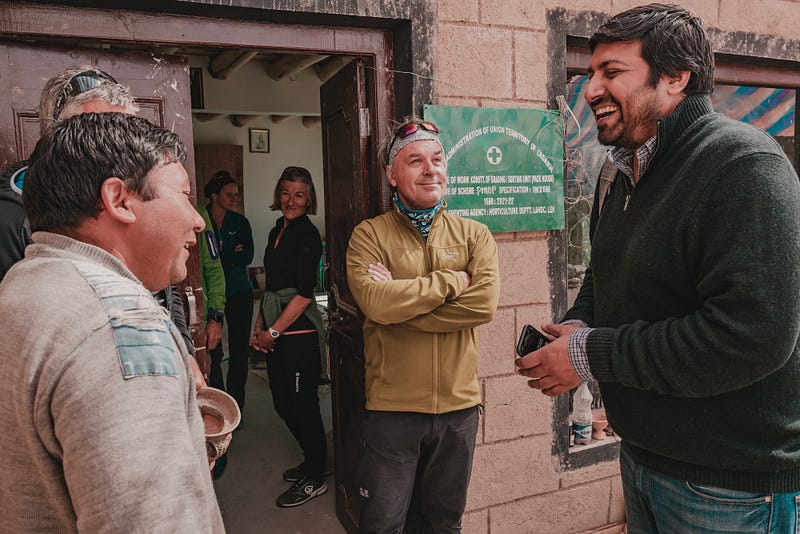
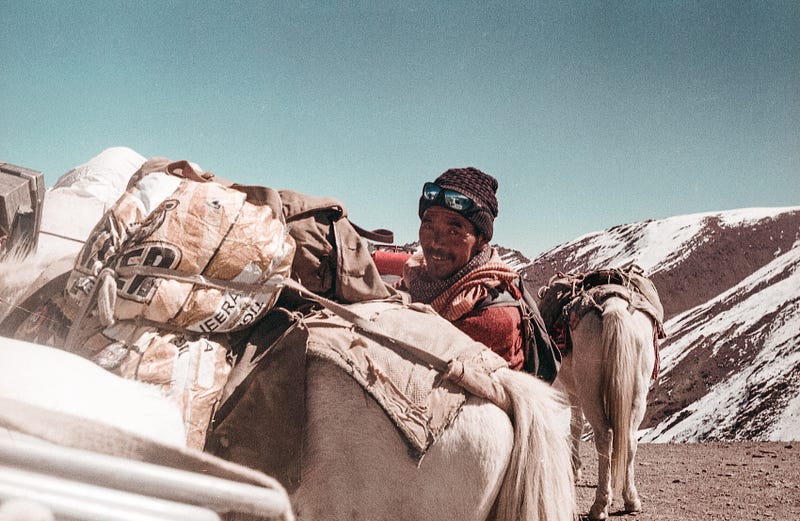
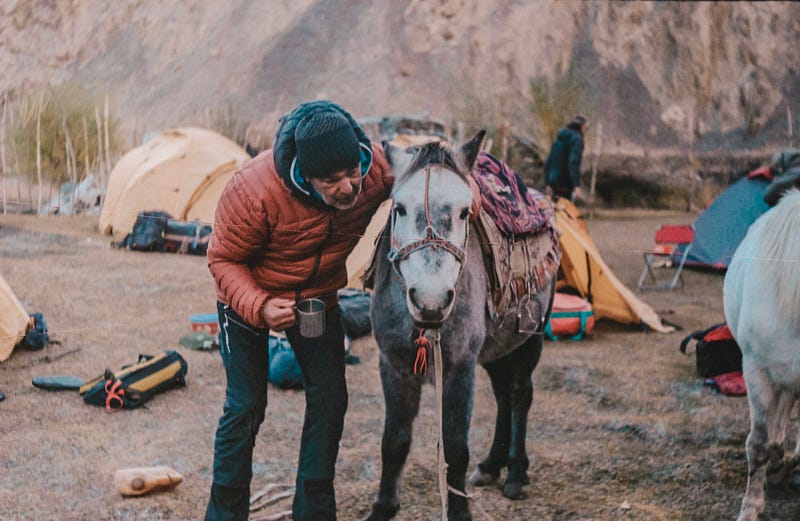
With three days of acclimatization under our belts, we finally set out for the vast Hemis National Park. It’s a six-day expedition and we’re supported by a small crew, plus our baggage horses — all seventeen of them. The landscape here is arid, dotted with simple villages and solitary stupas set against cracked and crumbling mountains. Under a warm winter sun, we splash our way barefoot across a brilliant blue river that carves a path through a valley rife with groves of golden poplars, cries of “jullay!”(hello) ringing out from villagers and homesteaders as we make our way.
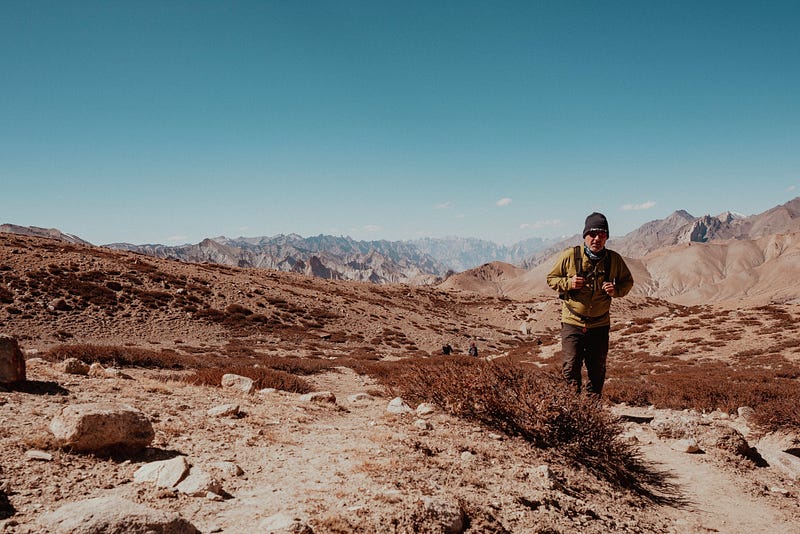
I’m unused to trekking in such luxury. Our crew organizes and breaks camp, serving tea and coffee to our tents each morning. Our Nepali cooks are surprisingly unhindered by the lack of facilities — preparing everything from pizza to carrot cake out of the magical mystery mess tent. The pampering, though, is much appreciated as the trek itself is grueling.
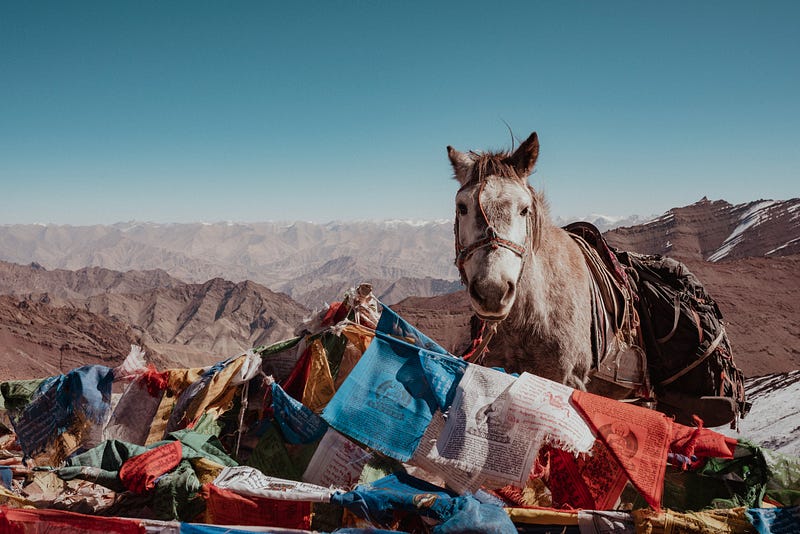
By the second day, we’re already plodding breathlessly upward to the 17,000ft Ganda La pass. A 69-year-old Austrian trekker on our team, Horst, gratefully accepts a lift to the top on the back of one of the horses that we unanimously nickname ‘Hero’. My nickname for Horst is ‘Horizontal Horst’ due to his penchant for casting his pack on the ground at every break and lying on his side, Titanic-style, to smoke a handful of cigarettes. Not that I’m in great shape myself. My last Himalayan trek was almost a year ago, and already my calves and quads feel like they’ve been sliced to ribbons from the inside.
The complete lack of mobile reception is as invigorating as the lofty altitude is debilitating. I spend any downtime we have in my tent, bundled up in either meditation or engrossed in a book, trying to fight the creeping lethargy. Our fifth night finds us camped at 15,400ft — the highest point I’ve ever braved in a tent — on a plateau under starlit skies. It truly feels like the edge of civilization as we know it.
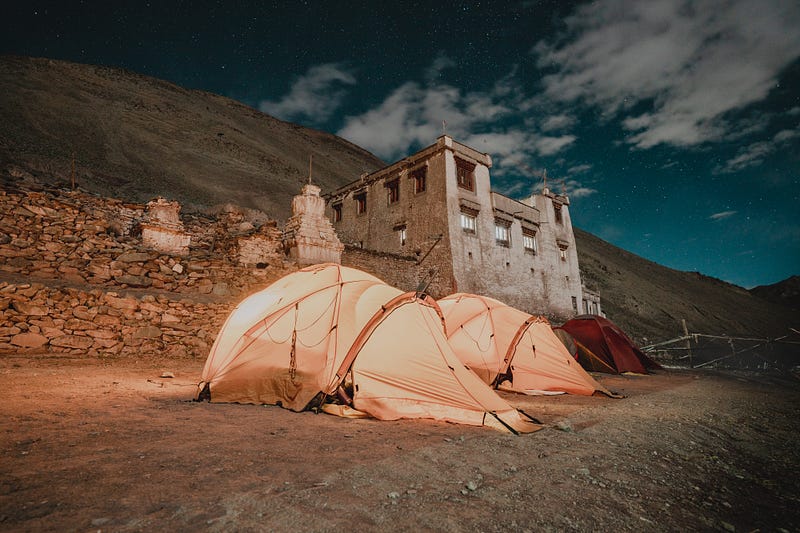
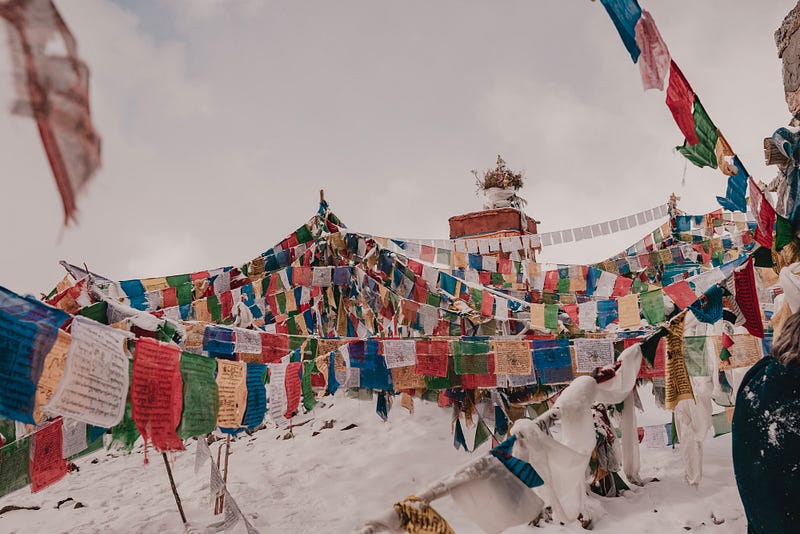
During the night, my tentmate Gunter and I— also from Austria, and leading our “climate impact expedition” — struggle to exist, let alone sleep, as each breath becomes a battle. Outside, a wild dog barks with ceaseless endurance. The next morning as we push onward in cold, thin air up to Kongmaru La (17,200 feet), I reflect on why I accepted the invitation to photograph this journey. Was it merely to push myself as a photographer and as an individual to my own physical limits, or perhaps to answer the question of whether travel can serve a purpose outside of myself? While gasping for air at the top of the pass, prayer flags rippling in the wind around me, I remember something Gunter said that struck a chord: “I would not like to live in a world without travel. That’s why we are doing this, to make travel possible in times of climate crisis”.
The climate impact project for our expedition is to subsidize the cost of 17 solar water heaters for Boorma, a remote village in the Nubra Valley, where the Himalayas meet the Karakorum. As we walk into the village, a sandstorm grows in the grey distance. Closer by, young children scurry with excitement back to whitewashed dwellings to announce our arrival. We are welcomed wholeheartedly under a colorful nomad pavilion by smiling villagers in traditional maroon woolen garments. Together, we work to install solar heaters.
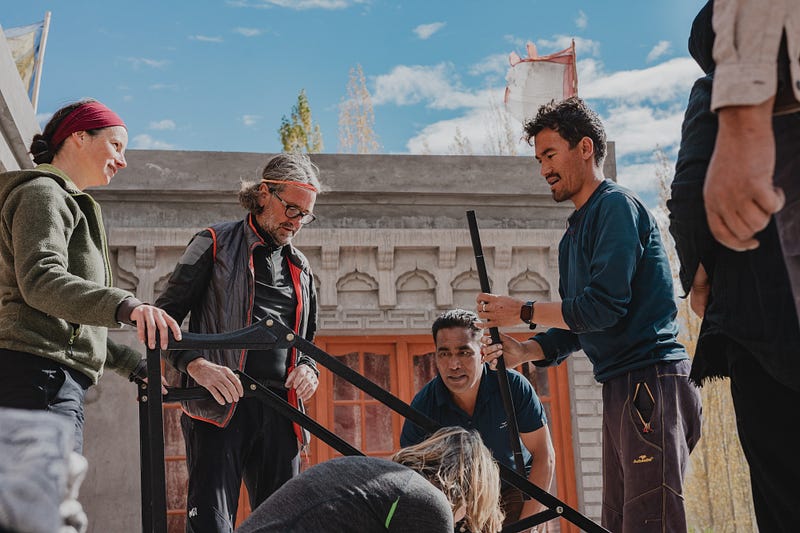
Each heater will not only provide hot water for bathing and cooking during the harsh Ladakhi winters but will also replace 2.3 tonnes of carbon over the course of its lifetime. More than offsetting the footprint of our trip. In fact, even when accounting for international flights, our trip is totally carbon-negative (Or as Paras likes to put it, “Climate-Positive”). Every expedition with GHE is slightly different, as each one paves — as Paras puts it — “inroads to new destinations.”
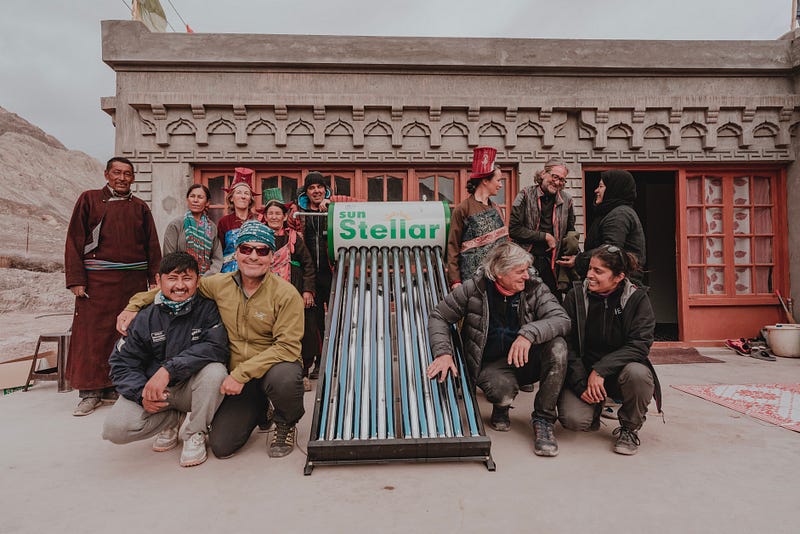
After a shared meal, coated with a light dusting from the sandstorm raging outside, we’re invited to don local garb and join the villagers in a traditional dance. We dance, and we laugh, and we exchange gifts — school supplies and sweets for the children — who accept them with gusto. Almost in a trance, I manage to take the group’s photo before the teary goodbyes begin. As our van wheels around, the villagers climb the rock wall parallel to the road and wave goodbye as we bounce off into a dusty Karakoram haze.
Hours later, our tires spinning in the accumulating snow at Kardung La — the world’s second-highest motorable pass — I slide open the frosted window and stick my head out into the white void. Looking down, all I can see are Dorje’s legs sticking out from underneath the van as he struggles to reaffix our snow chains. Dusk has set in and the temperature is plummeting, but my heart is full. In that quiet moment, I recall the whispers of prayer, from a monk in my not-so-distant past, and I finally understand its significance. And I know that this won’t be my last time in Ladakh.