
Finding Flow — Is flow the Secret to Happiness?
Lessons learned by a flow artist
Almost 9 years ago, I bought my first adult hula hoop. I had been watching hundreds of YouTube videos on hula hooping and flow arts. It became my new obsession. The flow arts would become my life-long obsession. Learning the concept of flow would help me in most areas of life. Flow arts would become an important aspect of my general well-being.
The hoop I had chosen wasn’t the best choice for a hula hoop. It was a travel hoop that broke into sections. The hoop sections connected badly, making it wonky. It didn’t matter, and I feel many people must have fallen for good branding of a less-than-perfect product on their first purchase.
I spun that giant hoop around me, and for 2 weeks that hoop barely managed 2 or 3 rotations before dropping to the ground. Every move was new to me, but I wanted to be a hula hooper! I kept picking it back up and trying again, and again, and again until eventually I could waist hoop. I learned other tricks, and I brought a smaller hoop. I learned to waist hoop with this. I could use this hoop to do faster and more varied tricks.
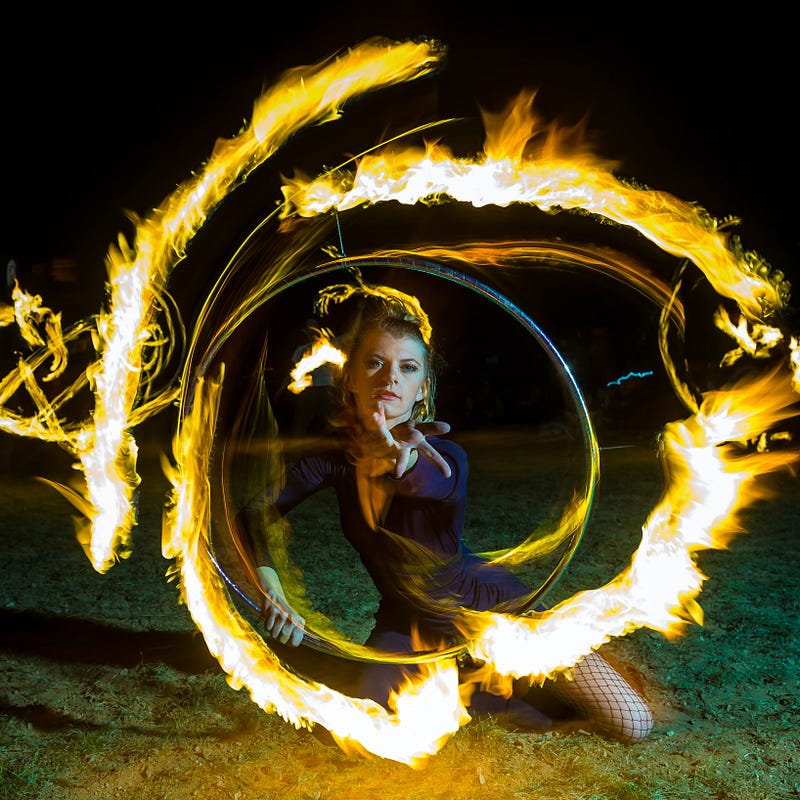
There was one problem… I wanted to flow! I’d heard about flowing through my research on prop spinning but I didn’t quite understand what it was. To me, it was when you became really, really good at the flow arts, and then you would “find your flow?” or something like that. Looking for this mysterious flow became quite frustrating.
I decided that the way that I would find flow was by learning every single trick that I could possibly learn! In hindsight, this helps but it doesn’t create flow on its own. I spent hours a day drilling new hula hoop tricks and moves until they were as technically perfect as I could make them. Adding these tricks to my growing collection of tricks gave me endless joy from the feeling of achievement but I didn’t feel like I had found flow. There was something still very unnatural in the way I would go from one trick to another when the prop was spinning. Almost like I’m stopping after every trick to be like “Well I know this trick and I also know this trick”. This doesn’t make for an interesting performance to watch.
As the years went by (around 4–5 years), I tried many different types of flow props. I started spinning Russian fire fans, double hoops, and veil fans. I still hadn’t found flow. I was getting technically better, learning double props was helping me to learn tricks on both sides of my body, and picking up different props was teaching me skills that I could transfer to other props. I was learning how the flow was a state of mind and trying to reach it, but I still felt like my attempts to reach the flow state felt artificial. I wanted to know that natural flow that everyone else in the hobby seemed to want or to know.
When I first picked up Russian fire fans, I met some people who were very elitist. They had seen some videos of pretty women dancing with fire fans, doing no complicated tricks which they termed flapping. They assumed from my prop choice that I would be flapping. I surprised them with more technical moves. I’m not sure why I let this idea get to me, these people did not spin fans or know about the technicalities of fan spinning, they just wanted to spin them in the future. Yet it pushed me to only practise very technical moves. The funny thing is flapping or at least having fun and learning simple transitions with props would probably have helped me reach the flow state much faster.
Then I had a life change. Over 2 years ago I was under immense stress from a breakup and the aftermath of lockdowns. In lockdown I’d been depressed, I hadn’t been training, I had been supporting someone who just needed to leave but would not leave. I also felt like I'd been trying to support everyone else in the retail role that I had filled during this time. I made excuses for that person and I lost myself in feelings of not being enough, I could do nothing right. Instead of asking for my own needs, I put the needs of someone who was never happy above my own in my home until he made the decision to leave. When he eventually left I had lost so much of my ambition, my confidence, and my sense of identity.
Connection
I needed connection with others and I happened to meet other flow artists. I threw myself back into flow arts practice. Back then my main prop was Russian fire fans, which is a double prop. I started to spin with fire every week (at this point I had years of training and experience, LEDs are just as effective for beginners). I threw myself into it. By spinning with other fire spinners, I learned new flow arts concepts. I practiced an activity I enjoyed as often as possible. I also had something to do and became more active. I walked more to meet people to practise with and I exercised by practising. It helped me to lose weight and rediscover my sense of self and identity. It’s a weird thought when you consider that flow sometimes feels like you are in the activity and not within yourself.
Finding flow
I learned how to link tricks together. The thing holding me back from flowing wasn’t technical ability, it was the ability to link moves together. I explored new flow arts props in the form of a dragon staff. This is a big staff with weighted ends on either side, these help the staff spin with gyroscopic motion. It’s a slower prop, which gave me a more relaxed feeling. Learning this helped me to forget my need to have every complex movement down and instead focus on connecting the movements. I’d love the staff, it felt so good to flow with.
Through the years, the skills that I had built from hours and hours of practice as well as learning new tricks had laid the foundations for me to begin to flow. When I feel like I am flowing, I am fully concentrated in the moment. I forget any worries or anxieties and I just do.
Flow and the secret to happiness
The word flow when relating to a state of mind when practising an art form or activity is not unique to the flow arts. Mihaly Csikszentmihalyi is the psychologist who first coined the term flow state. He has written several books on it. After growing up in World War 2, Mihaly realised the stresses that adults went through, he spent much of his early life searching for the secret to happiness. Through eventually talking to creatives such as artists, poets, and musicians he found the concept of flow state. A state where you are completely absorbed in an activity. At this level of concentration within the activity, you are completely absorbed. It is almost as if you are in a different reality. The result is that the activity you are doing often looks and feels effortless. He mentions that in order to reach this state you need a high skill level but you also need to feel challenged enough to prevent boredom. Mihaly found that people who could reach a flow state gained a sense of genuine satisfaction that led to happiness. This flow state can be achieved not only through creative means but also in any activity in life from gaining skills and through the correct level of challenge in that activity. He explains flow in detail in this Ted Talk…
Thoughts on flow state
We can reach a level of happiness through flow. We can reach flow state learning and challenge ourselves enough to prevent boredom in our activities. Reaching a flow state creates satisfaction in our practices. Having these outlets where we gain satisfaction in what we do can ultimately lead to happiness in our lives. In the end, the happiness that I found through continuing to practice flow regularly led me to attract more people into my life. The people who stayed in my life tend to be creatives too in the pursuit of learning and developing their skills. We have this shared understanding of self-development and the need to be practicing and master a skill, even if it's not something that is recognised as marketable.


