
Finding a Way Home
Nobel Laureate Toni Morrison shows us how toxic America can be.
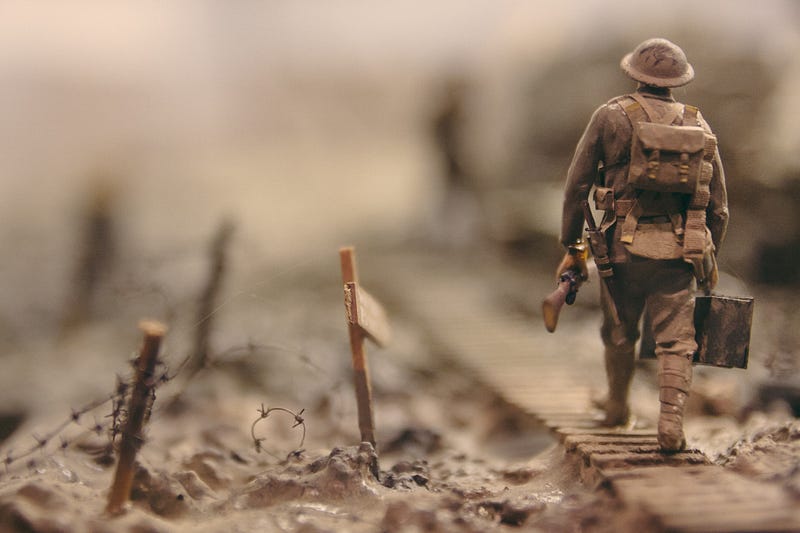
Toni Morrison’s penultimate novel Home begins with a scene depicting two black children watching a group of white men burying a body that has presumably been lynched. Home is a novel that explores the concept of “place”, both as a physical location and as a perception of the mind located in the depths of human consciousness. Physically, Morrison’s novel tells the story of Frank Money and his journey home after fighting in the Korean War. Home for young Frank is the fictional town of Lotus, Georgia. It is a place, Morrison reasons, that is not very pleasant. Lotus is where Frank’s family settled after being run out of Texas by the Ku Klux Klan. In Georgia, Frank’s parents picked cotton for sixteen hours a day, and both died young. Frank’s childhood trauma in Lotus is, of course, further accentuated by the burial in the opening scenes of the novel.
Frank Money’s journey back home to Georgia begins in Seattle, Washington — long considered a progressive bastion in the United States. Yet it is in Seattle, where the reader finds Frank nearly homeless, arrested by the police, and committed to the psychiatric ward where he is pumped with morphine and secluded from the rest of society. Frank is left with no other option but to escape the nuthouse. Even as Frank escapes to find his way home, we later learn that to Frank, home is even worse than Seattle. As a matter of fact, Frank admits that Georgia is worse than any place in the world, including the battlefields of Korea where two of his friends from Lotus were killed right beside him.
In his lecture about Morrison’s book at Harvard University, the Historian of Religions Charles Long describes the word “home” as a familiar term that is complete with its own popular aphorisms such as, “there’s no place like home”, and “home sweet home”. Long points out that the problem with the idea of home, however, is raised by two questions:
1. Where is your home?
2. Why are you not at home?
These questions, when paired with the history of Afro-Americans in the New World, raise some serious issues. Oftentimes, the United States of America is described as a country built on the backs of immigrants who came to this country seeking a better life in a new home. This narrative, while sounding ideal, fails to consider the fact that African Americans did not volunteer to come to this country, and that their sole purpose of settling in the United States was to be forcibly exploited for the economic gain of white people.
Even after the abolition of slavery, black people were never granted a sense of belonging in the United States. Officially, segregation replaced slavery well into the 20th century, while groups such as the Ku Klux Klan provided auxiliary support to the systematic racism by oppressing, intimidating, and murdering African-Americans with reckless abandon. For Frank Money, 1950s America was a more de-humanizing place than the killing grounds of the Korean War.
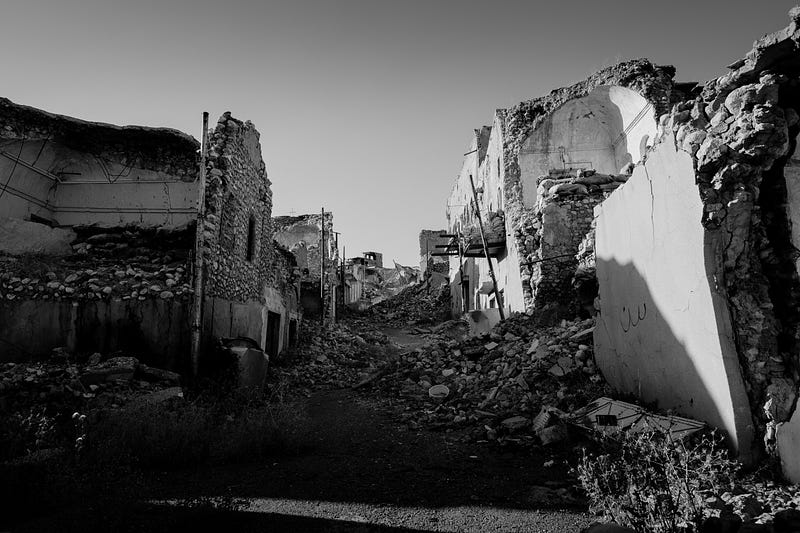
Not much has changed since the time of Frank Money. Droves of young men and women leave their homes to join an organization (the military) that is organized to systematically kill people throughout all four corners of the globe. These days, they do so voluntarily, but many likely feel the same way that Frank felt in Toni Morrison’s novel. Military life is hard, and fighting in wars is tough, but it is better than being at home in places like Flynt, Michigan; Ironton, Ohio; or Lotus, Georgia. Charles Long astutely points out in his Harvard lecture, that the only reason the United States left Vietnam was that the children of the upper and middle class were being drafted, sent to war and subsequently protesting the war. He goes on saying,
“Poor folks do not have a voice, and they are sent anywhere. If there had been a draft, and everybody’s child was drafted, do you think they would be sending soldiers on four, five, six, or seven tours to Afghanistan and Iraq? Right now, the United States is taking poor kids, calling them patriots, and using them as mercenaries, and everybody is looking the other way”.
Like the slaves that enabled the United States to become the richest country in the history of the world in mere centuries, poor Americans in the military today enrich a certain subset of people in the United States to unimaginable heights. Outside of the military, the prison system has created another class of people, who are essentially enslaved and forced to labor for pennies, or sometimes nothing at all. Meanwhile, all over the United States, African-Americans are meant to feel unwelcome, not only in places like Georgia but also in places like Aurora, Colorado; Palmdale, California; and Minneapolis, Minnesota.
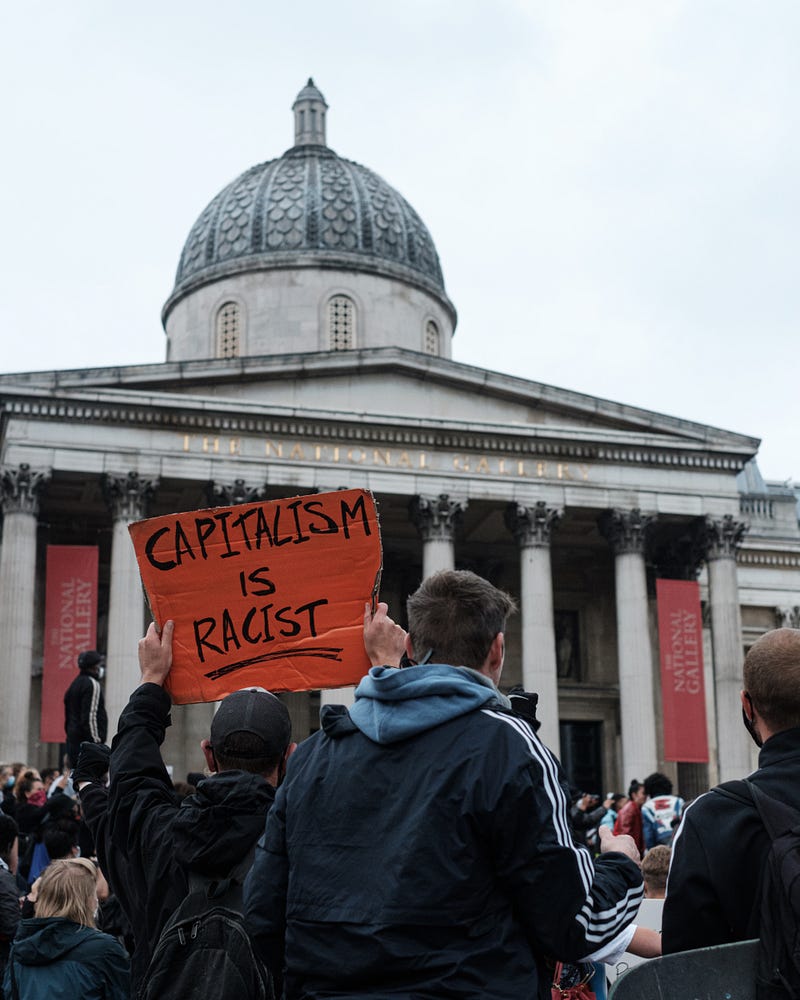
The unfortunate reality of America in 2020 is the sad fact that much of the country has refused to accept the historical circumstances that have led to the widespread economic and civil unrest. The rioting and mass protests which once seemed to occur every decade, and then every few years, will accelerate and occur more often and at larger scales. Perhaps the events that have catalyzed the unrest in 2020 might not be the last straw, but the United States inches ever closer to reaching the proverbial tipping point of perpetual instability, chaos, and disorder.
At the governmental level, the story gets even worse. The President of the United States wholeheartedly defends the public display of the Confederate battle flag and the preservation of Confederate statues, essentially signaling to African-Americans that American history and culture belong exclusively to the domain of white people. Let us hope that for the sake of humanity and the future of the United States, systematic changes are on the horizon.


