Find a Pathway to Healing with Dear Lyme Disease by Wendi Lindenmuth
A guide to help you overcome setbacks on your way to wellness
When I grew up, it was common for young children to run into the woods of Northern Wisconsin and play until the sun went down and our parents called for us to come home. Upon entering the house, we’d strip off all our clothes and pick off the ticks that we’d acquired throughout the day.
Wood ticks are nasty little creatures, and most of the time you catch them before they latch on. When they do bite, you can pull them off with a thumb and forefinger, although they often take a little white patch of skin with them. The deer ticks are even worse because they aren’t content with just latching on to the surface. Instead, the deer ticks burrow in and often require the help of a pair of tweezers to remove once lodged.
Wood ticks and deer ticks were a way of life when I grew up and we didn’t think much about them. They certainly didn’t give us enough concern to stop our youthful adventure and exploration into the beautiful wilderness.
However, over the decades something has changed and now ticks of all varieties represent a real danger. Today when you are bitten by a tick, you need to observe the bite area for several days and hope that you don’t develop the bullseye type rash that is one of the first indications that you have contracted Lyme Disease.
Lyme Disease has always been around, but it seems to have gotten worse over the years and cases are far more prevalent. It’s a strange illness that can manifest in a variety of different ways and can severely impact your ability to live. Lyme Disease is one of those illnesses that seems to linger, and which often is difficult to diagnose. My fear of Lyme Disease means that my own children do not get the free reign of exploration that I used to enjoy.
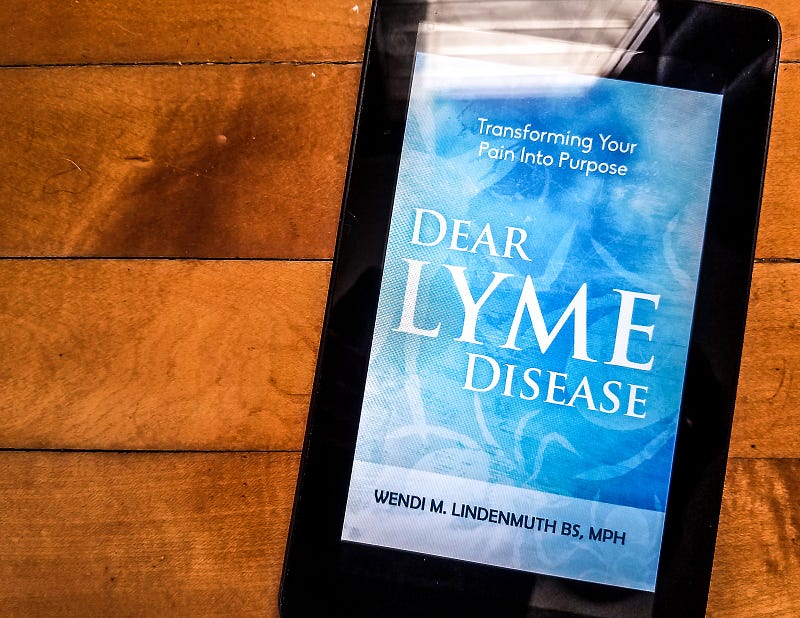
Dear Lyme Disease by Wendi Lindenmeuth contains a lot of good information about the mental journey that surrounds your path to conquering Lyme Disease. Healing from Lyme Disease, or any illness for that matter, is a difficult task that requires an individual to pass through many stages of grief. It can be heart wrenching to achieve a certain level in your life, only to have all your achievements ripped away by a minuscule circumstance beyond your control. It’s natural for people to lash out against the unfairness of such an occurrence, but the unfortunate reality is that the more you lash out, the more you take yourself away from the place you want to be.
Lindenmeuth’s book combines real life experiences with a weekly plan that will put you on the road to mental recovery. The writing is both gentle and encouraging. I especially liked how suggestions for such things as “writing a love letter to yourself” or “writing a letter to your disease,” were presented as invitations rather than commands. Above all, the book aspires to provide actionable information, support, and encouragement.
Dear Lyme Disease focuses on the mental side of recovering from a life changing event. This book is not a medicinal treatment plan, and if you have Lyme Disease or you suspect you have Lyme Disease you need to contact your doctor right away for appropriate treatment. However, if you have already visited a doctor and you’re having trouble coming to terms with the new reality that has been thrust upon you as a result of this disease, Dear Lyme Disease is the perfect book to help you recuperate control of your life.
Pick up your copy of Dear Lyme Disease by Wendi Lindenmeuth here.


