
Finally Done Building our Solar, Off- Grid Home
A manifestation of a 30 year vision and worth the wait.
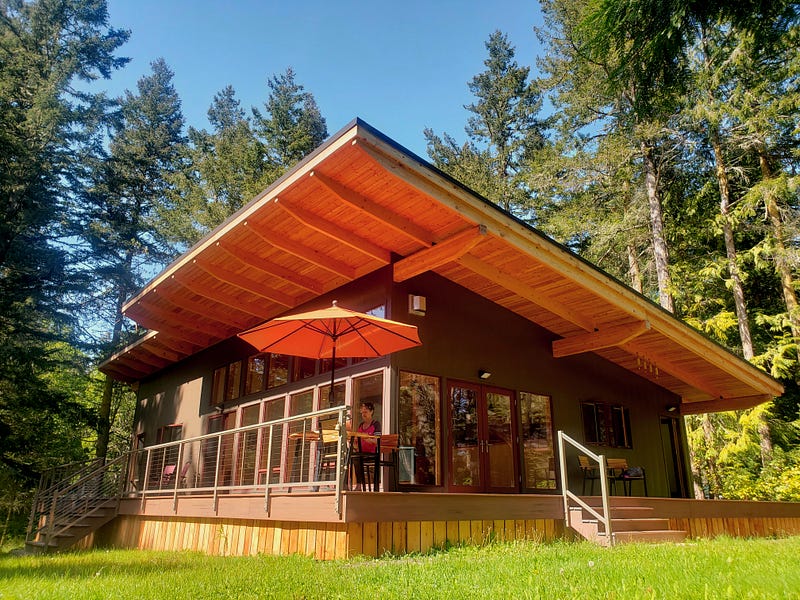
My husband and I were among the first wave of solar home builders in Seattle, WA. In 2005 we self designed and completed our grid connected, solar home. The electrical meter spun backward almost every day, sending our surplus energy to City Light. Our bills were practically non existent, busting the myth that gray skies and rainy climates are not conducive to solar construction.
We downsized 15 years later and sold our home to a grateful, young tech couple. This move allowed us to focus on our land on a nearby island and dust off the drawing board once again. We sketched out a design, deciding to forego the expense of an architect. Our home was going to be off-grid this time, tucked away into our community of Forest Folk.
We found an island builder who had never tackled a solar, off-grid house, but he was highly skilled and interested in the process. We turned our design draft over to him. He cleaned it up and submitted it for the permit. This took place two years ago, after stewarding our land for more than 30 years.
There are shreds of truth in partnerships breaking down over an extensive home remodel or new home construction. Although my husband and I were building and couple veterans, we had differing ideas about where our new home should be located.
We began laying out square footage with a hefty hammer and four stakes representing the corners of our structure. We often ended up wanting to pound each other instead. James staked out his ideal location while detailing it’s merits. As soon as his back was turned I would pull them out and pound in my superior, personal opinion of course, placement.
When I left to do errands, I returned to the scene of a new crime, involving runaway stakes, once again. We played this game ad nauseam until our approved permit came in and forced us to meet in the middle of our desires. It was a tempering process for both of us.
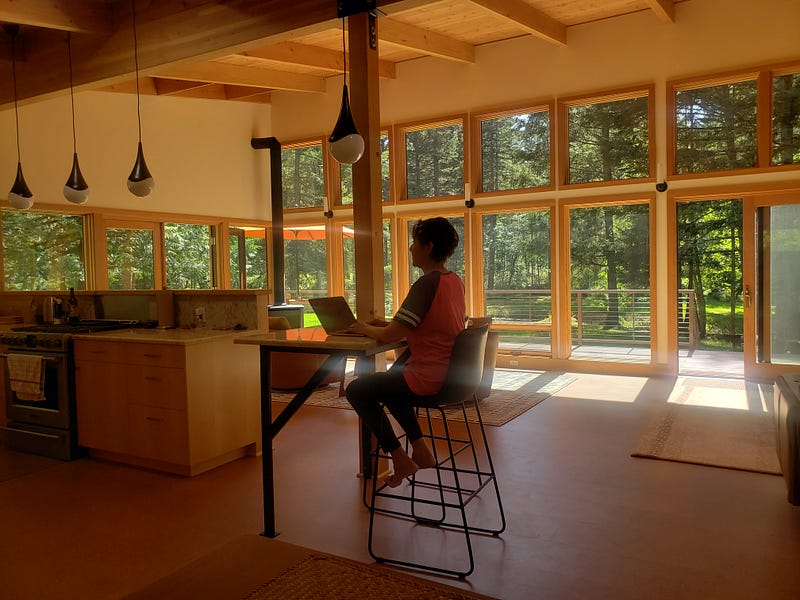
Once we entered the framing phase, the project became mine alone. I was delighted and terrified as well. I would’ve rather taken another kick butt journey down the Amazon River instead of figuring out plumbing and lighting for an entire house. Shopping for anything other than groceries is one of my least favorite activities.
Fortunately for me, our builder had a calm temperament, a counterbalance to my excitable and passionate nature. Whenever I became overwhelmed by the complexity and unending details of building from ground up, he would advise me to do one task at a time. Simply deal with what was in my face and not contemplate the tasks to come.
This attitude was the opposite of my perception in life and I had to retrain my mental process. His formula proved effective, enabling me to soldier on to the finish line.
An unexpected blessing was our builder’s crew were very talented individuals and their work standards were high. Our finish carpenter was also a fine arts painter with work displayed in galleries. A fact I didn’t know until our home was finished. I should’ve suspected his artistic accomplishments when he asked what I had in mind for window and door trims.
I told him I would like a layered, multi dimensional look, coaxing one visually into the outdoors. The entire focus of our home was oriented to the spectacular natural setting and our wildlife refuge pond in the meadow. He zipped off, made a sketch and came back 20 minutes later with a stunning drawing I instantly approved.
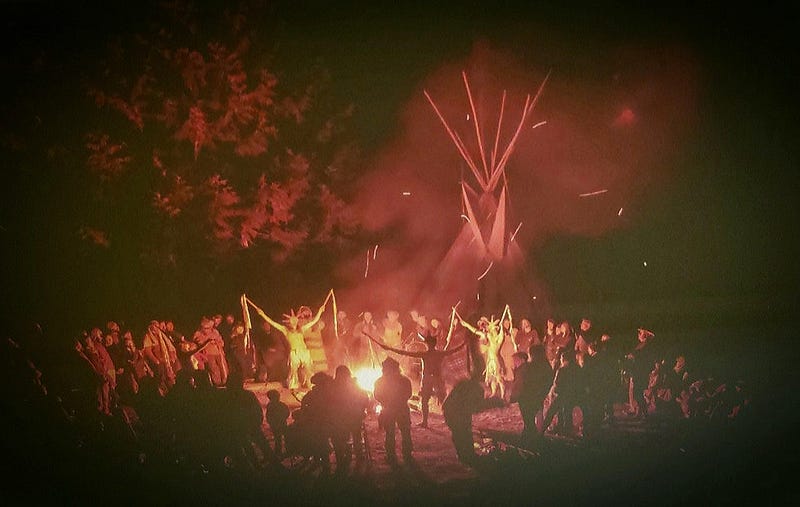
Several workers on our site already knew the land well. We had hosted almost 20 years of winter solstice celebrations where up to 250 people gathered to celebrate the longest night. A fire circle was created, teepees set up and a full night vigil embarked upon with sacred dances and stories exchanged until the sun rose with the dawn.
The placement of our kitchen is only feet away from this energetically charged spot, another reason why the positioning of our house became so vital. We had relished sharing our land with like minded, nature oriented pagans over the years and wanted to honor their deep respect, legacy and shared love for planet Earth. Below is a photo gifted to us by an island photographer, taken at the break of dawn when the Sun God-Goddess returns to bless another year.
As home building moved along, our solar company Rainshadow, installed new panels high in fir trees to enhance the single array which had sufficed many years for our small, 350 sq. ft. cabin. These intrepid energy workers became solar aerialists. Since our site was forested, our best solar, southern exposure was found in our treetops.
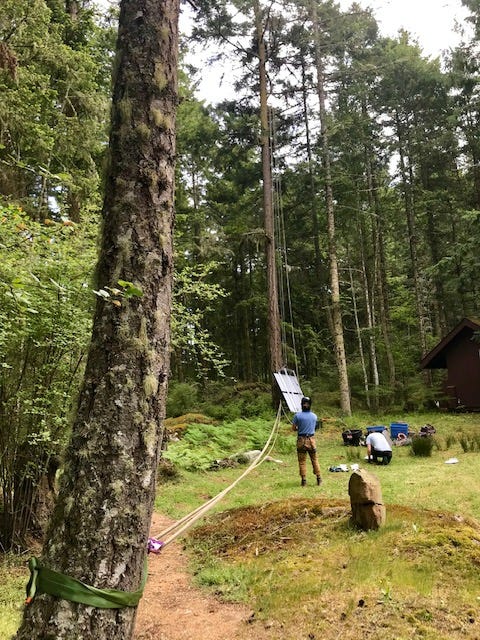
The crew flew up into the sky with ropes and pulleys, anchoring additional panels in the highest branches without inflicting any harm. I waited below with cookies in hand and concern in my gaze, immensely relieved when they landed safely back on the ground to savour their treats.
The following paragraphs contain a summary for anyone interested in the technical aspects of solar, off-grid building.
Our system provides energy for household use without being connected to a power utility. In this system, there are two main components: 1) energy generation and 2) energy storage.
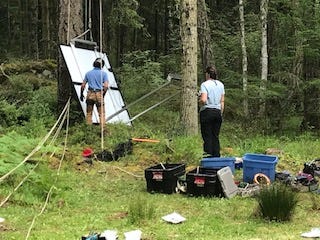
The energy generation part of the system occurs when energy is generated through the use of solar panels (2.1 KW of power from 8 individual panels) mounted 80 to 100 ft. high in three fir trees. The solar power is then run through wiring to 3 MPPT charge controllers that function to ensure the power is transferred into the energy storage system in the most optimal way.
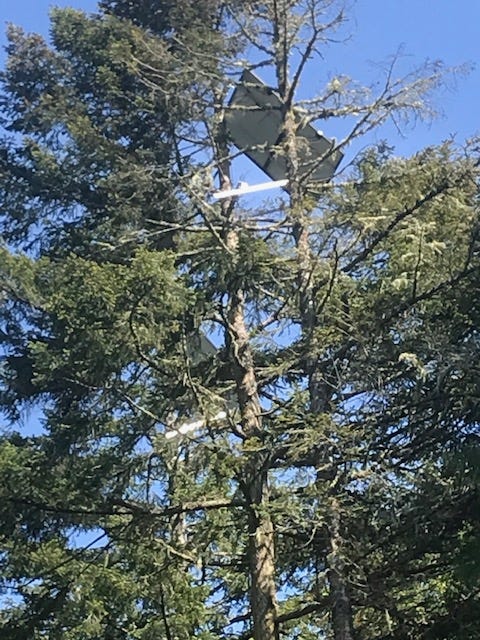
This means a route which maximizes battery life, avoids overcharging and self regulates when charging should be accelerated (winter) or decelerated (summer) due to battery state of charge. We have a propane generator backup which normally only activates in the darkest days of winter.
The energy storage system is comprised of 16 AGM lead acid batteries that provide 800 amp-hours of capacity in the 48-volt direct current (DC) system. A battery monitor is located in our kitchen so we can observe the state of charge in the batteries and manage the loads if necessary.
Because power is stored in the battery system at 48-volts DC and most household appliances use 120/240 volt alternating current (AC) electricity, the power needs to be “inverted” through an invertor so it can be used. After the inverter is activated, our home is no different than one powered by a local utility.
Contrary to what many believe we have the same amenities you would find in a grid connected home. Our washer, dryer, kitchen oven, refrigerator and living room fireplace are all fueled by propane.
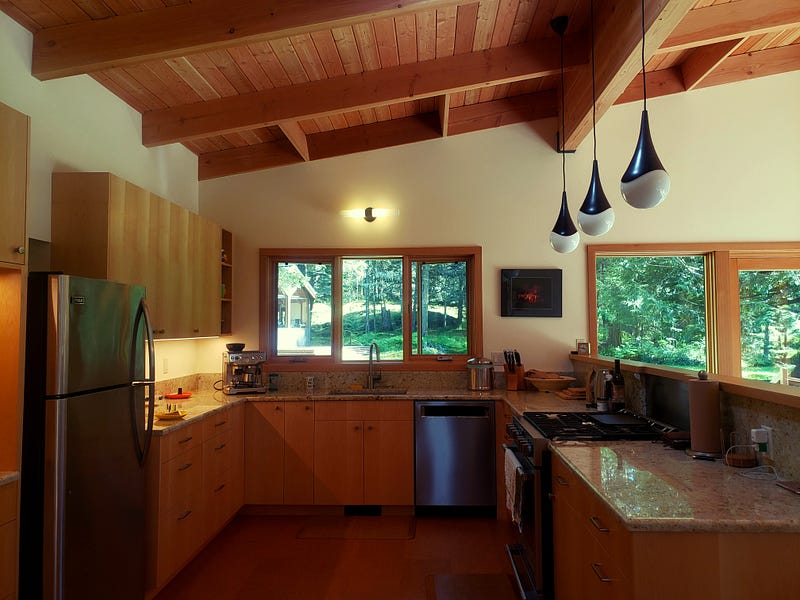
We have a propane furnace hooked up to service every area of our 1600 sq. ft. two bedroom, two bath home. So far, we’ve only had to use it once during a hard freeze and snow shortly after moving in at the end of January this year. The rest of the time our propane fireplace has worked like a charm to heat the entire house.
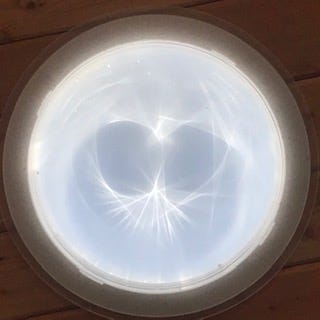
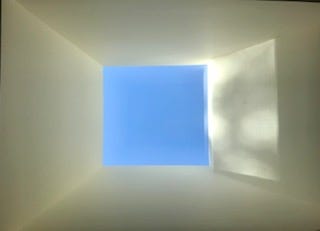
We have also installed five sun tunnels, providing more light than we imagined. They penetrate the roof, illuminating the north and east sides of the house, greatly reducing the need for lighting during the day. The tunnels create unusual designs as the sun transits overhead. I call this image twins in utero. In addition to sun tunnels, we added a 4 by 4 ft. skylight in the master bedroom roof, an awesome way to track the cosmos before taking off for dreamland.
Since January 1st, 2014, the state of California has mandated all new residences must be solar and commercial business’s be ‘solar ready.’ This is a progressive law leading to a more sustainable energy future. The price of solar panels has decreased considerably since we built our first home in 2005 and there are often rebates for building solar as well.
Humanity cannot carry on as usual, building mega homes and gobbling up resources as basic as water for private swimming pools and golf courses. We need to commit to a greener world, one less taxing to our planet’s resources.
Solar energy, in addition to wind, waves and geothermal heat are all options nature generously provides. Technology will continue to improve, making alternative energy easier to install and more affordable for every type of building.
If you are building a new home and haven’t considered solar energy, please do so. At our first home, solar strips were laminated directly onto the metal roof, making it impossible to see our residence was solar, if the visual impact of panels is a concern.
Homes can be retro fitted to solar energy too. After our neighbors came over and checked out our solar equipment, panels began sprouting on surrounding rooftops. By the time we moved, five homes on our block had converted to solar and panels were a frequent site on rooftops throughout the entire neighborhood.
I sit in my kitchen on this blue sky, spring day, watching our Tri Metric reader rise. I could power up the vacuum, do a few loads of laundry and use electrical tools without making a dent in our fully charged batteries.
On second thought, I could also make an afternoon latte and compose an ode to my favorite star, our precious, life giving sun, powering our home and my heart. Nice option. I’m going for it.
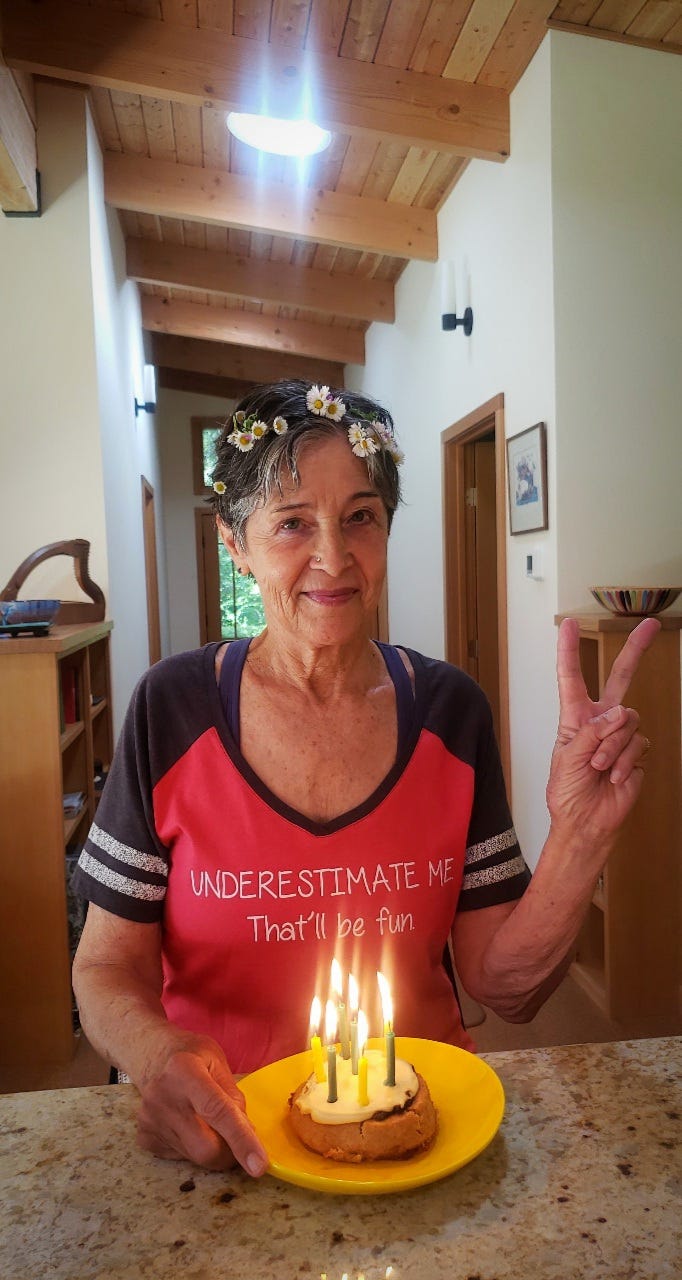
And for any of you who might believe you can’t teach older doggies new tricks, please lay that false notion aside. This piece is being published on my 70th birthday. As a newly fledged septuagenarian, I’m already sniffing out new territory to satisfy my curious mind. And here’s a shout out to my fellow Boomers and anyone else who hasn’t given up on the idea of peace and love. We knew the truth long ago and will never lose hope.