Film Review — Maestro
Bradley Cooper directs and stars in an absorbing Leonard Bernstein biopic, but the real standout is Carey Mulligan
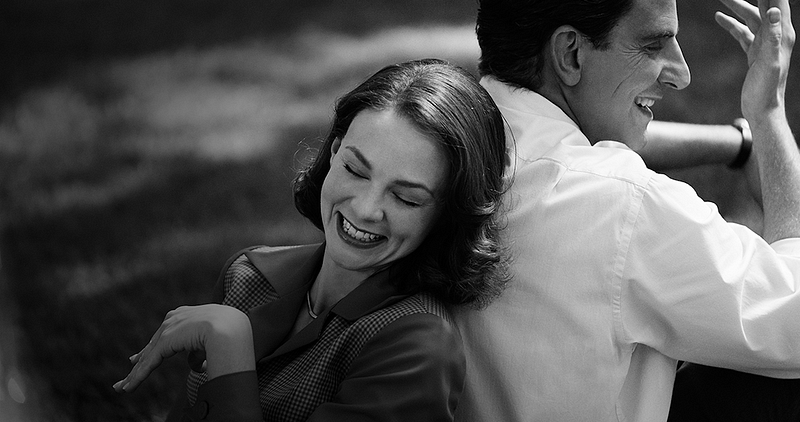
Bradley Cooper’s previous directorial labour of love, A Star Is Born (2018), did the impossible, in that it exceeded my love for all earlier versions (no small feat), and wound up as my favourite film of that year. Maestro, a biopic about legendary composer and conductor Leonard Bernstein, failed to generate the same level of love, but it’s still worthwhile, and noteworthy primarily for the excellent lead performances.
In addition to directing, Cooper plays Bernstein in the kind of showy, extrovert, physically challenging performance the Academy loves. Some have taken issue with the prosthetics (specifically the nose) and said a Jewish person should have played Bernstein. Whatever one’s opinion on that, there’s a lot more to Kazu Hiro’s excellent make-up artistry than just a nose, especially as Bernstein ages (this film romps through a significant portion of his life). Cooper delivers a fine performance, and I fully expect him to wind up Oscar nominated.
However, for my money, the real star is Carey Mulligan. Her performance as Bernstein’s wife Felicia Montealegre is a masterful depiction of self-deluded self-sacrifice (Joan of Arc is mentioned at one point, and the analogy is apt). She starts with buoyant, enthusiastic support for her husband, possessed of an absolute belief in the importance of his talents, and not wanting to change who he is, despite having full knowledge of his affairs with men. However, over time, she gradually realises she has deceived herself into thinking she is fine with her husband’s infidelities, especially once their children are old enough to know the truth, and she insists he keeps lying to them. Indeed, Felicia ultimately faces many difficult realities, yet despite everything, and despite her understandable anger (look out for an explosive Thanksgiving argument, which also features a crassly amusing life-is-passing-you-by metaphor), she does so without bitterness.
I wasn’t entirely convinced by some of Cooper’s formal choices. The screenplay (by Cooper and co-writer Josh Singer) often feels episodic. Furthermore, the decision to shoot the first half in black and white 1:33 Academy aspect ratio, and the second in colour with a 1:85 aspect ratio seems arbitrary. I could perhaps understand this if it were a film about cinema (as the change in aspect ratios would reflect a change in how films were generally shot in the 1950s and 1960s), but it isn’t. Perhaps it is meant as a reflection on Felicia’s state of mind; things go into colour as she comes to the gradual realisation of the price she is paying in her marriage. But again, to my mind, this doesn’t give her character arc any further depth and simply feels distracting.
Beyond that, it could be argued this film’s focus on Felicia at the expense of the men with whom Bernstein carried on affairs is a little dramatically one-sided. There are moments when the inevitable emotional devastation wreaked is hinted at; for instance, in a subtle, brilliantly performed moment with David Oppenheim (Matt Bomer), whose heartbreak is evident when he is introduced to Felicia. I understand why the film wants to be kind-hearted and forgiving towards Bernstein at a time when being public with his sexuality would have been potentially ruinous, but still, I think a bit more time could have been spent with these men, whose later frequenting of family gatherings is a source of tension with Felicia.
Still, Cooper sidesteps some of the selfish struggling artist cliches by demonstrating that Bernstein clearly loved his wife, and that she came first, before his work (as is made clear when he remains at her side, during her later illness). Although Bernstein may well have been a closeted gay rather than bisexual (West Side Story collaborator Arthur Laurents stated Bernstein was “a gay man who got married”), the film portrays him as a man of many contradictions. Even a scene late in the film, scored to Shout by Tears for Fears, which could be read as a final, euphoric acceptance of his sexual preferences, doesn’t provide a definitive answer.
On the subject of music, there’s a good selection of Bernstein greats included here. Pieces from On the Waterfront (1954) and West Side Story (1961) are cleverly and amusingly interspersed. There are also elements of his opera A Quiet Place, as well as renditions of classical greats including Mahler’s 5th Symphony, and the Resurrection Symphony.
Matthew Libatique’s cinematography is dreamlike and vibrant during the monochrome sections, featuring directorial flourishes including a one-shot following Bernstein out of bed directly into Carnegie Hall. In addition to some deft scene transitions, there’s also a dance rehearsal sequence that incorporates Bernstein and Felicia in a manner that briefly reminded me of Gene Kelly. These fantastical elements disappear in the colour segments, again adding to the theory I mentioned earlier about Felica’s idealisation of her husband versus reality.
Maestro lists Martin Scorsese and Steven Spielberg among the producers. With such prestigious talent backing Cooper up, a part of me wonders whether the quibbles I have with this film are a “me problem”. Perhaps another viewing will cause me to arrive at a different conclusion. But regardless of potential flaws, this is a worthwhile film I liked rather than loved, featuring a fine direction and performances, especially from Carey Mulligan.
The Dillon Empire beyond Medium