
Figure Out What to Write About on Medium in 2020
A powerful set of tools to set you off on the right foot.

This is the third post in a weekly series that will run the rest of 2019. Every Sunday, I’ll post an action plan to help you get ready to start writing on Medium(or take your Medium blog to the next level) in 2020. Click hereto get a free ebook about blogging on Medium and be notified when new posts in the series go live.
Read this whole series here:
Whenever someone who I know is a good writer posts about money trouble on Facebook, I find myself leaving a comment that says something like: you should be writing on Medium.
The response (if I get one) is almost always some variation of I wouldn’t know what to write about.
The feeling that you don’t have anything interesting to say — or not enough to keep up any sort of a regular blogging habit — it completely common. You’re in very good company. Even my friends who are professional writers have the same worry.
Today we’re going to go over how to figure out what you should be writing about. And how to come up with ideas for blog posts, once you have your topics.
A Four-Step Plan for Figuring Out Your Topics
The great thing about Medium is that you can blog about just about anything. You don’t have to stick to a single niche, like you would probably want to if you were writing on a self-hosted website (like a Wordpress blog.)
With publications, you can also niche down within Medium. So you get the best of both worlds. You can write on a wide variety of topics and also attract an audience (or audiences) that are interested in a single thing that you want to write a lot about.
This exercise is the best way I know to figure out the topics you might consider blogging about. You’re going to ask yourself four questions. When you answer them, it’s important to not censor yourself. Don’t think about what you want to write about at this time. Just write down every answer you can think of.
Step One: What are you good at?
A mentor taught me that you can blog two ways. You can teach or you can learn. This step is about figuring out the topics you can approach as an expert and write about with your teacher hat on.
Think about the things that people ask for your help with. What are you constantly being asked for advice about? What jobs have you had? What skills have you mastered? What about your education?
Keep in mind that something what you’re really good at might seem so easy that you don’t think anybody would care about it. But that’s what you want on your list. Because what’s easy to you isn’t easy for someone else — and you can help them figure it out.
Step Two: What do you want to be good at?
Here’s where you think about blogging as a learner. Make a list of the things that you want to be good at, but aren’t yet.
When you blog about these things, you’ll be writing for people who want to learn along with you (rather than from you.) If you’re getting ready to start a big project, that goes on this list. If you’re planning some major life change, that does, too.
Step Three: What are you interested in?
What do you do you study when no one makes you do it? Take a look at your bookshelf. The podcasts you listen to. The blogs you read. The workshops you join. The documentaries you watch.
The things that make you perk up and pay attention are all good topics for you to write about.
Step Four: What’s interesting about you?
Lastly, think about your life and just make a list of the things that have happened to you or that you’ve done that other people might find interesting. You won’t necessarily have to write real confessional blog posts on these topics — but you have some insight, so maybe you can write about them in a more general way that your readers will connect with.
Now, do some analysis.
Take a look at your lists and see what you find. Where are the intersections? What excites you? Start to imagine who your audience might be (more on that in a minute) and make a list of at least three or four topics you think you’d like to write about.
Who is your reader?
Take a few minutes, after you’ve done the exercise above, to think about your reader. I like to think about this as my one reader. I’ve heard it called an ideal reader or a reader avatar as well. Just a portrait of the person you’re writing for.
My one reader is someone very much like I was a few years before I was published. I knew what I wanted. I was working really hard for it. I would have loved to have someone who was several steps ahead of me reach back and offer me a hand up. That’s what I try to do when I write about writing. But — it’s also what I do when I write about anything, because that’s always my one reader.
Three Tools For Finding (Nearly) Unlimited Post Ideas
Now that you have a list of topics, I’m going to show you a few tools to use for figuring out what exactly you should be writing about in your blog posts.
There are three websites I use that help me figure out what readers want to know about my topics.
Ubersuggest
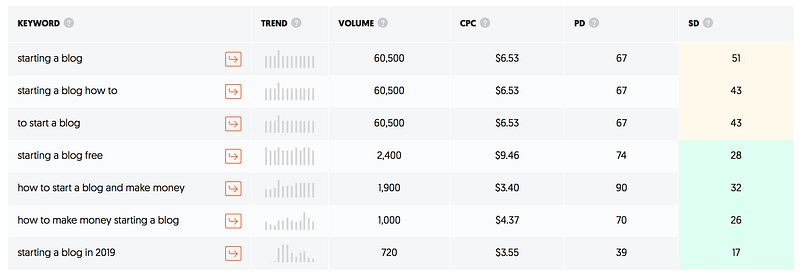
Ubersuggest is a tool owned by Neil Patel. It allows you to type in possible keywords and find out how many people search for that term every month on Google. You also can see related keywords and a list of content that other people have written related to your keyword.
This is a fantastic tool to use for going deeper into your topic, to find the parts of it that matter to your readers.
For instance ‘writing’ is one of my topics. I can use Ubersuggest to find out the things about writing that matter to people by finding keywords like ‘writing dialogue’ or ‘formatting short stories’ or ‘starting a blog’ that lots of people search for.
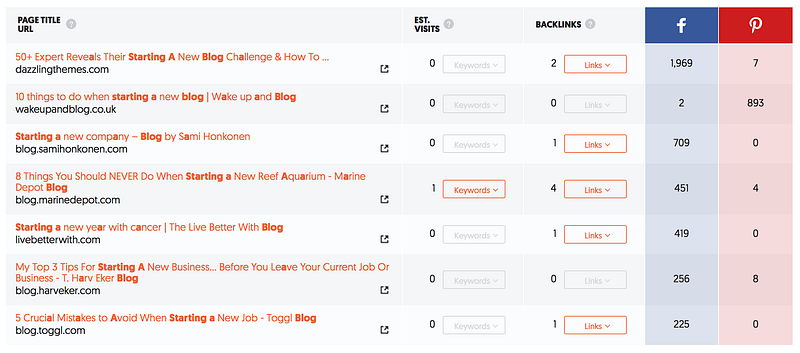
You also get a list of other posts that people have written on your topic. This is great for sparking ideas. You’ll be able to see where there might be gaps in the existing content or where you can otherwise add to the conversation.
Answer the Public
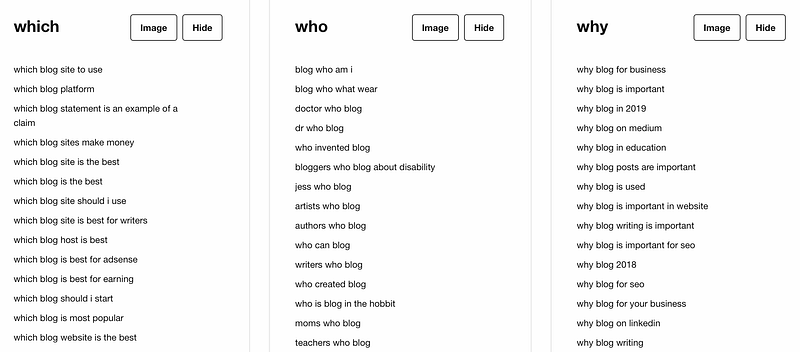
Answer the Public is a site that lets you type in a keyword and then lets you know the exact Google searches people have been making that include that keyword.
You get three free searches a day. So really think about what you want to search for before you hit enter. Use Ubersuggest to research your keywords. Find one that has at least 250 monthly searches and then enter the base of that keyword into Answer the Public.
So, using the examples above, I’d search for ‘dialogue,’ ‘short stories,’ or ‘blog.’
You’ll get back a list of questions and other searches that people have made surrounding your keyword.
Quora
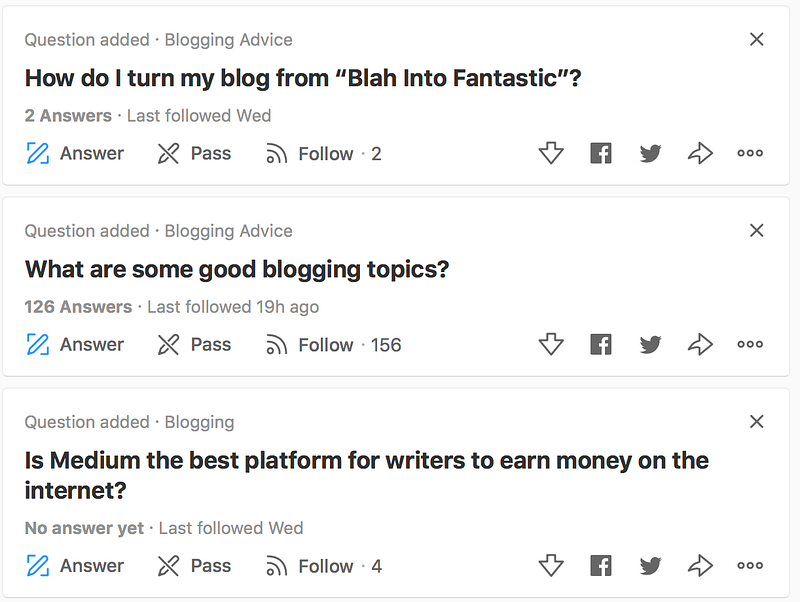
Quora is a question-and-answer social media site.
When you go to Quora, you can search for your topic and find questions that people are actually asking about it.
One last little trick — keep a book or two about your topics nearby as you write. When you feel stuck, just flip the book open to a random page and let what you read suggest a post.
The truth is that there is a nearly unlimited amount of blog post ideas on just about any topic, in any niche. Just pay attention to what people are asking for. When you start to write, you’ll get comments. You’ll see what readers are asking in the comments on other writers’ posts. Become part of the conversation.
Make a List of at Least 20 Post Ideas
This week, go through the exercise to figure out your topics. Then start to make a list of possible blog post ideas.
Aim for at least twenty, but the more the merrier.
Here’s a great idea from Ayodeji Awosika: challenge yourself to make a list of 10 new blog post ideas every day this week. Or even every day for the rest of this year. You’ll be so far ahead of the game if you know exactly what you want to write about when you start.
Here’s my secret weapon for sticking with whatever your thing is.
Shaunta Grimes is a writer and teacher. She is an out-of-place Nevadan living in Northwestern PA with her husband, three superstar kids, two dementia patients, a good friend, Alfred the cat, and a yellow rescue dog named Maybelline Scout. She’s on Twitter and Instagram and is the author of Viral Nation and Rebel Nation, and The Astonishing Maybe. She is the original Ninja Writer.


