
Fighting For Fair
Lois Jenson was just trying to earn a decent living….

“You … women don’t belong here. If you knew what was good for you, you’d go home, where you belong.”
Lois Jenson made her decision as she slammed her locker door. The nooses hanging over work stations, the sexual innuendoes, the leers, jeers, open threats, obscene language, exposure to hard-core pornography, clothes kept in their lockers marked with the filthy ejaculate of low-browed co-workers, all of it piled onto her narrow shoulders and she knew it had to end.
The final straw was the union siding with management and refusing to intervene after her supervisor maliciously assaulted her.
“He grabbed my wrists, came around the desk and pushed me back in the chair. He was kneeling over me. He put both of my wrists in one hand — it was really hurting me — and with the other he was trying to get at my body.” Her voice cracks. “The whole thing probably took 15 minutes, but it felt much longer. It was absolutely terrifying.” -Lois Jenson
Lois filed a complaint against The Eveleth Taconite Company to the Minnesota Human Rights Commission in 1984. What seemed at first like a strong victory was only the start of her legal battles with her employer. The State found probable cause and ordered Eveleth to create and enforce a sexual harassment policy and pay a penalty of $11,000.
The mine refused to pay the damages and the harassment continued as the case dragged on for fourteen long years.
A Horrifying History Of Mining
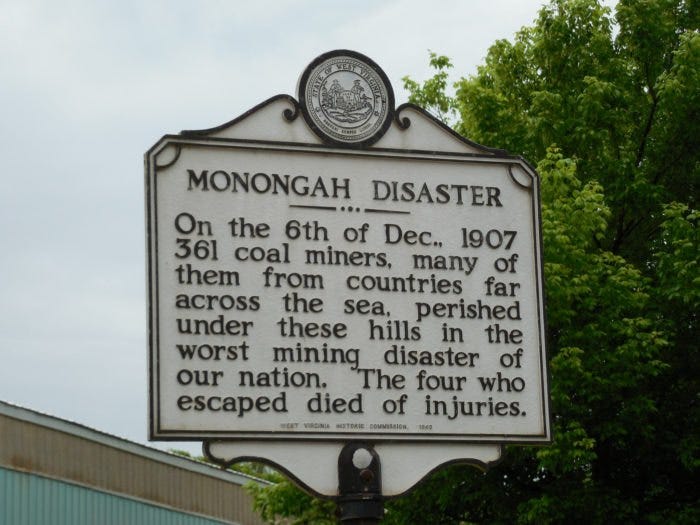
The men credited with making America an industrial powerhouse built it in the nadir of the Industrial Revolution, building their success on the backs of men willing to work sixteen hours a day to earn a living. With a long line of men looking for work, employers kept wages low for both skilled and unskilled workers because, well, they could and there was no one to stop them.
Working conditions in the late nineteenth and early twentieth centuries was mostly abysmal, whether working in a factory, on a rail line, in a chemical or steam plant, or in a mine. There was no government oversight ensuring worker safety or fair employment and the benefits earned from these wretched beginnings of modern American blue-collar work were hard-earned with the blood, sweat, tears, and death of the men who worked them.
There were few jobs more dismal than those carried out hundreds of feet below the earth in the mines of coal, copper, bituminous, lead, iron ore, and other buried material, and there’s no shortage of appalling stories in the history of mining companies in the United States.
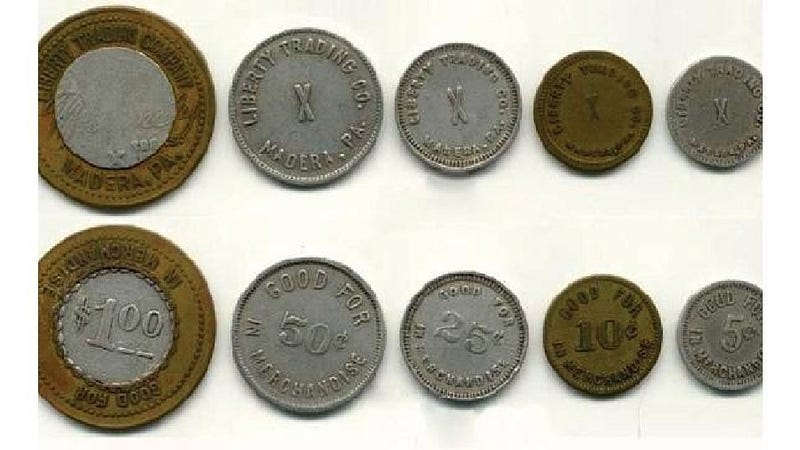
From company towns to earning scrip rather than legal tender, to atrocious working conditions and company practices, mining was a dirty business in the most literal sense of the word. Thousands of men died in unsafe mining conditions, with many thousands more injured long before a woman thought to enter a mine make a living.
The passage of the Clayton Anti-Trust Act in 1914 declared that labor unions and peaceful strikes were legal under federal law and in the decades that followed, worker safety came to the forefront of the American conscious through the efforts of unionized labor. From the mid 1970’s to today, mining accidents and the deaths related to them dropped to historic lows.
While the men who ran the mines and the men who worked in them were busy fighting with one another about safe working conditions, a little thing called the Equal Pay Act caught up with them.
Women started applying for work in the Eveleth Mine, and they got hired to work right along side the men.
The Crime Of Seeking A Better Life

In 1974, the country’s largest steel companies consented with an Equal Employment Opportunity Commission, the U.S. Department of Justice, and The Department of Labor decree to hire women and minorities for 20% of their labor force.
Lois Jenson started working for Eveleth Mines Forbes Fairlane Plant in 1975, one of the first female employees hired at the mine. She was a single mother, raising two children on welfare, when she heard about the opportunity to work a job that paid a good wage and offered benefits that included health insurance.
It was an opportunity she couldn’t pass on.
On her second day of working in the mines, one of the men told her that she didn’t belong there and if she knew what was good for her, she’d go home where she belonged.
Outnumbered 600 to 4, Lois and her female co-workers were called bitches, whores, and sluts. Men exposed themselves to the women. They were relentlessly abused both verbally and emotionally and threatened almost daily with rape and physical assault.
There were no female bathrooms in most of the areas of the mines and when the women complained to management about it, they were told to “get over it,” because the men didn’t need bathrooms, so why should the women?
In 1983 a senior male engineer started sending suggestive letters to Lois. He also stalked her, breaking into her home one night and threatening her son. She complained to the mine, but they offered no help to her. She filed a grievance with the Union and contacted The Minnesota Department of Human Rights the following year.
“This was about sexual harassment and being able to go to work knowing you were going to come home safely, but also that you could go to work knowing that you would not be grabbed or raped, or have these verbal abuses,” she says. “There were times I felt so terrible about myself on the job that I couldn’t stand it.” — Lois Jenson
In addition to adopting a sexual harassment policy, the state of Minnesota awarded Lois $6000 in punitive damages and $5000 for mental anguish. The mine’s management company agreed to create the workplace policy, but refused to pay the damages.
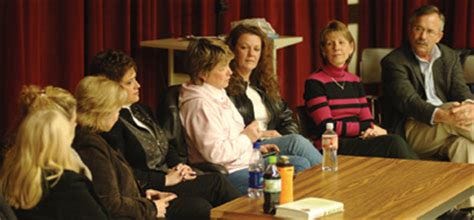
Lois called fifty lawyers before she found one who would take her case. When she hired Paul Sprenger in 1988, the charge against Eveleth Mines was given class action status, the first class action suit for sexual harassment. Lois was one of only three women who originally joined the class action suit; the other women were scared of losing their jobs or suffering even more abuse from their male co-workers.
After the 1992 liability trial found the mine was responsible for preventing the abuse that the women endured and made them establish a sexual harassment policy, more women joined in the class action suit to claim damages.
During the long litigation phase of the suit to determine the amount of money to be awarded the women, a retired judge was appointed as a special magistrate who allowed the defense attorneys to collect and review the women’s medical records, allowing them to treat the women to intense interrogations regarding their personal history, including their sexual history.
Pat Kosmach was one of the women named with Lois in the class action suit. During the course of the trial, she developed ALS and while she was hospitalized, defense attorneys charged into her hospital room, demanding to see her medical records and trying to depose her even though she had already lost the ability to speak because of the disease.
All this resulted in a 416-page report that published the women’s personal medical and sexual history, called them histrionic, and awarded them a total of $10,000.
These brazen and tasteless acts blew up in the defense’s face when the Eight Circuit Court of Appeals took on the case and granted the women a new trial with a jury. In 1998, the Eveleth Mine finally settled with the women for $3.5 million.
Lois Jenson Didn’t Want Special Treatment
Lois struggled with post-traumatic stress and depression because of the sexual harassment forced on her and her female co-workers. All she wanted was a better life for herself and her family. She didn’t ask for special treatment, she only wanted a fair work environment and common respect.
In the end, she was bold enough to seek a change, to ask her employer to do better, and to ask her fellow workers to try harder. It wasn’t just her fight, but Lois was the right woman at the right time.
We owe a debt of gratitude to Lois Jenson for her bravery and perseverance. Because she stood up and said this treatment is wrong, companies now institute and enforce sexual harassment policies, educating men and women on proper workplace behavior, and women and men may pursue legal means for workplace abuse.
Lois may not think of herself as a hero, but her courage and sacrifice changed the world for the better for women in the workplace and that, friends, is the definition of a hero.
“I did not set out to change the world, the company, the union or the workplace, or to make a statement for the feminist movement” — Lois Jenson
References:
https://www.theguardian.com/film/2006/feb/03/gender.world
https://www.chicagotribune.com/news/ct-xpm-2005-11-02-0511020328-story.html
https://www.bitchmedia.org/post/adventures-in-feministory-lois-jenson-and-sexual-harassment
Do you like what you just read? Become a member at Medium to read all my stories as well as the stories from thousands of eclectic and savvy writers across the world! Are you a writer? Then write for Medium! This link takes you to a subscription page where you can join Medium for a nominal fee, of which I will receive a small portion of your subscription. But don’t join just for me! Your subscription supports all the fine writers you can find here at Medium! Don’t miss a single story at Medium! Join!


