
Fight for Revolution with Songs for Good
An Interview with the creator of the Songs for Good songwriting Contest
Martin Luther King said “songs are the soul of a movement.” As an ambassador for Hip Hop education and a creator of protest music, I couldn’t agree more.
I’ve seen my work set the tone for protests, educate the youth, and inspire college students. And I’ve felt catharsis pouring my pain onto the page and pushing it out through the mic.
I’m part of a storied tradition of calling for change through song, and the team behind Songs for Good wants you to add your voice to the narrative.
The online songwriting contest deadline is July 19, 2020 — and the prizes, like the purpose, are no joke:
- Top-rated anthem: $5,000 in cash; collaboration with Madame Gandhi, activist-artist, drummer for M.I.A., Thievery Corporation and Oprah, Forbes 30 Under 30 and 2020 TED Fellow; and music video made of the song
- Four runners-up: $1,000 in cash
- Top-five anthems: Used by Songs for Good partner organizations March For Our Lives, Zero Hour, Access The Polls, Bridgeusa, RepresentUs, and others
As it says on the Songs for Good website, “We need a new soundtrack for democracy. Now more than ever.”
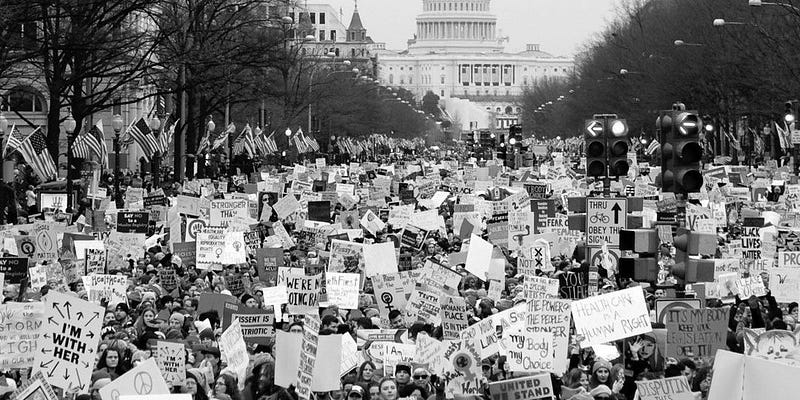
Indeed, super PACs, corporate donors and lobbying groups — as well as outright voter suppression, based on race and class — dictate who gets elected in this country. As of this writing, nearly 140,000 people have died of COVID-19. The unemployment rate is reaching historic levels, and people can’t pay their rent, feed their families or visit a doctor. The President has lied more than 20,000 times and incites violence through his Twitter account, and the Democrats and Republicans in Congress have colluded to bail out the corporations while leaving 99% of us languishing.
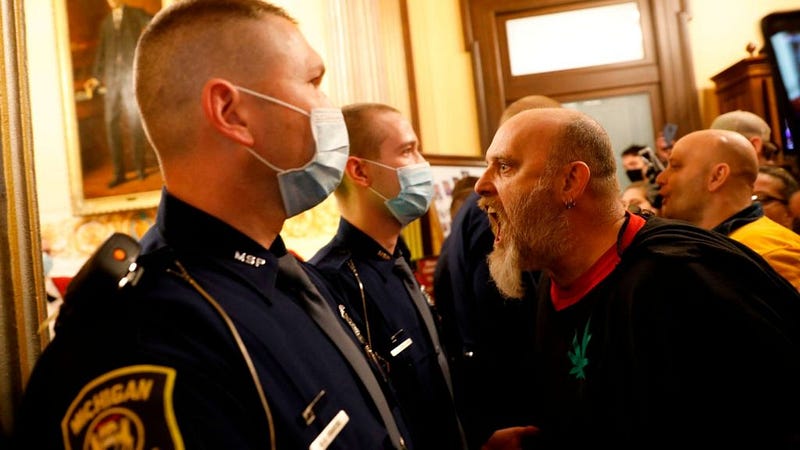
People have been protesting for months in all 50 states, fighting for justice and equality for the poor and, particularly, people of color, who are discriminately impacted by policing, prosecution and sentencing. The cops have killed three people every day for years, and are now beating, gassing, shooting, killing, arresting and trumping up charges against protesters exercising their Constitutional rights — that is, unless they’re right-wing ‘freedom fighters’ storming the capital building with machine guns to protest wearing a mask.
We represent 5% of the world’s population, and 25% of those incarcerated. The jails are filled with petty offenders who can’t afford cash bail, with seven out of ten nationwide never convicted of a crime.
Forty-million people go to bed hungry every night in this country, while America’s billionaires have become 20% richer since the Coronavirus outbreak.
Ten Demands for Justice already has a theme song on the way; the Songs for Good partner organizations, as well as 8toAbolition, Movement for Black Lives, Black Lives Matter, Poor People’s Campaign, and Movement for a People’s Party need a soundtrack, too. And that’s where you come in.
“Music has always been one of the most powerful forms of art because it caters to the emotions and motivates the listener,” says Madame Gandhi. “Some of the biggest revolutions in history have happened because of the musicians of the time.”
A few days remain before the close of the Songs for Good online songwriting contest to crowdsource anthems for this historic moment — and the top-rated songs will be used as the soundtrack for our revolution.
To learn more about what prompted the creation of the Songs for Good contest, I interviewed Nate Dewart, a Songs for Good co-creator.
It’s time to take action that matches the urgency of our situation. Songs for Good has been circulating the concept to organizations and musicians, and there’s a clear consensus: a new soundtrack is needed; it needs to be created by those impacted by our democracy’s failings; and a contest would amplify the anthems and the movements pushing for change.
Nate Dewart
1. What inspired Songs for Good?
As a lifelong singer, I’ve worked in the energy and climate policy space for a decade, on long term policy change and some local police accountability reform.
After 2016, like many, I took a step back to better understand what we’re all really facing as a country, the common challenges, and what we need to thrive — signing up for every organization I could find that is doing the work on democracy, and writing to synthesize my thoughts.
In January 2017, my wife and I invited our friends to gather, with our friends’ Kaitlin of the Alphabet Rockers and Adhi offering their home, to educate each other about our political system and perhaps take some action together. We named it Less Sleep. More Fight. Better Boots. In many ways this became an incubator for Songs for Good.
Fast forward to January 2018. I made a simple goal: to sing more.
Meanwhile, the Alphabet Rockers’ music and actions were reawakening me to the power of music; Greta Thunberg’s book was inspiring me to wake up with cathedral thinking; and my friends Kaia Marbin, age 11, and Lily Ellis, age 10, who launched the Butterly Effect Migration, were inspiring me to step up.
Finally. he idea emerged: we need expansion, not contraction. Rather than yet another tweet, how about a new narrative, one that calls upon the legacy of physical non-violent sacrifice: a march over several days, like the marches of the past.
And so it started, as a March for Good, in March of 2020, with three pillars: a policy platform; long walks; and a competition to get new songs for the strategic actions.
As I started sharing the March for Good concept with my network, it became clear that the most excitement centered around the challenge for new music.
I then went down the list of organizations that might be open to this idea, including RepresentUs, and in August learned that Renaldo Pearson was walking 700 miles from Atlanta to DC to fix our broken democracy. My aunt has recently passed away from cancer, and we had planned to be on the East Coast on Labor Day, while Renaldo was still walking, so I decided to take a week off from work to walk with him.
I drove from Boston to meet the RepresentUs team in Western, MA, and then met up with Renaldo on a back road south of Richmond, VA; he immediately welcomed me, and within a few hours was teaching me “Eyes on the Prize.” Inspiration begets inspiration.
2. Very true, and you demonstrated serious dedication. How was the team formed? And how are you selecting advisors and ambassadors?
The team, including advisors, formed primarily through my personal and the early team’s network: an incredibly generous, skilled, collaborative, fun group of folks who have been willing to share their talents for the mission. There seems to be a deep hunger for things like this, as we’ve seen with COVID creatives, and it seems every week someone new has been coming in to match the needs of the moment. As for the ambassadors, these are folks who want to spread the word, so they’re self-selecting.
3. And what do you believe to be the biggest threats facing America today?
The biggest issue is one that covers nearly every other: our broken system of our self-governance. We are no longer a leader in democracy; we are 25th in the world, according to the Democracy Index. And nearly every solution to our large-scale problems is being thwarted by the few, with corporate power’s outsized influence on politics resulting in bad outcomes for the many. All the industrial complexes — fossil fuel, auto, gun, prison, military, healthcare, housing, you name it — will continue to lead us to our own self-destruction, unless we change how we make the rules.
In short, we are not being represented, and we will not survive as a people, as a nation or as a global society if we continue to ignore the realities of our shared, public goods — air, water, earth, liberty, justice, trust, health, safety and prosperity.
4. Well said. In line with our greatest threats, then, what should be our biggest priorities?
Fixing our broken system of self-governance. While greed and thirst for power is arguably a natural human characteristic, our political and social systems have fed this corroded process. Inside and outside of politics, when you have a bad process you get bad results.
So what does a good process like? In my view, it’s one that is open, inclusive and collaborative. Our problems are too big, otherwise.
5. Agreed, and I fear we won’t get that from a Trump or a Biden presidency… So, what role can music play in pushing us toward this more humanist, stronger democracy?
Prof. Erica Chenoweth has conducted rich historical analysis showing that nonviolent protests engaging a threshold of 3.5% of the population have never failed to bring about change. And when we look historically at many of these successful movements, music plays an incredibly important role in elevating the message, and in growing and unifying a movement.
Songs are one of our most transferable assets, and they lead to another one: literal movement, or dance.
Music is expansion, when performed in large groups, where the performer and audience are the same. Song, especially as an act, opens hearts and minds, and cultivates empathy; a well designed alchemy of words and sounds connects us like nothing else. And in the end we will make the best decisions for collective selves when we experience this connectivity.
It’s time to take action that matches the urgency and magnitude of the challenges we face — and we need a new soundtrack to elevate.
Originally published at https://herald.news.


