
Hong Kong English/Cantonese (XXXV)
Something Too Fierce(-ish)
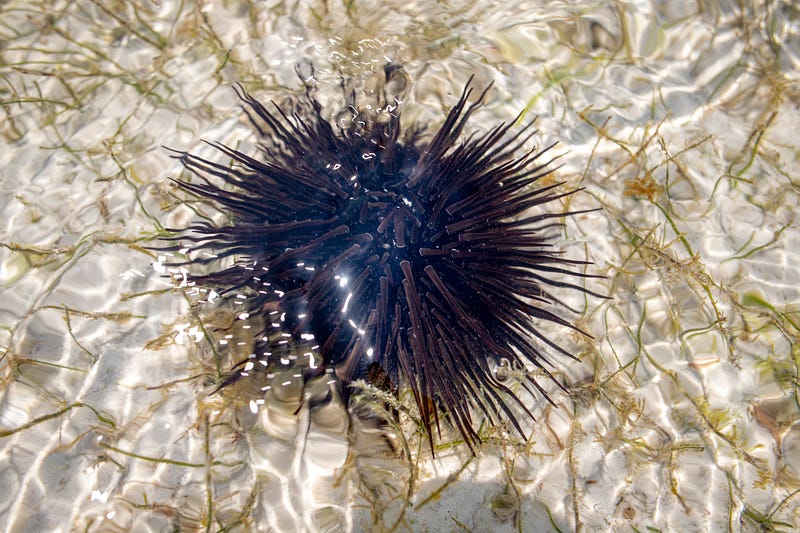
Too fierce that someone decided to name himself after it
Across East Asia, especially Japan, this sea creature seems to be a delicacy. If you want to know what parts of this creature is eaten, you can google it yourself and I hope you won’t regret.
This creature, in Hong Kong, is usually referred to as 海膽 (Jyutping: hoi2 daam2, literally: gall bladder of the sea). I tried but in vain to find the reason this is called like this in Chinese.
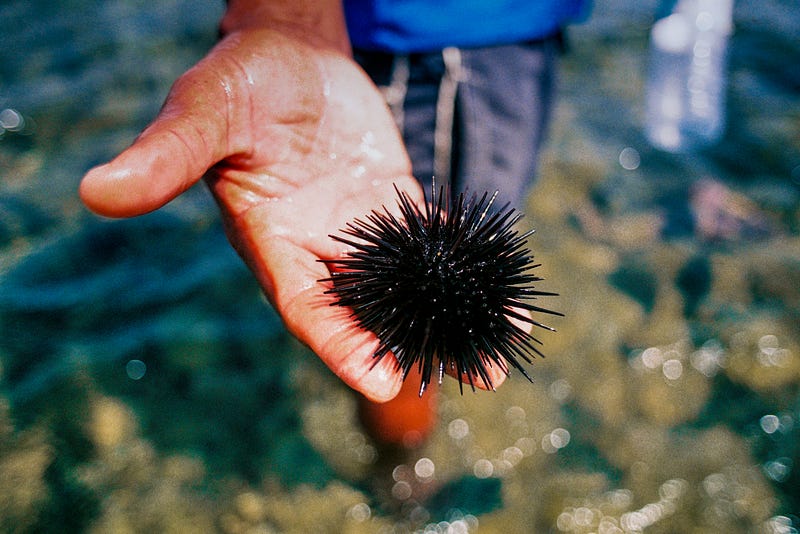
Set aside being some Japanese food that sparks joy, sea urchins can still be pretty dangerous because of their spikey nature. You may get hurt when you step on it.
This was what happened to Humphrey Dupont, a French guy who came to Hong Kong to study, in 2014. He got hurt by a sea urchin on a beach soon after he arrived in Hong Kong and so he decided to give himself a Chinese name after the urchin.
Never had learnt Chinese, Mr Dupont decided to get this done using the one and only Google Translate. He got “Fierce Urchin” translated, the translation written during the process of getting an HKID card, passed and printed on the card eventually.
Then he became some sort of “famous person” and lots of Hongkongers got a laugh at his Chinese name, 激烈的海胆 (Jyutping: gik1 lit6 dik1 hoi2 daam2, and 胆 is a simplified writing of 膽).
We can’t judge his decision of giving himself a Chinese name. We get our own English names. There was Nikki, Nicole, Tiffany and Heather. (Right, I’m singing the lyrics.)
We shouldn’t judge his decision of giving himself a weird Chinese name because we Hongkongers like to give ourselves weird English names.
I came across several Fish, female Mans (Let’s be honest, these ladies may be a little bit unfortunate that one of the characters in their Chinese names is “Man”, transliterated.), a Romantic (because her legal name is just three letters away from this word), and an unfortunate Angus who was nicknamed Maggie.
But my legal name in Westerners' eye is to be laughed at because mine is Chun Man Li. Oh you think I am Chun Li the Street Fighter? Maybe you should be kicked. And luckily my English name isn't Ken, or you will be even more confused.Here is a Cantonese article/list on some uncanny names. By the way, one main reason the locals got a laugh at Humphrey Dupont’s Chinese name wasn’t his bravery or his decision of naming himself after food. The reason is Cantonese.
We call a particular part of the body “sea urchins”.
Sea urchins that we eat are mostly black and spikey. The body parts that can associate with it is actually hairs. These would not be hairs on some large surface such as arms, legs and chest.
Well, this part of hairs is usually hidden, but it could be seen when you wear a tank top, for example, and you open your arms.
Some people have this part of hair removed for practical reasons. Some may be athletes and they have to lower the friction in that area because they move their arms very often. Some have them removed to conform to modern day beauty standards.

“Sea urchins” are the hair at the armpit, especially when there is a lot.
So poor monsieur Dupont, you accidentally named yourself “intense armpit hair” and that’s why Hongkongers got some giggles.
Also, I don’t believe these “sea urchins” can be eaten. Don’t even put your tongues on them. Ew.
References:
Apple Daily Hong Kong (but you can’t find it anymore, so here are some internet entries from more newspaper on Mr Dupont: here, here and here)
Further reading:
This looks like an interesting academic paper on our names.Eickmann, W. (2020). “One Person, Two Names: A Study of Naming Practices in Hong Kong and the Use of English and Chinese Names.” Inquiries Journal, 12(11). Retrieved from http://www.inquiriesjournal.com/a?id=1840
This looks like how our names work in Hong Kong's government database and this implies that we can have at most six Chinese characters in our namesThis article.


