

FIBER! What is it Good For?
Absolutely nothing!
I’ve seen several articles lately, here on Medium, suggesting — or out-and-out recommending — that we add fiber to our diet. Does this suggestion make sense? You be the judge:
One thing to keep in mind when looking at the impact of a single nutrient (and it’s not even clear fiber qualifies as a nutrient — as you will see later) is that we never eat a nutrient in isolation. Indeed, some nutrients are difficult to find on their own — completely on their own. Fat, for example, typically comes with some sort of protein along with it. As you will see, it’s the same for fiber.
Turning now to the topic at hand, let’s start by looking at the origins of wanting fiber in the diet
Back in the 1800s, it was thought that fiber could help prevent premature death. The mechanism by which fiber was thought to benefit humans in this way is a bit bizarre. It was thought that a diet high in fiber would replace meat in the diet; meat caused lust; lust led to masturbation and masturbation led to moral and physical decay, and ultimately, to premature death.
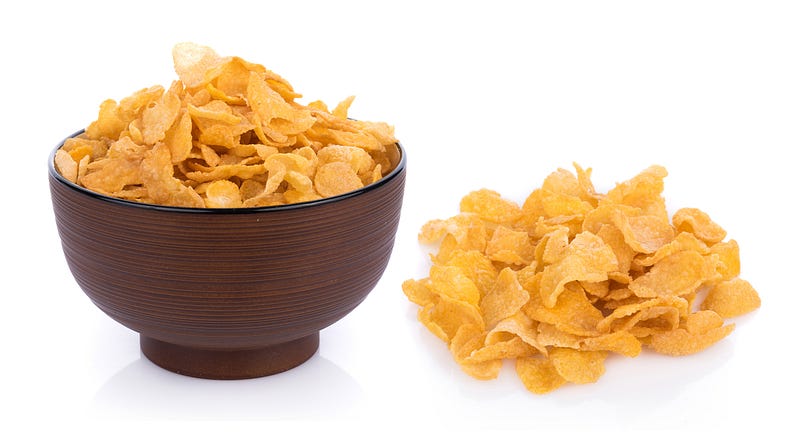
This set of ideas is actually what started (and continues to support) the vegan movement in the US and much of the world. For a real eye-opener, google the history of Kellogg’s Corn Flakes and the influence the Seventh Day Adventists have on medical and nutrition schools across the US. You don’t even need to dig too deep to understand why many are skeptical of the “science” behind the plant-based movement.
Next, let’s look at what fiber is
Fiber is an indigestible polysaccharide. It belongs to the macronutrient class of carbohydrate. The more famous carbohydrates, of course, are the monosaccharides of Glucose, Fructose and Galactose — three basic forms of sugar. What’s important to keep in mind, and as I mentioned at the start of the article, is that when you eat fiber, you are getting some form of sugar along with it. While the fiber is indigestible, the glucose, fructose and/or galactose that comes with it, is digestible.
So, how much fiber do we need?
The short answer is none. Carbohydrate is a non-essential nutrient for humans — that means humans don’t need to eat carbohydrate to survive. This is not up for debate. This is a fact. According to the Dietary Reference Intakes for Energy, Carbohydrate, Fiber, Fat, Fatty Acids, Cholesterol, Protein, and Amino Acids, “the lower limit of dietary carbohydrate compatible with life apparently is zero, provided that adequate amounts of protein and fat are consumed.”
The US dietary guidelines for 2015–2020 go on the further clarify that an essential nutrient is “a vitamin, mineral, fatty acid, or amino acid required for normal body functioning that either cannot be synthesized by the body at all, or cannot be synthesized in amounts adequate for good health and thus must be obtained from a dietary [i.e., eaten] source.” The guidelines go on to identify dietary fiber as a nutrient, but not an essential nutrient.
So, given fiber is a non-essential sub-nutrient of a non-essential macronutrient, it makes sense that we don’t need any. Still puzzled over how carbohydrate, as a macronutrient, is non-essential when the brain needs glucose? Remember, the body is pretty sophisticated. It can synthesize many of the nutrients it needs. For example, the body needs 20 different amino acids (that come from protein). But only 9 of the 20 are “essential.” The other 11 can be synthesized from the other nutrients we eat. So if we don’t eat anything that would provide our body with glucose, the body synthesizes it — and it synthesizes it out of body fat. Put a pin in that if you are interested in weight loss…
At this point we’ve established that:
· Fiber is an indigestible form of carbohydrate
· Carbohydrate is a non-essential nutrient for human life
· Fiber, while considered a nutrient by the US Dietary Guidelines, is considered a “non-essential nutrient.”
· We don’t need any fiber in our diet.
To me it seems odd that something indigestible could be considered a “nutrient.” The dictionary defines a nutrient as “a substance that provides nourishment essential for the maintenance of life and for growth.” If fiber isn’t digestible, how is it providing nourishment? We will leave that as a paradox likely related to the Seventh Day Adventists and move on.
So, fiber isn’t necessary, but is it bad for us?

This is hard to know because very little research has been done that could be used to determine if a causal relationship between fiber and either good or bad health outcomes exists. There is a lot of epidemiological research that shows various associations between fiber and health outcomes. But this sort of research simply cannot determine a causal relationship between fiber intake and any health outcome — or any item in the diet and any health outcome. Yes, there have been meta-analyses and even an umbrella analysis (a meta-analysis of meta-analyses) done on this epidemiological research. But this doesn’t allow us to make causal inferences between fiber and any health outcome(s).
Only one study, reported back in 1989, did a randomized controlled test of an intervention involving fiber. While only providing directional indications, the study found that deaths from heart disease were higher in the high-fiber group vs. the control group (109 vs. 85, respectively) and deaths due to all causes were also higher in the high-fiber group vs. the control group (123 vs. 101, respectively).
Does it provide any benefits?

The answer to this isn’t so clear, either. Fiber does promote “throughput” and “output” of the contents of the alimentary canal. This could be seen as a benefit. But once you hear why fiber promotes these actions might give you a different perspective. Fiber essentially irritates the walls of the intestines by cutting their sensitive lining. This irritation causes the intestines to secrete more mucus than usual to sooth the lining. The mucus, in turn helps the undigestible matter through your system and into the toilet. Seems like eating less undigestible material might help eliminate (sorry…) the problem without needing to lacerate the walls of the intestines.
And while fiber is said to feed gut bacteria, it is not the only source of nutrition for our intestinal flora.
In summary, we have the following:
· Fiber is an indigestible for of carbohydrate
· Carbohydrate is a non-essential nutrient for human life
· Fiber, while considered a nutrient by the US Dietary Guidelines, is not considered an “essential nutrient.”
· We don’t need any fiber in our diet.
· There are directional data from an RCT study that, at a minimum, fail to support the idea that fiber is good for us.
· Eating fiber will bring with it other dietary carbohydrate (which is, essentially, sugar)
· Fiber provides a benefit to a problem largely created by fiber itself.
With all the above, I don’t see why anyone advocates adding fiber to the diet.
What are your thoughts?
References used in writing this article:
The Panel on Macronutrients. Dietary Reference Intakes for Energy, Carbohydrate, Fiber, Fat, Fatty Acids, Cholesterol, Protein, and Amino Acids (Macronutrients): The National Academies Press, 2005.
U.S. Department of Health and Human Services and U.S. Department of Agriculture. 2015–2020. The Dietary Guidelines for Americans. 8th edition.
Burr ML, Fehily AM, Gilbert JF, et al. Effects of changes in fat, fish, and fibre intakes on death and myocardial reinfarction: diet and reinfarction trial (DART). The Lancet 1989.
I wrote a book about nutrition, metabolism and weight management where I cover topics like this in more depth — but not so much that you need an advanced degree to understand it! It’s available on Amazon. See my profile page for more details, if you are interested.
